
Loading, please wait...
LOT 0766
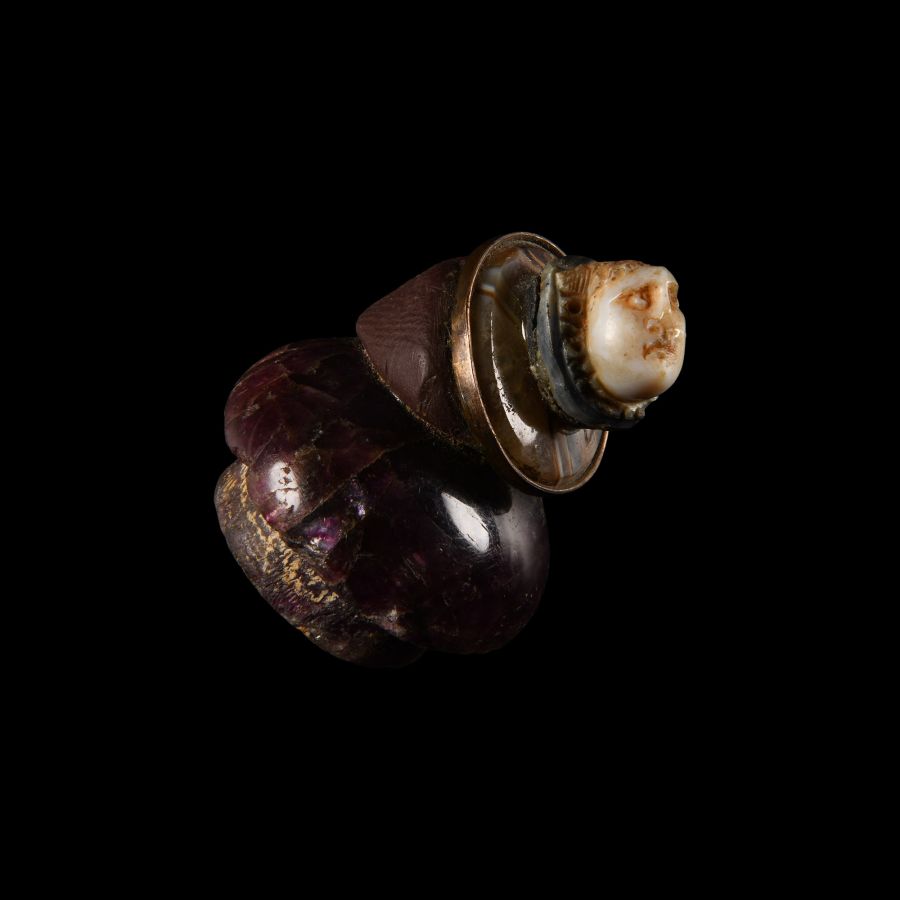
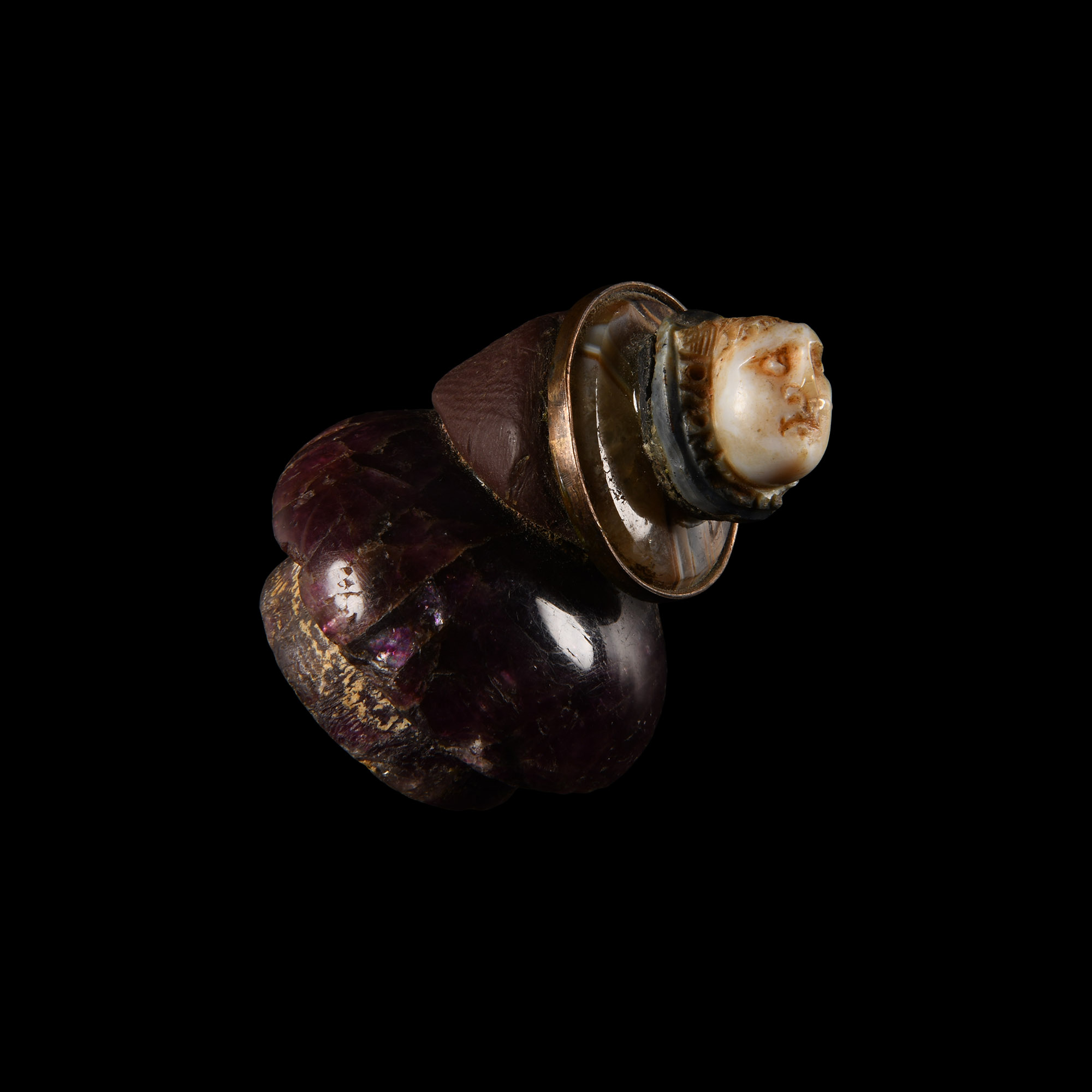
Large Roman Fragmentary Cameo with Face
3RD CENTURY A.D.
2 1/8 in. (95 grams, 55 mm).
Carved in high-relief in (likely) agate; sympathetically mounted on a naturalistic base; chipped; mounted by the late Alison Barker in her own inimitable style.
ProvenanceAcquired 1960s-1990s.
Late Alison Barker collection, a retired London barrister.
Cf. The British Museum, museum number 1924,0514.2, for a similar style of face.
CONDITIONTimeLine Auctions follows a vetting process to ensure the authenticity and legality of all items, reinforcing our commitment to integrity and responsible trading. Each antiquity, antique, and coin lot undergoes thorough examination by a vetting committee of at least ten external specialists, professional trade association members, scientists, and archaeologists: Our Vetting Process
AUCTIONS:
TimeLine is a leading auction house specialising in antiquities, ancient art, collectables, natural history, coins, medals, and books. Our auctions offer museums, collectors, historians, and enthusiasts the opportunity to acquire unique and historically significant pieces.
-
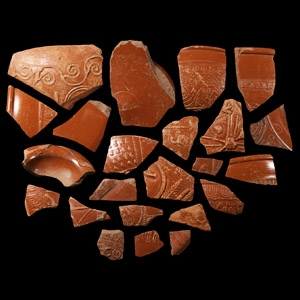
Roman 'Thames' Decorated Samian Ware Pottery Collection
Circa 2nd century A.D.Sold for (Inc. bp): £91
Mainly from rims and bodies of vessels; most displaying a design in relief, including architectural elements, scrolling foliage and a maker's stamp. 440 grams total, 3-10.5 cm
Found Billingsgate spoil from the Thames foreshore, London, UK. -
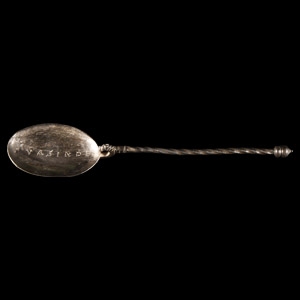
Roman Silver Cochlear Spoon Inscribed 'May You Live in God'
Circa 4th century A.D.Sold for (Inc. bp): £715
Composed of a decoratively twisted slender stem with onion knop finial and roughly D-shaped neck formed as the arched neck of a horse, the restored oval bowl bearing a Latin inscription '[V]IVASINDEO' to the interior, the underside gently carinated. 13.5 grams, 13.4 cm
Ex Garcia collection, France, 1990s-2000s.
According to the British Museum, the inscription corresponds to the phrase 'Vivas in deo', meaning 'May you live in God'. This inscription was common in the Roman Empire and especially in Roman Britain after the advent of Christianity. A small Roman silver disc, thought to have been part of a signet ring, dated to 4th-5th century and found near Swaffham, is inscribed 'Antonius, may you live in God (Antoni, vivas in Deo)'. It is highly possible that our spoon, if a liturgical object, was used to administer Holy Communion. -
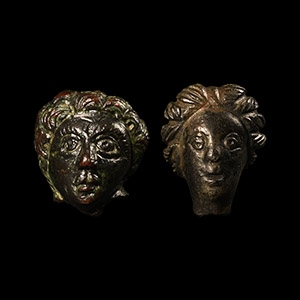
Roman Bronze Goddess Statuette Heads
Circa 1st-3rd century A.D.Sold for (Inc. bp): £312
Comprising: a female with hair held in a chignon at the nape; figure with hair dressed in short wavy tufts, large eyes with exaggerated eyelashes. 71 grams total, 23-25 mm
Acquired before 2000. From the collection of a European gentleman living in the UK.
Bronze statuettes representing Roman gods and goddesses were widespread all around the empire, and are also known as far as archaeological sites of Jutland and the islands. The two heads represent probably tutela divinities of the home, like Vesta and Juno (Greek Hera).
