
Loading, please wait...
LOT 0770
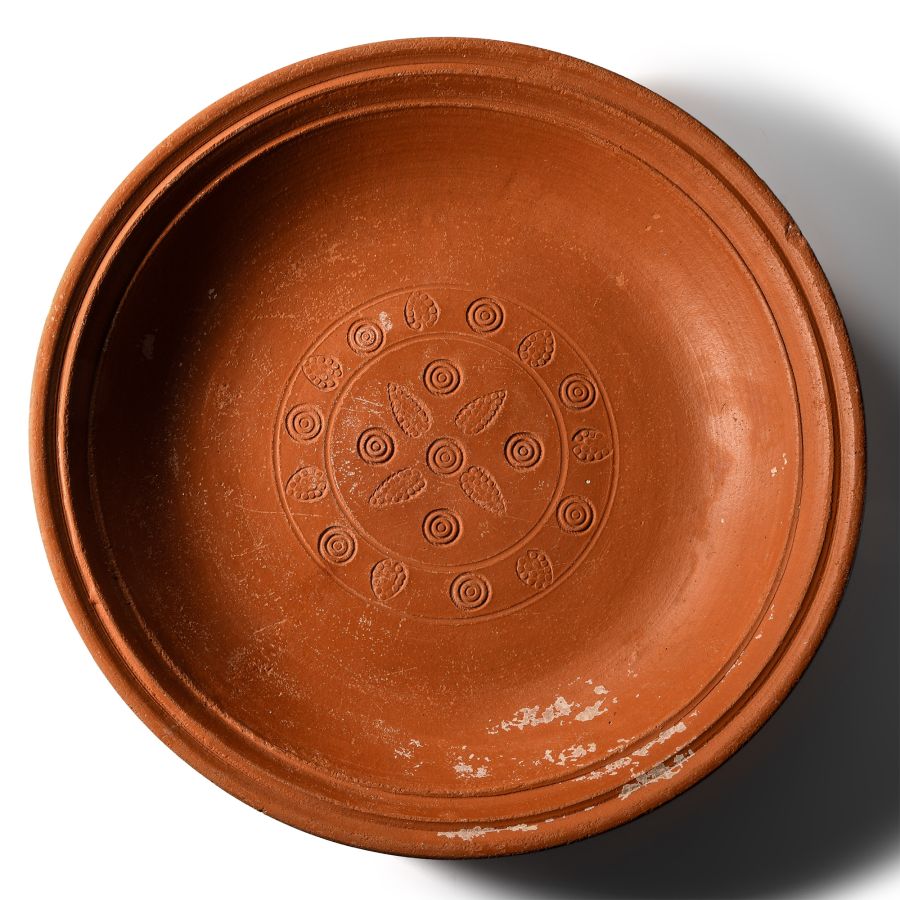
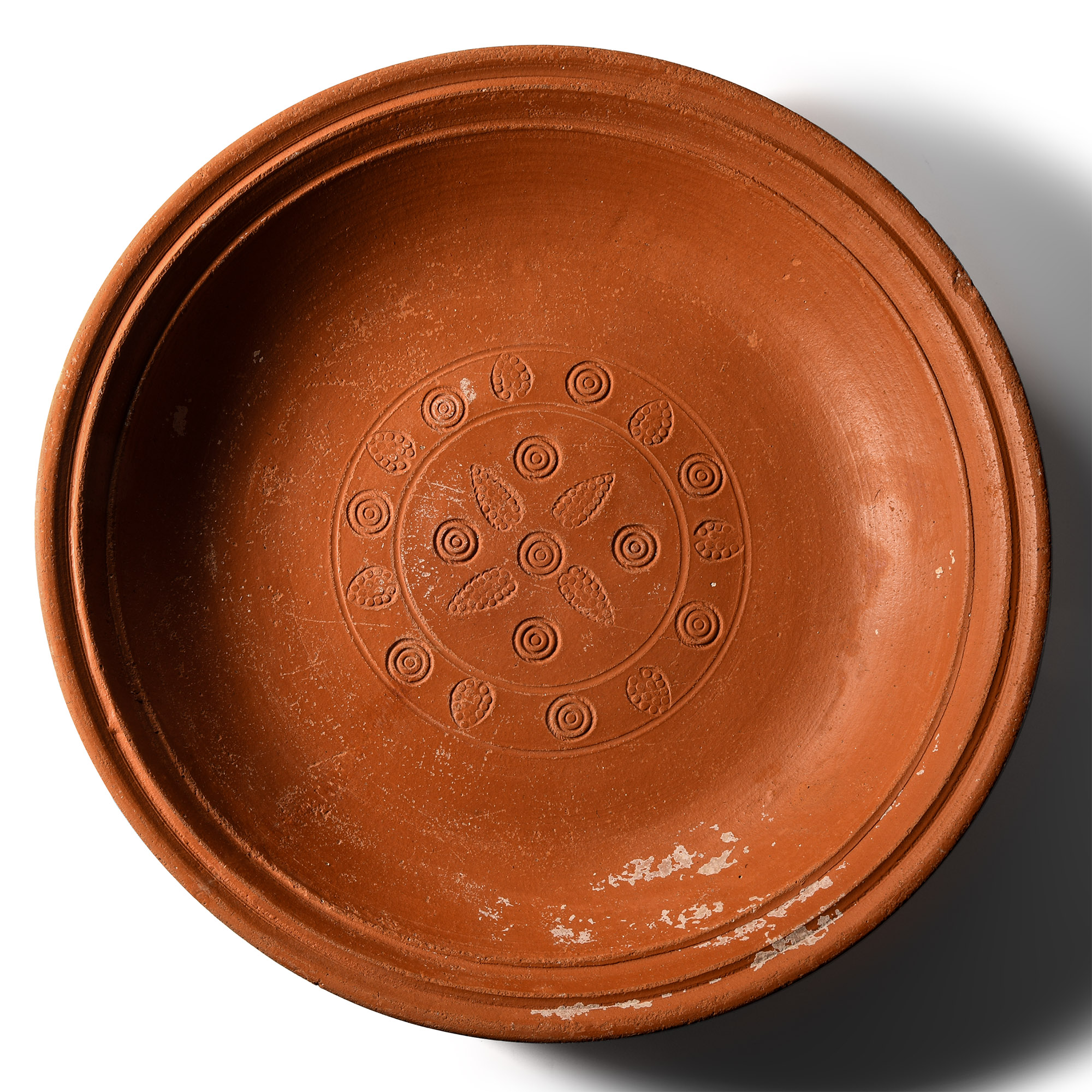
Large Roman Decorated Redware Serving Bowl with Grape Bunches
CIRCA 4TH CENTURY A.D.
12 1/4 in. (1.13 kg, 31 cm).
In perfect condition with stepped rim, impressed stylised bunches of grapes and concentric circles within a roundel to the interior. [No Reserve]
ProvenanceAcquired in the 1990s.
From the Greer collection, Oxford, UK.
TimeLine Auctions follows a vetting process to ensure the authenticity and legality of all items, reinforcing our commitment to integrity and responsible trading. Each antiquity, antique, and coin lot undergoes thorough examination by a vetting committee of at least ten external specialists, professional trade association members, scientists, and archaeologists: Our Vetting Process
AUCTIONS:
TimeLine is a leading auction house specialising in antiquities, ancient art, collectables, natural history, coins, medals, and books. Our auctions offer museums, collectors, historians, and enthusiasts the opportunity to acquire unique and historically significant pieces.
LOT 0770
Large Roman Decorated Redware Serving Bowl with Grape Bunches
Sold for (Inc. bp): £468
-
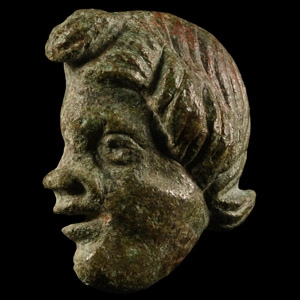
Roman Bronze Face Mount
1st-3rd century A.D.Sold for (Inc. bp): £52
Profile bust of a putto with swept-back hair and fleshy features; studs to the reverse. 8.21 grams, 23 mm
Property of a Gloucestershire, UK, collector. Property of an East Sussex, UK, gentleman. -
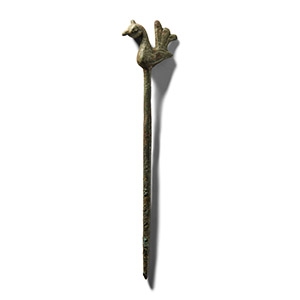
Roman Bronze Bird-Headed Dress Pin
Circa 4th century A.D.Sold for (Inc. bp): £91
Substantial pin with slight bulb below the finial formed as a stylised bird modelled in the round with bulbous head and eyes, lobed tail. 32.9 grams, 15.5 cm
From a collection acquired on the UK art market from various auction houses and collections mostly before 2000. From an important Cambridgeshire estate; thence by descent. -
.jpg)
Etruscan Gold Fibula with Amber Disc
Circa 4th-3rd century B.C.Sold for (Inc. bp): £650
Bow brooch with hollow-formed head, foot and bow; the head formed as the head of a goat; bow enclosing an annular amber panel. 12.42 grams, 75 mm
Private collection of Mr S.A., Switzerland, 1990s, thence by descent.
