
Loading, please wait...
LOT 0943
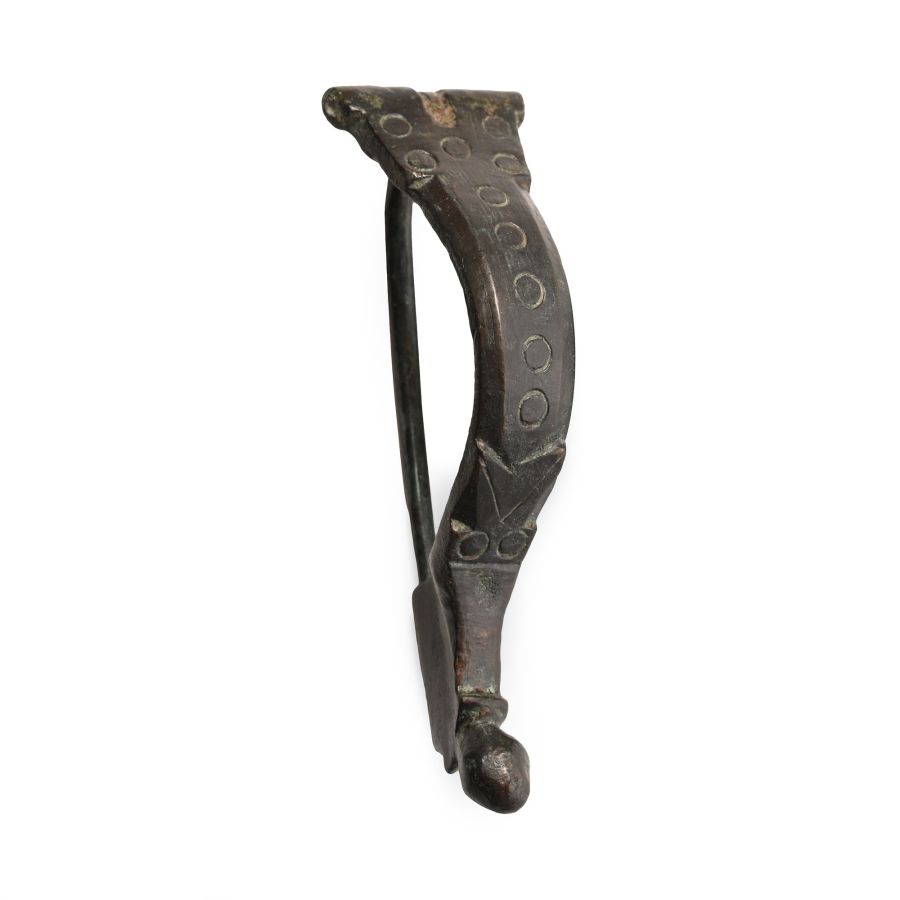
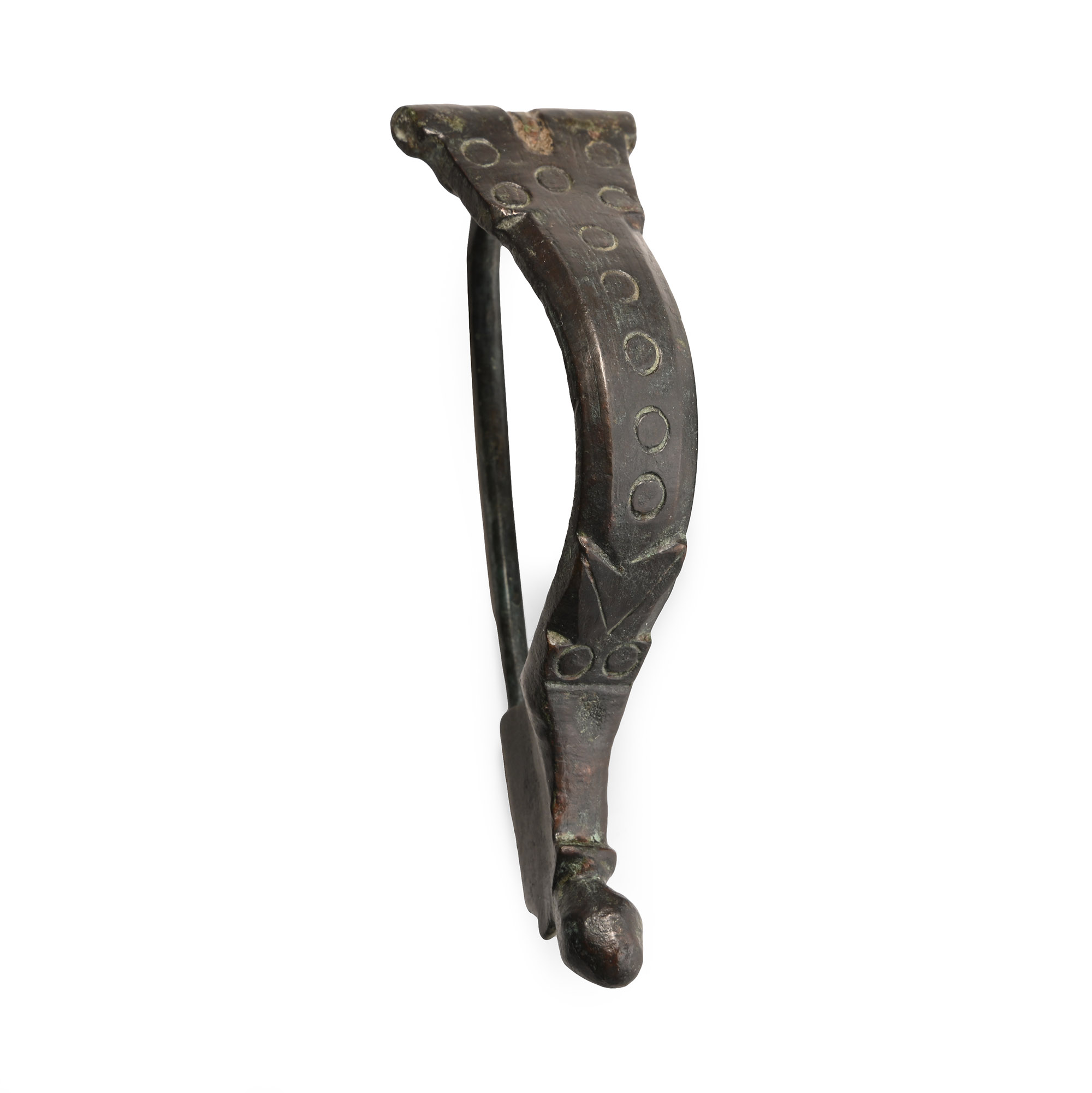
Large Roman Decorated Bronze Bow Brooch
3RD-4TH CENTURY A.D.
2 7/8 in. (28 grams, 72 mm).
Wide bow with punched annulet decoration, short footplate with a knop finial. [No Reserve]
ProvenanceEx German art market, 2000s.
Acquired from an EU collector living in London.
From the collection of a Surrey, UK, gentleman.
TimeLine Auctions follows a vetting process to ensure the authenticity and legality of all items, reinforcing our commitment to integrity and responsible trading. Each antiquity, antique, and coin lot undergoes thorough examination by a vetting committee of at least ten external specialists, professional trade association members, scientists, and archaeologists: Our Vetting Process
AUCTIONS:
TimeLine is a leading auction house specialising in antiquities, ancient art, collectables, natural history, coins, medals, and books. Our auctions offer museums, collectors, historians, and enthusiasts the opportunity to acquire unique and historically significant pieces.
-

Roman Bronze Ring with Bust
3rd-4th century A.D.Sold for (Inc. bp): £59
Square bezel with beaded border, profile bust with vexillum. 2.12 grams, 22.18 mm overall, 20.22 mm internal diameter (approximate size British T, USA 9 1/2, Europe 21.26, Japan 20)
Acquired on the London art market in the late 1980s-1990s. From the family collection of an East London, UK, gentleman. -
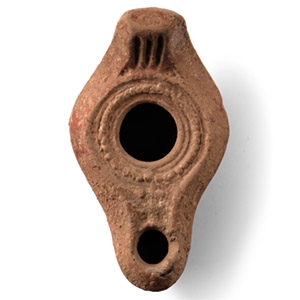
Roman Redware Terracotta Oil Lamp
3rd-4th century A.D.Sold for (Inc. bp): £65
Slipper-shaped type with stub nozzle, broad discus with beaded border to the filler-hole, ribbed reflector, incised detail to underside. 120 grams, 10.8 cm
From the old private collection of a retired UK gentleman; his collection formed in the 1990s. -
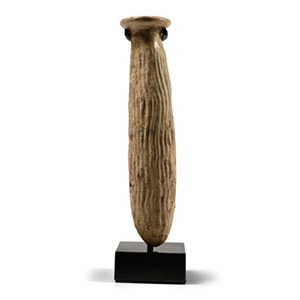
Roman White Elongated Glass Date Flask
1st century A.D.Sold for (Inc. bp): £598
Mould-blown with elliptical body, short neck and thick everted rim, with modelled wrinkles. 13 grams, 10.5 cm (46 grams total, 12 cm including stand)
From an important glass collection, London, UK, 1980-1990.
Bottles shaped like dates are among the most common varieties of 1st century mould-blows vessels. Examples have been discovered in most part of the Roman Empire, with a concentration of finds in the Eastern Mediterranean.
