
Loading, please wait...
LOT 0127
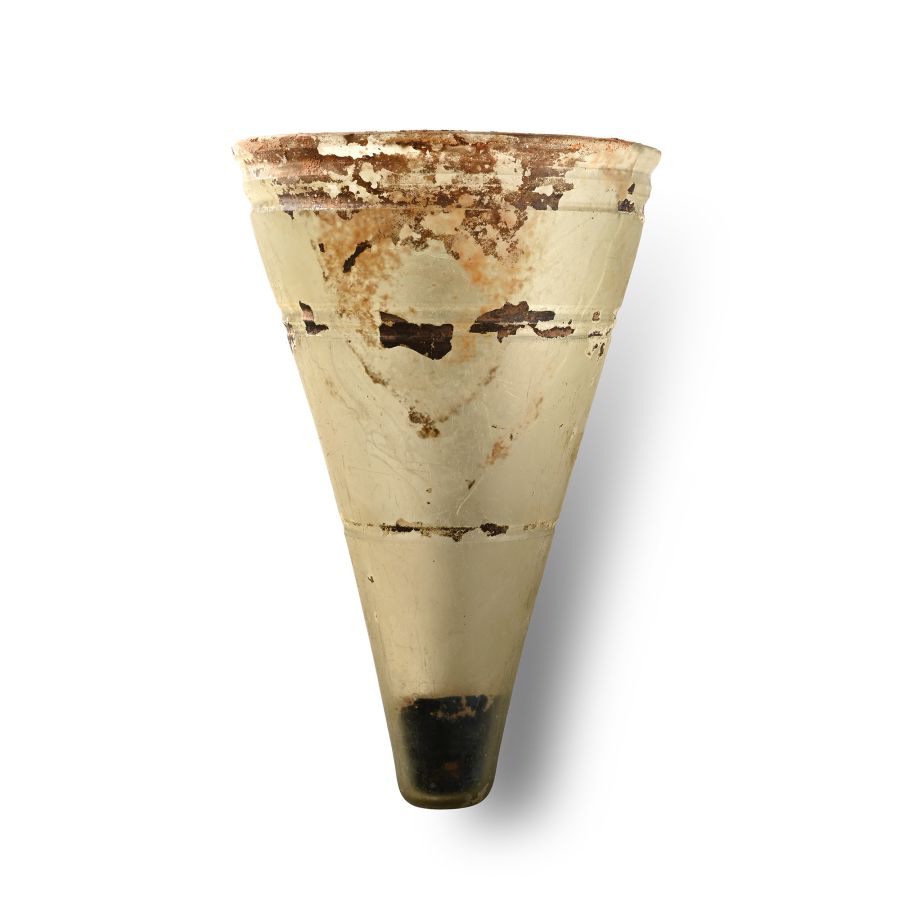
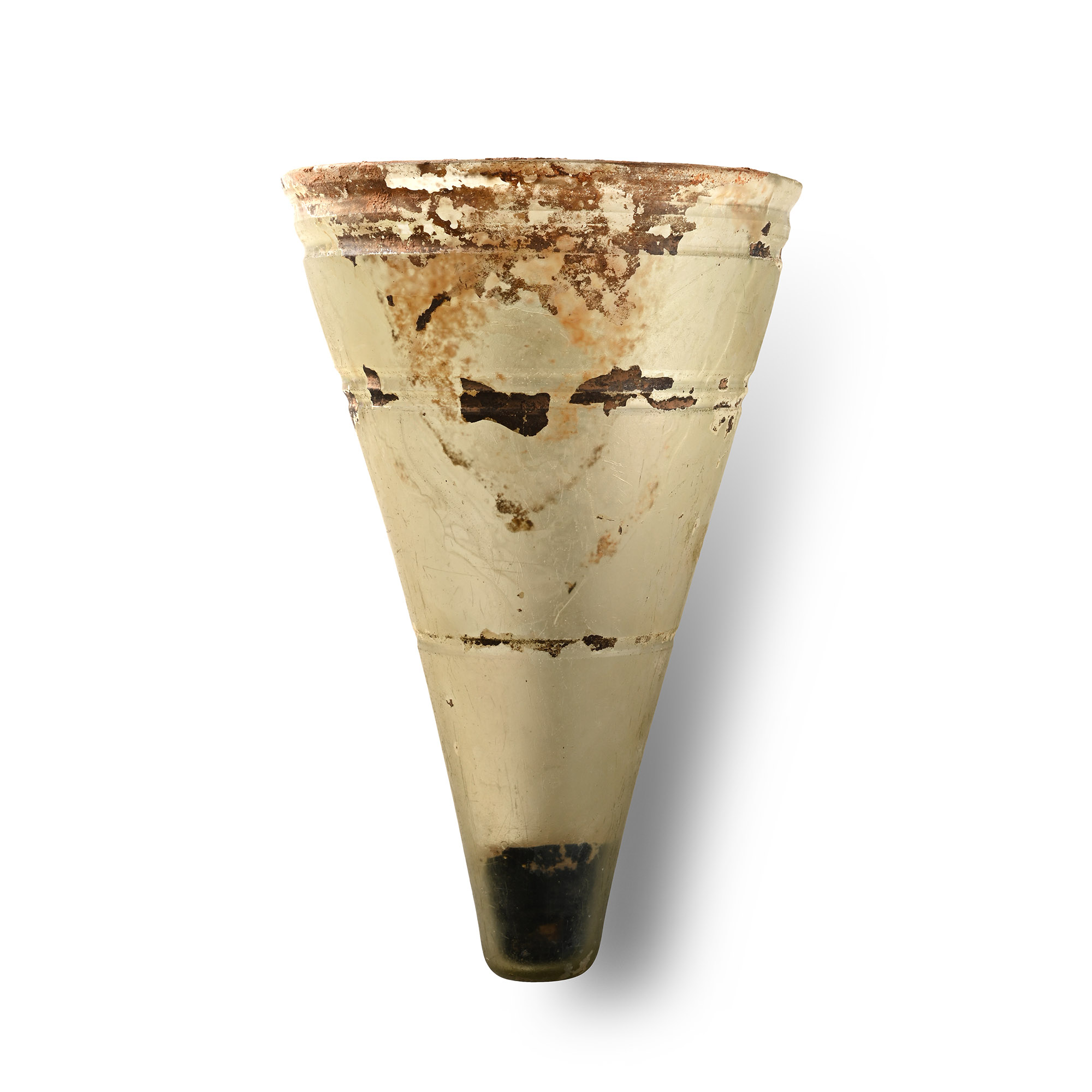
Large Roman Cut Glass Beaker
4TH-5TH CENTURY A.D.
7 1/4 in. (289 grams, 18.5 cm).
A beaker or lamp with thick conical body and pontil base, five horizontal grooves cut around the body; traces of iridescence.
ProvenanceDr Jutaro Kawabe, Nagoya, Japan, his collection formed in the 1960s-1970s.
with Hoshigaoka Gallery until the late 1990s.
Private collection, London, UK.
This lot has been checked against the Interpol Database of stolen works of art and is accompanied by a search certificate number no.12830-241334.
Cf. Auth, H.S., Ancient Glass at the Newark Museum, New Jersey, 1976, items 200 and 201; Whitehouse, D., Roman Glass in The Corning Museum of Glass: Volume Three, New York, 2003, item 1180; The Metropolitan Museum of Art, item 74.51.310.
FootnotesConical vessels of this form were either used as a lamp or a beaker; notably during the late imperial period in the eastern provinces of the Roman Empire and in the early Migration period. Deep cuts on this piece suggest it was used with suspension chains or ropes, making it highly likely that this example was used as a lamp.
CONDITIONTimeLine Auctions follows a vetting process to ensure the authenticity and legality of all items, reinforcing our commitment to integrity and responsible trading. Each antiquity, antique, and coin lot undergoes thorough examination by a vetting committee of at least ten external specialists, professional trade association members, scientists, and archaeologists: Our Vetting Process
AUCTIONS:
TimeLine is a leading auction house specialising in antiquities, ancient art, collectables, natural history, coins, medals, and books. Our auctions offer museums, collectors, historians, and enthusiasts the opportunity to acquire unique and historically significant pieces.
LOT 0127
Large Roman Cut Glass Beaker
Estimate £2,000 - 3,000€2,320 - 3,480 (for guidance only)$2,700 - 4,050 (for guidance only)
-
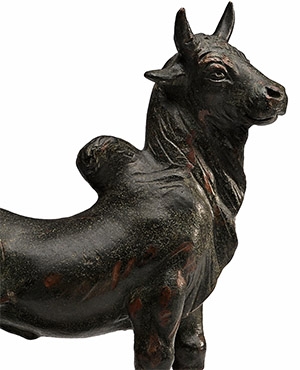
Bronze Figure of a Zebu Bull
Roman Imperial Period, 2nd-3rd century A.D.Sold for (Inc. bp): £11,700
Modelled in the round in alert pose with head raised and slightly turned; hair texture to the forehead, neck and shoulders; mounted on a custom-made stand. 2.3 kg total, 20 cm including stand
Art market, Bavaria, 1990s. with Christie's, New York, 7 December 2011, no.188. Accompanied by copies of the relevant Christie's catalogue pages. Accompanied by a copy of an Art Loss Register certificate, no.S00122050. This lot has been checked against the Interpol Database of stolen works of art and is accompanied by search certificate number no.12962-245248.
After the Roman annexation of Egypt, Egyptian cults such as that of the Apis bull were syncretised, becoming part of a distinctively Egyptian form of Roman polytheism. Representations of prancing Apis bulls, turned either left or right, have been found throughout the Roman Empire. However, it is also possible that this beautiful statuette is connected with the cult of Jupiter Dolichenus, where the armed god is usually standing upon a bull. -
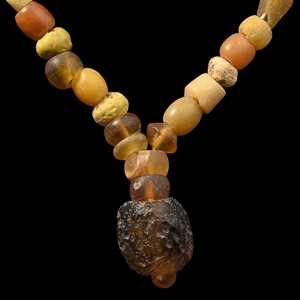
Roman Yellow Glass Bead Necklace String
1st-4th century A.D. and laterSold for (Inc. bp): £65
Restrung designer necklace string of fusiform, oblate and other types with facetted centrepiece. 25 grams, 35.8 cm
London, UK, collection, 2000s. -
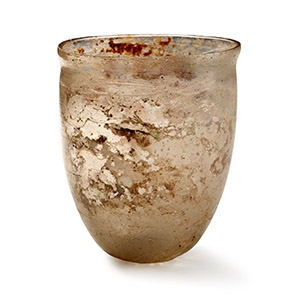
Roman Iridescent Glass Flask
1st-4th century A.D.Sold for (Inc. bp): £221
Aqua glass drum-shaped jar with everted rim and rounded base. 34.58 grams, 70 mm
Acquired Christie's, London, Antiquities, Works of Art and Important Renaissance Bronzes, Plaquettes and Limoges Enamels, 8 July 1981, no.617 (part). From a private Wiltshire, UK, collection. Accompanied by a copy of the relevant Christie's catalogue pages.
