
Loading, please wait...
LOT 0764
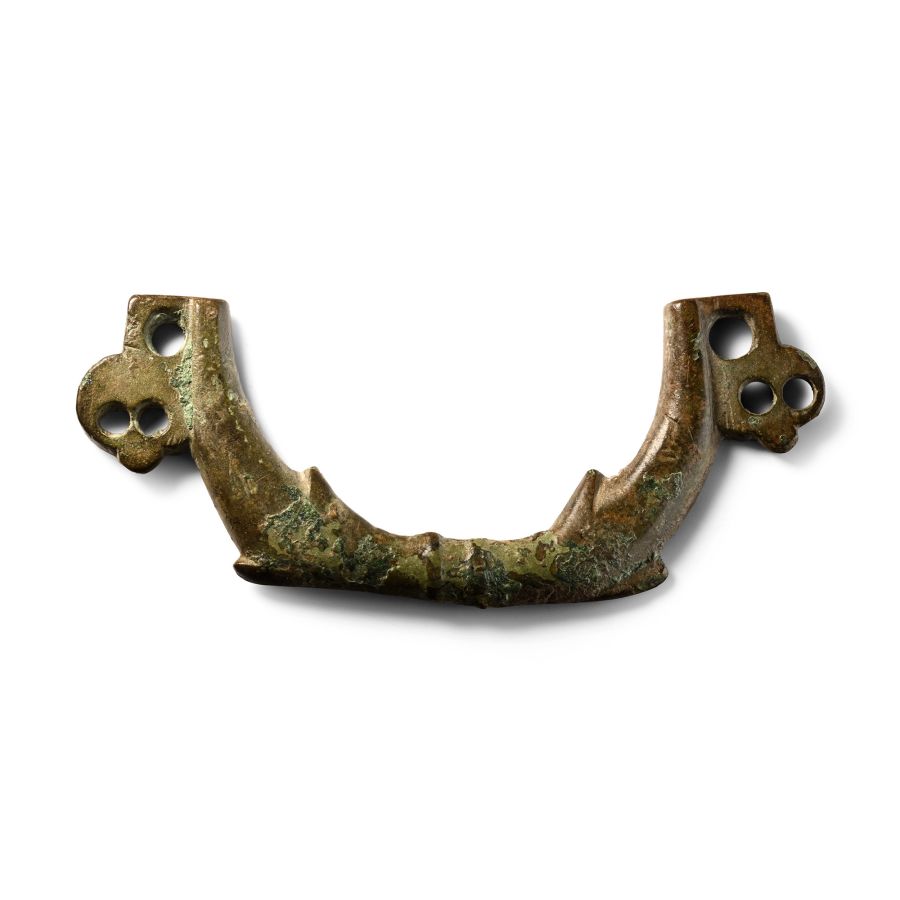
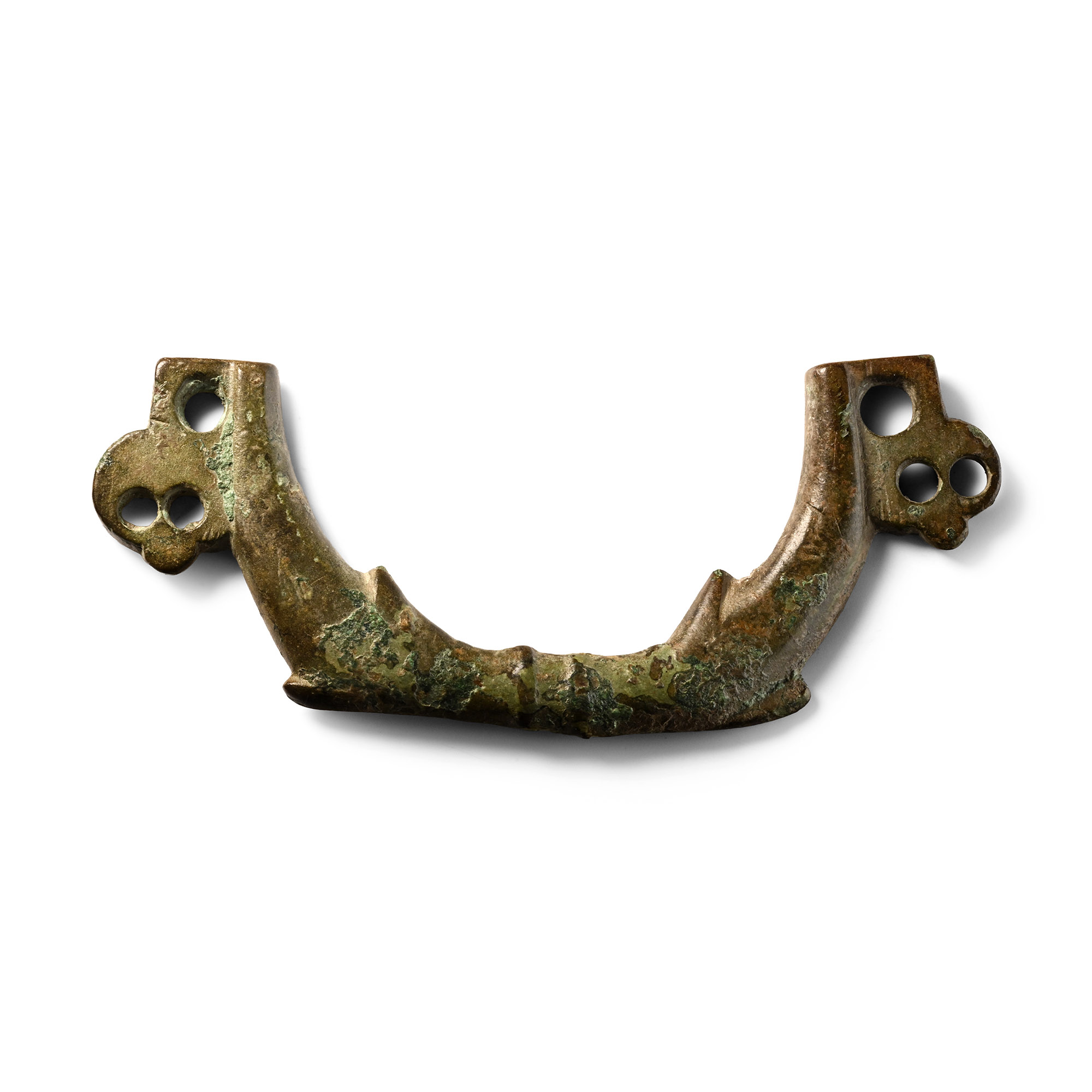
Large Roman Bronze Vessel Handle with Conjoined Dolphins
2ND CENTURY A.D.
4 3/8 in. (55 grams, 11.3 cm).
Comprising a crescentic band with ribbed detailing of two opposed dolphins, each with a pierced P-shaped lug to the lower end; [No Reserve]
ProvenanceFound Gloucestershire, UK.
LiteratureCf. Appels, A. & Laycock, S., Roman Buckles and Military Fittings, Witham, 2007, item AA.4.8, for type.
CONDITIONTimeLine Auctions follows a vetting process to ensure the authenticity and legality of all items, reinforcing our commitment to integrity and responsible trading. Each antiquity, antique, and coin lot undergoes thorough examination by a vetting committee of at least ten external specialists, professional trade association members, scientists, and archaeologists: Our Vetting Process
AUCTIONS:
TimeLine is a leading auction house specialising in antiquities, ancient art, collectables, natural history, coins, medals, and books. Our auctions offer museums, collectors, historians, and enthusiasts the opportunity to acquire unique and historically significant pieces.
LOT 0764
Large Roman Bronze Vessel Handle with Conjoined Dolphins
Sold for (Inc. bp): £27
-
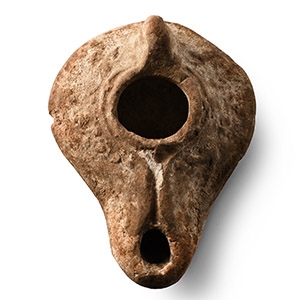
Late Roman Terracotta Oil Lamp
3rd-5th century A.D.Sold for (Inc. bp): £33
Rounded body with large filler hole and lug handle behind; broad shoulder, the rim with a low-relief geometric decoration, elongated nozzle with a low-relief pillar motif; low basal ring. 50 grams, 81 mm
From a late private Dorset, UK, collector. Property of a West London, UK, gentleman. -
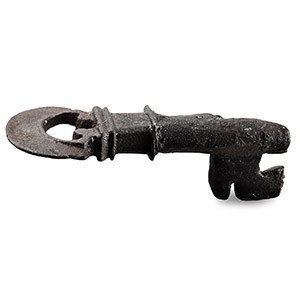
Roman Bronze Key
1st-4th century A.D.Sold for (Inc. bp): £156
With tubular shank and rectangular-section neck, crescentic bow; repaired. 37 grams, 73 mm
From the collection of a Buckinghamshire, UK, collector established from the earlier 1960s. -
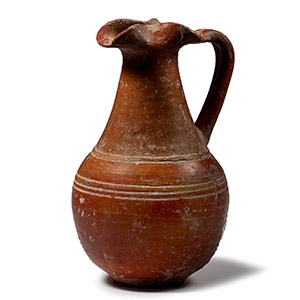
Phoenician Terracotta Jug with Handle
Circa 8th century B.C.Estimate: £600 - 700 (‡+bp*)
Opening Bid: £300
Globular body decorated with circumferential banding, low foot, conical neck with pinched spout, strap handle to the rear. 395 grams, 18.5 cm
Acquired in the mid 1980s-1990s. Private collection, Switzerland, thence by descent. Private collection, since the late 1990s.
