
Loading, please wait...
LOT 0911
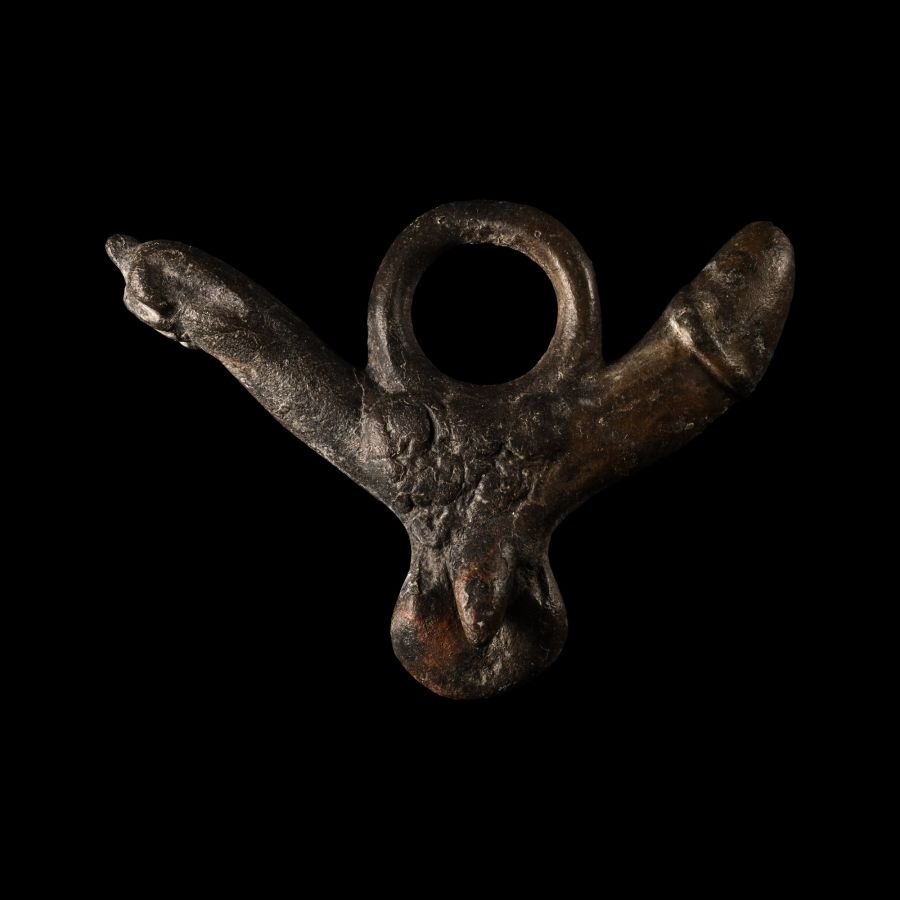
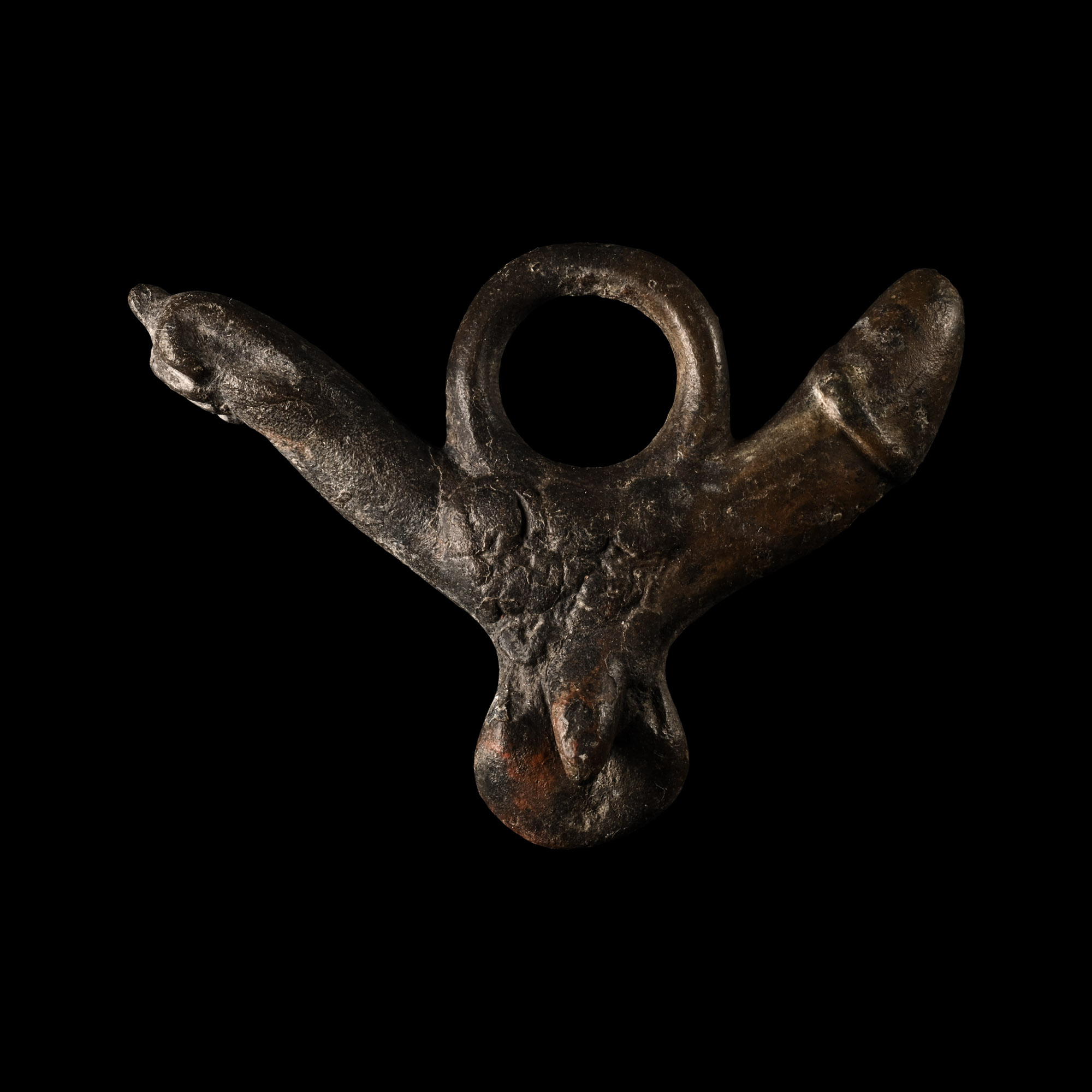
Large Roman Bronze Triple Phallic Pendant
1ST-2ND CENTURY A.D.
2 7/8 in. (55 grams, 73 mm).
Comprising male genitals flanked by an erect phallus and a hand in the fica gesture. [No Reserve]
ProvenanceFrom a collection acquired on the UK art market from various auction houses and collections mostly before 2000.
From an important Cambridgeshire estate; thence by descent.
Cf. Rolland, H., Bronzes Antiques de Haute Provence, Paris, 1965, item 430.
CONDITIONTimeLine Auctions follows a vetting process to ensure the authenticity and legality of all items, reinforcing our commitment to integrity and responsible trading. Each antiquity, antique, and coin lot undergoes thorough examination by a vetting committee of at least ten external specialists, professional trade association members, scientists, and archaeologists: Our Vetting Process
AUCTIONS:
TimeLine is a leading auction house specialising in antiquities, ancient art, collectables, natural history, coins, medals, and books. Our auctions offer museums, collectors, historians, and enthusiasts the opportunity to acquire unique and historically significant pieces.
-
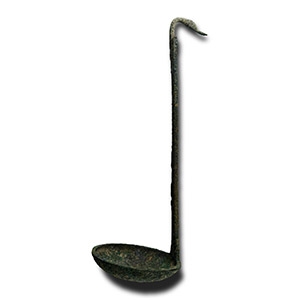
Roman Bronze Duck-Headed Ladle
1st-3rd century A.D.Sold for (Inc. bp): £520
With broad bowl and inturned rim, D-section handle, with one remaining hooked duck-head finial. 208 grams, 26.5 cm
Private collection of Mr S.A., Switzerland, 1990s, thence by descent. -
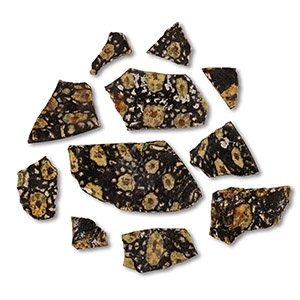
Roman Mosaic Glass Fragment Collection
1st century B.C.-1st century A.D.Sold for (Inc. bp): £111
Comprising fragments of black glass decorated with green and yellow rosettes surrounded by white pellets, from the same plate. 40.7 grams total, 16-65 mm
From the collection of Mr N.A., Brussels, 1970s. -
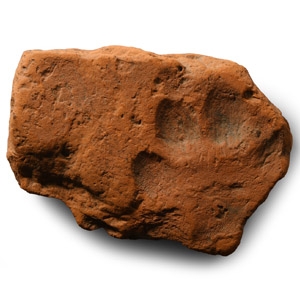
Roman Terracotta Roof Tile with Dog's Paw Print
1st-4th century A.D.Sold for (Inc. bp): £286
Fragment of flat-section tegula roof tile, with impressed paw-print from a dog walking on the tile while still wet. 137 grams, 10 cm
From the collection of the famous author, writer and speaker, Gordon Bailey, Essex, UK; formed since 1968.
