
Loading, please wait...
LOT 0580
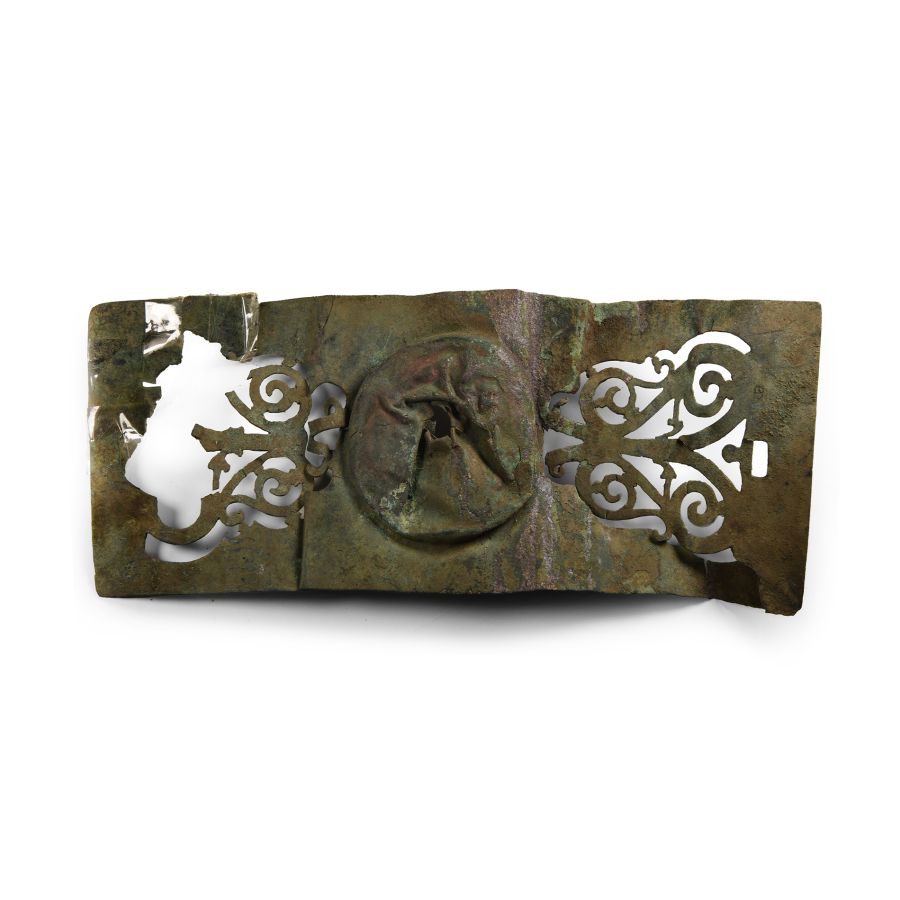
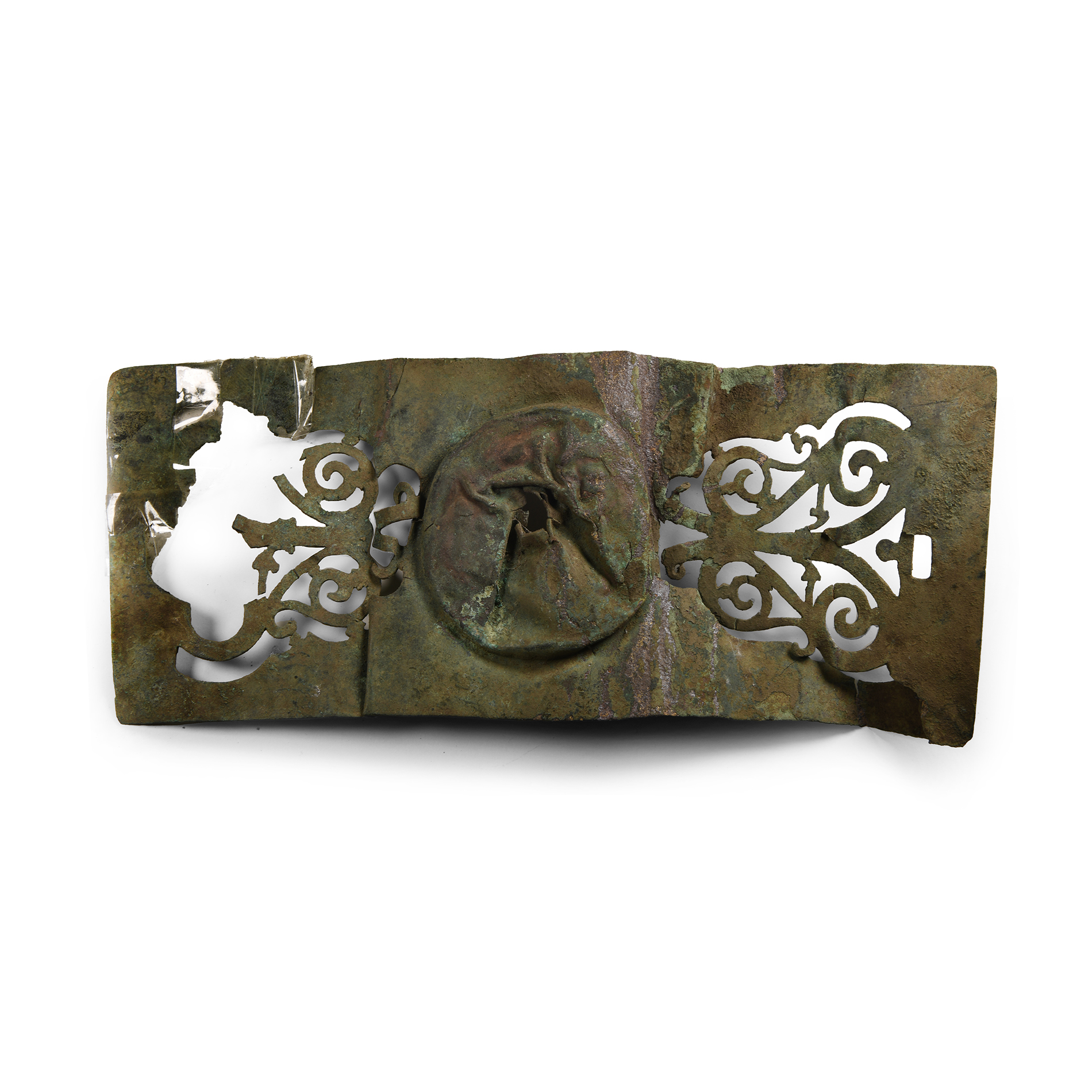
Large Roman Bronze Military Mount
2ND-3RD CENTURY A.D.
5 2/4 in. (69 grams, 14 cm wide).
Composed of a central domed boss and openwork volutes to the sides; for a sword belt or a chariot, one corner separated.
ProvenanceAcquired 1960s-1990s.
Late Alison Barker collection, a retired London barrister.
This lot is accompanied by an illustrated lot declaration signed by the Head of the Antiquities Department, Dr Raffaele D'Amato.
Cf. for baldric elements Miks, C., Studien zur Romischen Schwertbewaffnung in der Kaiserzeit, I-II Banden, Rahden, 2007, I, fig.62 (openwork plate with heart-shaped terminal); Boube-Piccot, C., Les bronzes antiques de Maroc, III, Les chars et l’attelage, Rabat, 1980, nos.202 (Rabat), 631 (Tanger), for chariot elements.
FootnotesIn the 3rd century A.D. the sword (spatha) was mainly carried suspended from a broad baldric usually on the soldier’s left side. This sword’s shoulder belt, visible on many monuments related to the 3rd century, was composed from a leather strap, reinforced on the rims. The four specimens of Vimose provided valuable information about the shape of the baldric: one end was broad and finished in a straight edge, the other tapered to a narrow strip. They were decorated with silver disks (phalerae) of circa 6.4 cm of diameter, with rings on the reverse for fastening.
These phalerae were of different shapes, styles and decorations: we can observe a range from simple copper-alloy discs to bronze openwork pieces fitted with a plate or an openwork disc showing elaborate figures. They were usually attached at about 29-30 cm from the wider and squared top of the baldric. One of the finial parts of the baldric was in fact very wide and ended with a straight edge, upon which could be placed a hinged rectangular openwork terminal plate (like our specimen), attached to a belt terminal pendant. The lack of holes for the attachment rivets in our specimen could also support the thesis that the piece is not for a baldric, but a mount for cart or chariot as some examples in a similar style found in Roman North Africa.
TimeLine Auctions follows a vetting process to ensure the authenticity and legality of all items, reinforcing our commitment to integrity and responsible trading. Each antiquity, antique, and coin lot undergoes thorough examination by a vetting committee of at least ten external specialists, professional trade association members, scientists, and archaeologists: Our Vetting Process
AUCTIONS:
TimeLine is a leading auction house specialising in antiquities, ancient art, collectables, natural history, coins, medals, and books. Our auctions offer museums, collectors, historians, and enthusiasts the opportunity to acquire unique and historically significant pieces.
-
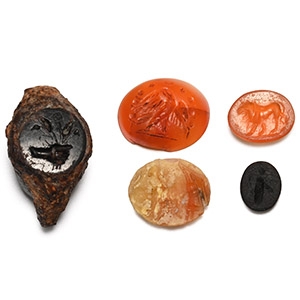
Roman Gemstone Collection
2nd-3rd century A.D.Estimate: £500 - 700 (+bp*)
Opening Bid: £250
Including advancing lion, perching bird and other types; each supplied with a museum-quality impression. 3.82 grams total, 7-19 mm
From the collection of a gentleman, acquired on the London art market in the 1990s. This lot is accompanied by an illustrated lot declaration signed by the Head of the Antiquities Department, Dr Raffaele D'Amato. -
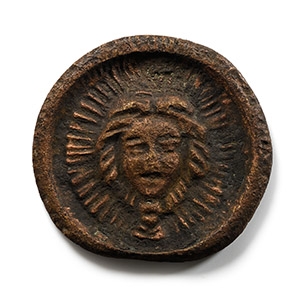
Roman Bronze Phalera of Medusa
3rd-4th century A.D.Estimate: £250 - 350 (+bp*)
Opening Bid: £125
Discoid in plan with raised lip to the rim, central gorgoneion motif. 33 grams, 47 mm
From the collection of a gentleman, acquired on the London art market in the 1990s. This lot is accompanied by an illustrated lot declaration signed by the Head of the Antiquities Department, Dr Raffaele D'Amato. -
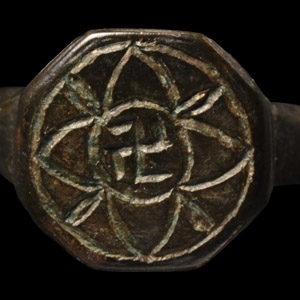
Late Roman Bronze Ring with Fylfot
4th-5th century A.D.Sold for (Inc. bp): £91
With a D-section hoop and octagonal bezel with a fylfot within a quatrefoil. 4.32 grams, 22.84 mm overall, 17.44 mm internal diameter (approximate size British O, USA 7, Europe 14.98, Japan 14)
Ex German art market, 2000s. Acquired from an EU collector living in London. From the collection of a Surrey, UK, gentleman. This lot is accompanied by an illustrated lot declaration signed by the Head of the Antiquities Department, Dr Raffaele D'Amato.
