
Loading, please wait...
LOT 0895
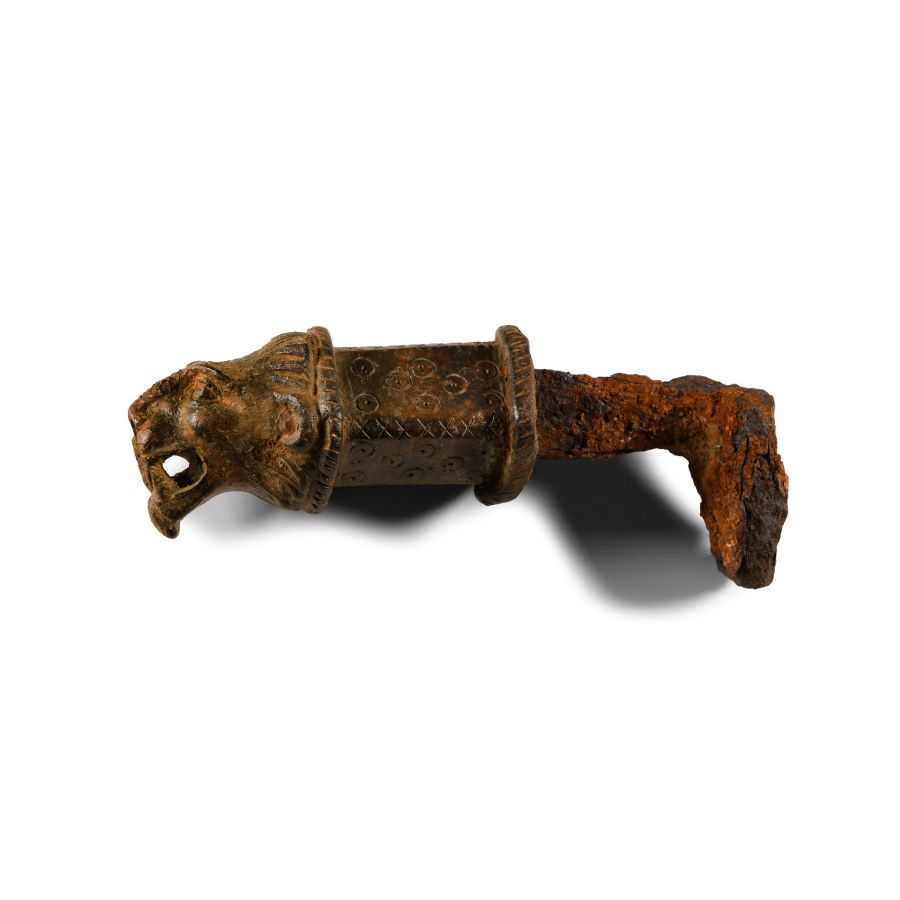
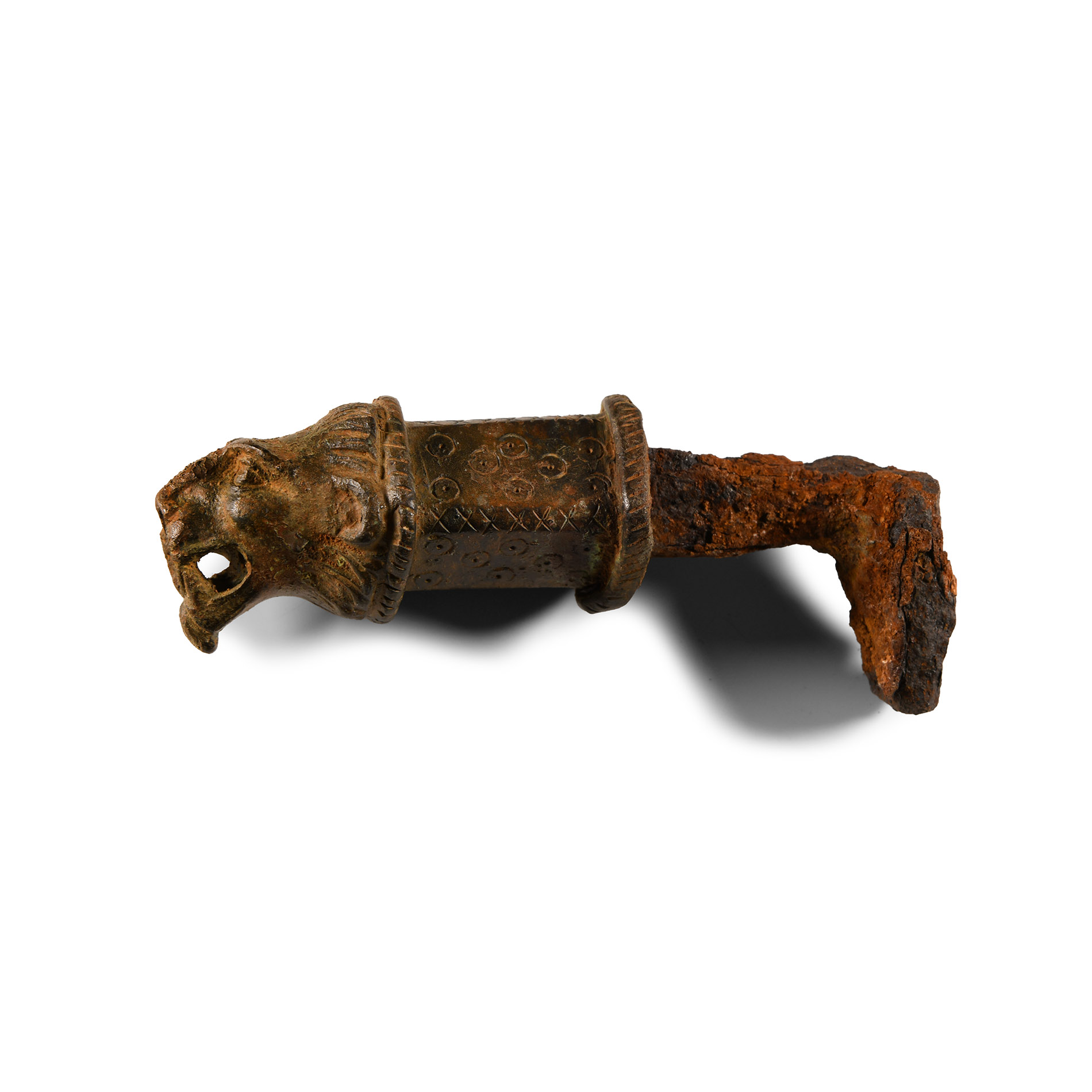
Large Roman Bronze Lion-Headed Iron Key
1ST-4TH CENTURY A.D.
3 3/8 in. (125 grams, 86 mm).
Iron shank with perpendicular wards, square-section bronze handle with incised geometric ornament, lion-head finial with open mouth to accept a suspension ring.
ProvenanceEx German art market, 2000s.
Acquired from an EU collector living in London.
From the collection of Surrey, UK, gentleman.
TimeLine Auctions follows a vetting process to ensure the authenticity and legality of all items, reinforcing our commitment to integrity and responsible trading. Each antiquity, antique, and coin lot undergoes thorough examination by a vetting committee of at least ten external specialists, professional trade association members, scientists, and archaeologists: Our Vetting Process
AUCTIONS:
TimeLine is a leading auction house specialising in antiquities, ancient art, collectables, natural history, coins, medals, and books. Our auctions offer museums, collectors, historians, and enthusiasts the opportunity to acquire unique and historically significant pieces.
-
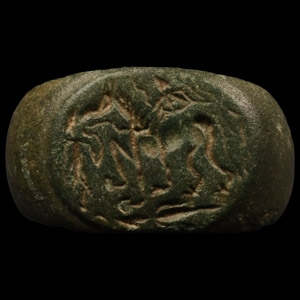
Roman Bronze Signet Ring with Horse
1st-3rd century A.D.Sold for (Inc. bp): £117
Broad plaque with incuse image of a horse with walking attendant, objects in the field. 7.30 grams, 24.71 mm overall, 19.11 mm internal diameter (approximate size British O 1/2, USA 7 1/4, Europe 15.61, Japan 15)
Ex German art market, 2000s. Acquired from an EU collector living in London. From the collection of Surrey, UK, gentleman. -
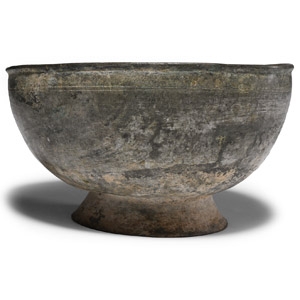
Late Roman Tinned Bronze Bowl
4th-6th century A.D.Sold for (Inc. bp): £72
Hemispherical in profile with applied flared base, thickened rim and two parallel incised lines below. 313 grams, 16 cm
From an old UK collection. Acquired from Red House Antiques, York, 2010. Ian Wilkinson collection, Nottinghamshire, UK.
These bronze vessels were typical of the Late Roman Empire. They were direct forerunners of the Frankish types. They often had Christian inscriptions and have been found with silver spoons for liturgical use. -
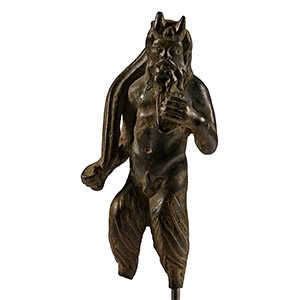
Roman Bronze Figure of Pan
1st-early 2nd century A.D.Sold for (Inc. bp): £4,290
The god standing nude supporting a cornucopia on his right shoulder and a syrinx in his left hand; ithyphallic with furry legs and short tail; mounted on a custom-made stand. 323 grams total, 16.5 cm including stand
Acquired from Sasson Ancient Art, Jerusalem, Israel, in 2008. From the Keane private collection, Kent, UK. Accompanied by an original signed certificate of authenticity, export approval, and invoice (US $9,500.00), from Sasson Ancient Art. Accompanied by a copy of the Israel Antiquities Authority export licence. This lot has been checked against the Interpol Database of stolen works of art and is accompanied by a search certificate number no.12100-216768
