
Loading, please wait...


LOT 0850
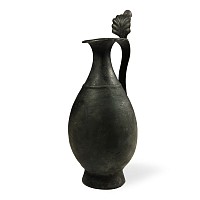
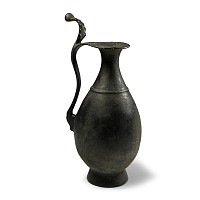
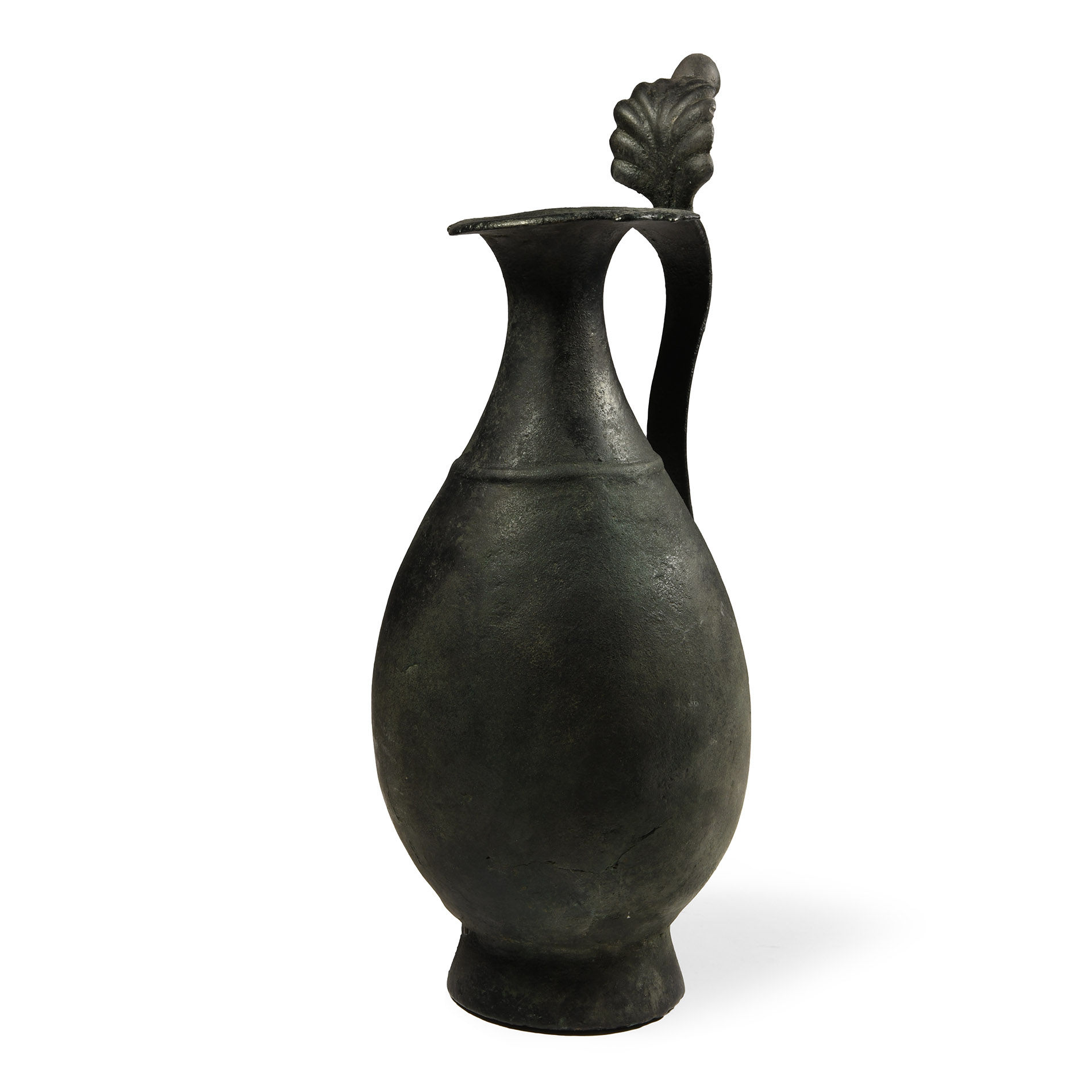
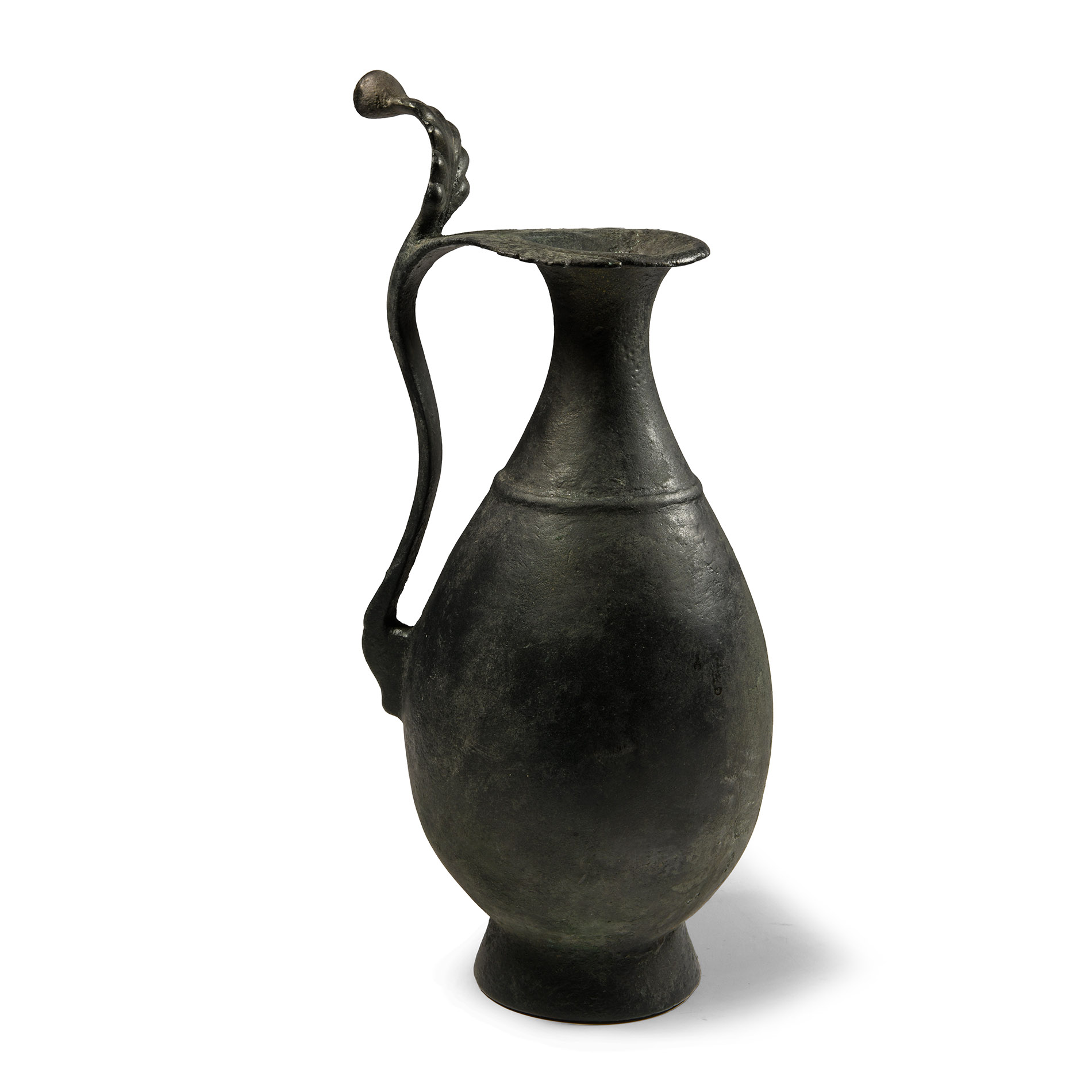
Large Roman Bronze Jug with Handle
3RD CENTURY A.D.
14 in. (1.69 kg, 35.5 cm).
Piriform in profile with a flared foot and raised collar at the shoulder, everted rim to the mouth with crescent plate to the rear ending in profile avian heads; curved acanthus-leaf with bulb finial forming the thumb-pad, with a swept curve to the strap handle ending in a deer's head at the junction with the body; heavily restored.
ProvenanceUK private collection before 2000.
Acquired on the UK art market.
Property of a London gentleman.
Cf. Rolland, H., Bronzes Antiques de Haute Provence, Paris, 1965, item 291, for type.
CONDITIONTimeLine Auctions follows a vetting process to ensure the authenticity and legality of all items, reinforcing our commitment to integrity and responsible trading. Each antiquity, antique, and coin lot undergoes thorough examination by a vetting committee of at least ten external specialists, professional trade association members, scientists, and archaeologists: Our Vetting Process
AUCTIONS:
TimeLine is a leading auction house specialising in antiquities, ancient art, collectables, natural history, coins, medals, and books. Our auctions offer museums, collectors, historians, and enthusiasts the opportunity to acquire unique and historically significant pieces.
-
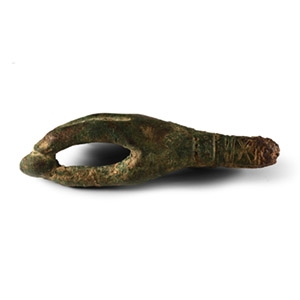
Roman Bronze Key Handle in the Shape of a Hand Holding Fruit
1st-3rd century A.D.Estimate: £700 - 900 (+bp*)
Opening Bid: £350
Formed as a lady's right hand with thumb and forefinger extended to hold a grape; iron shank to the wrist. 157 grams, 10.1 cm
Ex Cambridgeshire, UK, collection, 1990s. -

Romano-Celtic Bronze Statuette of a Warrior Wearing Torc
Circa 1st-2nd century A.D.Sold for (Inc. bp): £78
Modelled in the round, standing with right leg bent, right arm raised and left extended before the body; with thick tousled hair, exaggerated torc to the neck, jacket with incised vertical lines, tight-fitting trousers and ankle-boots. 53 grams total, 67 mm
From a collection acquired on the UK art market from various auction houses and collections mostly before 2000. From an important Cambridgeshire estate; thence by descent.
The pose of the figure suggests that he is in the action of brandishing a weapon, or possibly holding the reins of a team of horses pulling a chariot. Caesar mentions the expert use of the war-chariot by the Britons (Conquest of Gaul, IV.33). The padded garment suggests a Celtic auxiliary in the Roman army. -

Roman Lead Seal Group
2nd-3rd century A.D.Sold for (Inc. bp): £117
Comprising: a seal with an amphora, loop to the reverse; a discoid seal inscribed with 'TANTMS'; a rectangular seal with standing figure surround by an inscription. 56 grams total, 20-29 mm
From the collection of a gentleman, acquired on the London art market in the 1990s.
