
Loading, please wait...
LOT 0647
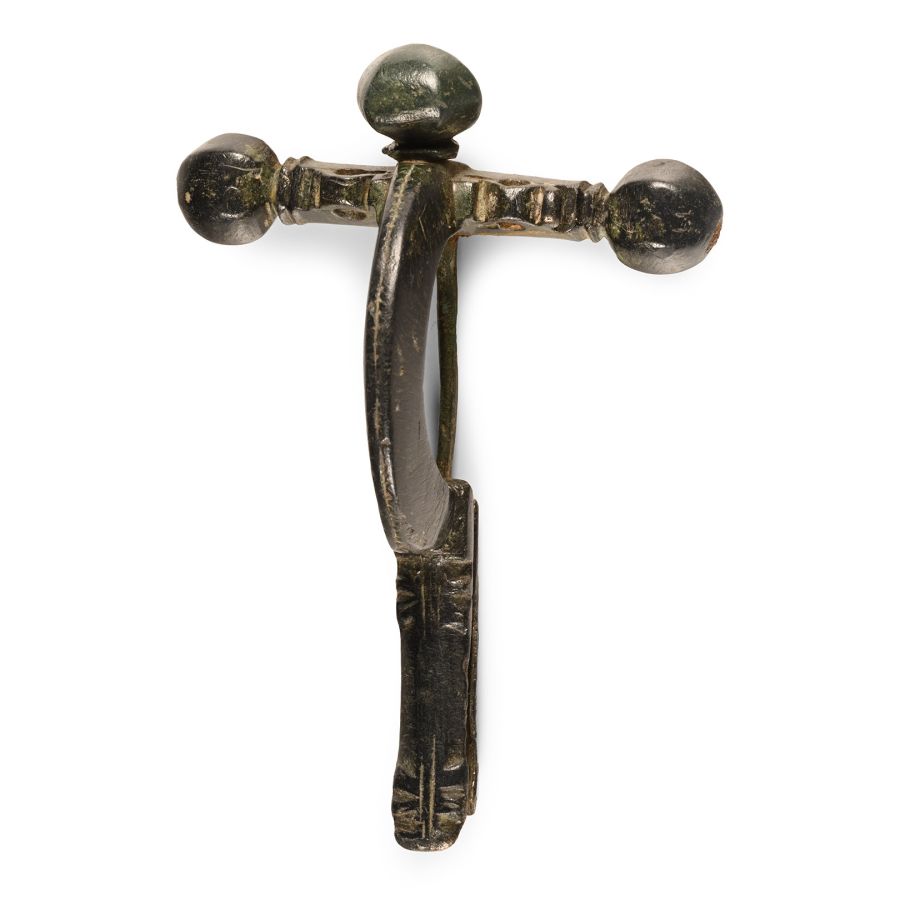
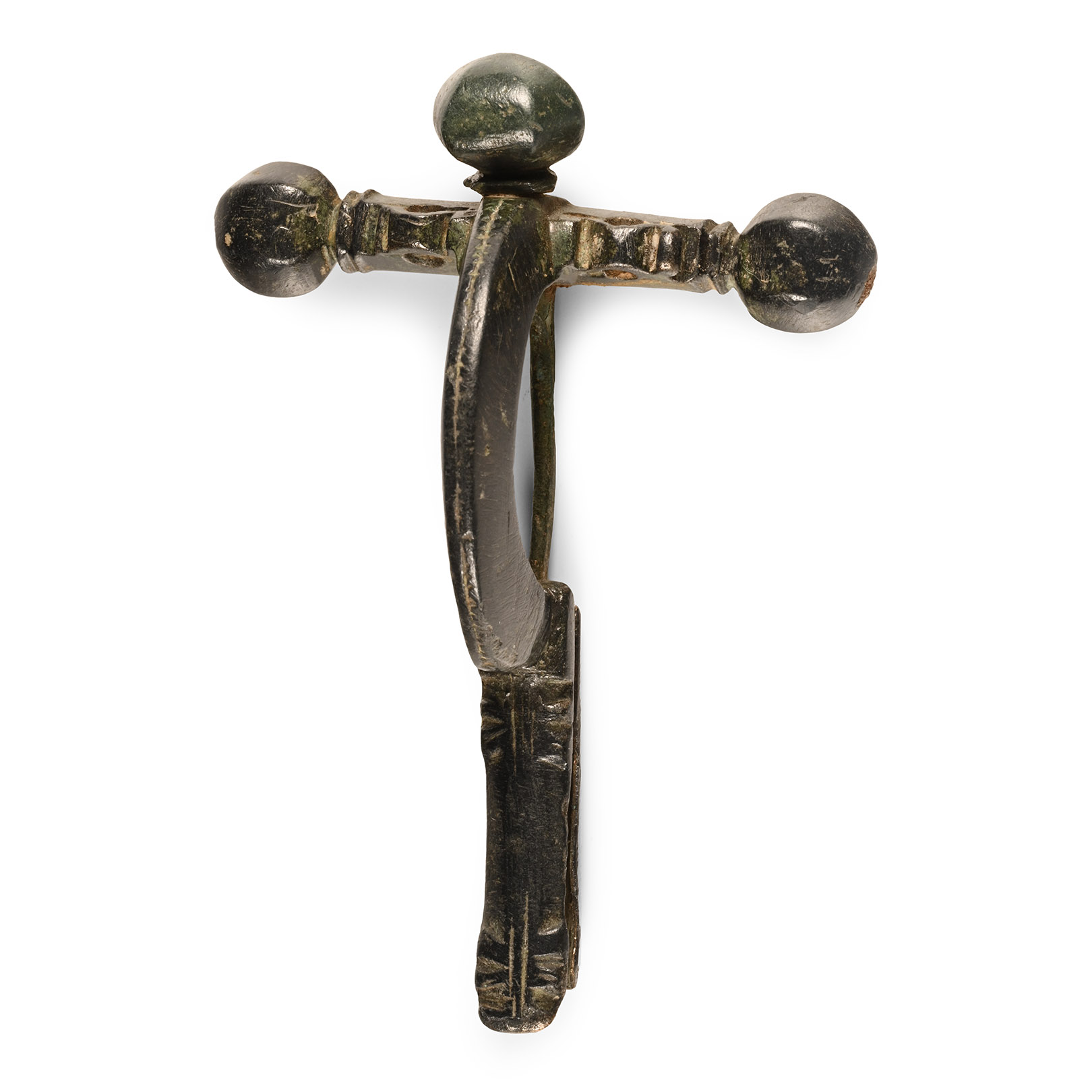
Large Roman Bronze Crossbow Brooch
4TH CENTURY A.D.
3 1/4 in. (62.4 grams, 84 mm).
With onion-knop finials, gusset to the bow, chamfered sections to the foot, hinged pin to the reverse. [No Reserve]
ProvenanceEx German art market, 2000s.
Acquired from an EU collector living in London.
From the collection of Surrey, UK, gentleman.
Cf. Beck, H. et al., Fibel und Fibeltracht, Berlin, 2000, fig.119(7), for type.
CONDITIONTimeLine Auctions follows a vetting process to ensure the authenticity and legality of all items, reinforcing our commitment to integrity and responsible trading. Each antiquity, antique, and coin lot undergoes thorough examination by a vetting committee of at least ten external specialists, professional trade association members, scientists, and archaeologists: Our Vetting Process
AUCTIONS:
TimeLine is a leading auction house specialising in antiquities, ancient art, collectables, natural history, coins, medals, and books. Our auctions offer museums, collectors, historians, and enthusiasts the opportunity to acquire unique and historically significant pieces.
-
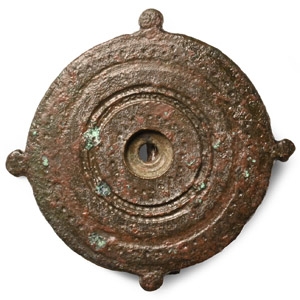
Roman Bronze Discoid Plate Brooch
2nd century A.D.Sold for (Inc. bp): £72
With concentric rings and punched detailing, radiating knops, pin, pin-lugs and catchplate to the reverse. 6.97 grams, 30 mm
Ex property of a London collector, acquired before 1980. Property of a Kent lady collector. -
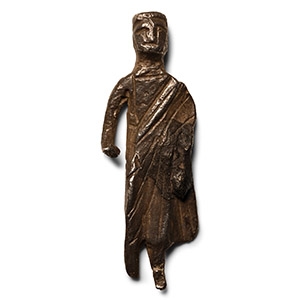
Roman Silver Standing Figure
3rd-4th century A.D.Sold for (Inc. bp): £117
Modelled with toga to the left shoulder, right arm bent, D-section head. 7.4 grams, 37 mm
Acquired 1960s-1990s. From the late Alison Barker collection, a retired London barrister. -
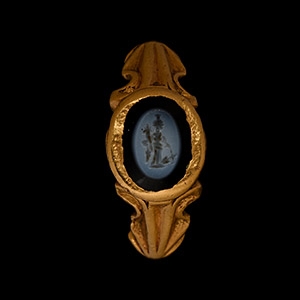
Large Roman Gold Ring with Tyche Gemstone
Mid-late 3rd century A.D. and laterEstimate: £7,000 - 9,000 (+bp*)
Opening Bid: £3,889
A substantial D-shaped ring with floral decoration, set with a later nicolo intaglio engraved with the figure of Tyche, holding a cornucopia and rudder, wearing a kalathos on her head; supplied with a museum-quality impression. 27.45 grams, 31.67 mm overall, 22.21 x 16.71 mm internal diameter (approximate size British O, USA 7, Europe 14.98, Japan 14)
Marcus Hollersberger, Solothurn, 1982. Ex Galerie Schönbrunn, Vienna, 1987. with Christie's, London, 7 December 2022, no.80. Accompanied by a copy of the relevant Christie's catalogue listing. This lot has been checked against the Interpol Database of stolen works of art and is accompanied by a search certificate number no.12105-217766.
