
Loading, please wait...
![Large Pyrite Crystal 'Paper Weight' Group [3]](https://timelineauctions.com/zoom_images/zoomthumb/2/2/228019_900x900.jpg "Large Pyrite Crystal 'Paper Weight' Group [3]")
![Large Pyrite Crystal 'Paper Weight' Group [3]](https://timelineauctions.com/zoom_images/zoommap/2/2/228019_200x200.jpg "Large Pyrite Crystal 'Paper Weight' Group [3]")
![Large Pyrite Crystal 'Paper Weight' Group [3]](https://timelineauctions.com/upload/images/items/228019.jpg "Large Pyrite Crystal 'Paper Weight' Group [3]")
LOT 2546
Large Pyrite Crystal 'Paper Weight' Group [3]
4 - 4 1/8 in. (1.66 kg total, 10-10.5 cm).
Each displaying intergrown crystals displaying typical striations. [3, No Reserve]
ProvenanceFrom Peru.
Ex Mineral Imports, London, UK.
Gregory, Bottley & Lloyd (Gregory's), Harwich, UK.
TimeLine Auctions follows a vetting process to ensure the authenticity and legality of all items, reinforcing our commitment to integrity and responsible trading. Each antiquity, antique, and coin lot undergoes thorough examination by a vetting committee of at least ten external specialists, professional trade association members, scientists, and archaeologists: Our Vetting Process
AUCTIONS:
TimeLine is a leading auction house specialising in antiquities, ancient art, collectables, natural history, coins, medals, and books. Our auctions offer museums, collectors, historians, and enthusiasts the opportunity to acquire unique and historically significant pieces.
-
![Polished Purple Amethyst Crystal Section Group [20]](https://timelineauctions.com/upload/images/items/small/228025-s.jpg)
Polished Purple Amethyst Crystal Section Group [20]
Sold for (Inc. bp): £7
Comprising irregular pieces of polished amethyst. 297 grams total, 15-62 mm
From Brazil. Ex Mineral Imports, London, UK. Gregory, Bottley & Lloyd (Gregory's), Harwich, UK. -
![Cut and Polished Agate Crystal Geode Half Group [10]](https://timelineauctions.com/upload/images/items/small/228161-s.jpg)
Cut and Polished Agate Crystal Geode Half Group [10]
Sold for (Inc. bp): £7
Majority with an exposed cavity showing various interesting crystal formations. 760 grams total, 45-61 mm
From Brazil. Ex Mineral Imports, London, UK. Gregory, Bottley & Lloyd (Gregory's), Harwich, UK. -
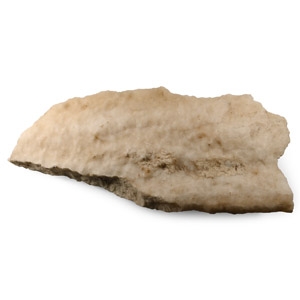
Calcite Stalagmite Fragment
Sold for (Inc. bp): £39
A large section of white stalagmite displaying natural rippling. 7.28 kg, 47 cm
Ex West Country, UK, collection, 1990s.
