
Loading, please wait...
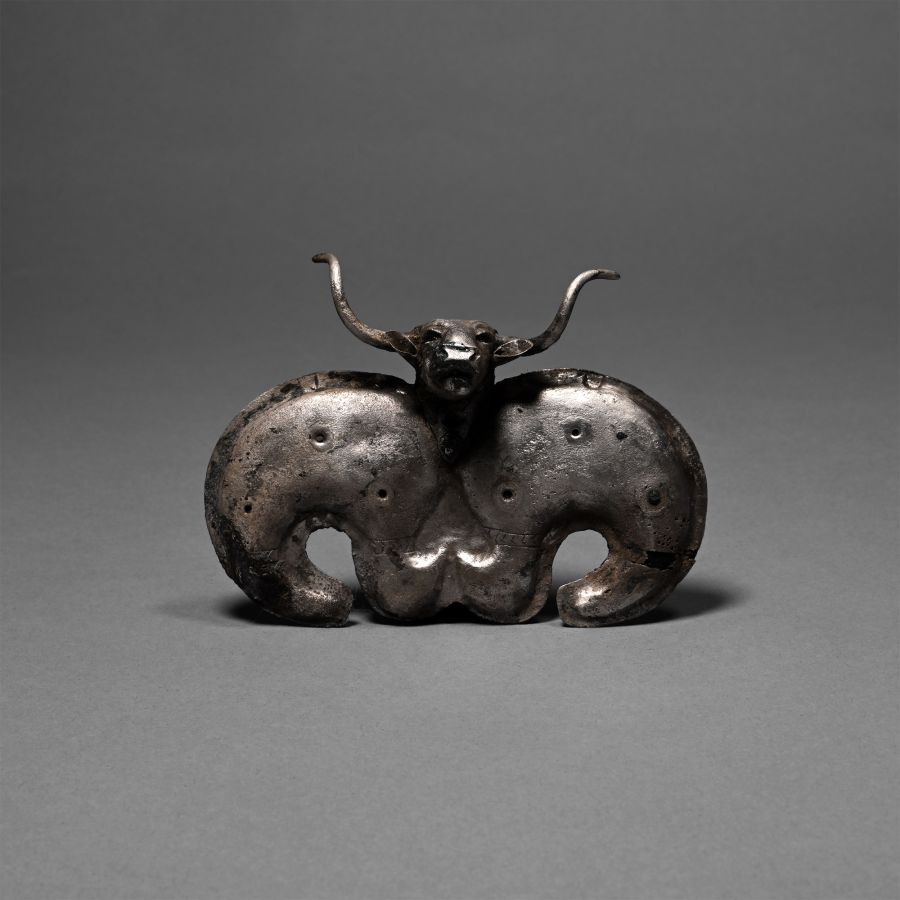
_900x900.jpg "Large Proto-Elamite Silver Pendant with Bull's Head")
_200x200.jpg "Large Proto-Elamite Silver Pendant with Bull's Head")
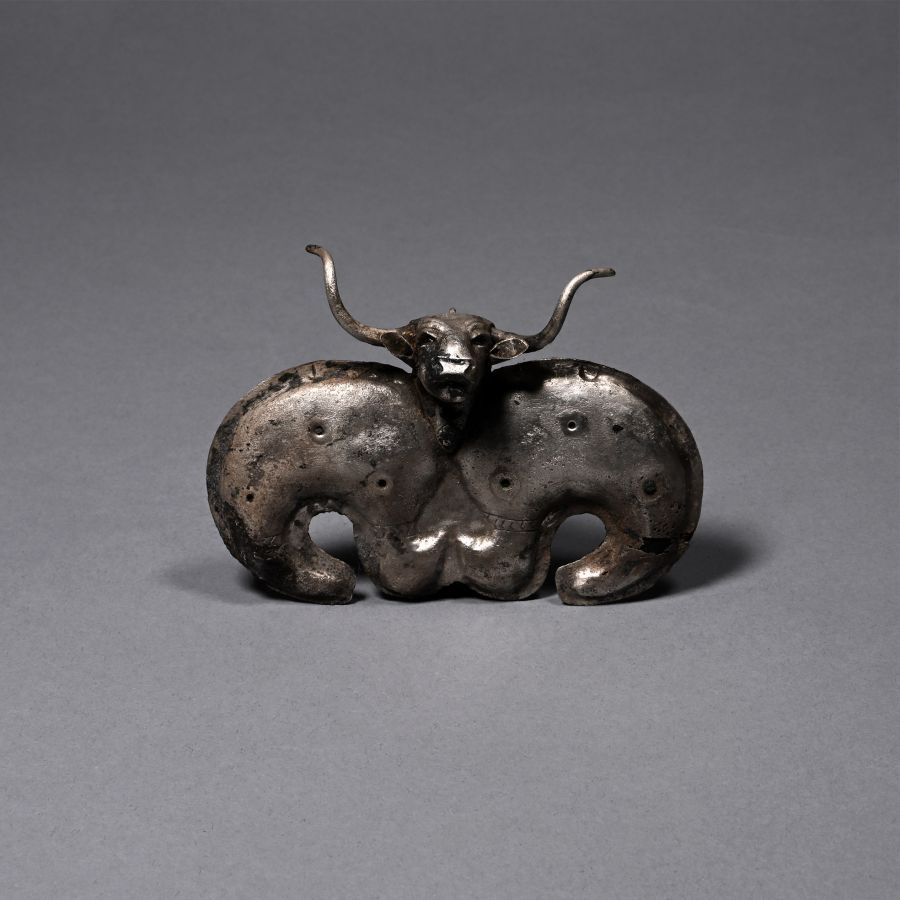
.jpg "Large Proto-Elamite Silver Pendant with Bull's Head")
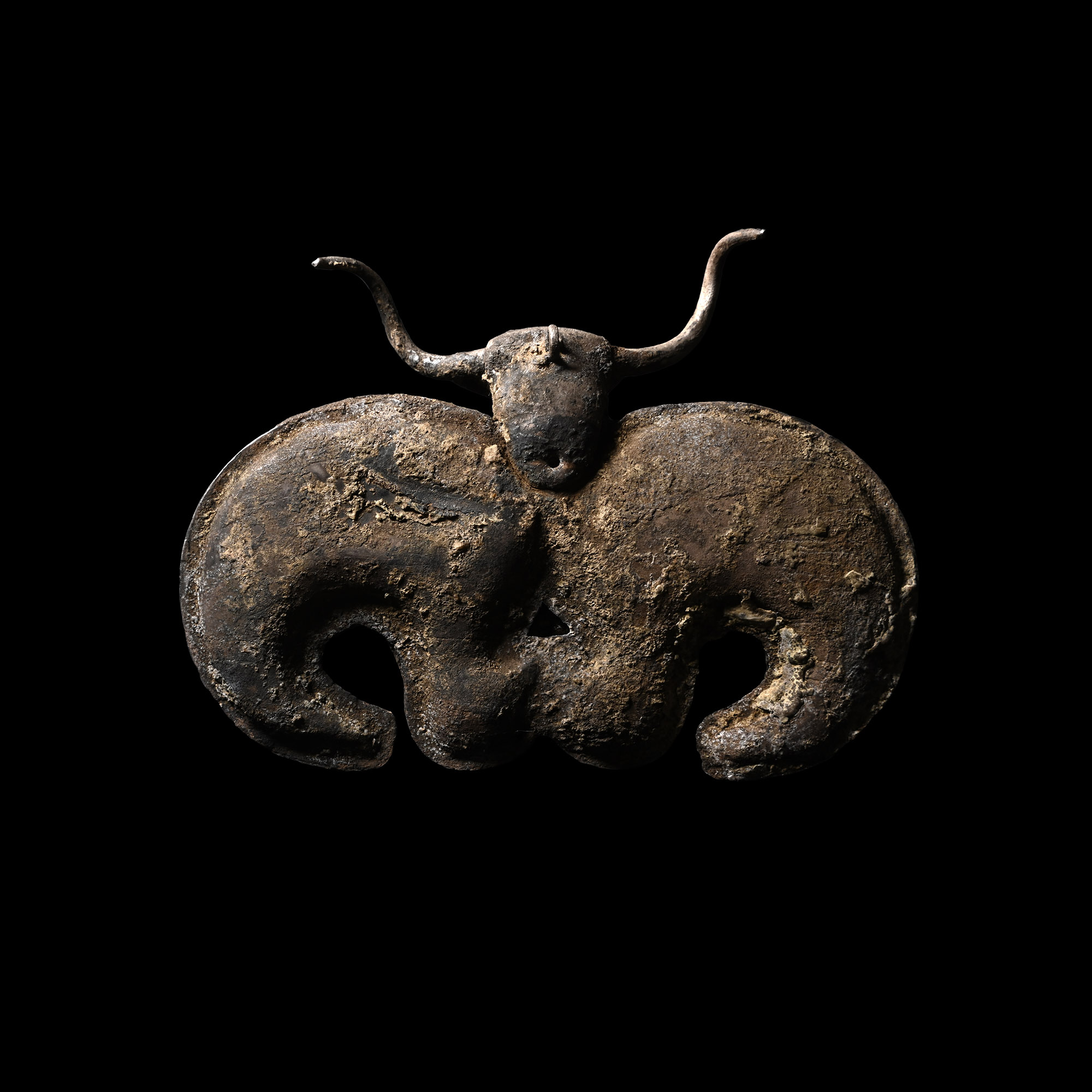
LOT 0282
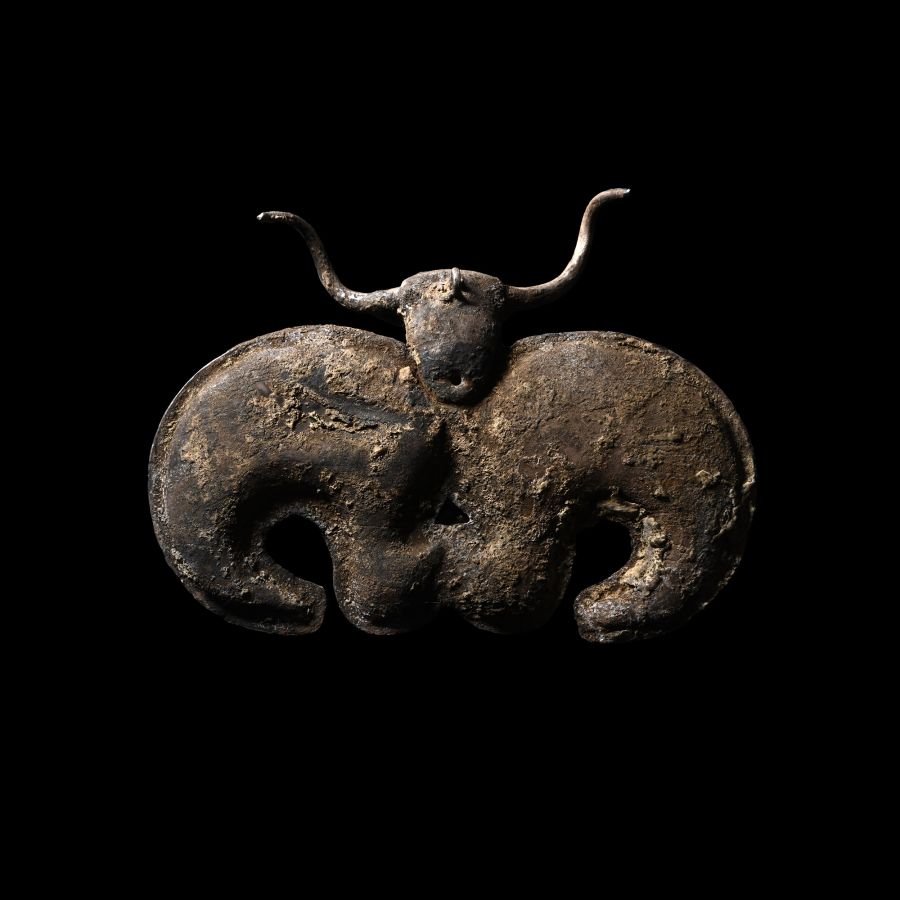
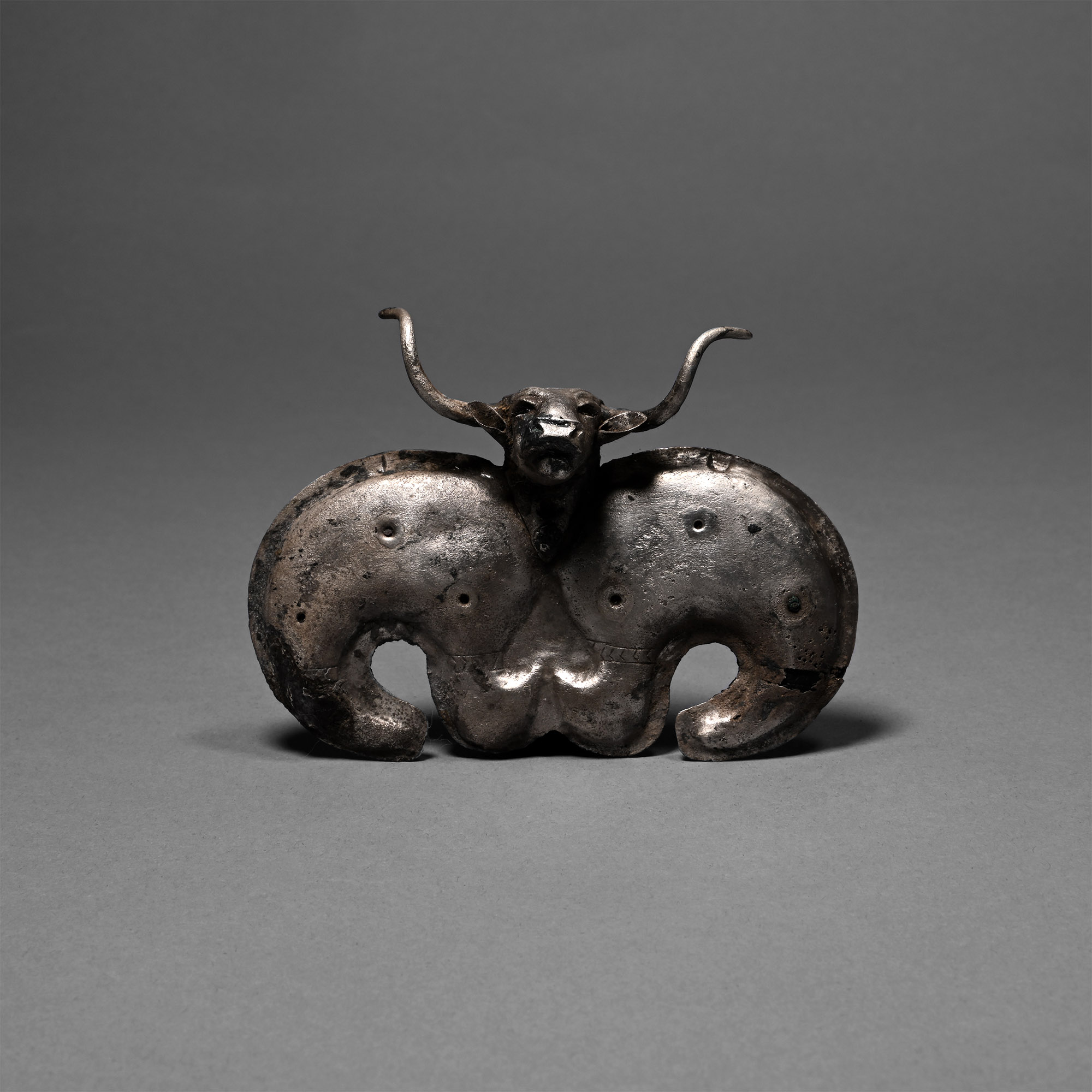
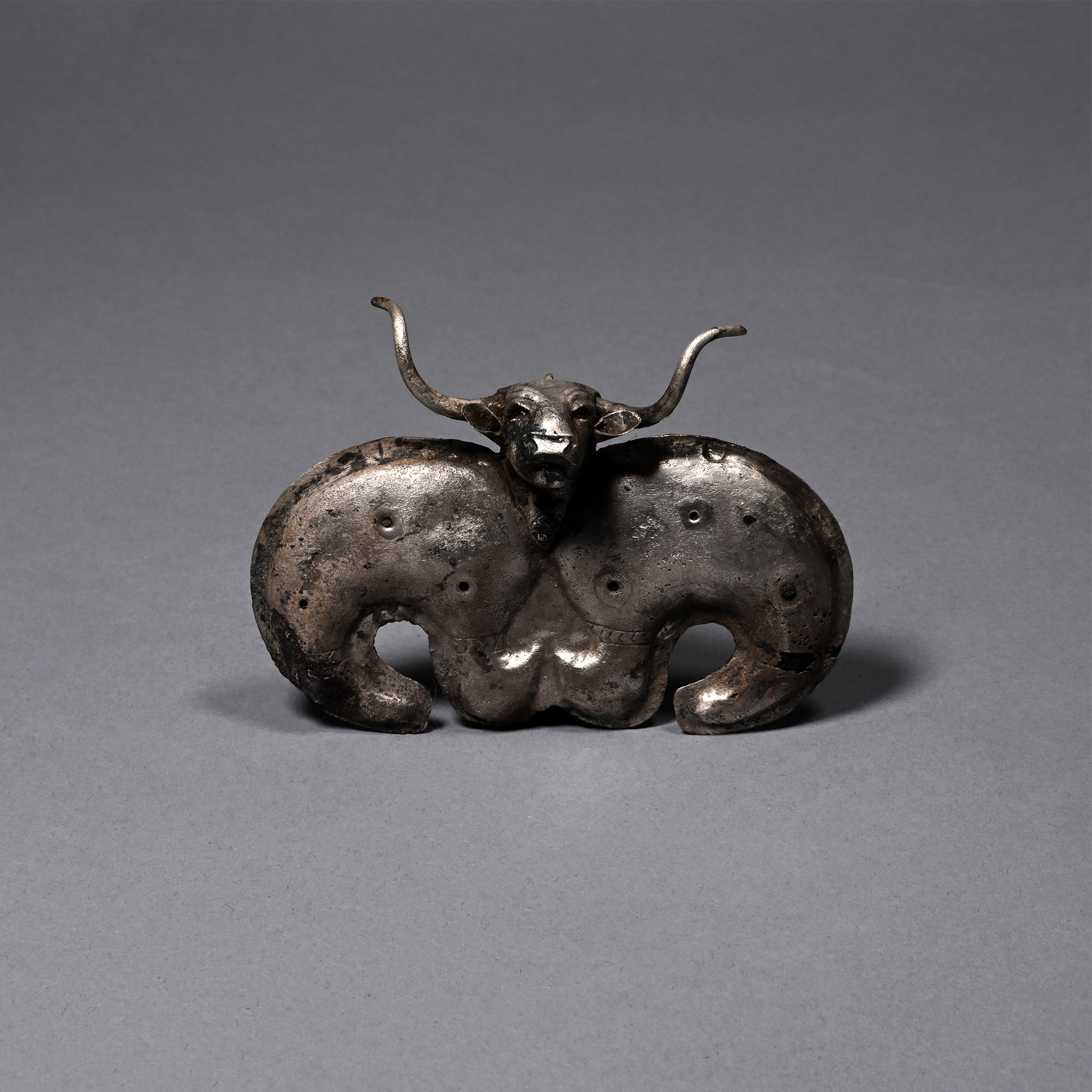
Large Proto-Elamite Silver Pendant with Bull's Head
CIRCA 3100-2900 B.C.
4 1/4 in. (67.7 grams, 10.7 cm).
Comprising: a hollow sheet-silver panel formed as two comma-shaped stylised bovine bodies, each with transverse hatched bands at the ankles and perforations for attachment of studs; at centre top, a bull's head modelled in the round with long curved horns; loop to the reverse.
Provenancewith Mahboubian Gallery, New York, acquired prior to 1969.
London, UK, collection.
Accompanied by an academic report by Dr Raffaele D'Amato.
This lot has been checked against the Interpol Database of stolen works of art and is accompanied by a search certificate number no.12710-235586.
This lot has been cleared against the Art Loss Register database, and is accompanied by an illustrated lot declaration signed by the Head of the Antiquities Department, Dr Raffaele D'Amato.
Cf. Maxwell-Hyslop, K.R., Western Asiatic Jewellery c.3000-612 BC, London, 1971, fig.36, for a similar use of comma-shaped elements to suggest a complex form.
CONDITIONTimeLine Auctions follows a vetting process to ensure the authenticity and legality of all items, reinforcing our commitment to integrity and responsible trading. Each antiquity, antique, and coin lot undergoes thorough examination by a vetting committee of at least ten external specialists, professional trade association members, scientists, and archaeologists: Our Vetting Process
AUCTIONS:
TimeLine is a leading auction house specialising in antiquities, ancient art, collectables, natural history, coins, medals, and books. Our auctions offer museums, collectors, historians, and enthusiasts the opportunity to acquire unique and historically significant pieces.
LOT 0282
Large Proto-Elamite Silver Pendant with Bull's Head
Estimate £25,000 - 35,000€29,000 - 40,600 (for guidance only)$33,750 - 47,250 (for guidance only)
-
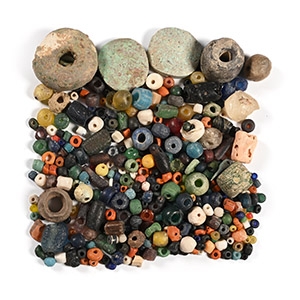
Western Asiatic Mixed Bead Group
1st millennium B.C. and laterSold for (Inc. bp): £20
Including tubular, tabular, annular and other beads in glass, shell, stone and ceramic. 56 grams total, 2-23 mm
Ex London, UK, collection, 1990s. This lot has been cleared against the Art Loss Register database, and is accompanied by an illustrated lot declaration signed by the Head of the Antiquities Department, Dr Raffaele D'Amato. -

Sasanian Carnelian Seal with Bird
5th-6th century A.D.Sold for (Inc. bp): £338
Plano-convex garnet seal with intaglio simurgh motif, portion of wire suspension loop. 2.21 grams, 12.85 mm
Acquired from Ancient and Islamic Art Ltd., February 1993. Thence by descent, private collection, since 1998. This lot has been cleared against the Art Loss Register database, and is accompanied by an illustrated lot declaration signed by the Head of the Antiquities Department, Dr Raffaele D'Amato. -
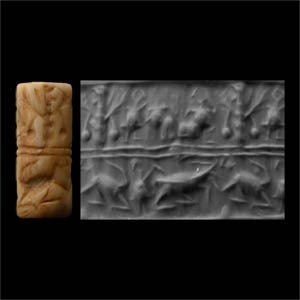
Sumerian Bone Cylinder Seal
2nd millennium B.C.Estimate: £300 - 400 (+bp*)
Opening Bid: £150
With frieze in two registers depicting running animals, facing figure with arms raised and other items; supplied with a museum-quality impression. 4.42 grams, 24 mm
Ex 'S' collection, London, UK. Examined by Professor Wilfrid George Lambert FBA (1926-2011), historian, archaeologist, and specialist in Assyriology and Near Eastern archaeology, in the late 1980s and early 1990s. This lot has been cleared against the Art Loss Register database, and is accompanied by an illustrated lot declaration signed by the Head of the Antiquities Department, Dr Raffaele D'Amato.
