
Loading, please wait...
LOT 0300
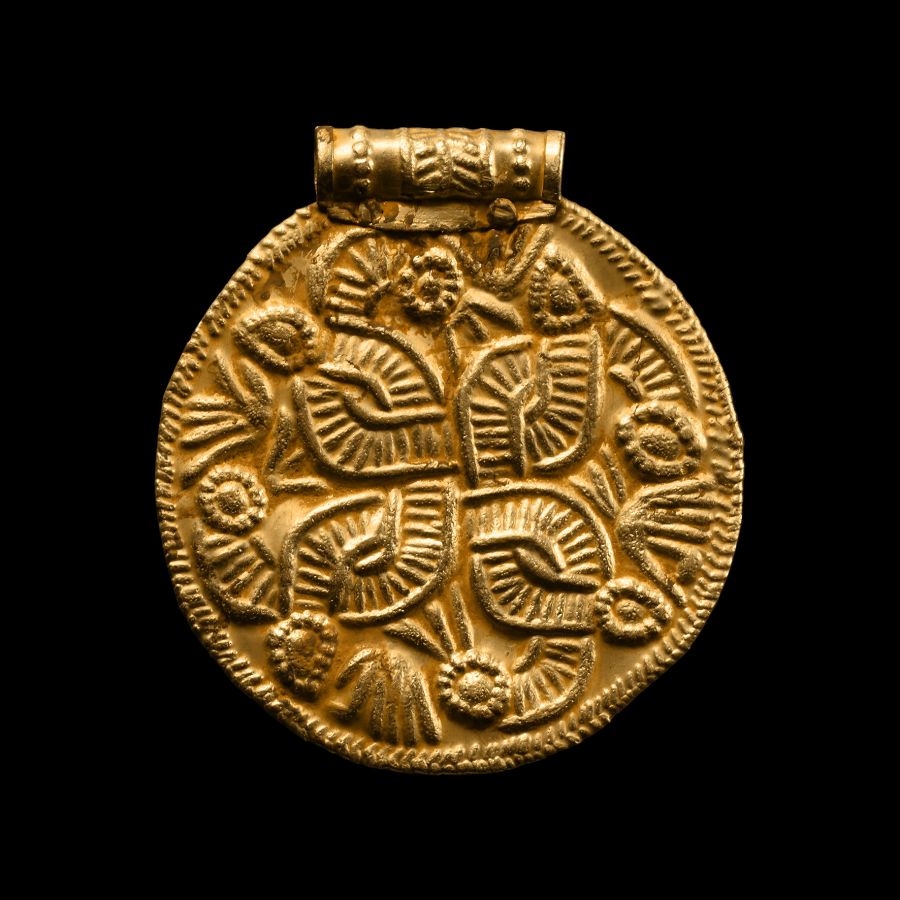
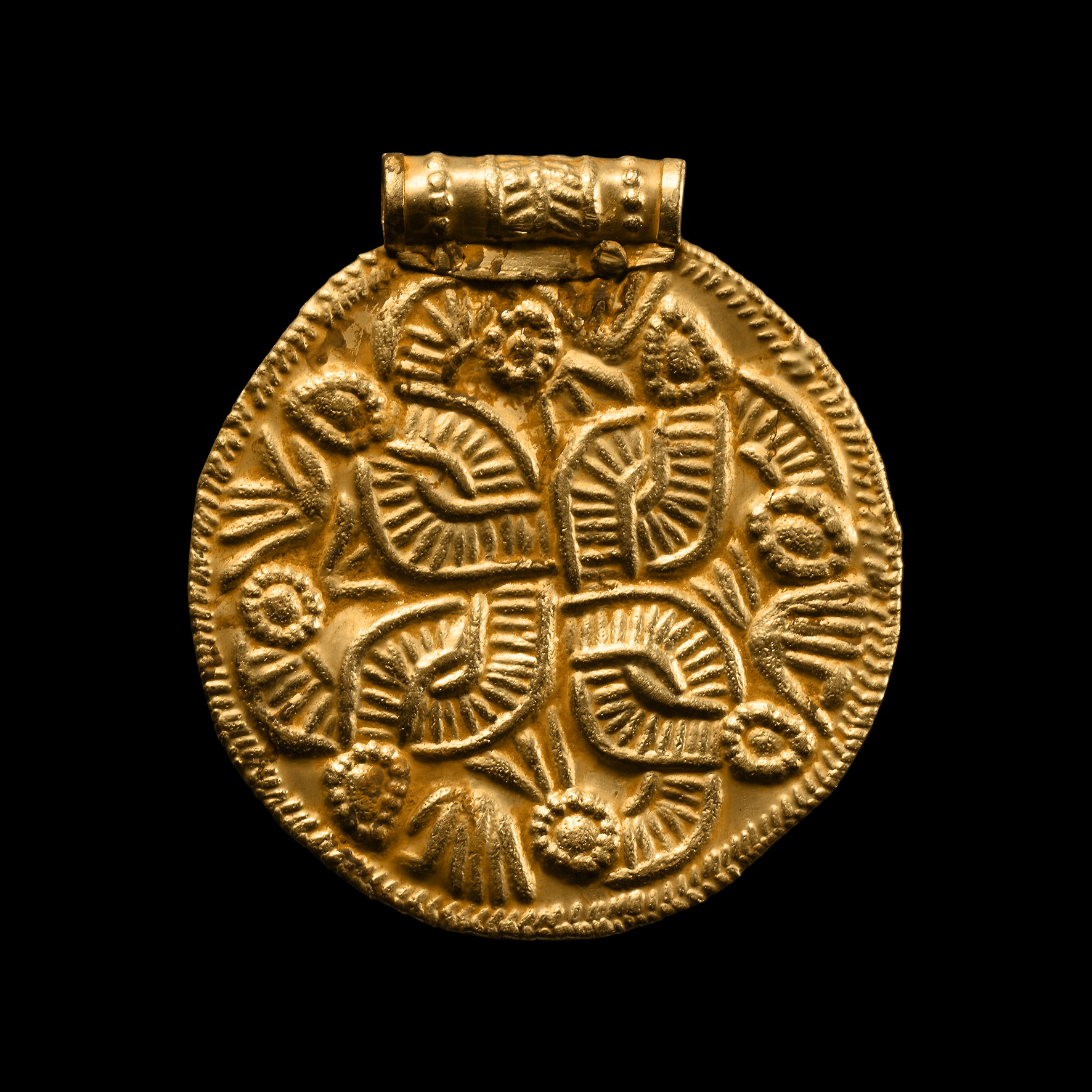
Large Pre-Viking Gold Bracteate Medallion with Interlaced Snakes
5TH-6TH CENTURY A.D.
2 3/8 in. (13.04 grams, 61 mm).
Executed using the repoussé technique, depicting interlaced snakes or possibly Jörmungandr, the world serpent; applied suspension loop with repoussé chevrons and pellets, faux ropework border around the whole.
ProvenanceFrom the collection of a North American gentleman, formed in the 1990s.
Accompanied by an academic report by Dr Raffaele D’Amato.
This lot has been checked against the Interpol Database of stolen works of art and is accompanied by search certificate number no.11729-200423.
Cf. Glob., P.V., Danefae, Copenhagen, 1980, no.60; Various, Riflessi di Roma, L’Impero Romano e Barbari del Baltico (Reflections of Rome, the Roman Empire and the Barbarians of the Baltic), Roma, 1992, pp.218ff., no.4 D.
FootnotesThe bracteate belongs to the main type D, showing an image of tetramorphic monsters. Probably here the representation refers to Jörmungandr, the serpent of Midgard, son of Loki and killer of Thor, protagonist of Ragnarok - the downfall of the gods. The art of the bracteate medallions is one of the few contemporary sources for the pre-Christian religion of the Nordic countries. It demonstrates that ancient Germanic mythology, although known from later texts, was built on a tradition dating back to at least the 5th-6th centuries A.D. The function of these medallions was linked to the social position of the wearer in Germanic society.
CONDITIONTimeLine Auctions follows a vetting process to ensure the authenticity and legality of all items, reinforcing our commitment to integrity and responsible trading. Each antiquity, antique, and coin lot undergoes thorough examination by a vetting committee of at least ten external specialists, professional trade association members, scientists, and archaeologists: Our Vetting Process
AUCTIONS:
TimeLine is a leading auction house specialising in antiquities, ancient art, collectables, natural history, coins, medals, and books. Our auctions offer museums, collectors, historians, and enthusiasts the opportunity to acquire unique and historically significant pieces.
LOT 0300
Large Pre-Viking Gold Bracteate Medallion with Interlaced Snakes
Sold for (Inc. bp): £5,720
-
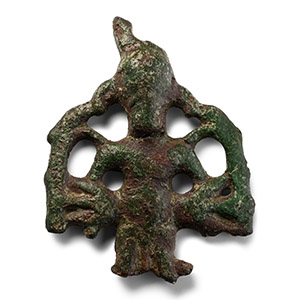
Anglo-Scandinavian Viking Bronze Bound Odin Openwork Stirrup Apex Mount Upper Section
11th century A.D.Sold for (Inc. bp): £208
Of an excessively rare example of Williams Class A, Type 3 showing a standing nude man with beard and long moustache, an animal-like form around the man's waist extending towards the flanking serpents on each side. 14.8 grams, 41 mm
Found Gloucestershire, UK.
Based on comparable examples, when complete the serpents' tails wrapped around the man's legs, and their open jaws gaped on either side of his head. -
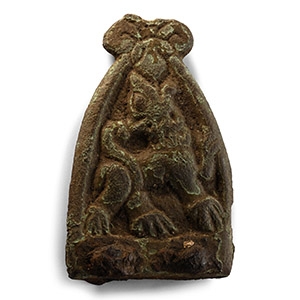
Anglo-Scandinavian Viking Bronze Howling Beast Stirrup Apex Mount
11th century A.D.Sold for (Inc. bp): £143
Heater-shaped in profile with trefoil knop above; high-relief profile wolf with head thrown back and one forepaw raised; ledge to reverse with remains of ferrous studs; Williams's Class A, type 11. 22.8 grams, 48 mm
Found Gloucestershire, UK. -
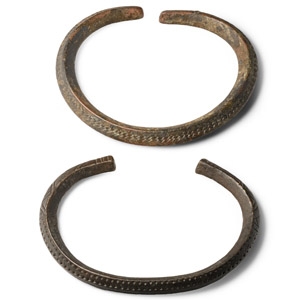
Viking Stamped Bronze Bracelet Pair
9th-11th century A.D.Sold for (Inc. bp): £286
Each a penannular square-section shank with punched detailing to the upper faces. 103 grams total, 75-79 mm
From the private collection of a London gentleman, from his grandfather's collection formed before the early 1970s.
