
Loading, please wait...


LOT 2418
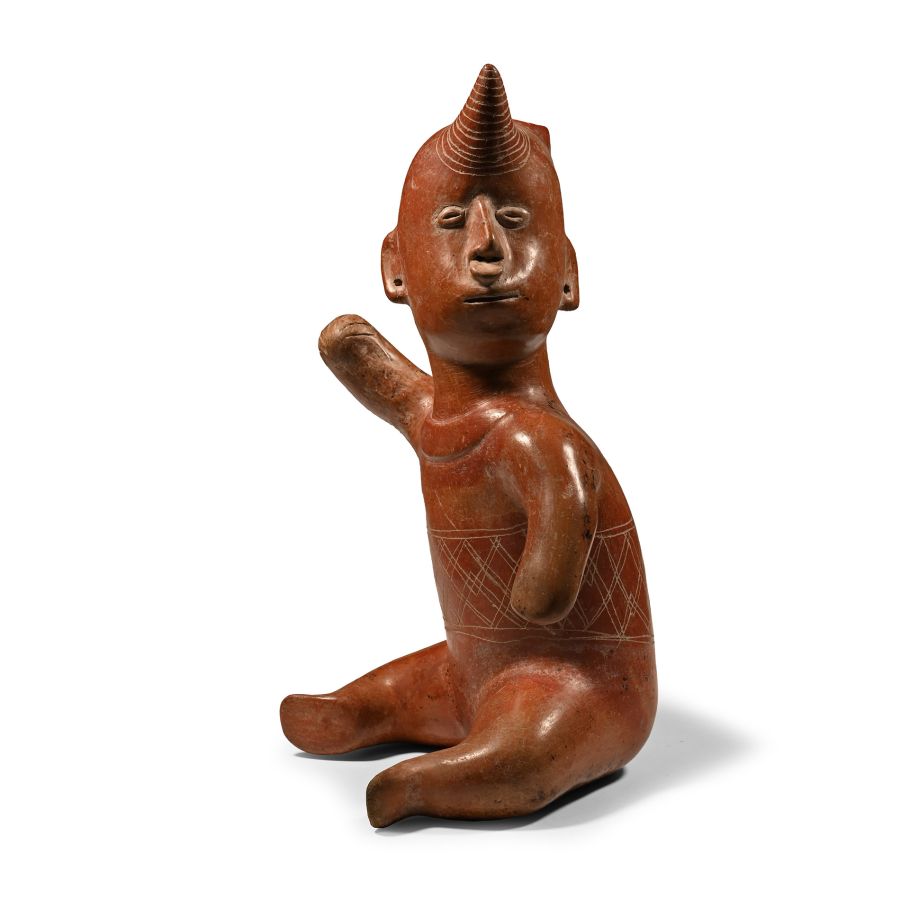
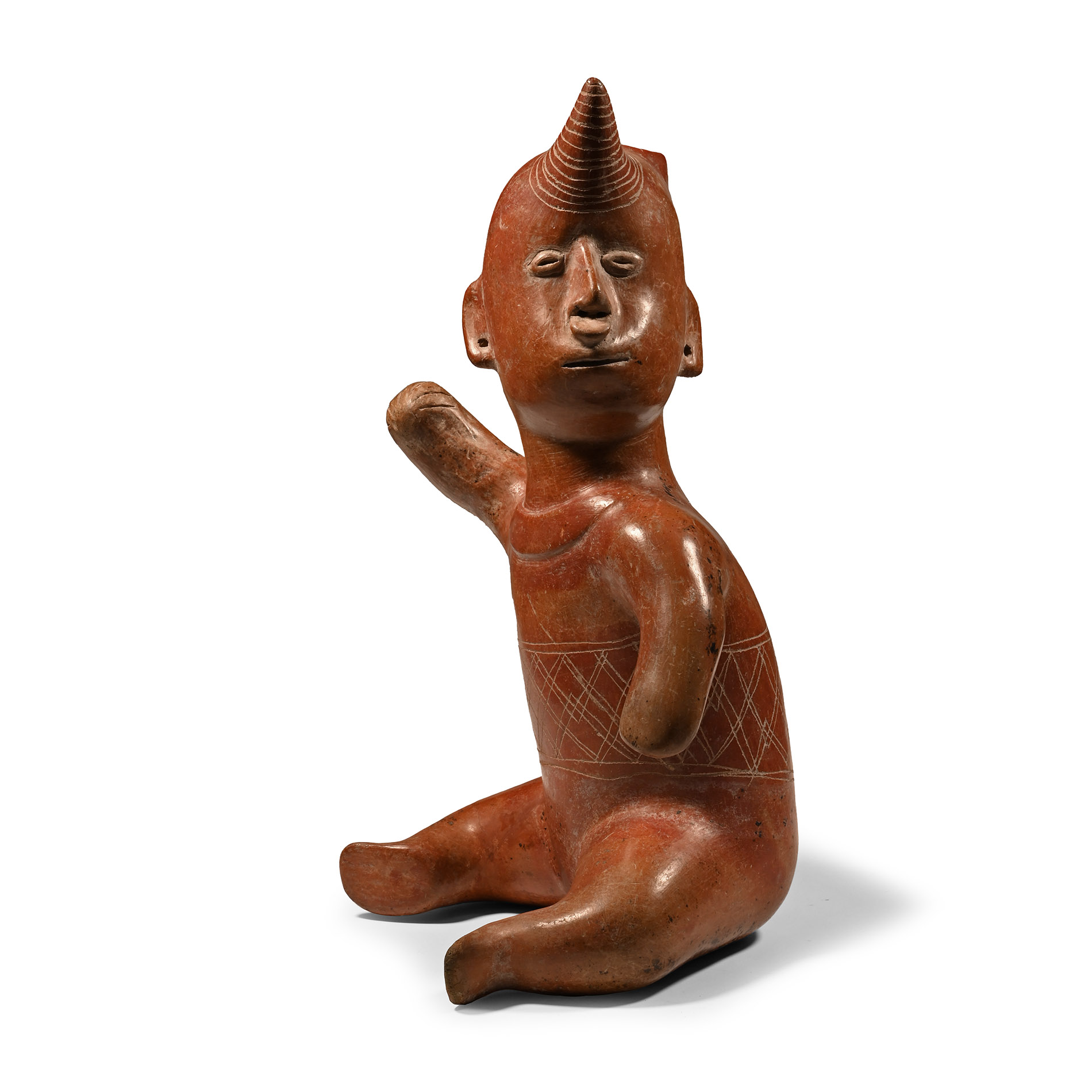
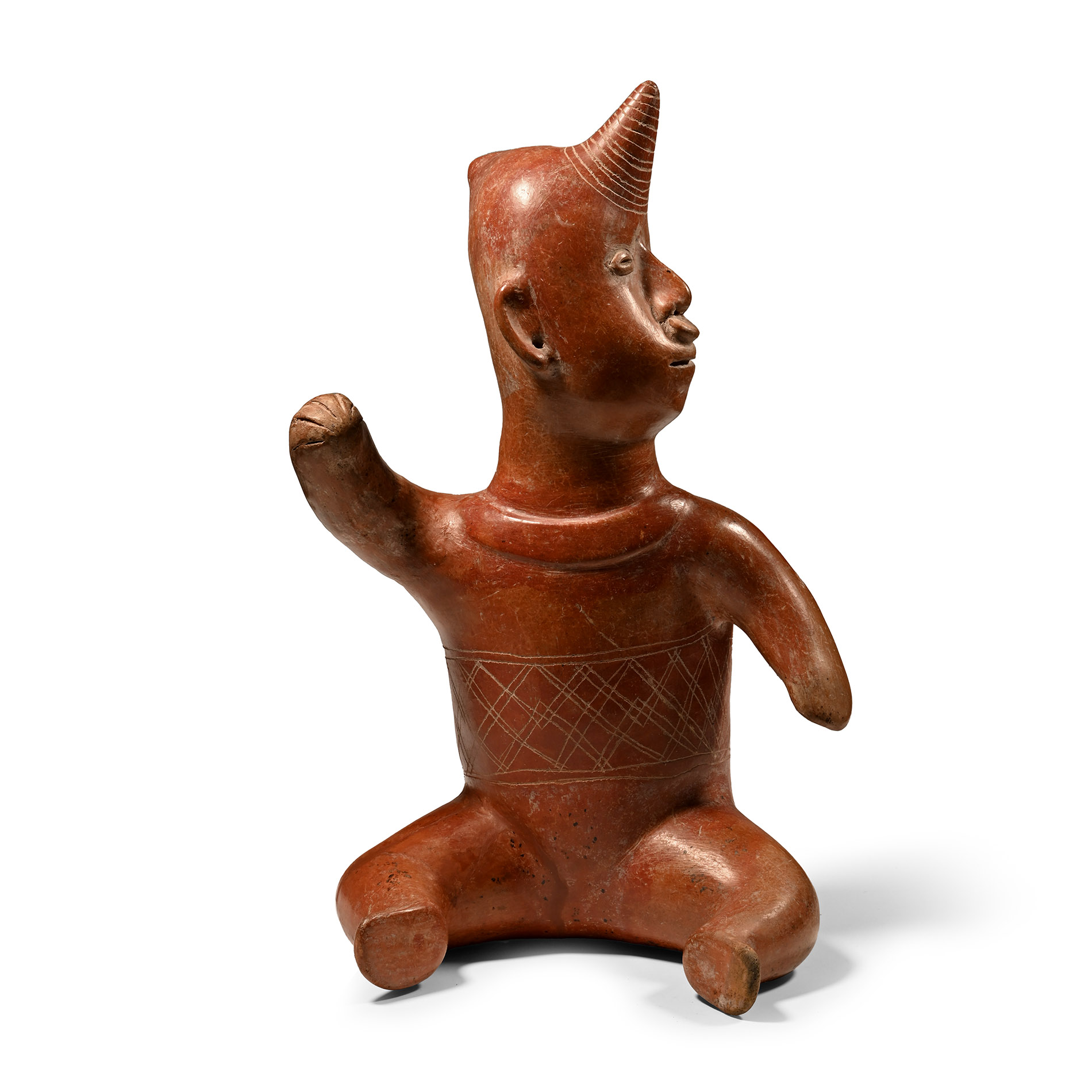
Large Pre-Columbian Colima Seated Shaman Vessel
MEXICO, PROTOCLASSIC PERIOD, CIRCA 100 B.C.-250 A.D.
14 3/8 in. (1.9 kg, 36.5 cm).
Red ware, hollow-formed and modelled in the round, seated figure with horn to the brow and pierced ears, incised decoration to the midriff, pouring spout to rear of head.
Provenancewith Bonhams, London, 24 May 2016, lot 21.
Property of a Gloucestershire, UK, gentleman.
See Holsbeke, M., Offerings for a New Life, Funerary images from pre-Columbian West Mexico, Antwerp Ethnographic Museum, 1998, figure 3, for a guardian striking a similar pose.
FootnotesHolding a throwing stone in one hand and facing an unseen danger to his left as was tradition. This seated figure can be identified as a tomb guardian with the horn on his head marking him as a shaman or with magical powers. His purpose was to serve and protect the deceased in the afterlife. The Colima culture produced the greatest variety of sculpture across ancient West Mexico.
CONDITIONTimeLine Auctions follows a vetting process to ensure the authenticity and legality of all items, reinforcing our commitment to integrity and responsible trading. Each antiquity, antique, and coin lot undergoes thorough examination by a vetting committee of at least ten external specialists, professional trade association members, scientists, and archaeologists: Our Vetting Process
AUCTIONS:
TimeLine is a leading auction house specialising in antiquities, ancient art, collectables, natural history, coins, medals, and books. Our auctions offer museums, collectors, historians, and enthusiasts the opportunity to acquire unique and historically significant pieces.
-
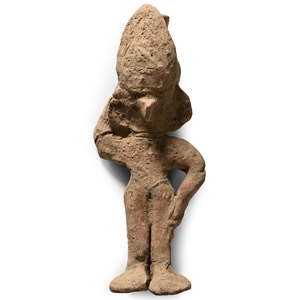
South American Chancay Terracotta Figure with Pitcher
12th-14th century A.D. or laterSold for (Inc. bp): £72
Hand-modelled Chancay(?) figure of a standing female with left hand on her hip and right hand raised to support the pitcher; pinched facial detailing and tall tongue-shaped headdress with lateral flaps; pointillé detailing for the eyes and breasts, incised lines to the collar and groin, exaggerated feet; top of the head supporting a pitcher. 129 grams, 17 cm
Acquired 1980-2015. Ex Abelita family collection. -
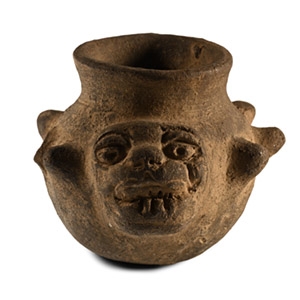
Pre-Columbian Terracotta Cup with Panther Face
Circa 1st millennium A.D.Sold for (Inc. bp): £65
Globular in profile with slightly flared mouth loop handle, six radiating spurs below the shoulder and discoid boss with incised feline face detailing. 140 grams, 92 mm
From a collection acquired on the UK art market from various auction houses and collections mostly before 2000. From an important Cambridgeshire estate; thence by descent. -
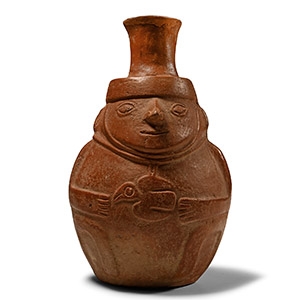
Pre-Columbian Moche Anthropomorphic Vessel
Circa 5th-6th century A.D.Sold for (Inc. bp): £338
Hollow-formed bulbous vessel with burnished finish, seated or crouching male figure with bent legs and arms across his waist, straps to the chin securing a flat-topped cap with rectangular flap to the rear decorated with a ropework saltire; the face with aquiline nose, lentoid eyes and small curved mouth; between the hands, a small bird with discoid eye and wings partly extended; funicular spout to the top; marked 'OTX' to the underside. 550 grams, 20.2 cm high
From the collection of a Norfolk, UK, gentleman, 1990s.
Examples of birds are relatively common across the spectrum of Moche pottery as are other animals depicting battle or hunting scenes.
