
Loading, please wait...
LOT 0420
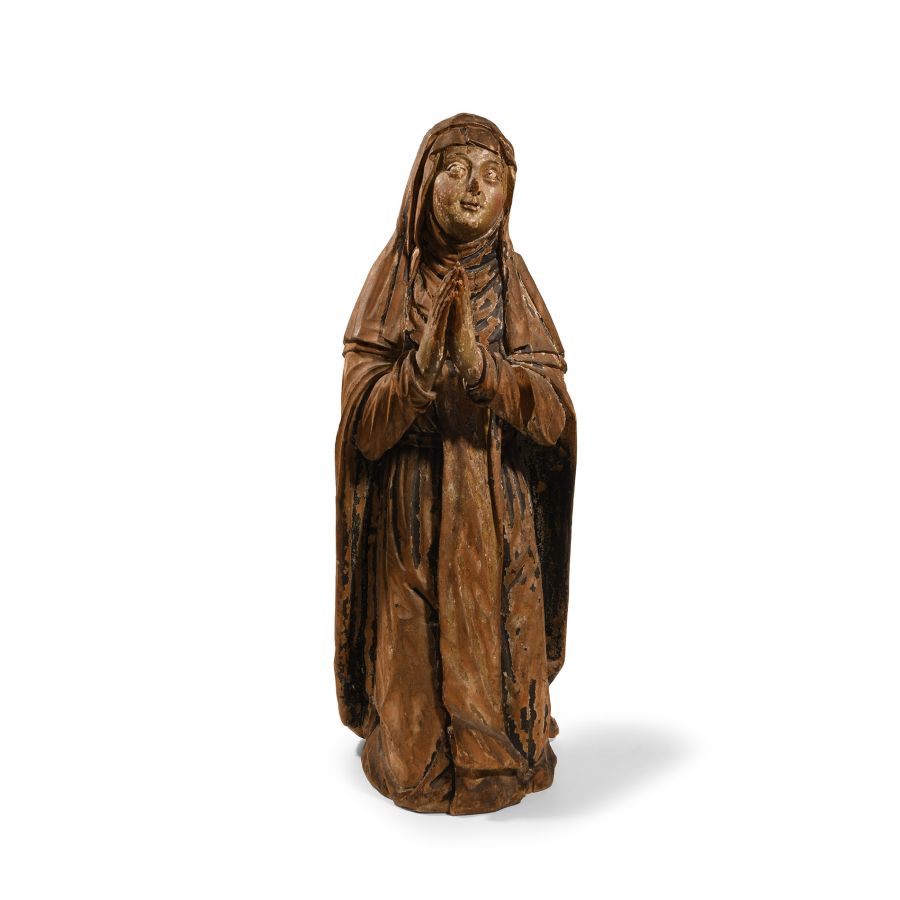
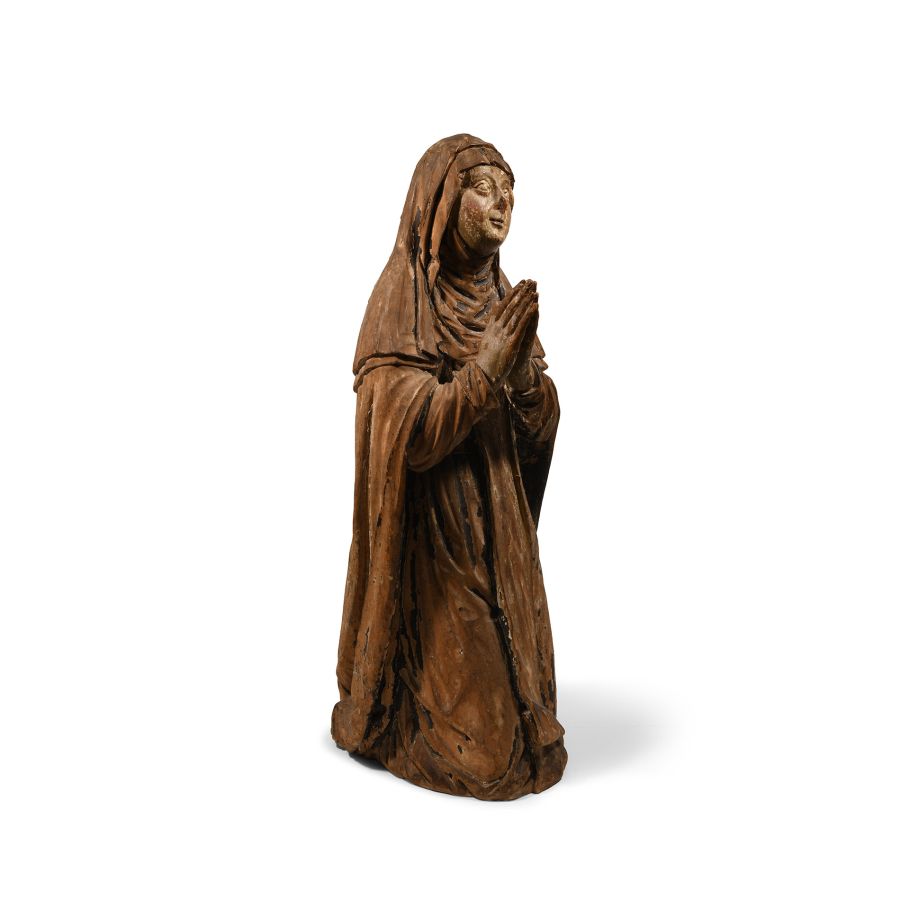
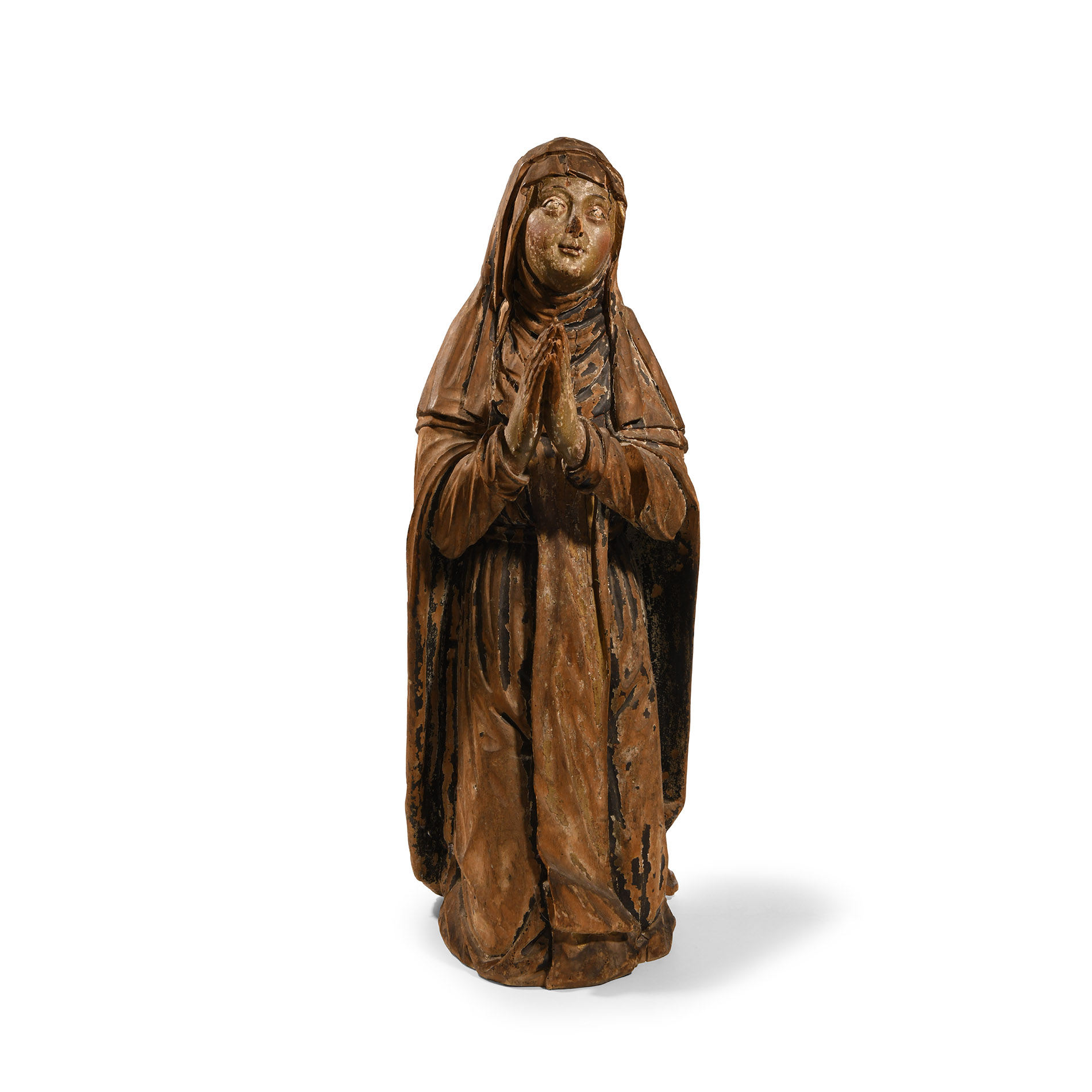
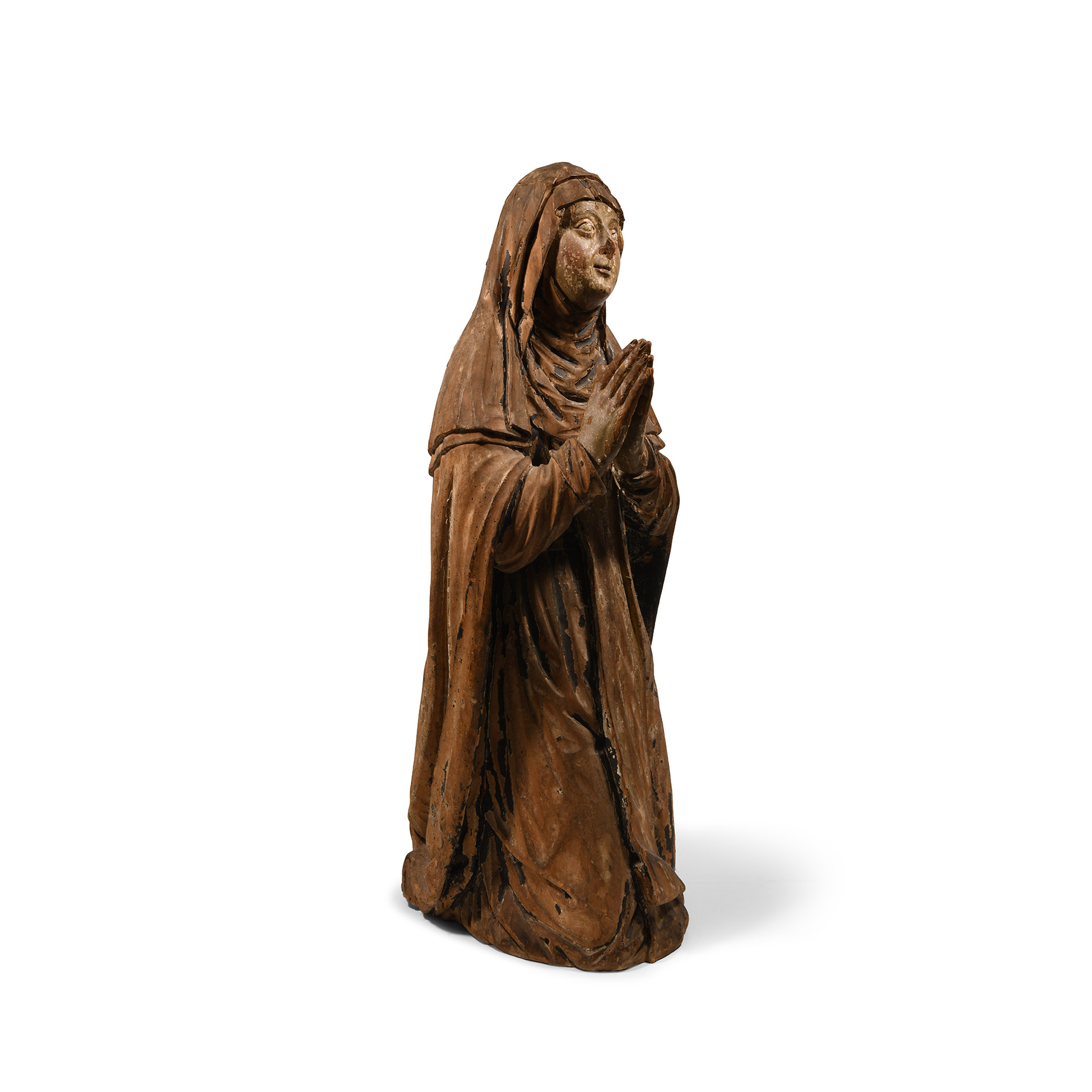
Large Post Medieval Wooden Virgin at Prayer Statue
17TH CENTURY A.D.
38 1/2 in. (27.7 kg, 98 cm high).
Modelled in a dynamic standing posture wearing floor-length robes, hands clasped in front of her breast; remains of polychrome pigmentation.
ProvenanceAcquired 1960s-1990s.
Late Alison Barker collection, a retired London barrister.
The timber shows some old insect flight holes and we are advised that this piece has been recently treated with Permethrin, as a precaution.
CONDITIONTimeLine Auctions follows a vetting process to ensure the authenticity and legality of all items, reinforcing our commitment to integrity and responsible trading. Each antiquity, antique, and coin lot undergoes thorough examination by a vetting committee of at least ten external specialists, professional trade association members, scientists, and archaeologists: Our Vetting Process
AUCTIONS:
TimeLine is a leading auction house specialising in antiquities, ancient art, collectables, natural history, coins, medals, and books. Our auctions offer museums, collectors, historians, and enthusiasts the opportunity to acquire unique and historically significant pieces.
LOT 0420
Large Post Medieval Wooden Virgin at Prayer Statue
Estimate £1,200 - 1,700€1,390 - 1,970 (for guidance only)$1,620 - 2,300 (for guidance only)
-
Charles II Period Vellum Indenture with Seals
Dated 1668 A.D.Sold for (Inc. bp): £78
Relating to a parcel of land called 'Conduit field' sold by Rowland and David Pearse of Bridgnorth, Shropshire to Edward Mylner of Bridgnorth for 'forty three pownds of lawful money of England'; with three vellum tags attached, two with red wax seals; endorsed to Thomas Norris by David Pearse. 71 grams, 64 cm wide
Acquired on the UK antiques market between 1974-1985. Albert Ward collection, Essex, UK. -
Post Medieval Dutch Glazed Ceramic Tiles
Circa 17th-18th century A.D.Sold for (Inc. bp): £72
Comprising eight blue and white tiles set into a slab, displaying animals, figural vignettes and floral compositions. 8.7 kg, 53.5 x 28 cm
Acquired 1990s-early 2000s. East Anglian private collection. -
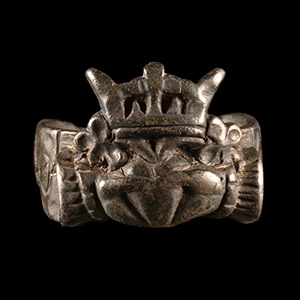
Large Post Medieval Silver Fede Ring
18th century A.D.Sold for (Inc. bp): £234
Composed of a substantial hoop with base formed as clasped hands emerging from sleeve cuffs, bezel formed as hands clasping a crowned and flowering heart. 18.14 grams, 28.88 mm overall, 20.21 mm internal diameter (approximate size British T 1/2, USA 9 3/4, Europe 21.89, Japan 21)
Found Pembroke area, Pembrokeshire, 1980s-2000s. Property of the finder.
