Loading, please wait...

Use mousewheel to zoom in and out, click to enlarge

Details

LOT 2121

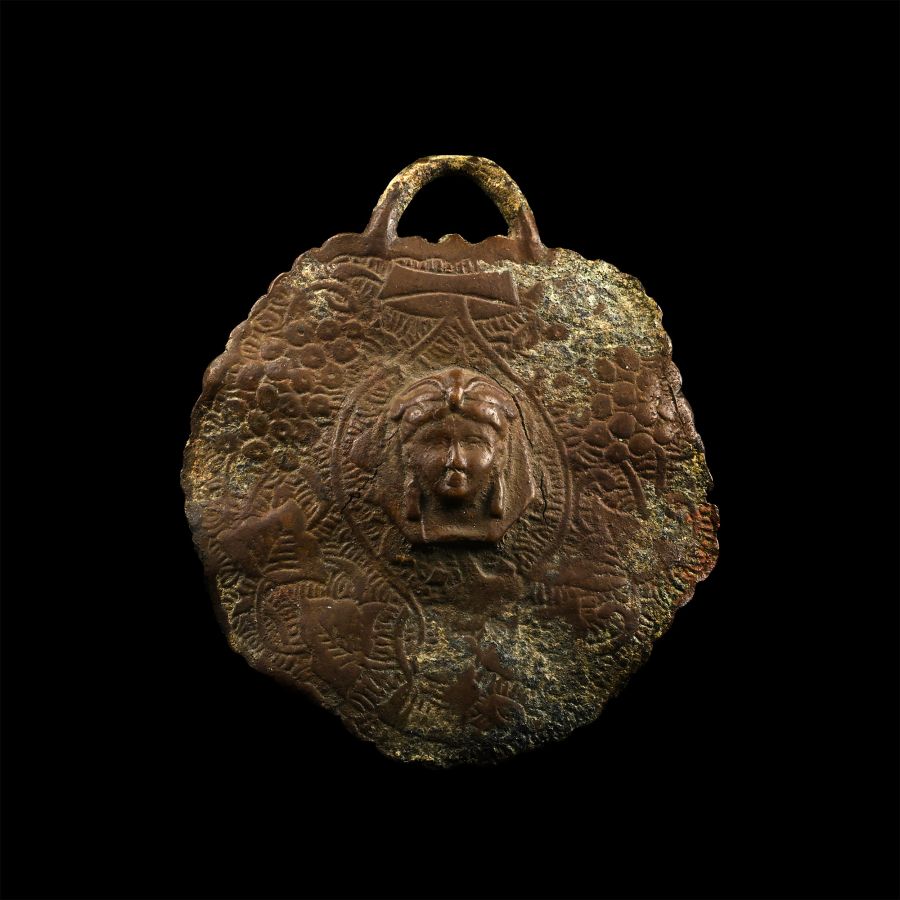
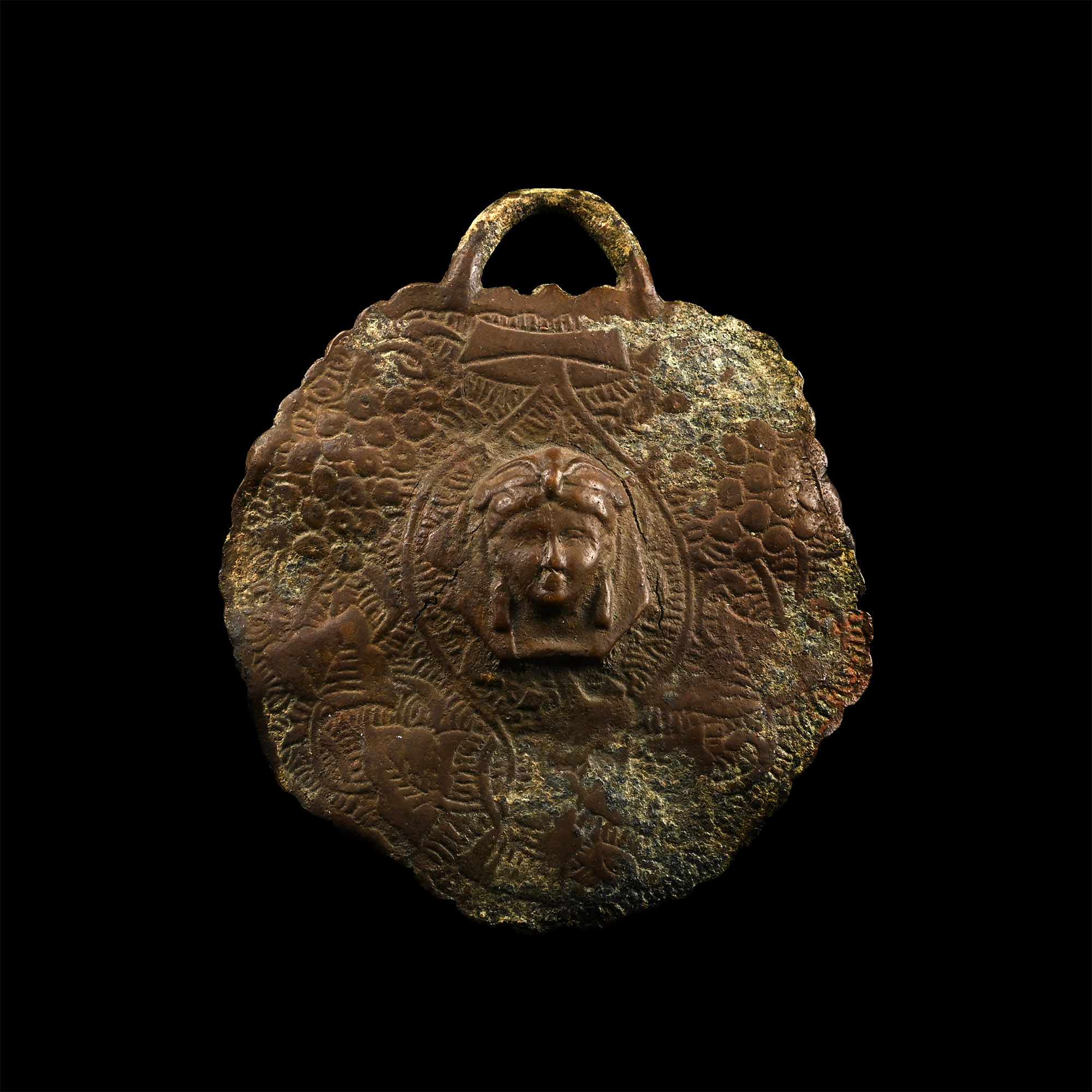
Large Post Medieval Bronze Plaque

19TH CENTURY A.D.

4 1/8 in. (118 grams, 10.5 cm).

Discoid in plan and slightly domed with loop to the edge; central facing bust wearing a diadem; field with embossed rosettes and other ornament. [No Reserve]

Provenance

From the collection of a Buckinghamshire, UK, collector established from the earlier 1960s.

CONDITION

VETTING:

TimeLine Auctions follows a vetting process to ensure the authenticity and legality of all items, reinforcing our commitment to integrity and responsible trading. Each antiquity, antique, and coin lot undergoes thorough examination by a vetting committee of at least ten external specialists, professional trade association members, scientists, and archaeologists: Our Vetting Process


AUCTIONS:

TimeLine is a leading auction house specialising in antiquities, ancient art, collectables, natural history, coins, medals, and books. Our auctions offer museums, collectors, historians, and enthusiasts the opportunity to acquire unique and historically significant pieces.

LOT 2121

Large Post Medieval Bronze Plaque

Sold for (Inc. bp): £26

Print page

RELATED LOTS

  • Post Medieval Silver Ring with Saltire Cross
    Post Medieval Silver Ring with Saltire Cross
    Circa 17th-18th century A.D.

    Estimate: £100 - 140 (+bp*)

    Opening Bid: £50

    Substantial hoop with decorative panels flanking the square bezel, the bezel with incuse saltire cross. 7.80 grams, 24.15 mm overall, 19.95 mm internal diameter (approximate size British T, USA 9 1/2, Europe 21.26, Japan 20)


    Ex German art market, 2000s. Acquired from an EU collector living in London. From the collection of a Surrey, UK, gentleman.

    Lot Details

  • Russian Orthodox Bronze Travel Icon with Saint George
    Russian Orthodox Bronze Travel Icon with Saint George
    Circa 1700 A.D.

    Sold for (Inc. bp): £140

    Showing Saint George on horseback, dispatching the dragon with a spear thrust; the Saint dressed in a soft cuirass and seated on a high-ended saddle secured by breast, rump, and belly straps; on the right, the walls of Trebisonda and on the bottom right the princess; Old Slavic inscription on the top, reciting Saint George of Cappadocia (Свято́й Гео́ргий Каппадоки́йский); at the top, the Christ Mandylion inscribed inside a cross. 71 grams, 87 mm


    Acquired from Chris Martin-Zakheim, Iconastas, 5 Piccadilly Arcade, London SW1. From the private collection of a West London, UK, gentleman, formed since the early 2000s.

    According to the Christian tradition, Saint George would have lived between the end of the 3rd century and the beginning of the 4th century: born into a noble Christian family, he became an officer in the Roman army and was then named a prefect by Diocletian. But when the same emperor decided to resume the persecutions, Saint George became a victim despite his important political rank. His role in the development of the faith is so important that he is included among the Great Martyrs of the Eastern Church and his fight against the dragon becomes a symbol par excellence of the fight for good which defeats evil.

    Lot Details

  • Large Cretan Wooden Icon Fragment of Deesis with Christ Pantocrator and Saint John the Prodromos
    Large Cretan Wooden Icon Fragment of Deesis with Christ Pantocrator and Saint John the Prodromos
    Circa 1670 A.D.

    Sold for (Inc. bp): £1,300

    Depicting Christ Pantocrator and Saint John on his side, hand of Mary visible on the left; the Lord of the Universe represented seated upon a cushioned throne, the right hand in blessing gesture, the left hand holding a Gospel decorated with precious stones; wearing a blue chlamys and red sticharion; Saint John in proskynesis in front of Christ, dressed in a brown vestis talaris; the head of both surrounded by a red halo; later wire for hanging to the reverse with an information sheet in German. 1.8 kg, 57 cm


    Ex Hargesheimen Auction House, Dusseldorf, Germany. Property of a London, UK, gentleman collector.

    The icon represents a middle section from a Deesis of a church iconostasis. Although preserved as a fragment, it is designed in the high style of the late 16th century.

    Lot Details

Stay up-to-date with the latest from TimeLine Auctions by joining our mailing list