
Loading, please wait...
LOT 0559
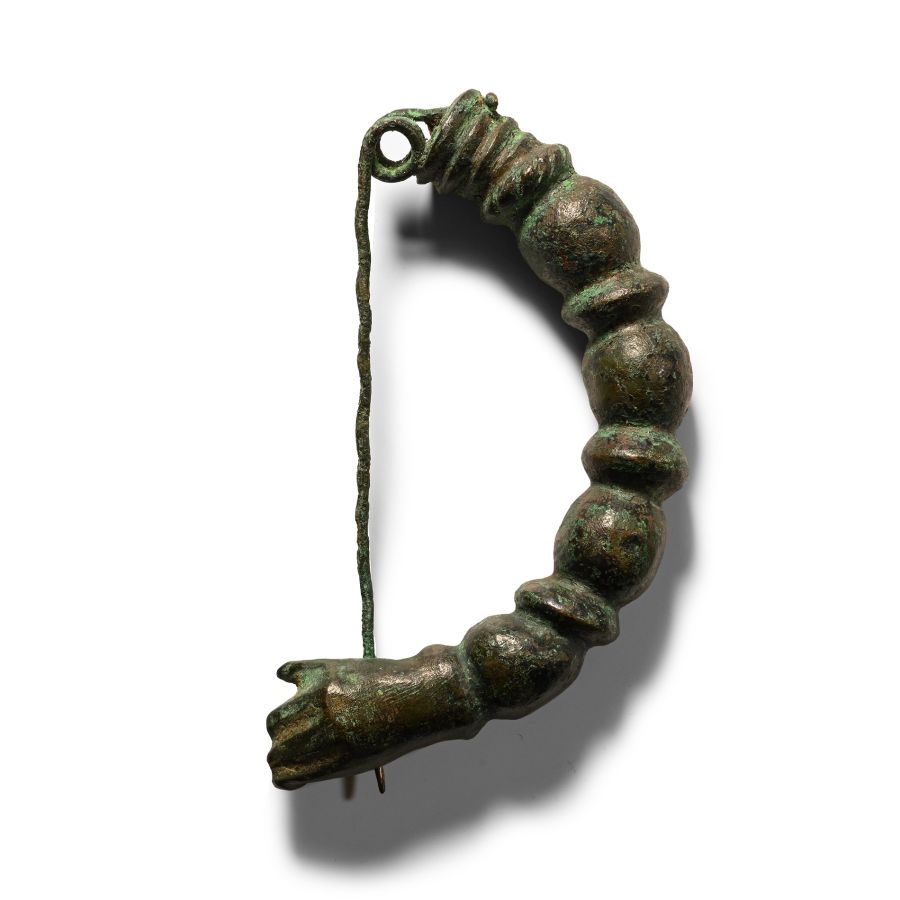
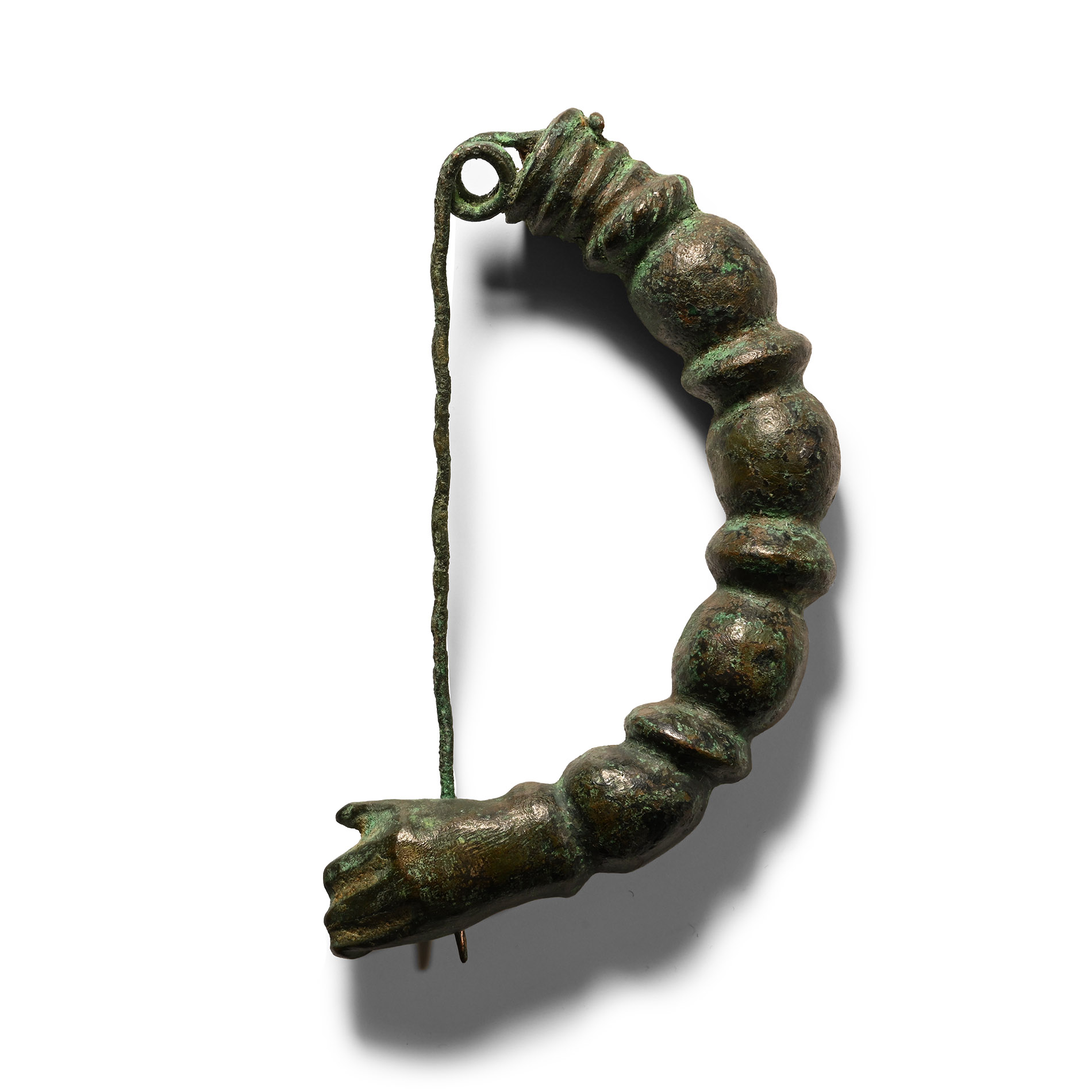
Large Phrygian Bow Brooch
8TH-6TH CENTURY B.C.
4 in. (173 grams, 10.3 cm).
Substantial arched bow formed with bulbs and collar, stepped finial with coil and spring; the catch formed as a hand with fingers curled round. [No Reserve]
ProvenanceUK private collection before 2000.
Acquired on the UK art market.
Property of a London gentleman.
Cf. Hattatt, R., Ancient and Romano-British Brooches, Sherborne, 1982, item 211.
CONDITIONTimeLine Auctions follows a vetting process to ensure the authenticity and legality of all items, reinforcing our commitment to integrity and responsible trading. Each antiquity, antique, and coin lot undergoes thorough examination by a vetting committee of at least ten external specialists, professional trade association members, scientists, and archaeologists: Our Vetting Process
AUCTIONS:
TimeLine is a leading auction house specialising in antiquities, ancient art, collectables, natural history, coins, medals, and books. Our auctions offer museums, collectors, historians, and enthusiasts the opportunity to acquire unique and historically significant pieces.
-
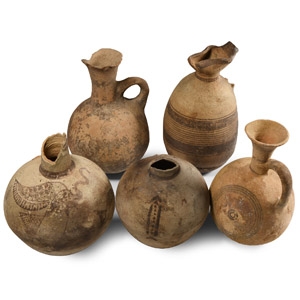
Cypriot Terracotta Vessel Group
Iron Age, Cypro-Geometric, 950-850 B.C.Sold for (Inc. bp): £520
Including globular jar with painted fish detailing, globular jar with trumpet-shaped neck and mouth, and other types. 1.07 kg total, 10.5-14.7 cm
From a collection acquired on the UK art market from various auction houses and collections mostly before 2000. From an important Cambridgeshire estate; thence by descent. -
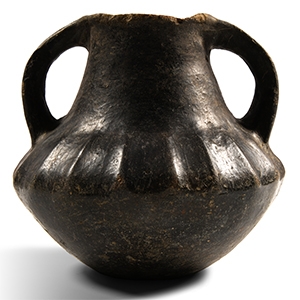
Etruscan Blackware Impasto Vase
8th-7th century B.C.Sold for (Inc. bp): £715
Biconical with a tapering cylindrical neck and two handles, raised ribbing around the shoulder. 550 grams, 15 cm wide
Ex private Mister X. (1931-2017) collection. Sold in the benefit of the 'Croix-Rouge of Monaco'. -
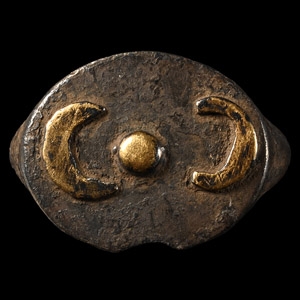
Greek Silver Ring with Gold Inlays
5th-4th century B.C.Sold for (Inc. bp): £416
With ellipsoid plaque, applied silver-gilt central boss flanked by two applied crescents. 3.89 grams, 19.00 mm overall, 16.00 mm internal diameter (approximate size British J, USA 4 3/4, Europe 8.69, Japan 8)
From an old UK collection, 1980s.
