Loading, please wait...
LOT 0162
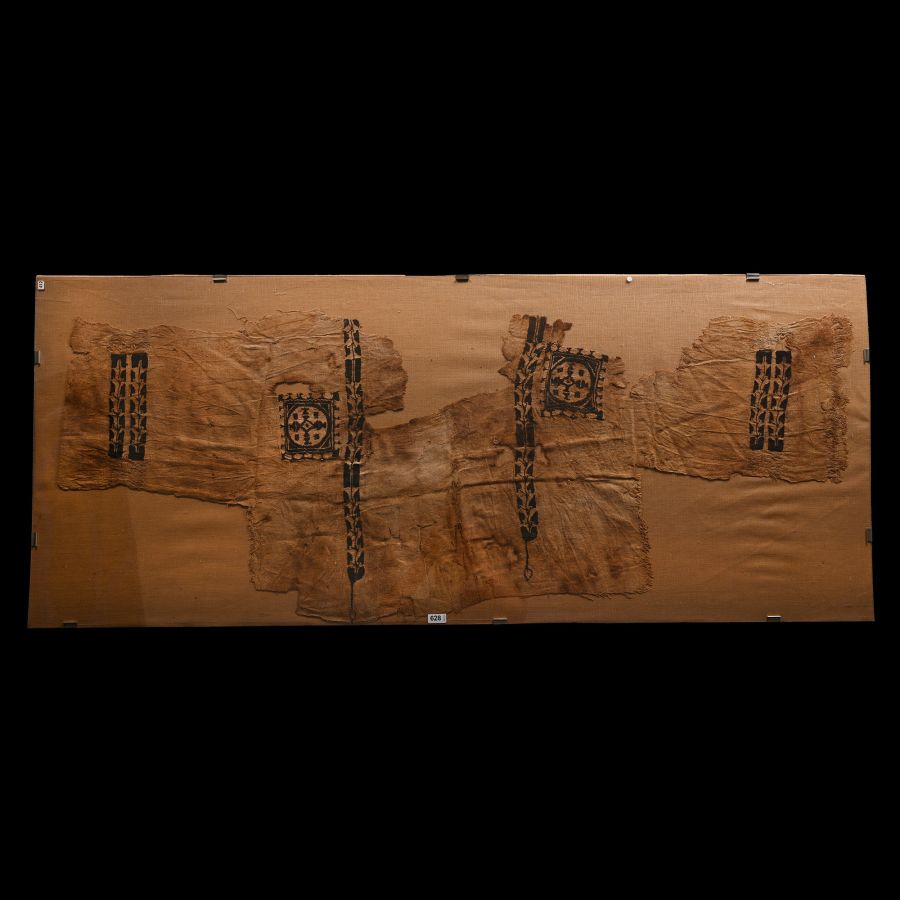
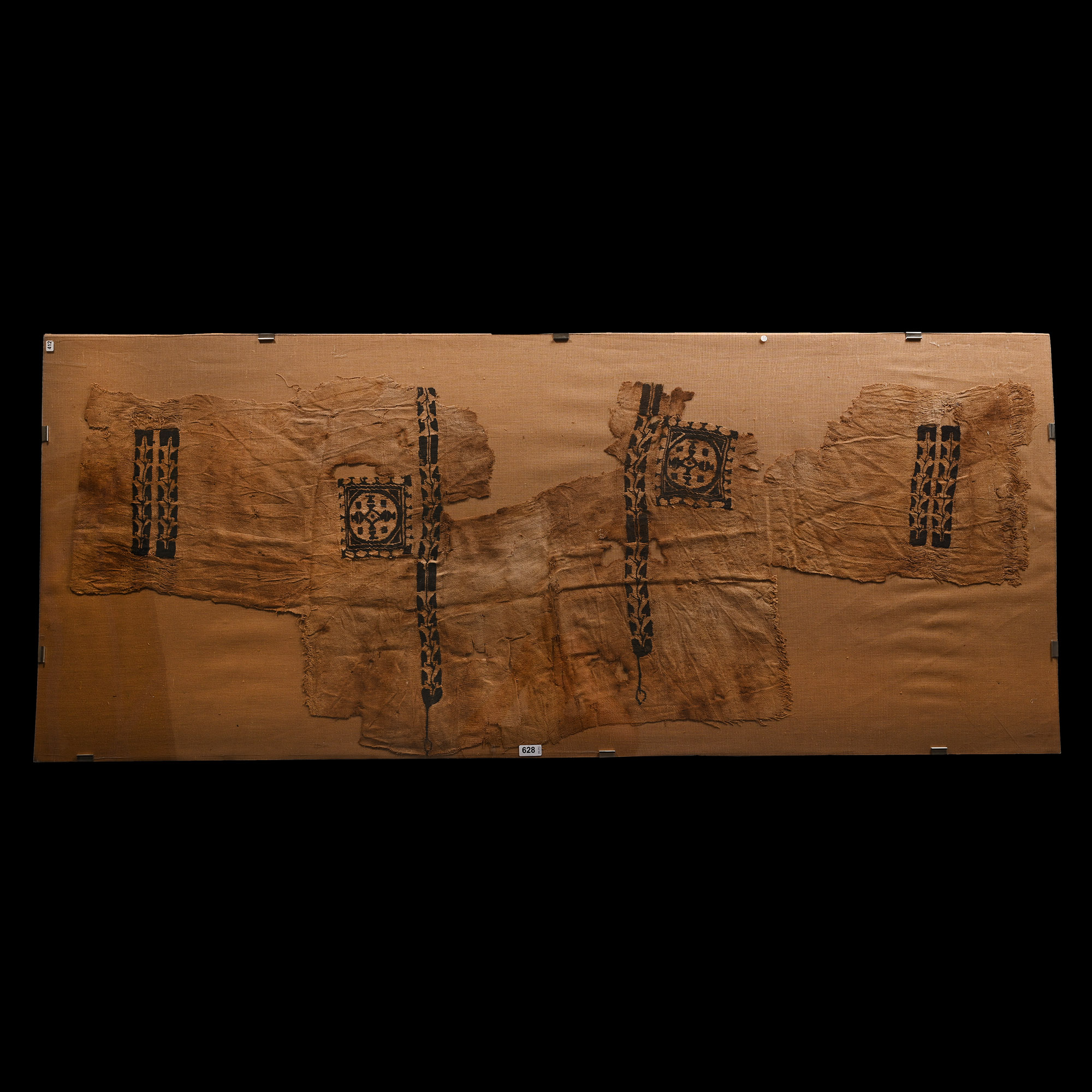
Large Mounted Roman Linen Tunic
CIRCA 4TH-5TH CENTURY A.D.
64 1/2 in. (7.7 kg total, mount: 1.64 m).
Comprising half of the upper part of a tunica manicata in light fabric, S-twist tapestry, ornamented with dark purple clavi with orbiculi and tablia, wool over linen; mounted in fabric backing and perspex display frame.
ProvenanceAcquired 1970s-1996.
Property of a North American collector.
London collection, 2016.
Cf. D’Amato, R., Roman Military Clothing (3), AD 400-600, Oxford, 2005, p.8, for similar (Berlin Museum, inv.8881).
FootnotesThe tunic is decorated in purple with opus phrygium embroidery. The archaeological evidence from the dry desert cemeteries of Egypt offers striking confirmation of pictorial sources about late Roman clothing around the empire.
CONDITIONTimeLine Auctions follows a vetting process to ensure the authenticity and legality of all items, reinforcing our commitment to integrity and responsible trading. Each antiquity, antique, and coin lot undergoes thorough examination by a vetting committee of at least ten external specialists, professional trade association members, scientists, and archaeologists: Our Vetting Process
AUCTIONS:
TimeLine is a leading auction house specialising in antiquities, ancient art, collectables, natural history, coins, medals, and books. Our auctions offer museums, collectors, historians, and enthusiasts the opportunity to acquire unique and historically significant pieces.
-
Monumental Roman Marble Head of a Greek Philosopher, Probably Diogenes
1st century B.C.-1st century A.D.Sold for (Inc. bp): £46,800
Carved in the round bust of a cynical, mature philosopher with short tousled hair and thick beard, exaggerated protruding eyes and gaunt facial features, the mouth modelled slightly open as if the subject is in pain; mounted on a custom-made stand. 47.6 kg total, 60 cm including stand
Private collection, Paris, 1980s. European private collection. Accompanied by a copy of French passport no.237041. Accompanied by an academic report by Professor Neritan Ceka. This lot has been checked against the Interpol Database of stolen works of art and is accompanied by a search certificate number no.12610-234690. This lot has been cleared against the Art Loss Register database, and is accompanied by an illustrated lot declaration signed by the Head of the Antiquities Department, Dr Raffaele D'Amato.
The portrait head was initially meant to be assembled on a statue. Chisel marks at the neck level indicate a relatively late separation of the head from the body, which must have been twice its natural size. The working of the back of the head suggests that the sculpture was exposed only to the front. The search for realistic traits brings this head close to the Hellenistic portraits of the 3rd and 2nd centuries BC, representing socially disadvantaged people of different ages and situations, such as fishermen and peasants, in the so-called genre sculptures. This presentation would be in contrast to the supernatural proportions of the portrait, which should have represented an elderly, publicly known person, poet, or philosopher, exhibited in his city of origin. In this respect, it would be more suited to the representation of a Cynical philosopher, in the model of Diogenes of Villa Albani. The almond-shaped eyes without drilled pupils, engraved eyes, and the absence of a deep drilling technique on hair date the portrait between the 1st century BC and the 1st century AD. -
Roman or Parthian Silver Ring with Quadriga Gemstone
3rd-4th century A.D.Sold for (Inc. bp): £247
With round-section hoop expanding at the shoulders; ellipsoidal bezel with gold(?) setting holding cut and polished carnelian gemstone with intaglio quadriga; supplied with a museum-quality impression. 10.23 grams, 24.50 mm overall, 17.34 mm internal diameter (approximate size British L, USA 5 3/4, Europe 11.24, Japan 10)
Ex Shiraz Antiques, London, W1, in 1998. -
Roman Silver Mirror
1st-3rd century A.D.Sold for (Inc. bp): £1,755
Discoid with raised, rounded rim; a 19th-century collection label bearing a handwritten inscription: ‘GAS, Miroir, Gallo Romain’ indicating the findspot; mounted on a custom-made display stand with serpentine column base. 239 grams, 13.8 cm (426 grams total, 20.1 cm including stand)
19th century collection label inscribed in ink ‘GAS, Miroir, Gallo-Romain’, indicating that the mirror was discovered at Gas, Eure-et-Loir, northern France. Private collection, UK.
The British Museum houses several notable ancient Roman silver hand mirrors, including: 1. Bursa Treasure Mirror – Part of the Bursa Treasure, a 1st-century AD Roman silver hoard discovered near Bursa, Turkey. This collection includes a large silver mirror, reflecting the luxurious personal items used by elite Roman women. 2. Chaourse Treasure Mirror – found in 1883 near Chaourse, France, this 2nd–3rd century AD hoard contains various silver objects, including a silvered bronze mirror, offering insights into the affluent lifestyles of Roman society. These mirrors exemplify the exquisite craftsmanship and refined artistry of Roman silverwork, providing a glimpse into the daily grooming practices and material culture of the Roman elite.