
Loading, please wait...
LOT 0490
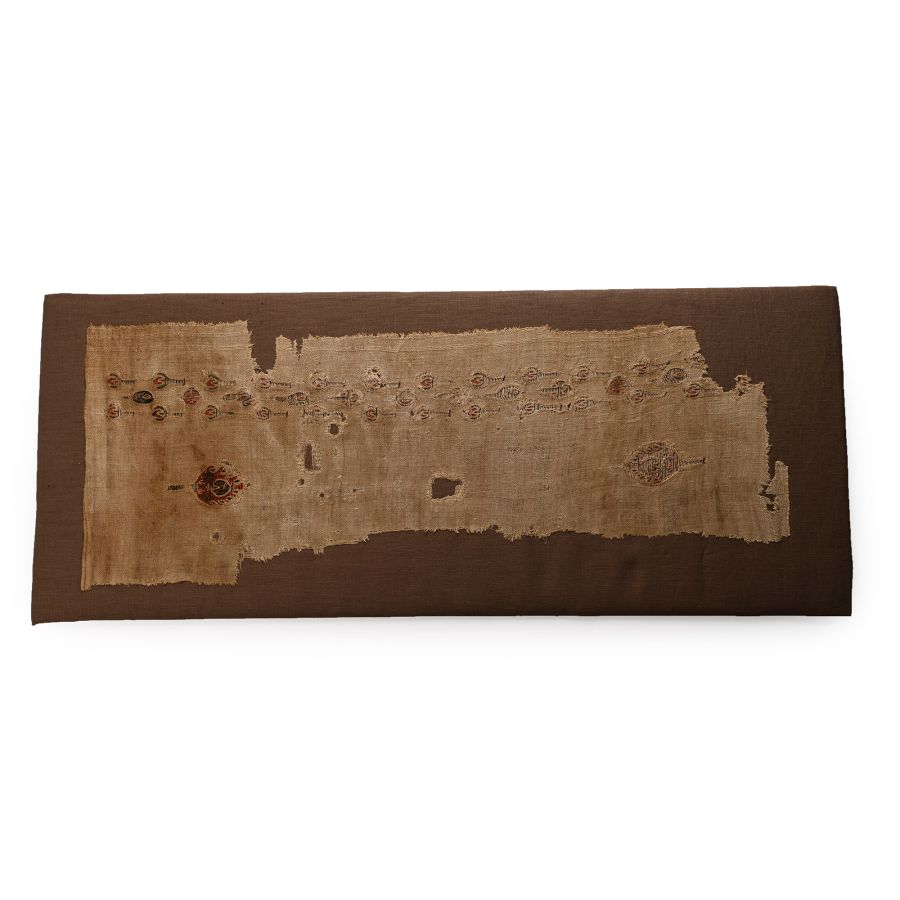
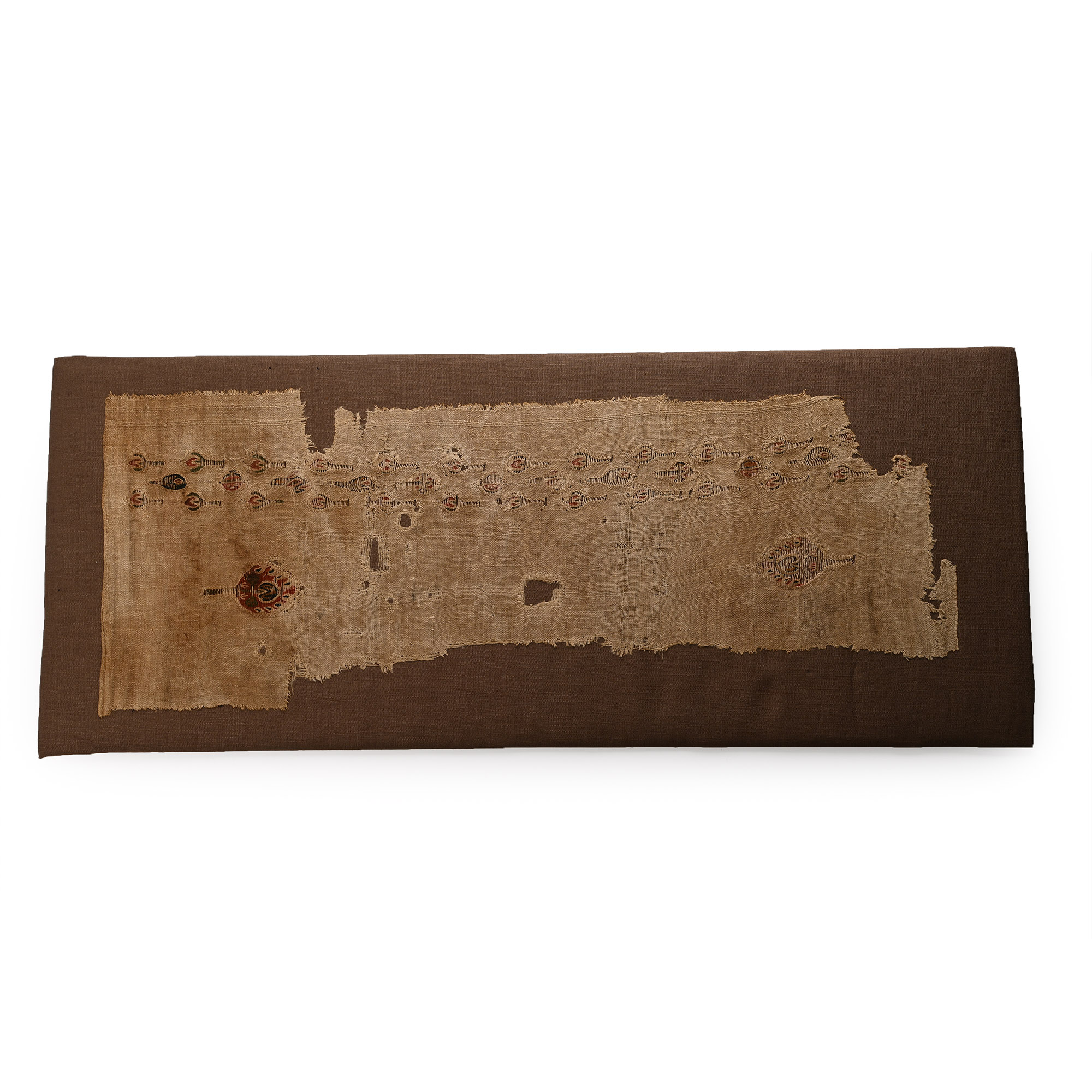
Large Mounted Egyptian Coptic Textile
CIRCA 5TH-7TH CENTURY A.D.
34 in. (345 grams total, mount: 86.5 cm).
Possibly a fragment of a cloak, wool on linen, S-twist tapestry, decorated with a band of lanceolate leaves and two bigger opposed leaves in red, green and yellow colour.
ProvenanceAcquired 1970s-1996.
Property of a North American collector.
London collection, 2016.
Cf. Calament, F., Durand, M., Antinoé, á la vie, á la mode, visions d’élégance dans les solitudes, Lyon, 2013, cat.44-45, for similar.
FootnotesA. Gayet, who excavated the Necropolis of Antinoe, showed that the cloaks of Coptic-era nobles could be ornate, with decoration applied or woven into the fabric. Realised in dark blue, red, orange, yellow, green, brown and off-white linen and wool, the leaves are usually positioned inside a central medallion, also lanceolate, divided by a small leaf surmounted by a flower.
CONDITIONTimeLine Auctions follows a vetting process to ensure the authenticity and legality of all items, reinforcing our commitment to integrity and responsible trading. Each antiquity, antique, and coin lot undergoes thorough examination by a vetting committee of at least ten external specialists, professional trade association members, scientists, and archaeologists: Our Vetting Process
AUCTIONS:
TimeLine is a leading auction house specialising in antiquities, ancient art, collectables, natural history, coins, medals, and books. Our auctions offer museums, collectors, historians, and enthusiasts the opportunity to acquire unique and historically significant pieces.
-
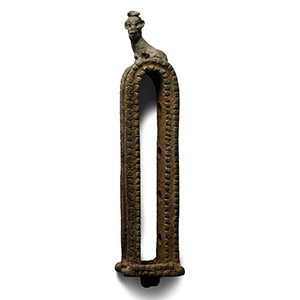
Romano-Egyptian Bronze Sistrum Fragment with Goat
2nd-3rd century A.D.Sold for (Inc. bp): £117
Comprising a slender U-shaped body with beaded border, the sides with four pairs of piercings to accept separate crossbars, an applied goat resting atop the body. 73.7 grams, 10.8 cm
Ex Paul Munro-Walker, Bournemouth, Hampshire, UK, 1980s. From a UK collection since before 1990.
When the sistrum was shaken, copper or bronze discs on its crossbars would rattle against each other, creating a clashing sound. The ancient Egyptian name for the sistrum, sesheshet, is onomatopoeic and mimics this sound. -
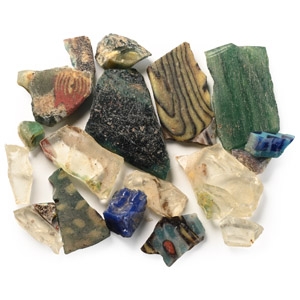
Romano-Egyptian Mosaic Glass Fragments
Circa 1st century A.D.Estimate: £100 - 140 (+bp*)
Opening Bid: £50
Including geometric and other patterns. 18 grams total, 5-30 mm
Ex Gallery Mikazuki prior to 1984. Propery of a London, UK, gentleman. -
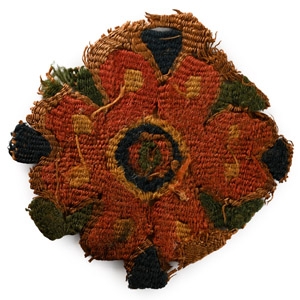
Egyptian Coptic Textile Fragment
Circa 5th-6th century A.D.Sold for (Inc. bp): £195
Central part of an orbiculus representing a six-petalled flower, S torsion, in red, yellow, olive green and blue wool. 11 grams total including package, 74 mm
Acquired 1970s-1996. Property of a North American collector. London collection, 2016.
Similar figures are widely presented in Coptic textiles, repeating a pattern in which flowers are usually paired with bird figures. This decoration is typical of tunics, but it was also used in large-scale textiles intended for domestic or funerary furnishings.
