
Loading, please wait...
LOT 0382
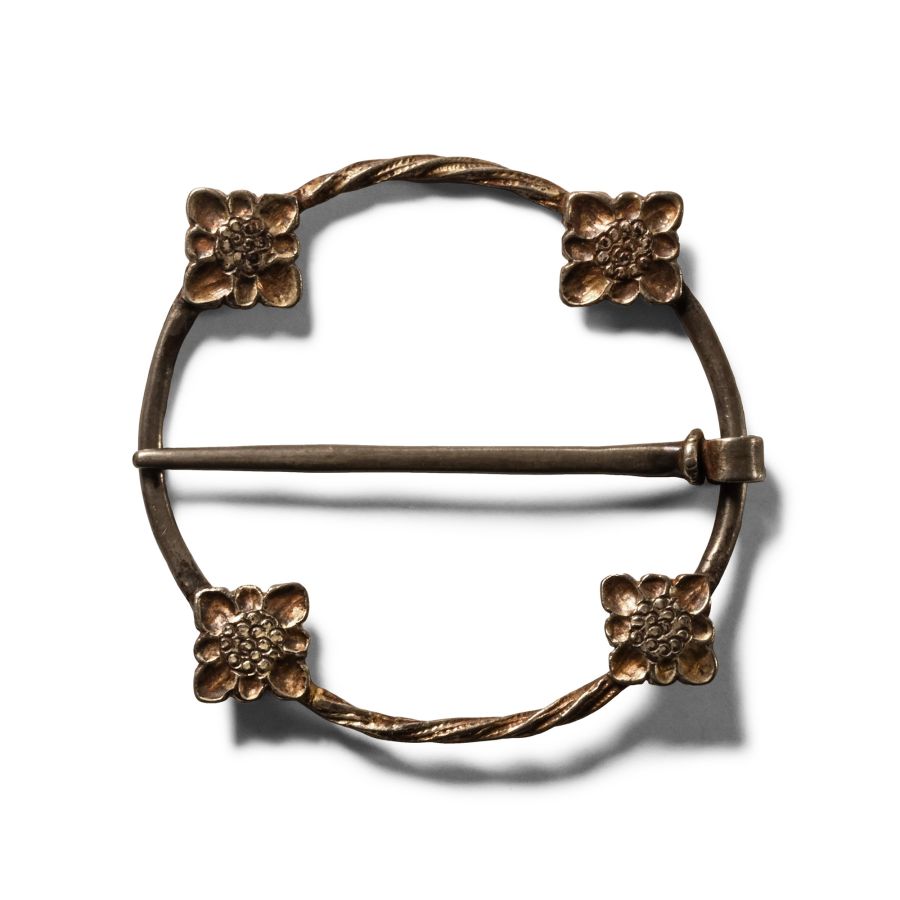
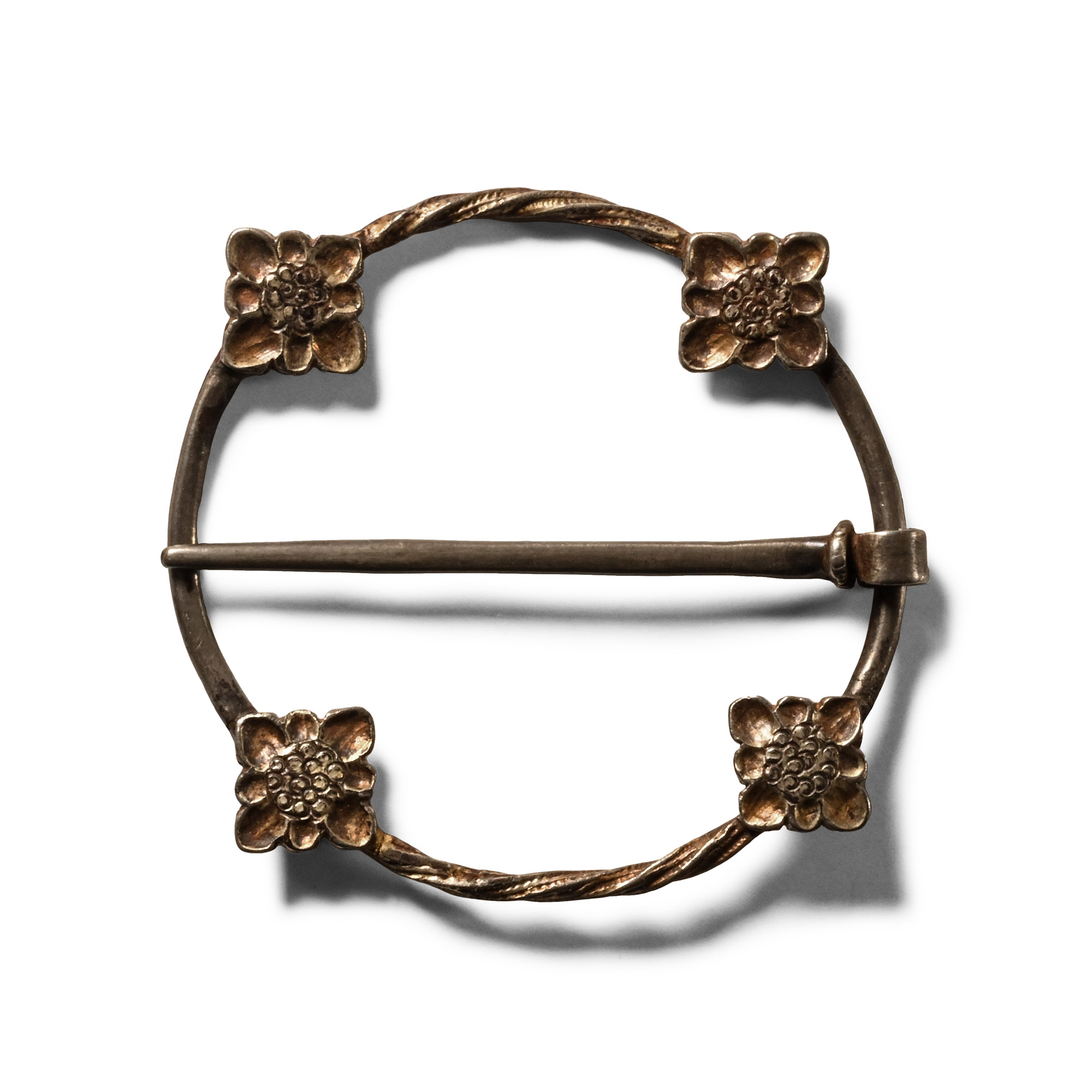
Large Medieval 'Published' Silver-Gilt Annular Brooch with Flowers
13TH-14TH CENTURY A.D.
1 3/4 in. (7.29 grams, 46 mm).
With slender hoop and four applied quatrefoil plates, alternating plain and twisted hoop sections; free-running pin. [No Reserve]
ProvenanceFrom the collection of the famous author, writer and speaker, Gordon Bailey, Essex, UK; formed since 1968.
PublishedPublished on the front cover of Bailey, G., Detector Finds 1, Witham, 1992, also p.47-48, no.6; and Bailey, G., Buttons & Fasteners 500 BC-AD 1840, Witham, 2004, p.107, fig.(1)3.26.
CONDITIONTimeLine Auctions follows a vetting process to ensure the authenticity and legality of all items, reinforcing our commitment to integrity and responsible trading. Each antiquity, antique, and coin lot undergoes thorough examination by a vetting committee of at least ten external specialists, professional trade association members, scientists, and archaeologists: Our Vetting Process
AUCTIONS:
TimeLine is a leading auction house specialising in antiquities, ancient art, collectables, natural history, coins, medals, and books. Our auctions offer museums, collectors, historians, and enthusiasts the opportunity to acquire unique and historically significant pieces.
LOT 0382
Large Medieval 'Published' Silver-Gilt Annular Brooch with Flowers
Sold for (Inc. bp): £338
-
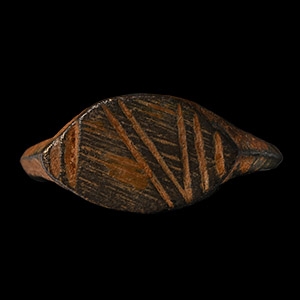
Medieval Bronze Ring with Linear Design
14th century A.D.Sold for (Inc. bp): £13
With carinated hoop, scaphoid bezel, incised zigzag design. 1.42 grams, 18.89 mm.
Acquired on the UK art market. Property of a Essex, UK, collector. -

Norman Bronze Hunting Dog Swivel Collection
11th-12th century A.D.Sold for (Inc. bp): £104
Elaborate swivel with large openwork bulbs and decorative motifs; many of these objects are published in the Detector Finds book series. 103 grams total, 32-47 mm
From the collection of the famous author, writer and speaker, Gordon Bailey, Essex, UK; formed since 1968. -
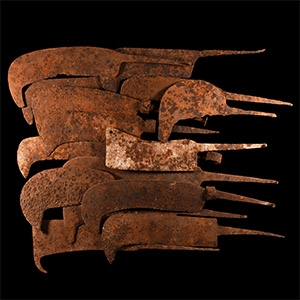
Medieval Iron Cleaver Group
15th-17th century A.D.Sold for (Inc. bp): £26
Comprising hook-ended examples together with one square-ended example. 8 kg total, 25-48 cm
Acquired 1990s-early 2000s. East Anglian private collection.
During the Roman period chopping tools such as cleavers were predominantly used whilst during the medieval period knives and cleavers were the preferred tools for butchering carcasses. Cleavers were also often depicted in medieval art as having riveted handles. Such handles made a cleaver more durable, whilst using steel as a component of the blade made it last longer.
