
Loading, please wait...
LOT 1387
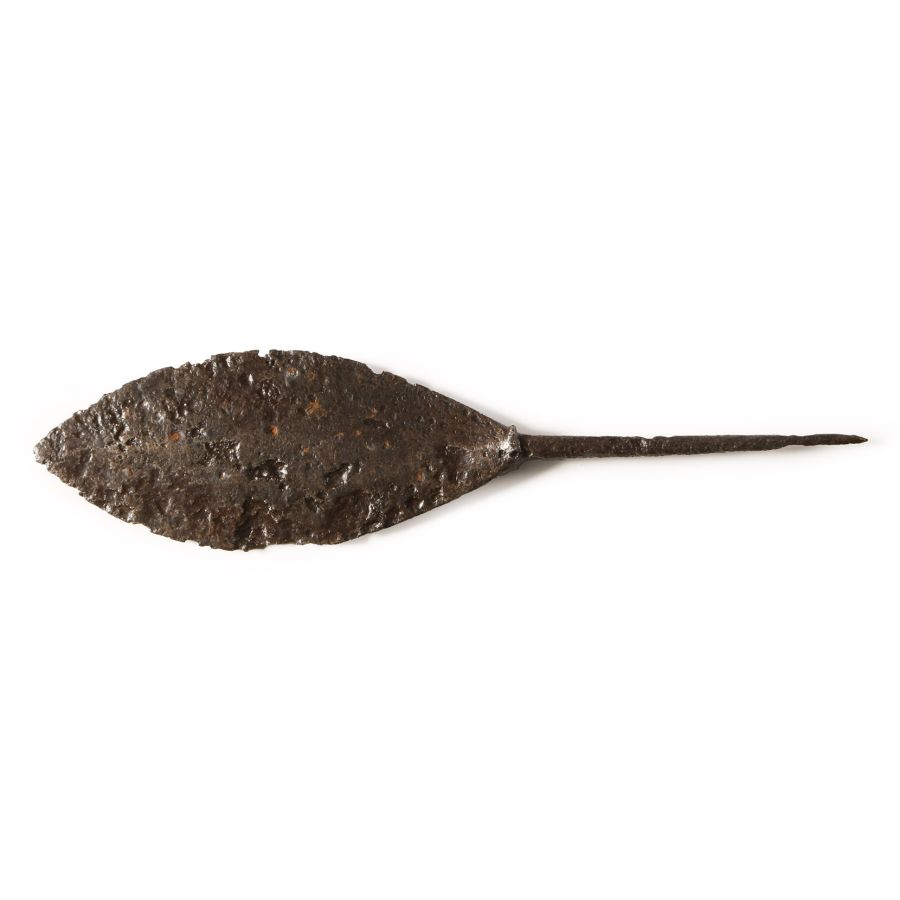
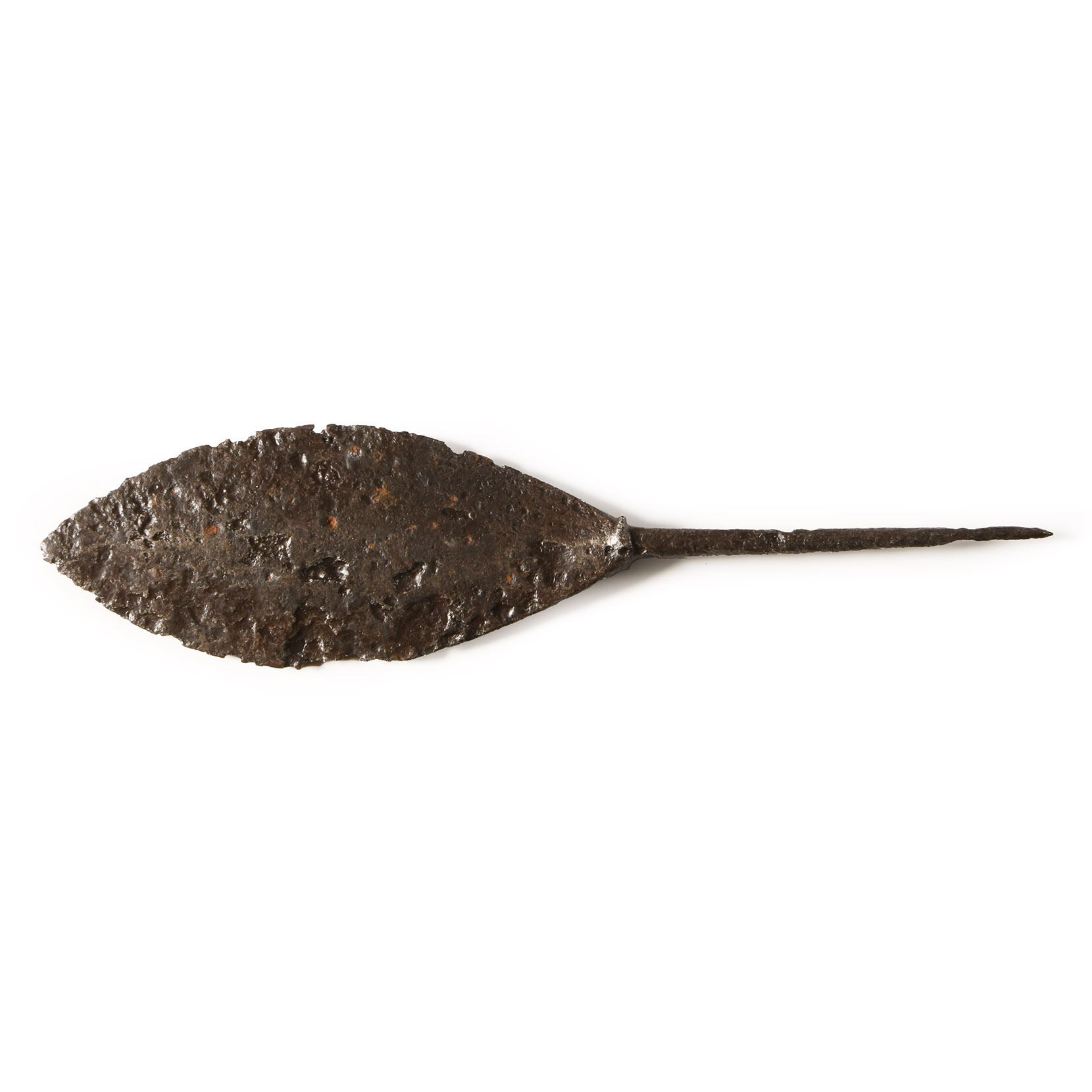
Large Medieval Leaf-Shaped Iron Arrowhead
13TH-15TH CENTURY A.D.
6 1/2 in. (36.8 grams, 16.5 cm).
Comprising a broad scaphoid blade and bolster to the neck, round-section tang. [No Reserve]
ProvenanceAcquired York Antiques, Yorkshire, UK, in 2012.
Property of a Kent lady collector.
Accompanied by an original certificate of authenticity signed by Garry Edwards.
TimeLine Auctions follows a vetting process to ensure the authenticity and legality of all items, reinforcing our commitment to integrity and responsible trading. Each antiquity, antique, and coin lot undergoes thorough examination by a vetting committee of at least ten external specialists, professional trade association members, scientists, and archaeologists: Our Vetting Process
AUCTIONS:
TimeLine is a leading auction house specialising in antiquities, ancient art, collectables, natural history, coins, medals, and books. Our auctions offer museums, collectors, historians, and enthusiasts the opportunity to acquire unique and historically significant pieces.
-
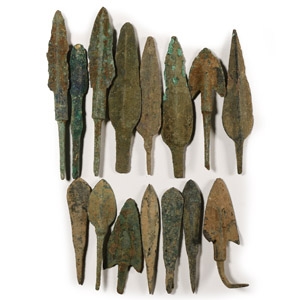
Luristan Bronze Arrowhead Group
Circa 13th-7th century B.C.Sold for (Inc. bp): £130
Including leaf-shaped, barbed-and-tanged, ribbed and other types. 200 grams total, 6.1-10.6 cm
Acquired 1980-2015. Ex Abelita family collection. -
.jpg)
North-West Persian Bronze Short Sword with Mushroom Pommel
Late 2nd-early 1st millennium B.C.Sold for (Inc. bp): £2,600
The hilt with conical openwork hollow-cast pommel, grip decorated with horizontal grooves and twisted zig-zag pattern, crescentic guard decorated with waves, long blade with ridged mid-grip. 613 grams, 58.5 cm
Kuizenga collection, the Netherlands, acquired in Utrecht 21 December 1977. with Bonhams, London, 7 December 2023, no.154.
This category of swords has been classified by Khorasani as 'swords with a mushroom pommel' and are usually characterised by a solid-cast hilt with a penannular guard, a ribbed or variously decorated grip and the conical hollow-cast mushroom pommel. Usually the blade is multi-fullered and tapers to a sharp tip. Moorey considers them to be from the end of the 2nd millennium B.C. -
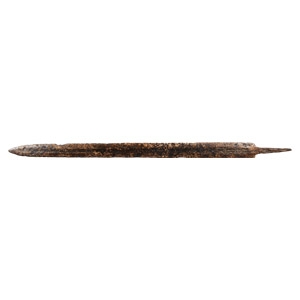
Roman Pattern-Welded 'Damascus' Iron Sword
3rd-4th century A.D.Estimate: £2,000 - 3,000 (+bp*)
Opening Bid: £800
A spatha with double-edged blade of Osterburken-Kemathen Type, fullers with damask pattern (rosette damask technique B.II.I.2), sturdy tang with remains of wood; the blade cleaned and conserved on one side. 659 grams, 85.5 cm
Excellent preserved blade
From the private collection of a London gentleman, from his grandfather's collection formed before the early 1970s. Accompanied by an academic report by Dr Raffaele D’Amato. This lot has been checked against the Interpol Database of stolen works of art and is accompanied by a search certificate number no. 11923-209660.
