
Loading, please wait...
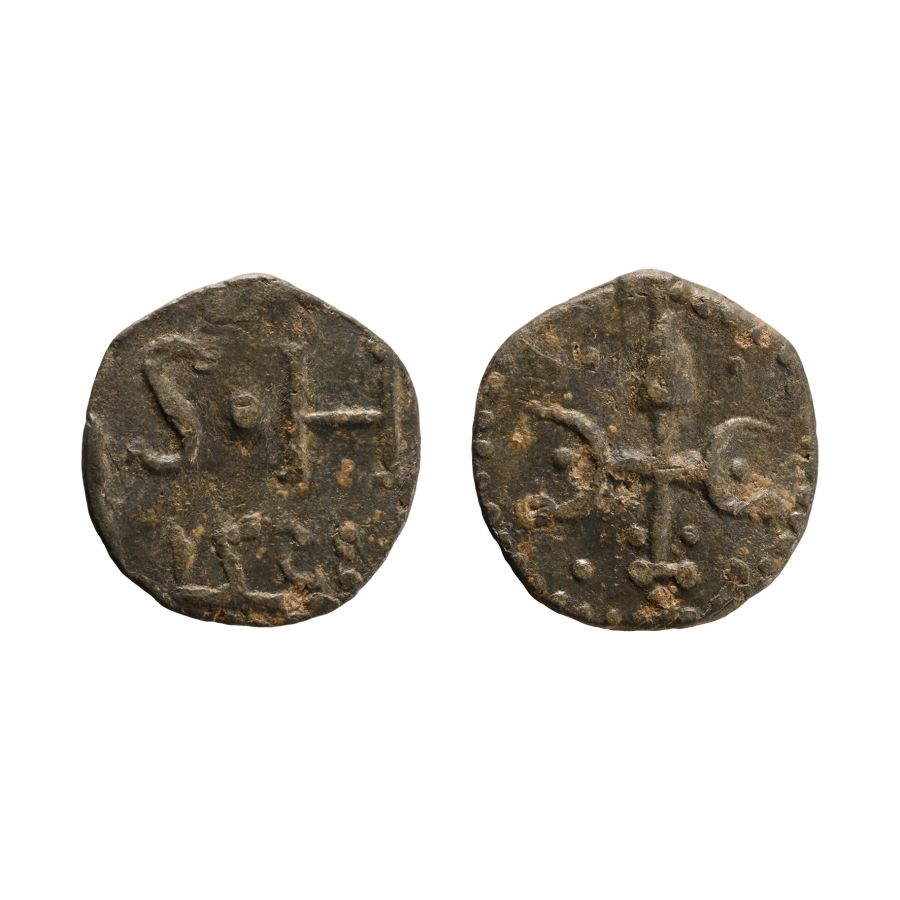
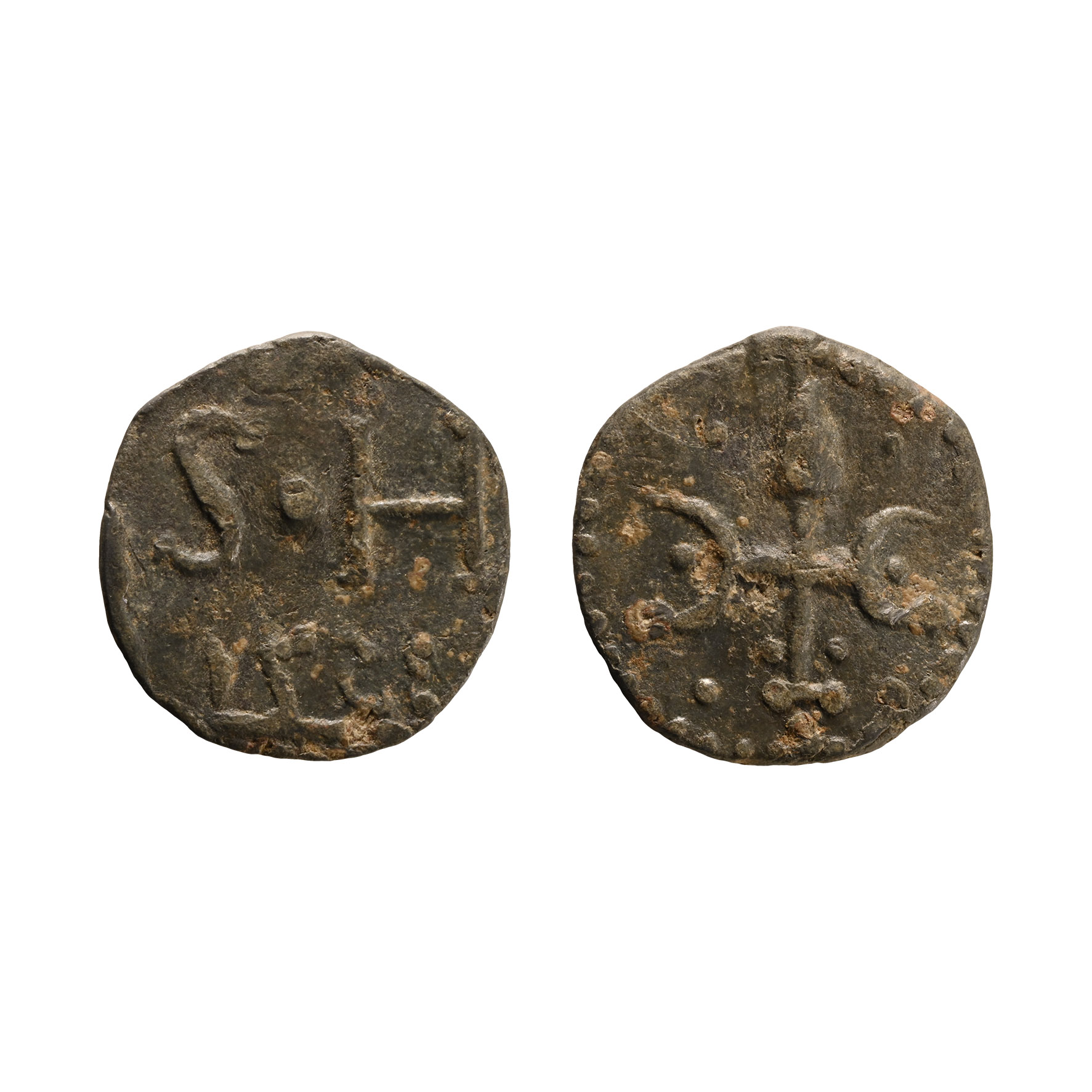
LOT 1644
Large Medieval Lead Merchant's Token
14TH-16TH CENTURY A.D.
1 in. (8.4 grams, 26 mm).
Discoid, the obverse with initials HS separated by a pellet; the reverse with a large cross with crescentic terminals, pellets to the field. [No Reserve]
ProvenanceProperty of a North London, UK, gentleman.
CONDITIONTimeLine Auctions follows a vetting process to ensure the authenticity and legality of all items, reinforcing our commitment to integrity and responsible trading. Each antiquity, antique, and coin lot undergoes thorough examination by a vetting committee of at least ten external specialists, professional trade association members, scientists, and archaeologists: Our Vetting Process
AUCTIONS:
TimeLine is a leading auction house specialising in antiquities, ancient art, collectables, natural history, coins, medals, and books. Our auctions offer museums, collectors, historians, and enthusiasts the opportunity to acquire unique and historically significant pieces.
-
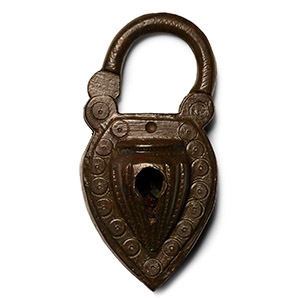
Medieval Bronze Padlock
14th-16th century A.D.Sold for (Inc. bp): £234
The body decorated with ring-and-dot motifs; the hinged, semi-circular hoop retained within the body of the lock; the keyhole in a piriform panel; complete. 36.1 grams, 57 mm
Ex German art market, 2000s. Acquired from an EU collector living in London. From the collection of Surrey, UK, gentleman. -
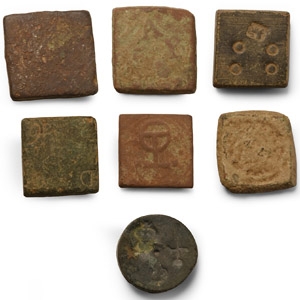
Medieval and Later Coin Weight Group
15th-19th century A.D.Sold for (Inc. bp): £46
Including discoid and square types with punched numerical values to one face. 28 grams total, 14-16 mm
Found Cambridgeshire, UK. -
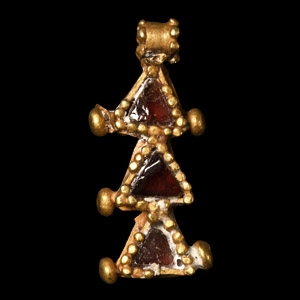
Medieval Gold and Garnet Pendant
Circa 14th-16th century A.D.Sold for (Inc. bp): £117
Comprising three triangular bifacial garnet cloisons each set in a gold cell with granulation to both faces, tiered and provided with a granulated loop above. 1.56 grams, 16 mm
Ex property of a late Japanese collector, 1970-2000s.
