
Loading, please wait...
LOT 0384
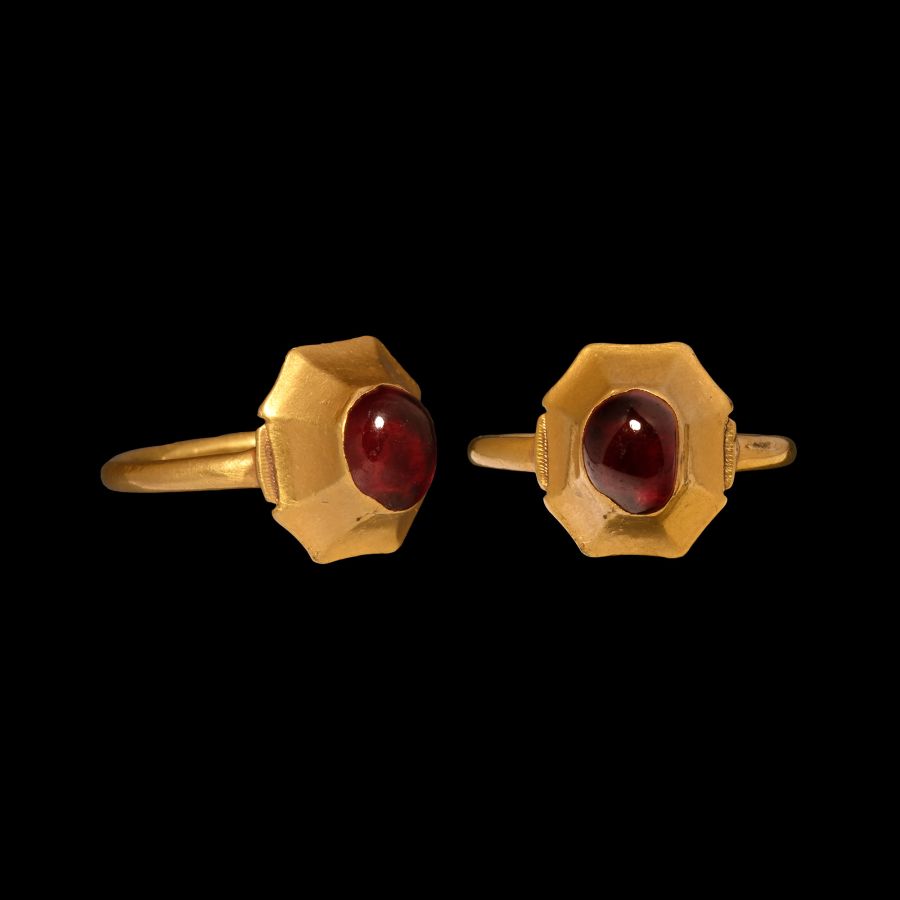
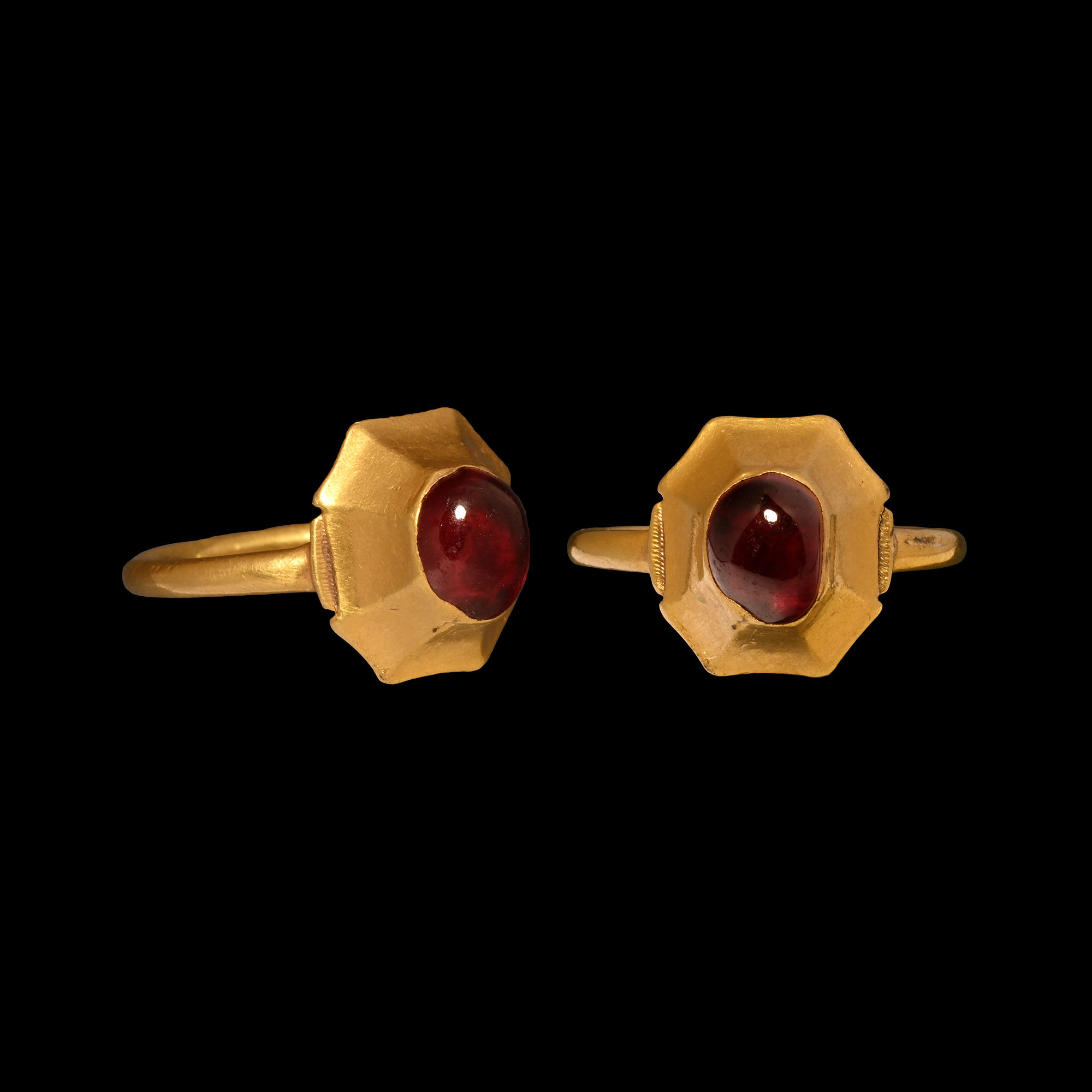
Large Medieval Gold Ring with Cabochon Garnet
13TH CENTURY A.D.
1 1/8 in. (6.19 grams, 28.88 mm overall, 20.15 mm internal diameter (approximate size British S, USA 9, Europe 20, Japan 19)).
With slender hoop, octagonal bezel with scooped profile, inset garnet cabochon at the apex.
ProvenanceAcquired on the European art market in the 1990s.
UK collection of a European gentleman.
This lot has been checked against the Interpol Database of stolen works of art and is accompanied by a search certificate number no.12296-219624.
Cf. Chadour, A.B., Rings. The Alice and Louis Koch Collection, volume I, Leeds, 1994, item 560, for type.
CONDITIONTimeLine Auctions follows a vetting process to ensure the authenticity and legality of all items, reinforcing our commitment to integrity and responsible trading. Each antiquity, antique, and coin lot undergoes thorough examination by a vetting committee of at least ten external specialists, professional trade association members, scientists, and archaeologists: Our Vetting Process
AUCTIONS:
TimeLine is a leading auction house specialising in antiquities, ancient art, collectables, natural history, coins, medals, and books. Our auctions offer museums, collectors, historians, and enthusiasts the opportunity to acquire unique and historically significant pieces.
-
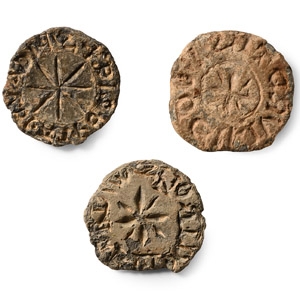
Medieval Lead Seal Matrix Collection
14th century A.D.Sold for (Inc. bp): £33
Each with a loop to the reverse, central rosette and surrounding legend to the rim. 36.93 grams total, 26-29 mm
From the collection of the famous author, writer and speaker, Gordon Bailey, Essex, UK; formed since 1968. -
.jpg)
Medieval Iron Horseshoe Group
Circa 15th-16th century A.D.Sold for (Inc. bp): £39
Mainly formed with broad plate and countersunk rectangular nail-holes. 1.2 kg total, 2.5-13.5 cm
From the collection of B. Posey, Germany 1990s. -
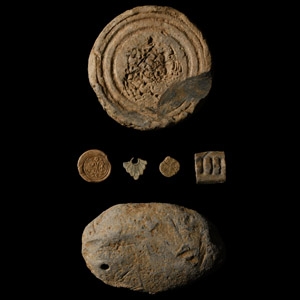
Medieval and Other Lead Artefact Group
14th-18th century A.D.Sold for (Inc. bp): £7
Mixed lead group comprising: an ellipsoid plano-convex leatherworker's palm-guard; a large discoid weight with concentric rings; a discoid casting from a badge; a strap slider; a foliage pane; a scallop-shaped token. 995 grams total, 12-83 mm
Found whilst searching in Devon and Somerset, UK.
