
Loading, please wait...
LOT 0305
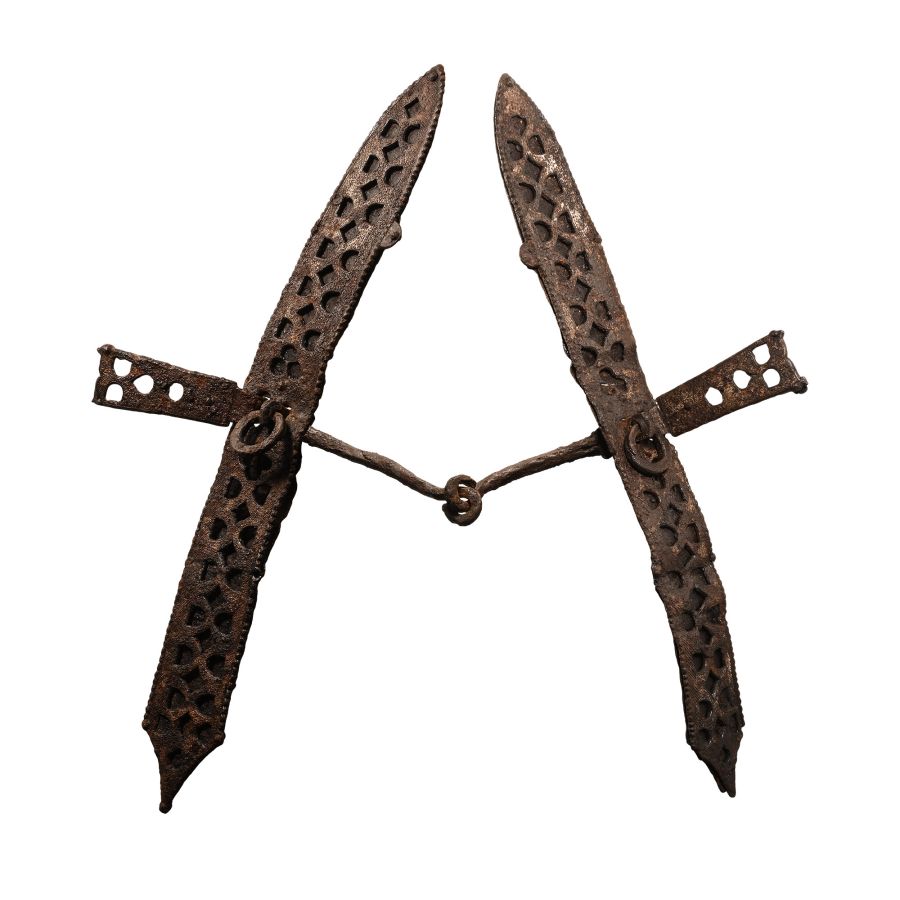
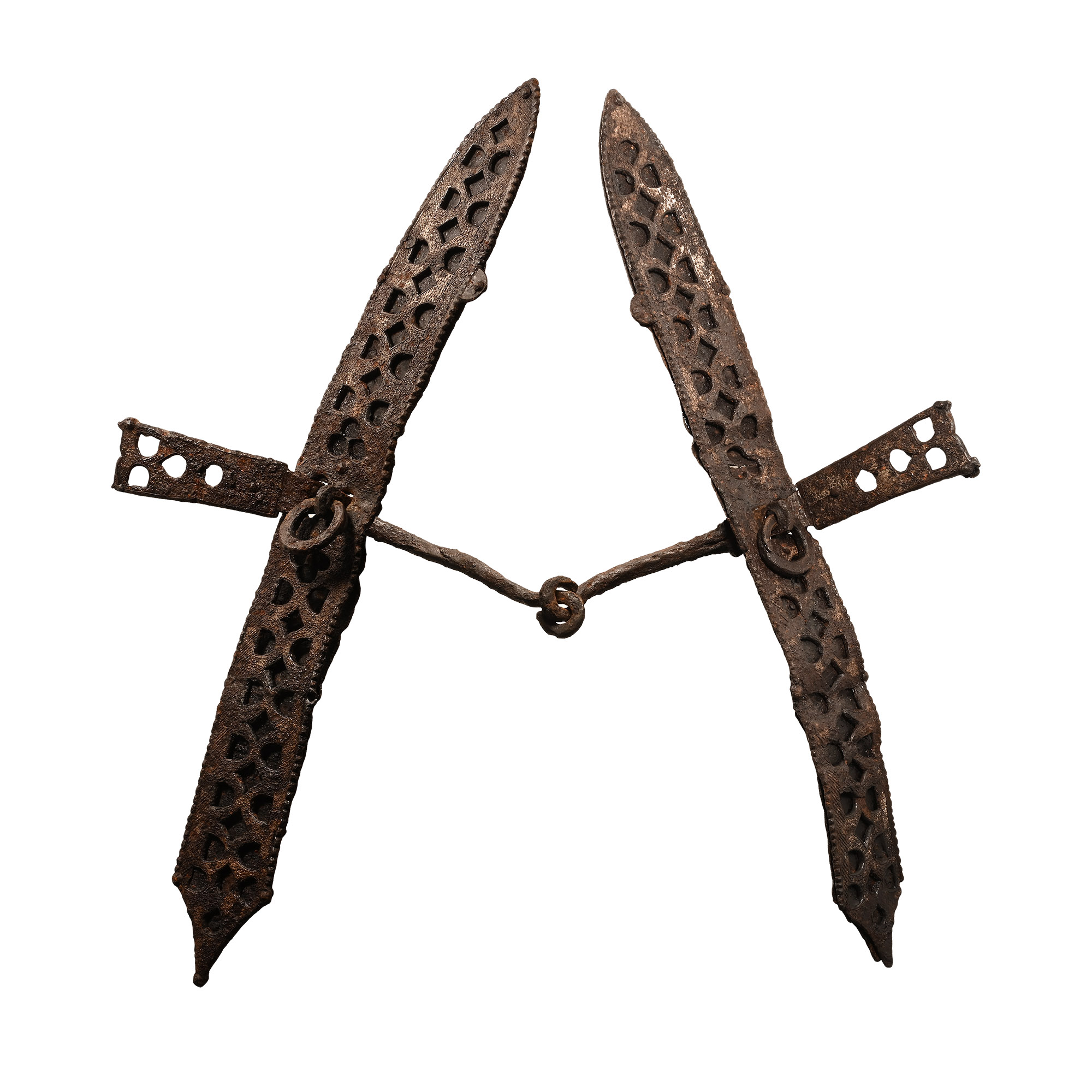
Large Medieval Eurasian Iron Knight's Military Horse Bit
12TH-13TH CENTURY A.D.
14 3/4 in. (624 grams, 37.5 cm).
The snaffle bit with two rectangular openwork cheekpieces decorated with an openwork plaque, the surface ornamented with scales and lozenge elements.
ProvenanceFrom the private collection of a London gentleman, from his grandfather's collection formed before the early 1970s.
LiteratureCf. Shcerbakov, I. Dzys, Ledovoe Battle, 1242 A.D. (The Battle of the Peipus Lake), Moscow, 2001 (in Russian), fig.12, for a similar bit.
FootnotesThe snaffle bits consisted of two parts: a bit, which was placed in the horse's mouth, and cheekpieces, which were connected to the reins and head strap.
CONDITIONTimeLine Auctions follows a vetting process to ensure the authenticity and legality of all items, reinforcing our commitment to integrity and responsible trading. Each antiquity, antique, and coin lot undergoes thorough examination by a vetting committee of at least ten external specialists, professional trade association members, scientists, and archaeologists: Our Vetting Process
AUCTIONS:
TimeLine is a leading auction house specialising in antiquities, ancient art, collectables, natural history, coins, medals, and books. Our auctions offer museums, collectors, historians, and enthusiasts the opportunity to acquire unique and historically significant pieces.
LOT 0305
Large Medieval Eurasian Iron Knight's Military Horse Bit
Sold for (Inc. bp): £1,105
-
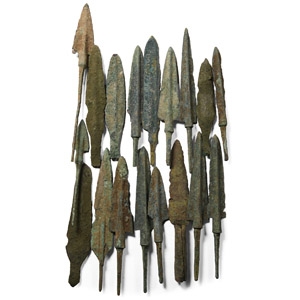
Luristan Bronze Arrowhead Collection
Circa 13th-8th century B.C.Sold for (Inc. bp): £286
Including leaf-shaped, barbed, and other types, all tanged, except one socketted. 428 grams total, 9.5-15.6 cm
Ex London, UK, collection, 1990s.
Majority of these arrowheads seem to belong to the type V, subcategory types A and C according to the classification of Khorasani and Negahban. In the four categories of triangular bronze arrowheads from Luristan, Marlik and Northern Iran individuated by Negahban, subtypes A and C of type V are larger arrow heads with barbed shoulders and triangular heads. Very interesting is the socketted type: Greek, dated at the 8th century B.C. -
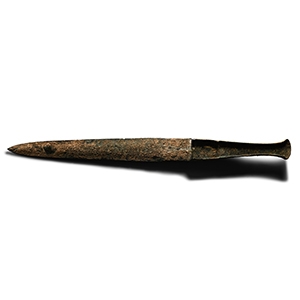
Luristan Bronze Dirk
13th-12th century B.C.Estimate: £300 - 400 (‡+bp*)
Opening Bid: £167
With lentoid-section blade, tongue-shaped in plan, integral tapering hilt with flared finial, lateral flanges to accept a panel of bone or wood to each face forming the grip. 174 grams, 34 cm
Ex Joseph J. Gancie (1923-2010), Washington, Silver Spring, Maryland. with Alex Cooper Auctioneers Inc., sale 1035, 27 January 2013, lot 162a.
The dirk belongs to the type III in the Medvedskaya classification, used in Near East from the 13th to the 6th century B.C. The type is the 32a of the Maxwell-Hyslop study. The Asiatic daggers of this type are confined to Syria and Persia, but Transcaucasia also provides an interesting analogy from Kalekent on the Baku peninsula, where a pointed straight-sided dagger blade has a flanged hilt with the whole of the side flanges bent over the centre. -
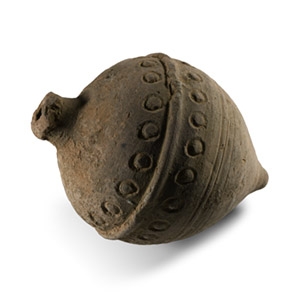
Byzantine 'Greek Fire' Ceramic Fire Bomb or Hand Grenade
9th-11th century A.D.Sold for (Inc. bp): £104
A spherical ceramic missile with stepped shoulder and impressed annulets, domed filler-hole, intended to be filled with explosive liquid and wick, used as a hand grenade. 494 grams, 12.5 cm
From a military inspired collection formed from the 1990s. Accompanied by an academic paper by military specialist Dr Raffaele D'Amato, dated 15 July 2019 and titled 'Eastern Roman Empire - Greek Fire Bomb or Hand Grenade (μεσαίον kακάβιον) 9th-11th century AD'.
Apart from the use of siphons or manual flame-throwers called cheirosiphona, special corps of Roman soldiers employed terracotta grenades, in the form of small jars, abundantly evidenced in archaeological excavations. They were called μεσαία kακαβιά or κυτροκακάβια where the former had a bulbous shape and the latter a more cylindrical form.
