
Loading, please wait...
LOT 1842
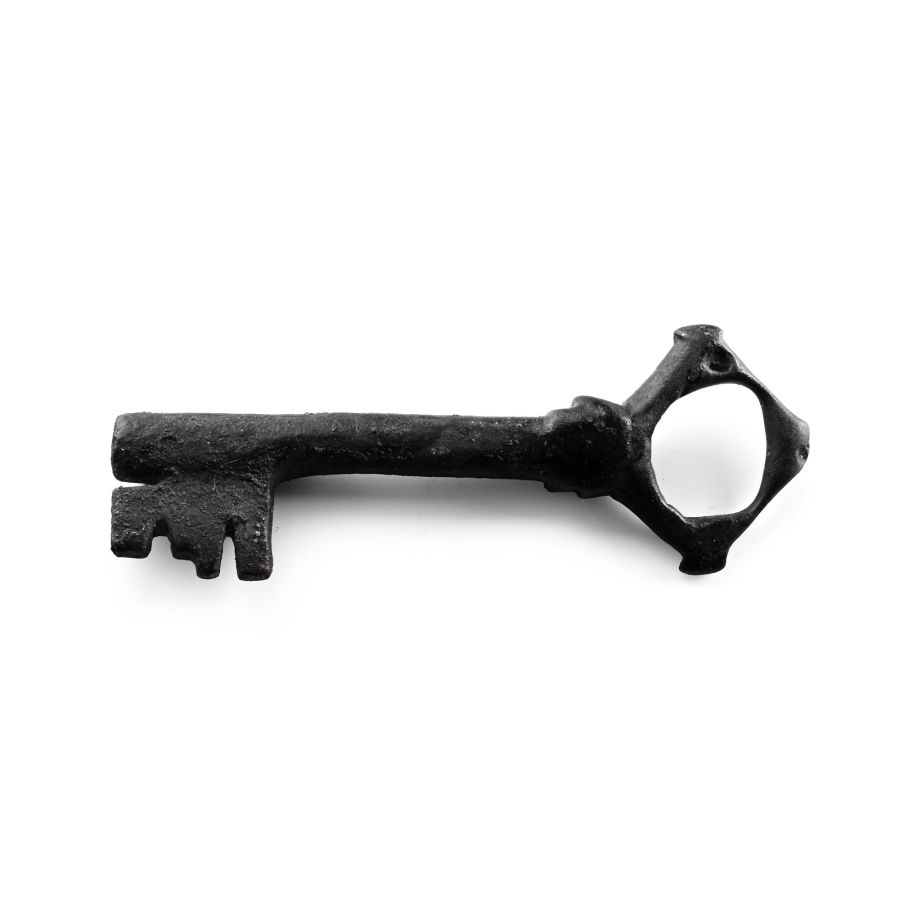
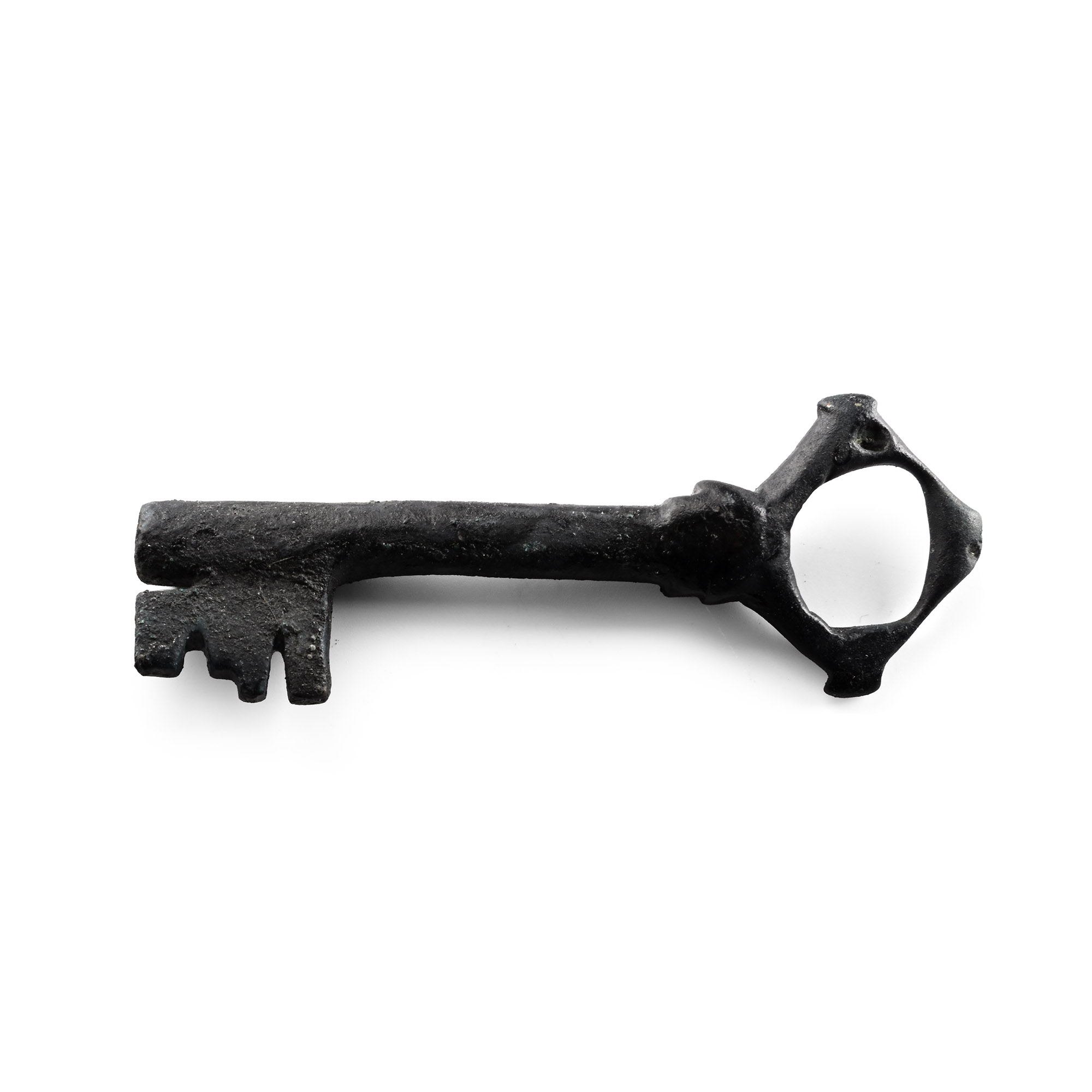
Large Medieval Bronze Door Key
14TH-15TH CENTURY A.D.
3 1/4 in. (38 grams, 83 mm).
Tubular-section shank, lozengiform bow with lobes to three corners, large rectangular bit with clefts and grooved wards. [No Reserve]
ProvenanceFrom the collection of a Buckinghamshire, UK, collector established from the earlier 1960s.
LiteratureCf. Medieval Catalogue, London Museum Catalogues: No.7, 1940, p.XXIX, nos.18.
CONDITIONTimeLine Auctions follows a vetting process to ensure the authenticity and legality of all items, reinforcing our commitment to integrity and responsible trading. Each antiquity, antique, and coin lot undergoes thorough examination by a vetting committee of at least ten external specialists, professional trade association members, scientists, and archaeologists: Our Vetting Process
AUCTIONS:
TimeLine is a leading auction house specialising in antiquities, ancient art, collectables, natural history, coins, medals, and books. Our auctions offer museums, collectors, historians, and enthusiasts the opportunity to acquire unique and historically significant pieces.
-
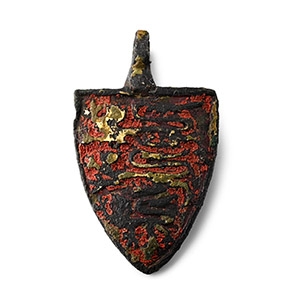
Medieval Knight's Gilt Bronze Royal Heraldic Horse Harness Pendant with Three Lions
Circa 14th century A.D.Sold for (Inc. bp): £143
Heater-shaped with pierced lug above; reserved border and three lions passant gardant on a red enamelled field. 10.7 grams, 42 mm
Acquired on the UK art market in the 1980s. From an East Anglian private collection. -
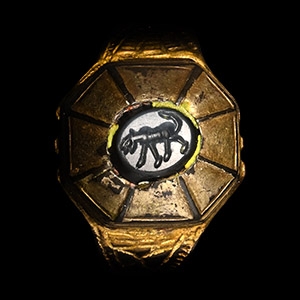
Large Medieval Silver-Gilt Ring with Lion Intaglio
14th-16th century A.D.Sold for (Inc. bp): £468
With a broad hoop, each shoulder decorated with a pointillé geometric motif, octagonal-section domed bezel with segmented upper and corrugated sidewall; inset nicolo with advancing lion motif. 9.96 grams, 31.53 mm overall, 19.51x23.08 mm internal diameter (approximate size British V 1/2, USA 10 3/4, Europe 24.40, Japan 23)
with Archaeologia, Switzerland, before 1983. Ex private North American collection. London private collection, 2016. -
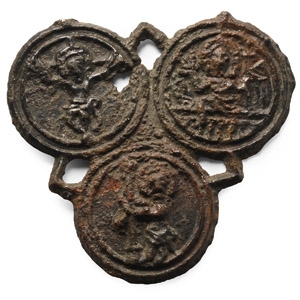
Medieval Dutch Pewter Holy Blood Of Wilsnack Pilgrim's Badge
14th-15th century A.D.Sold for (Inc. bp): £85
Trilobate in plan with openwork triangle between three roundels with hatched fields, the upper two surmounted by crosses, depicting scenes from Christ's life: the crucifixion, resurrection and Christ at the Column in relief. 3.39 grams, 31 mm
Ex European collection, 1990s. Ex Cambridgeshire, UK, collection.
In 1383 AD, after fire in the town of Bad Wilsnack, Germany) three consecrated communion hosts were found undamaged in the ruins of the church. According to the legend, they were sprinkled with the Holy Blood of Christ, which made Bad Wilsnack a famous pilgrimage site. The resultant pilgrim badges were distinctive in shape with three circles arranged in a triangle and painted in red, referring to this miracle. Although the miracle was doubted by Reformation period scholars like John Hus, the final blow came in 1552, when the miraculous communion hosts were publicly burned.
