
Loading, please wait...
LOT 1392
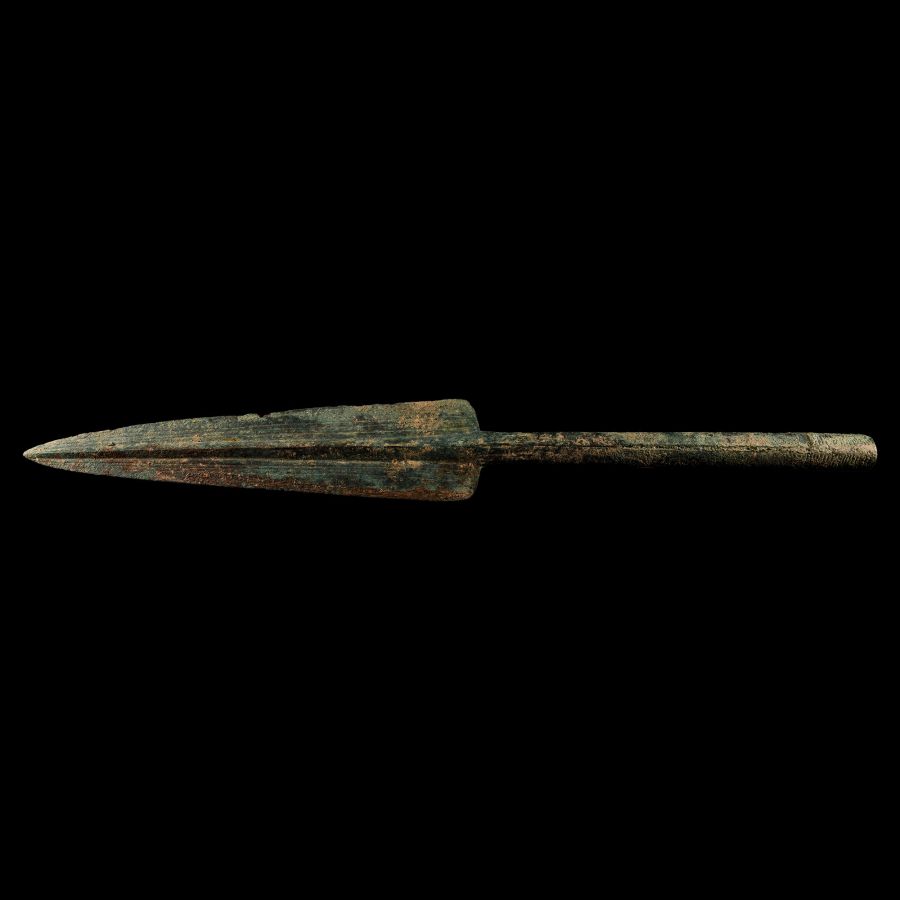
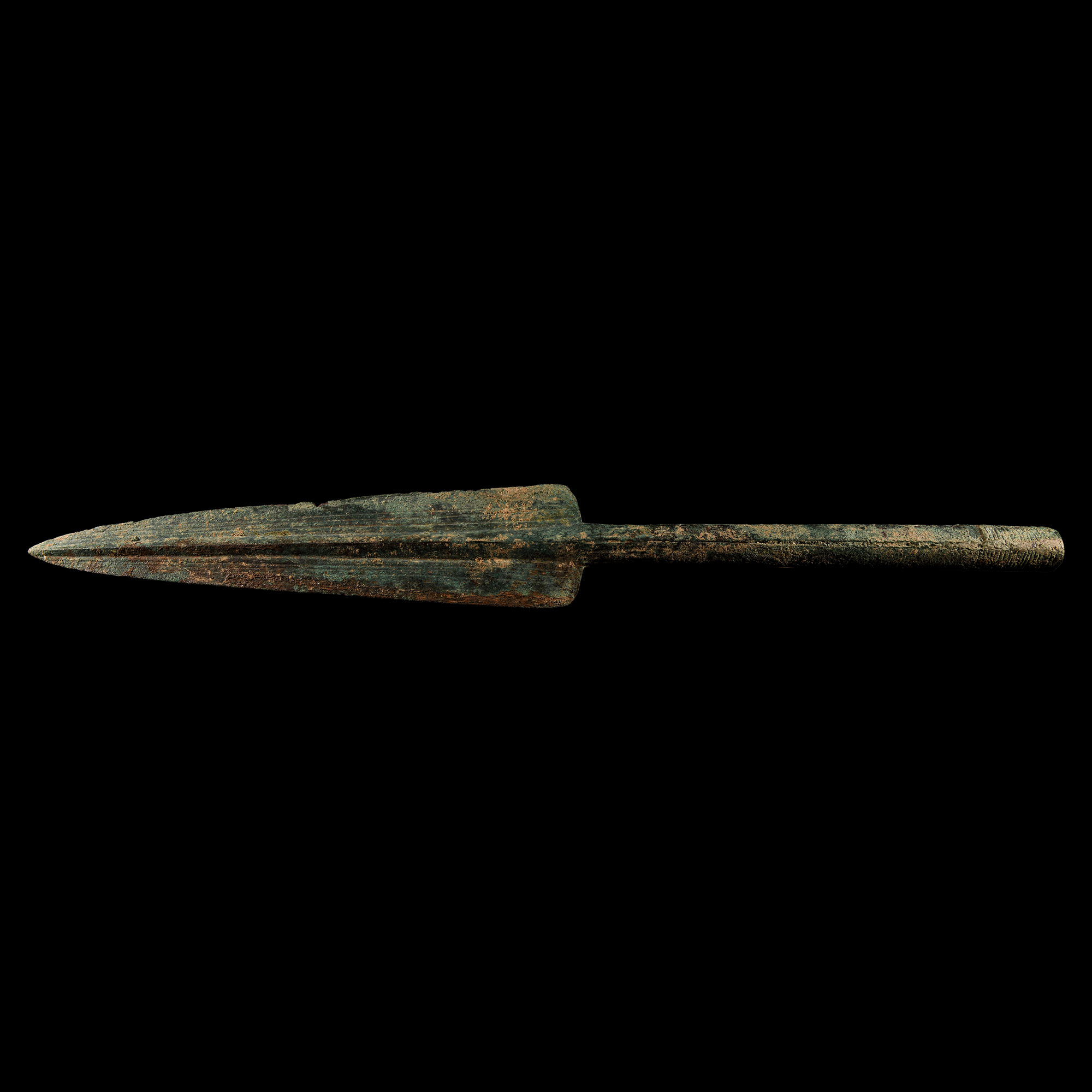
Large Marlik Type Bronze Socketted Spearhead with Blood Channels
14TH-10TH CENTURY B.C.
18 7/8 in. (336 grams, 48 cm).
Comprising a triangular blade with prominent midrib, long split socket with two piercings for attachment and lower part decorated by horizontal circular grooves.
ProvenanceAcquired 1980-2015.
Ex Abelita family collection.
Cf. Khorasani, M.M., Arms and Armour from Iran - The Bronze Age to the End of the Qajar Period, Tuebingen, 2006, p.626, cat.271.
FootnotesAccording to Khorasani, this spearhead belongs to the type VIII of his classification, characterised by a well-projecting midrib and long folded socket. The triangular blade is related to the subtype 2. Similar spearhead was excavated by Dr Negahban in the Royal Cemetery of Marlik (tomb 2, trench III D).
CONDITIONTimeLine Auctions follows a vetting process to ensure the authenticity and legality of all items, reinforcing our commitment to integrity and responsible trading. Each antiquity, antique, and coin lot undergoes thorough examination by a vetting committee of at least ten external specialists, professional trade association members, scientists, and archaeologists: Our Vetting Process
AUCTIONS:
TimeLine is a leading auction house specialising in antiquities, ancient art, collectables, natural history, coins, medals, and books. Our auctions offer museums, collectors, historians, and enthusiasts the opportunity to acquire unique and historically significant pieces.
LOT 1392
Large Marlik Type Bronze Socketted Spearhead with Blood Channels
Sold for (Inc. bp): £211
-
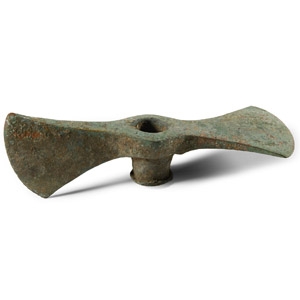
Large Luristan Bronze Socketted Axe-Adze
13th-7th century B.C.Sold for (Inc. bp): £195
With tapering socket and flared rim to the mouth, vertical axe-blade with curved cutting edge, horizontal adze blade of similar proportions. 1.14 kg, 24 cm
Acquired 1980-2015. Ex Abelita family collection.
The earliest axe-adzes from the 3rd millennium B.C. were weapons and tools furnished with socketted holes. Usually the socket is a more secure way of attaching the object to a wooden haft than having a tang. These weapons developed into a range of different forms in the 2nd millennium B.C., which were used until at least 800 B.C. -
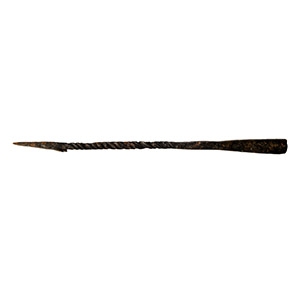
Medieval Iron Arrowhead
Circa 14th-16th century A.D.Sold for (Inc. bp): £59
Composed of a rectangular-section tip with a single barb, twisted shank and a tubular socket with a single piercing. 7.85 grams, 12 cm
Found Norfolk, UK. -
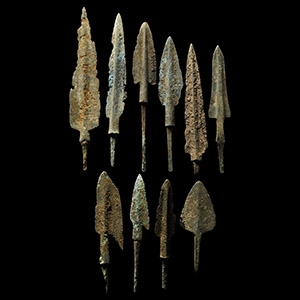
Luristan Bronze Arrowhead Group
13th-6th century B.C.Sold for (Inc. bp): £221
Mainly tanged examples of barbed and leaf-shaped types. 220 grams total, 7.5-13.6 cm
Acquired 1990s. From the collection of a late Japanese weaponry collector.
Although some of them are different in shape, these arrowheads are apparently related types of a polythetic group. Two basic deltoid forms are represented: one has a sharp, flat blade, the ends of which extend to form wings or barbs, and a prominent midrib extending into a long tang that often has a stop; the blade shape varies from deltoid to more manifestly triangular. The other form has no barbs, but it has a prominent midrib extending to the tang, and a narrow leaf-shaped blade.
