
Loading, please wait...
LOT 0628
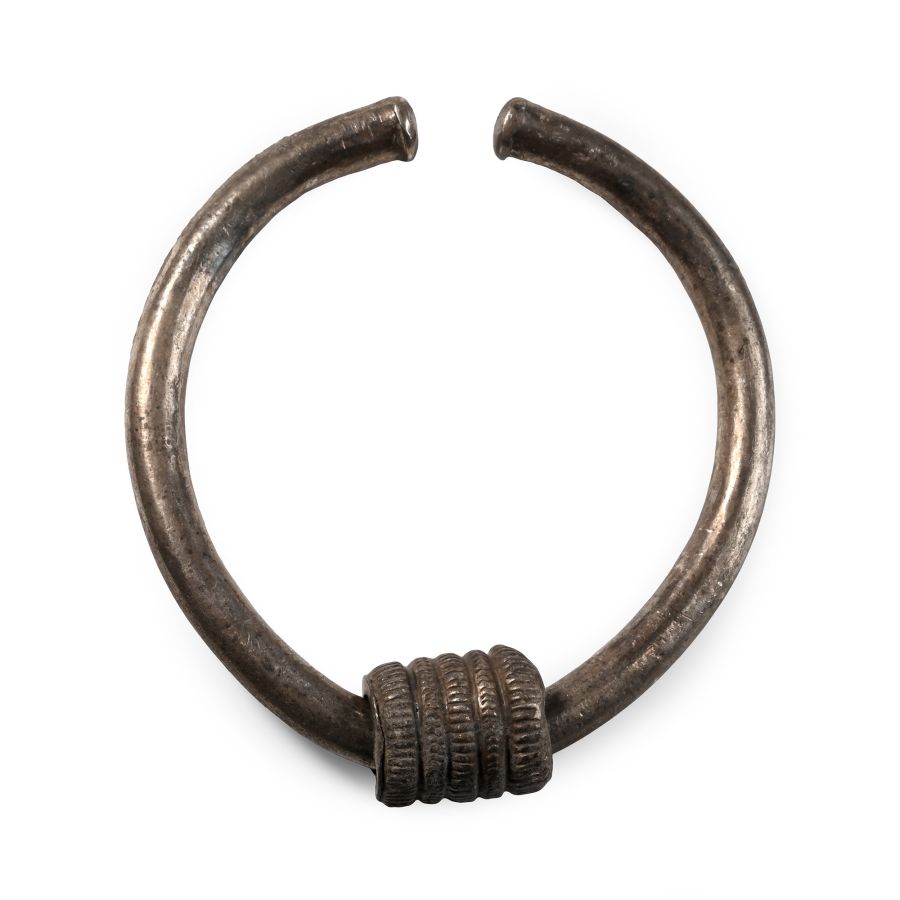
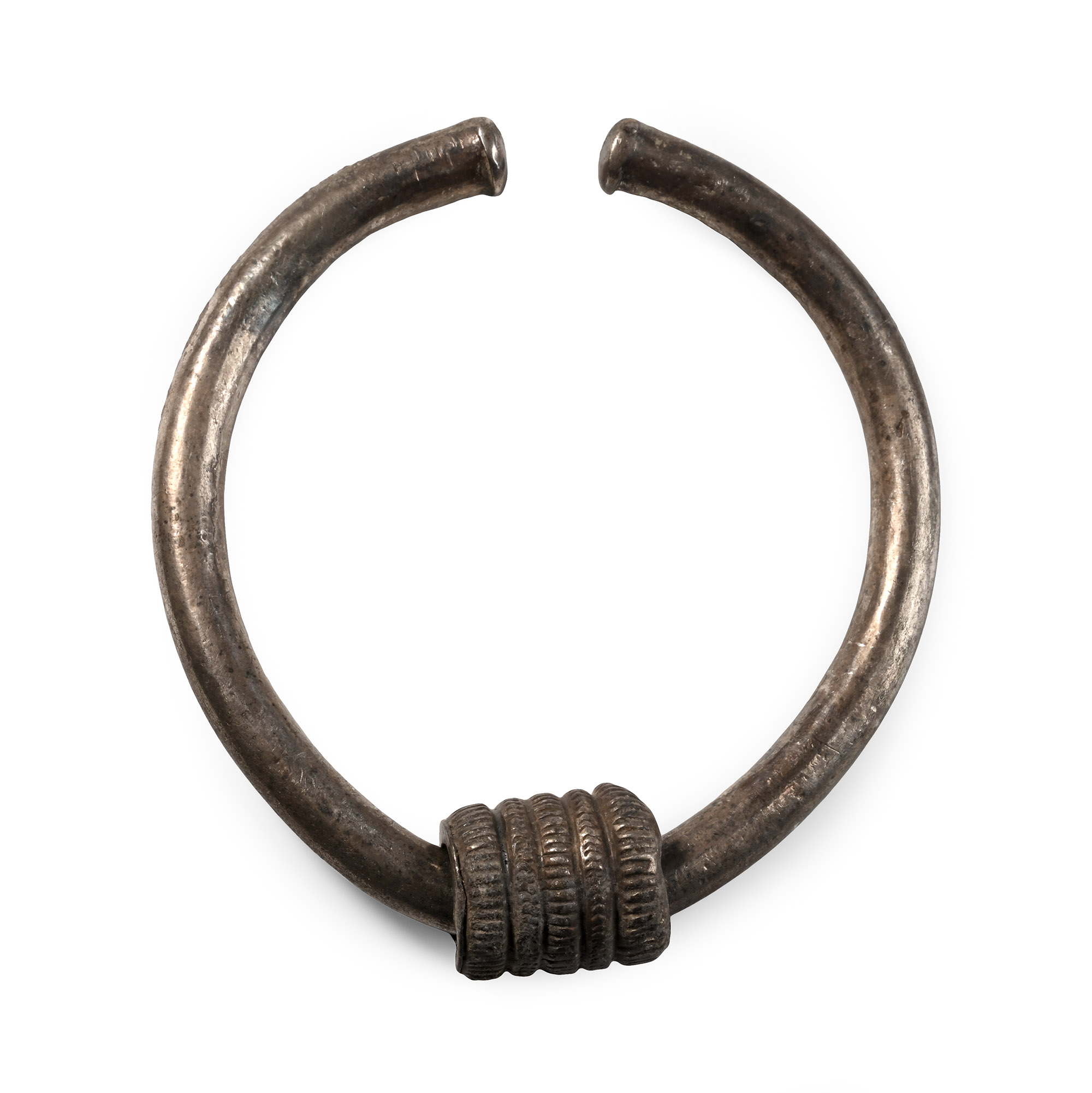
Large Lydian Silver Bar Bracelet
7TH-6TH CENTURY B.C.
4 5/8 in. (235 grams, 11.4 cm).
Comprising a round-section penannular body with clubbed finials, a free-running repoussé collar and a flat-section coiled band on the body. [No Reserve]
ProvenanceEx Paul Munro-Walker, Bournemouth, Hampshire, UK, 1980s.
From a UK collection since before 1990.
TimeLine Auctions follows a vetting process to ensure the authenticity and legality of all items, reinforcing our commitment to integrity and responsible trading. Each antiquity, antique, and coin lot undergoes thorough examination by a vetting committee of at least ten external specialists, professional trade association members, scientists, and archaeologists: Our Vetting Process
AUCTIONS:
TimeLine is a leading auction house specialising in antiquities, ancient art, collectables, natural history, coins, medals, and books. Our auctions offer museums, collectors, historians, and enthusiasts the opportunity to acquire unique and historically significant pieces.
-
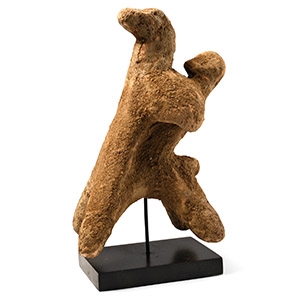
Archaic Greek Terracotta Figure of Mounted Warrior with Shield
7th-5th century B.C.Sold for (Inc. bp): £91
The figure comprising a stylised horse with elongated neck, mounted by a bearded rider figure holding a shield; mounted on a custom-made display stand. 275 grams total, 14.5 cm high including stand
Acquired before 1990. From an old German collection. From the private collection of John Meredith, acquired since the 1990s; thence by descent.
Terracotta figurines of horse and rider were common grave offerings in Boeotia, northwest of Attica, particularly during the 6th century B.C. Representations of warriors on horseback were already widespread in the Geometric Period, and widely used in Cyprus during this period. The rider, although influenced by Cypriot designs, does not show typical Cypriot characteristics. -
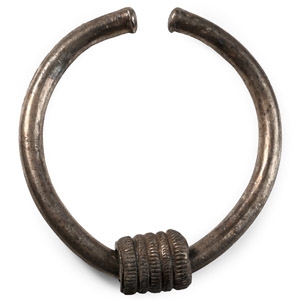
Large Lydian Silver Bar Bracelet
7th-6th century B.C.Sold for (Inc. bp): £442
Comprising a round-section penannular body with clubbed finials, a free-running repoussé collar and a flat-section coiled band on the body. 235 grams, 11.4 cm
Ex Paul Munro-Walker, Bournemouth, Hampshire, UK, 1980s. From a UK collection since before 1990. -
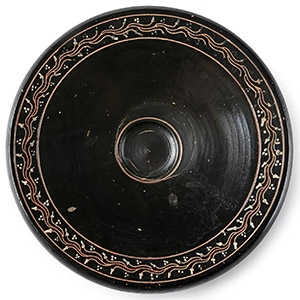
Large Hellenistic Teano-Ware Fish Plate
Early 3rd century B.C.Estimate: £1,500 - 2,000 (+bp*)
Opening Bid: £750
Broad face with incised rings outlining the painted border of running vinescroll in red and white; with a shallow central socket outlined in red, broad carinated rim and low foot. 834 grams, 26.5 cm
Acquired at Auction, London, UK, 1990s, no.233. Private collection, Suffolk, UK. Accompanied by a copy of the relevant catalogue page.
'Teano ware' is a type of ceramic produced in the late 4th century to the early 3rd century BC. Its modern name derives from Teanum Sidicinum, in northern Campania, the main centre of production. White and red pigment was used for the painted decoration on the black surface. It was probably used for votive or funerary purposes.
