
Loading, please wait...
LOT 1427
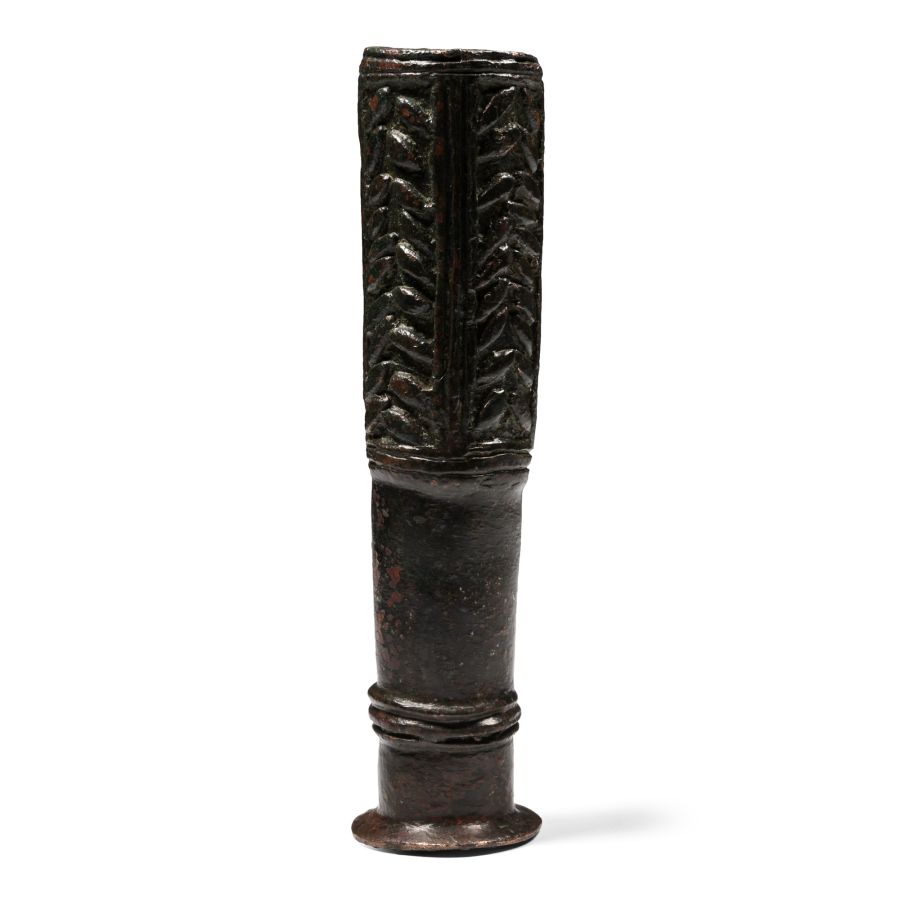
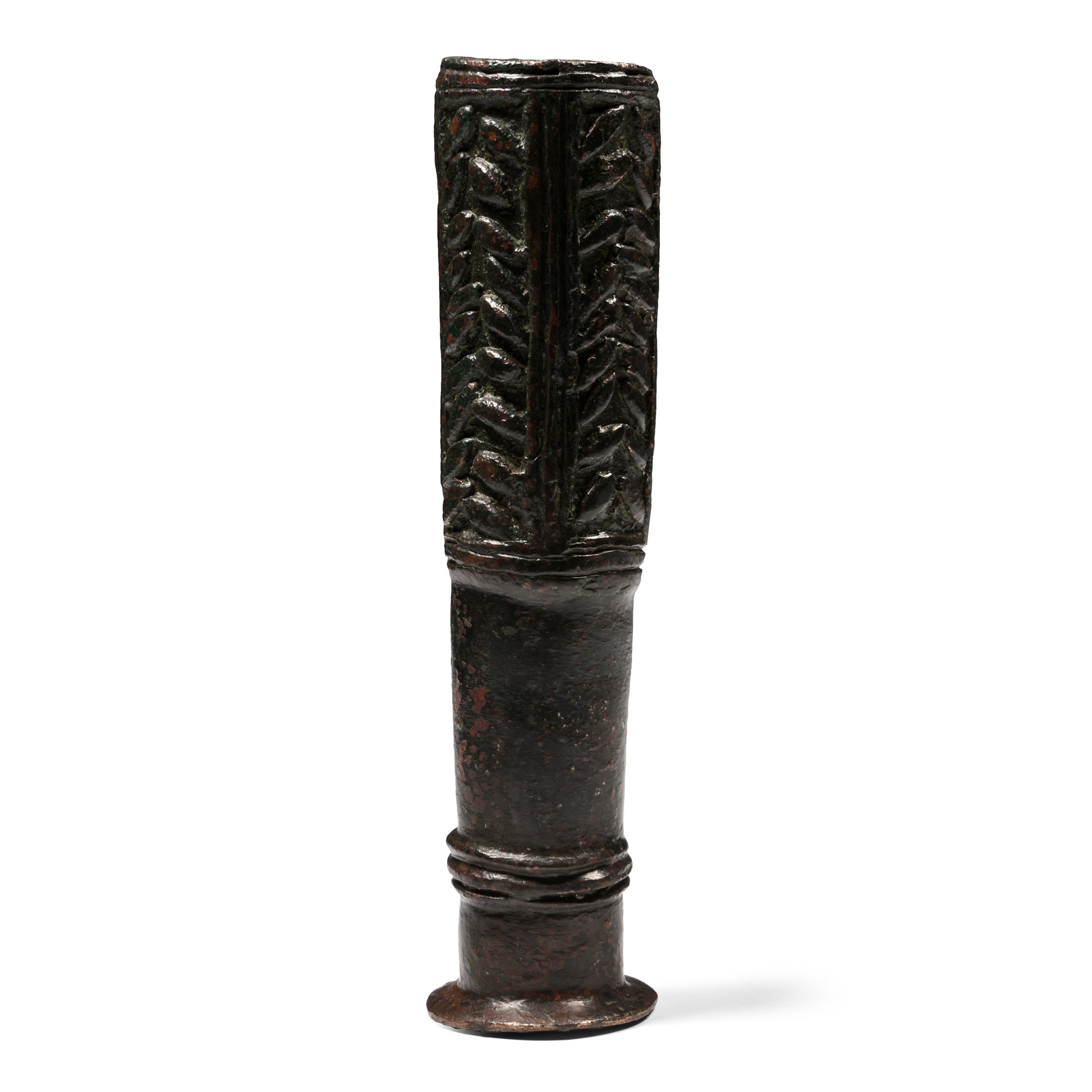
Large Luristan Bronze Gorz
EARLY 2ND MILLENNIUM B.C.
5 3/4 in. (374 grams, 14.5 cm).
Of tapering cylindrical form with flange to socket, the upper body displaying vertical columns of chevrons between plain bands.
ProvenanceAcquired in the 1990s.
Ex Abelita family collection.
This lot is accompanied by an illustrated lot declaration signed by the Head of the Antiquities Department, Dr Raffaele D'Amato.
Cf. The Metropolitan Museum, New York, accession number 56.102.1, for very similar; see Godard, A., Les Bronzes du Luristan, Paris, 1931, pl.XIX, no.58, for a similar mace; see also Christie's, The Axel Guttmann Collection of Ancient Arms and Armour, part 1, London, 2002, p.24, nos.18-19; Khorasani, M. M., 'Bronze and iron weapons from Luristan' in Antiguo Oriente: Cuadernos del Centro de Estudios de Historia del Antiguo Oriente, 7, 2009, fig.8.
FootnotesThis gorz mace head belongs to the category of truncheon-shaped mace heads, a type developed on the Iranian plateau during the Bronze Age, used by Elamite and Luristan warriors since the 3rd millennium B.C. This category of objects was also interpreted as a part of a shaft or cudgel, but most scholars agree on the interpretation of use as a mace.
CONDITIONTimeLine Auctions follows a vetting process to ensure the authenticity and legality of all items, reinforcing our commitment to integrity and responsible trading. Each antiquity, antique, and coin lot undergoes thorough examination by a vetting committee of at least ten external specialists, professional trade association members, scientists, and archaeologists: Our Vetting Process
AUCTIONS:
TimeLine is a leading auction house specialising in antiquities, ancient art, collectables, natural history, coins, medals, and books. Our auctions offer museums, collectors, historians, and enthusiasts the opportunity to acquire unique and historically significant pieces.
-
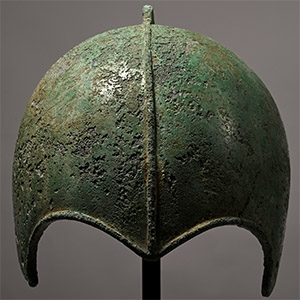
Scythian Bronze 'Kuban' Type Helmet
7th-6th century B.C.Sold for (Inc. bp): £18,200
Raised from a single sheet with rounded skull and semi-circular cut-outs for the eyes with raised rims, raised bar to the front extending to the top with a loop; ten circular perforations to the lower edge; accompanied by a custom-made display stand. 1.47 kg, 23.5 cm wide
Private collection formed in Europe in the 1980s. Westminster collection, central London, UK. Accompanied by an academic report by Dr Raffaele D’Amato. This lot has been checked against the Interpol Database of stolen works of art and is accompanied by search certificate number no.12616-235608. This lot has been cleared against the Art Loss Register database, and is accompanied by an illustrated lot declaration signed by the Head of the Antiquities Department, Dr Raffaele D'Amato.
This war helmet, typical of the Caucasian Scythians, belongs to the so-called Kuban type according to B. Z. Rabinovich, named after the north Caucasian region where the majority of this type of helmets were found. The helmet is almost identical to the helmet found in the 6th century barrow at Kelermes (Stanitsa Kelermeskaya), and in fact many of such helmets have been found in the Northern Caucasus. The helmets were typical of the noblemen fighting on horseback with spear, javelins and especially with bow and arrows. -
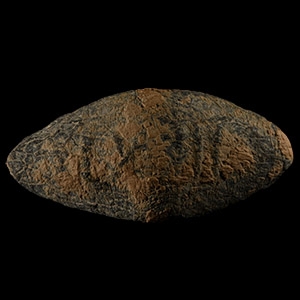
Roman Legion XIII 'Battle of Munda' Lead Slingshot
1st century B.C.Sold for (Inc. bp): £221
Fusiform with reserved legend 'LXIII' (for LEGIO XIII = 13th Legion). 32.6 grams, 36 mm
Acquired on the UK art market. Property of a gentleman collector. This lot is accompanied by an illustrated lot declaration signed by the Head of the Antiquities Department, Dr Raffaele D'Amato.
The shot (Völling type 1C) is marked with the abbreviated name of Legion XIII, and was probably used at the Battle of Munda (or Monda) against Julius Caesar, 17th March 45 B.C., or against the sons of Pompey, because both the generals (Pompey sons and Caesar) had in their army a Legio with the numeral XIII on that day. Interestingly, other glandes of the same typology from the same battlefield bear the name of Pompey, so that it is much possible that the glans belongs to the Legio XIII of Pompey, who was destroyed during the battle and whose survivors were massacred among the 22,000 defenders of Cordoba by the troops of Caesar (D'Amato, 2021, pp.421 and 424). The projectiles were made of different materials: lead (glandes) or in pottery or stone (lapides missiles). -
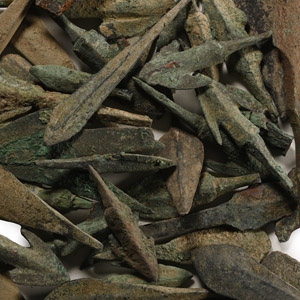
Western Asiatic Bronze Arrowhead Collection
18th-3rd century B.C.Sold for (Inc. bp): £130
Comprising triangular types with thick midrib, heater-shaped, leaf-shaped, barbed-and-tanged, paddle-shaped with a flat, comparatively wide mid-rib, and other types. 190 grams, 24-76 mm
Ex London art market, 1980-1990s. This lot is accompanied by an illustrated lot declaration signed by the Head of the Antiquities Department, Dr Raffaele D'Amato.
Some of the represented arrowheads (paddle-shaped) were typical of the Old Babylonian Empire. The shoulders were pronounced and the arrowhead had a rectangular-section tapering tang. This simple form was popular throughout and are comparatively common finds in the Holy Land.
