
Loading, please wait...
LOT 1017
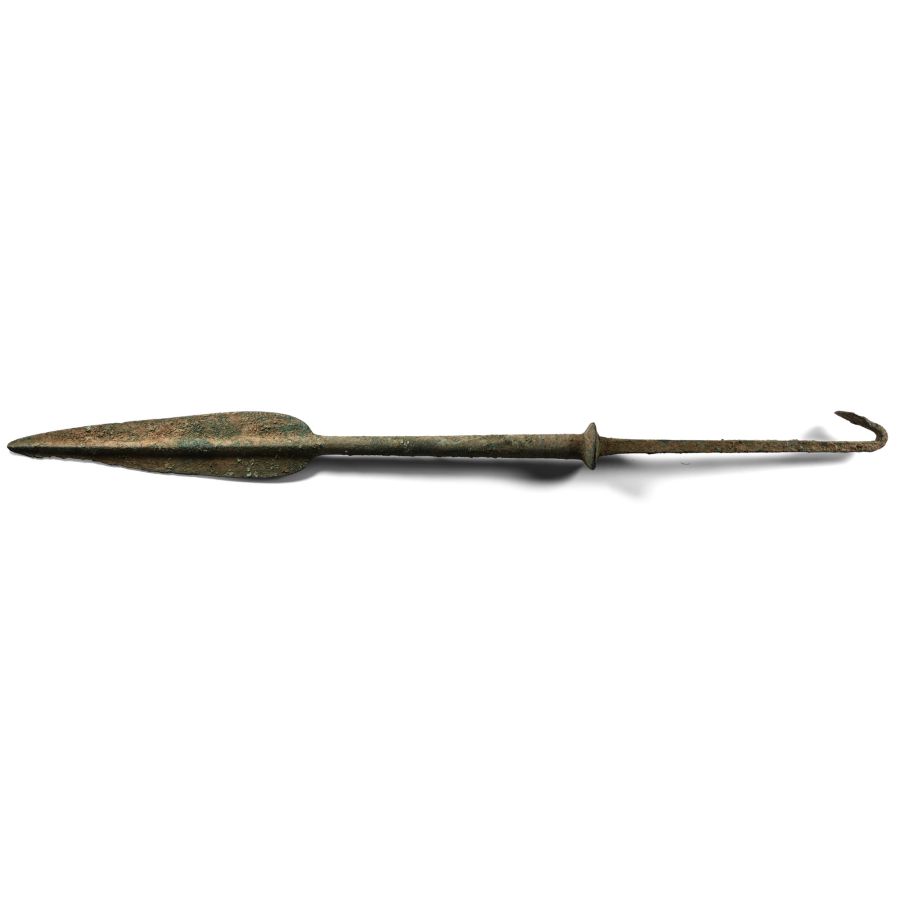
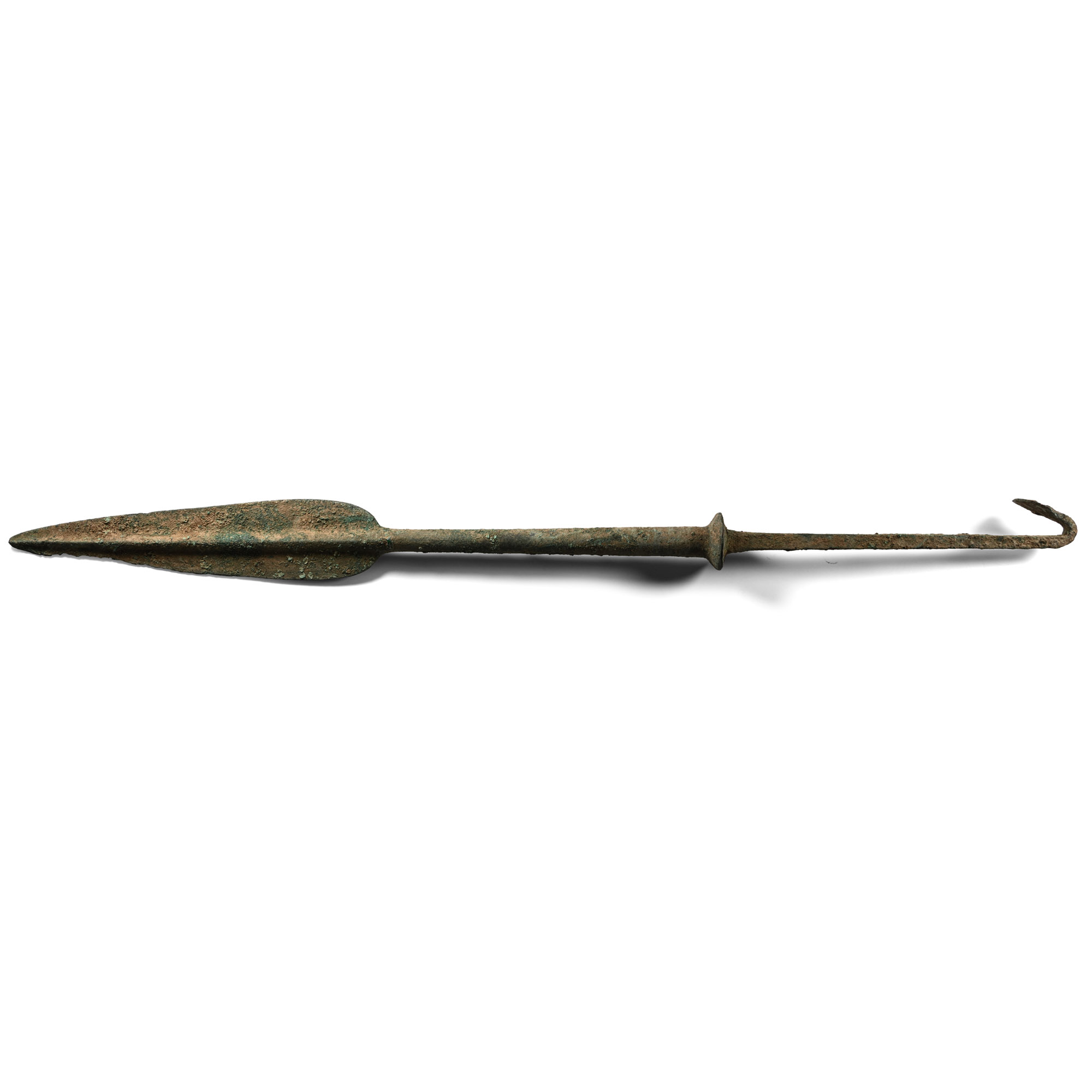
Large Luristan Bronze Collared Spearhead
3RD-2ND MILLENNIUM B.C.
18 1/8 in. (300 grams, 46 cm).
Comprising a leaf-shaped blade with raised midrib extending to the round-section long shank, raised collar above a rectangular section tang, fastened by bending to a right-angle.
ProvenanceEx London art market, 1980-1990s.
This lot has been cleared against the Art Loss Register database, and is accompanied by an illustrated lot declaration signed by the Head of the Antiquities Department, Dr Raffaele D'Amato.
Cf. Gorelik, M., Weapons of Ancient East, IV millennium BC-IV century BC, Saint Petersburg, 2003, in Russian, see pl.XXXIII, no.82, from Tepe Hissar; Gernez, G., L’armament en métal au Proche et Moyen-Orient: des origines a 1750 av. J.C., Paris, 2007, p.301, fig.2.88, subtype L2.B.b.
FootnotesThe specimen belongs to the category of tripartite spears with long pointed biconvex blade and single bevelled tang. They seem to be a Mesopotamian and Susian (Elamite) variant, and this type also includes decorated blades, like the spear from Tello with the inscription 'King of Kish'.
CONDITIONTimeLine Auctions follows a vetting process to ensure the authenticity and legality of all items, reinforcing our commitment to integrity and responsible trading. Each antiquity, antique, and coin lot undergoes thorough examination by a vetting committee of at least ten external specialists, professional trade association members, scientists, and archaeologists: Our Vetting Process
AUCTIONS:
TimeLine is a leading auction house specialising in antiquities, ancient art, collectables, natural history, coins, medals, and books. Our auctions offer museums, collectors, historians, and enthusiasts the opportunity to acquire unique and historically significant pieces.
-
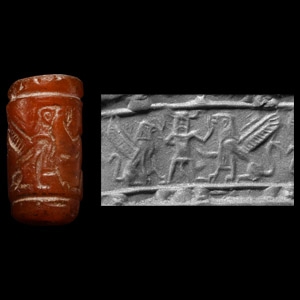
Syrian Carnelian Cylinder Seal with Figures
Circa 700-800 B.C.Sold for (Inc. bp): £2,080
Accompanied by a copy of an old scholarly note, typed and signed by W.G. Lambert, late Professor of Assyriology, University of Birmingham, 1970-1993, which states: ' Cylinder Seal of Carnelian, 19 x 10 mm. The design, which is placed between upper and lower rulings consists of a group of three figures. In the centre is a deity, standing in a frontal pose, with strange head and body, the head with horns projecting each side, also a tail hanging down between the splayed legs. With each hand he is holding off a composite animal. The one on the right has a quadruped's body with wings and a bird's head. There is a 'bib' between the front legs as the creature sits on its haunches. The creature on the left is meant to be the same, but is slightly different in details due to less space being available. This is a seal from Syria, c. 800-600 B.C., and is an unusual type. It is based on the common Assyro-Babylonian type of a standing god between two animals, but the god in this case is a variant of the Egyptian Bes and the animals are forms of creatures belonging to East Mediterranean art, not to Assyro-Babylonian art. Save for chipping of the edges the seal is in good condition.'; supplied with a museum-quality impression. 3.63 grams, 20 mm
Ex N. Colville collection. Acquired Christie's, London, 6 July 1994, lot 159. From the private collection of a North American lady, formed 1970s-early 1990s, with collection reference no.344. Accompanied by a copy of a scholarly note, typed and signed by Professor Wilfrid George Lambert dated August 1994. This lot has been cleared against the Art Loss Register database, and is accompanied by an illustrated lot declaration signed by the Head of the Antiquities Department, Dr Raffaele D'Amato. -
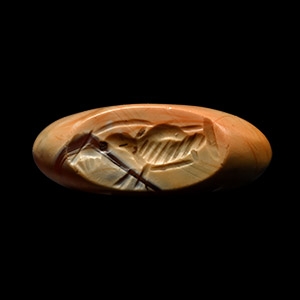
Sasanian Brown Agate Ring
3rd-4th century A.D.Sold for (Inc. bp): £442
With scaphoid plaque, intaglio standing profile figure in a draped robe. 4.90 grams, 26.53 mm overall, 15.11 mm internal diameter (approximate size British I, USA 4 1/4, Europe 7.44, Japan 7)
Mr S.A. collection, Switzerland, acquired in the 1980s. Thence by descent, private collection, since 1998. This lot has been cleared against the Art Loss Register database, and is accompanied by an illustrated lot declaration signed by the Head of the Antiquities Department, Dr Raffaele D'Amato. -
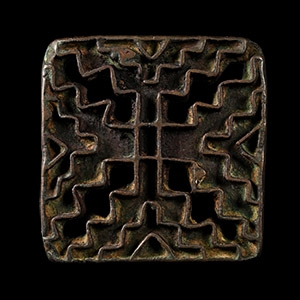
Very Large West Central Asian Bronze Stamp Seal Matrix with Stepped Cross
Circa 2300-2000 B.C.Estimate: £180 - 240 (+bp*)
Opening Bid: £90
Square in plan with chevron handle, openwork stepped saltire design. 79 grams, 60 mm
Ex collection of a late London gentleman, 1990s. This lot has been cleared against the Art Loss Register database, and is accompanied by an illustrated lot declaration signed by the Head of the Antiquities Department, Dr Raffaele D'Amato.
