
Loading, please wait...
_900x900.jpg "Large Luristan Bronze Armlet Pair with Animal Terminals")
_200x200.jpg "Large Luristan Bronze Armlet Pair with Animal Terminals")
.jpg "Large Luristan Bronze Armlet Pair with Animal Terminals")
LOT 0248
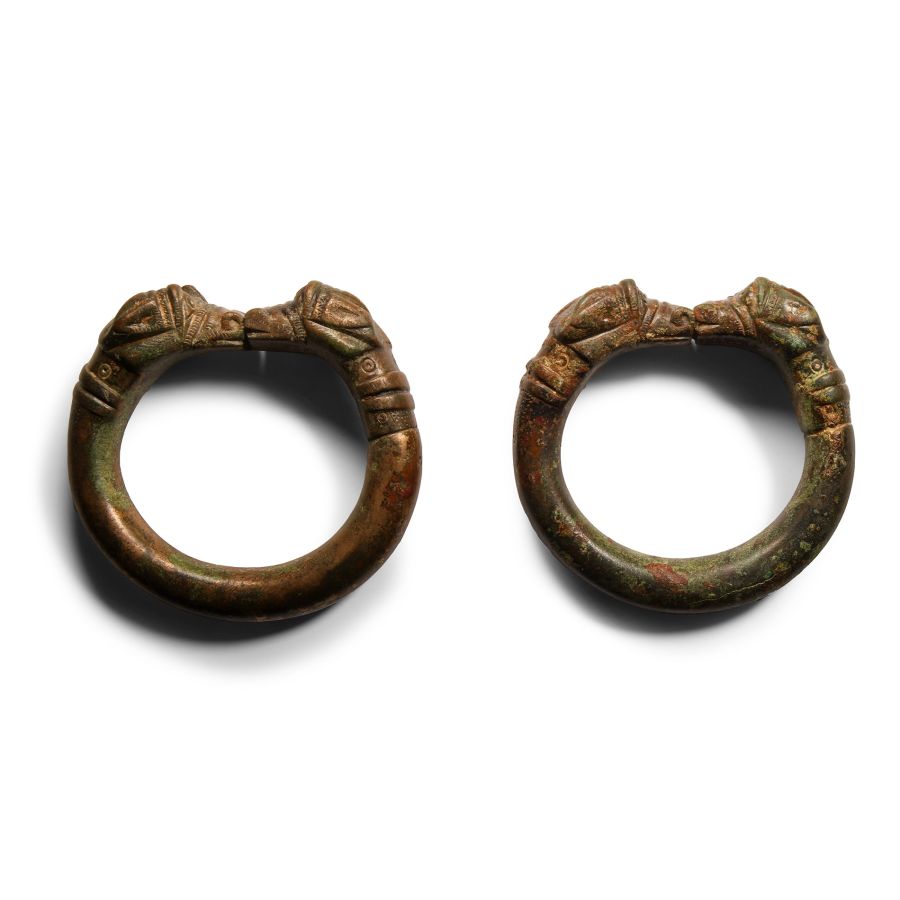
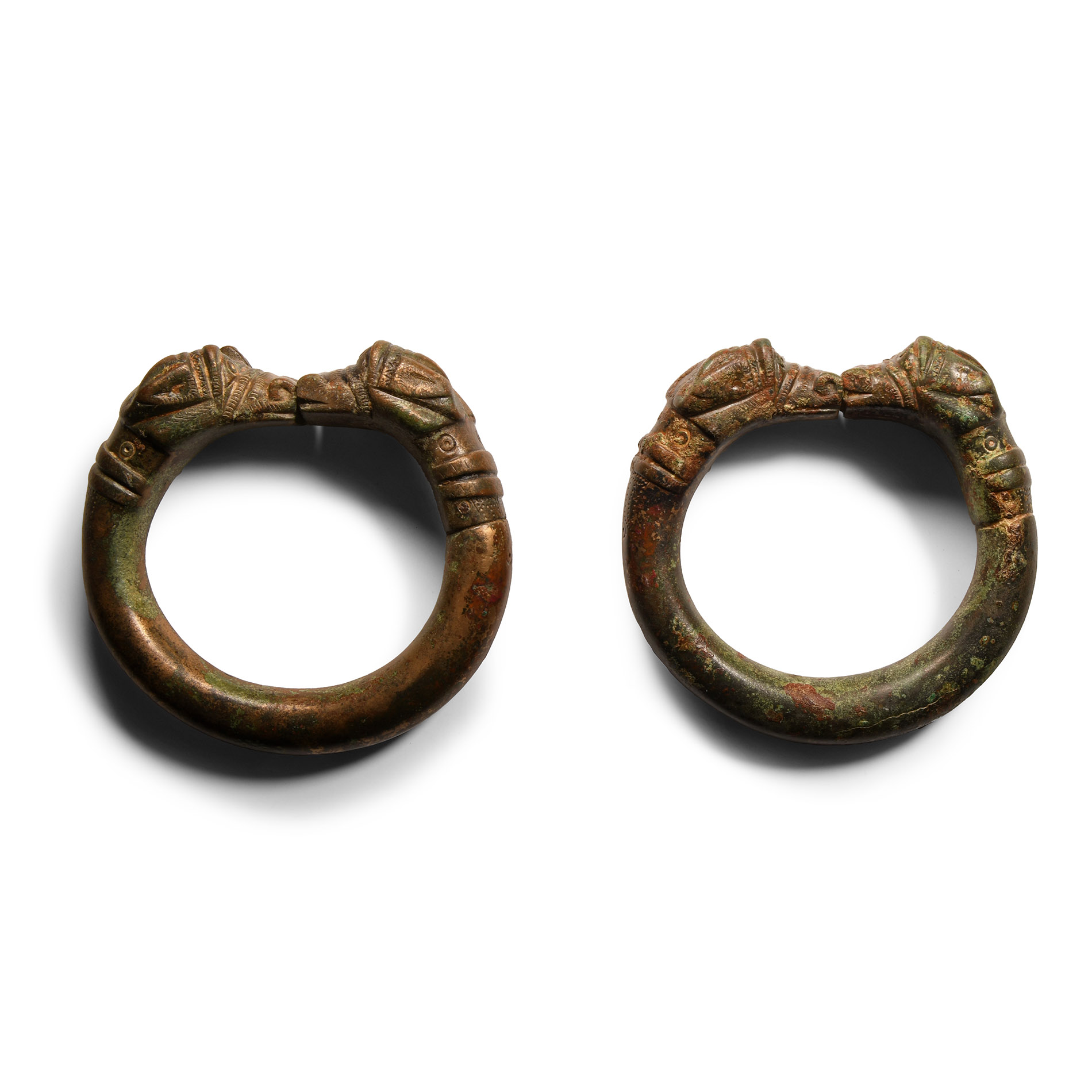
Large Luristan Bronze Armlet Pair with Animal Terminals
2ND MILLENNIUM B.C.
5 1/8 in. (1.19 kg total, 13-13.1 cm).
Each armlet composed of a substantial round-section penannular hoop with terminals formed as stylised opposed animal heads, ring-and-dot motifs representing the eyes and highlighting other anatomical detailing, together with dashes, dimples, chevrons and crescents. [2]
Provenancewith a London, UK gallery, 1971-early 2000s.
This lot has been checked against the Interpol Database of stolen works of art and is accompanied by a search certificate number no.12265-220622.
TimeLine Auctions follows a vetting process to ensure the authenticity and legality of all items, reinforcing our commitment to integrity and responsible trading. Each antiquity, antique, and coin lot undergoes thorough examination by a vetting committee of at least ten external specialists, professional trade association members, scientists, and archaeologists: Our Vetting Process
AUCTIONS:
TimeLine is a leading auction house specialising in antiquities, ancient art, collectables, natural history, coins, medals, and books. Our auctions offer museums, collectors, historians, and enthusiasts the opportunity to acquire unique and historically significant pieces.
LOT 0248
Large Luristan Bronze Armlet Pair with Animal Terminals
Estimate £1,500 - 2,000€1,740 - 2,320 (for guidance only)$2,030 - 2,700 (for guidance only)
-
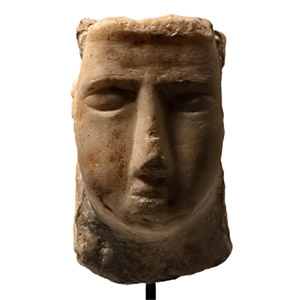
South Arabian Alabaster Head of a Man
3rd-1st century B.C.Sold for (Inc. bp): £1,430
Tongue-shaped carved bust reserved on an unworked block; bas-relief facial detailing with long vertical D-section nose, slit mouth and two shallow lentoid eyes; mounted on a custom-made stand. 2.42 kg total, 22.5 cm including stand
with Arte Primitivo, New York. American private collection, New York, before 2000. -
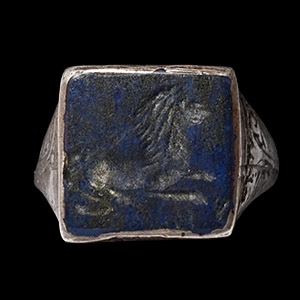
Western Asiatic Silver-Gilt Ring with Lion Gemstone
Circa 18th century A.D.Sold for (Inc. bp): £195
With flared shoulders and square bezel; reserved foliage detailing on a nielloed field; inset lapis lazuli cloison with intaglio lion couchant. 9.26 grams, 24.76 mm overall, 16.76 mm internal diameter (approximate size British M 1/2, USA 6 1/4, Europe 13.09, Japan 12)
From the collection of the famous author, writer and speaker, Gordon Bailey, Essex, UK; formed since 1968. -
.jpg)
Aramaic Iron Scroll Holder
2nd-8th century A.D.Sold for (Inc. bp): £59
Tubular in form with domed ends, remnants of scroll still in situ. 63 grams, 93 mm
Collected from 1969-1999. From the collection of the late Mr S.M., London, UK.
