
Loading, please wait...
LOT 0676
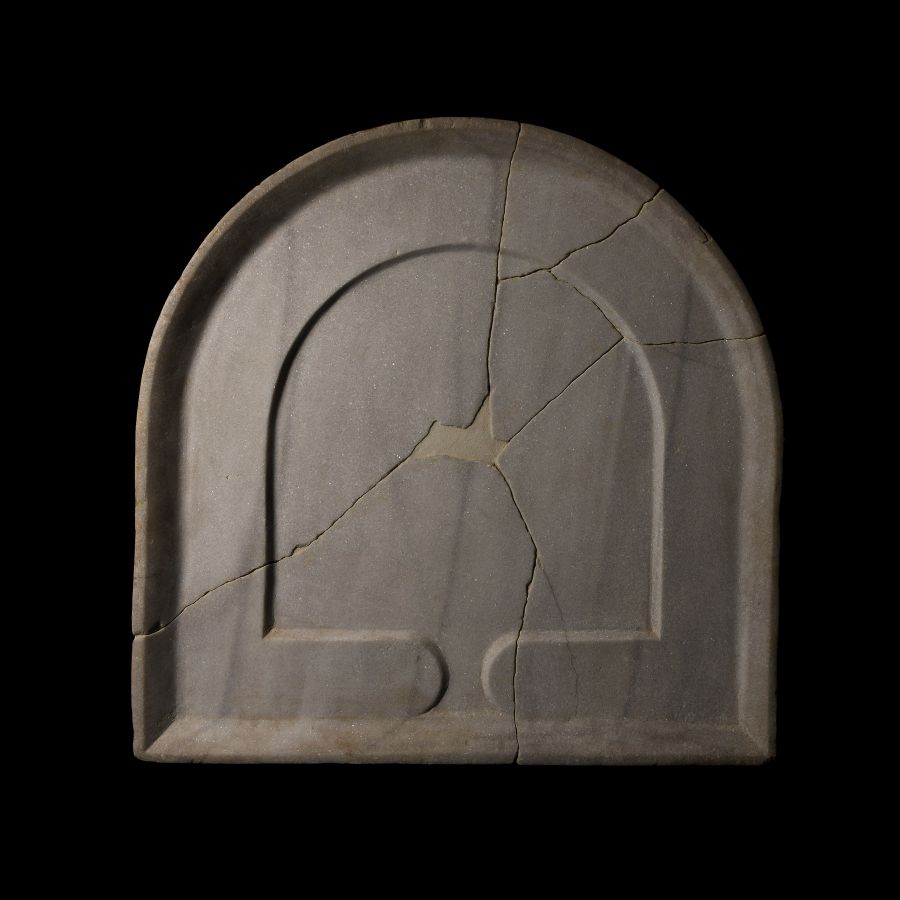
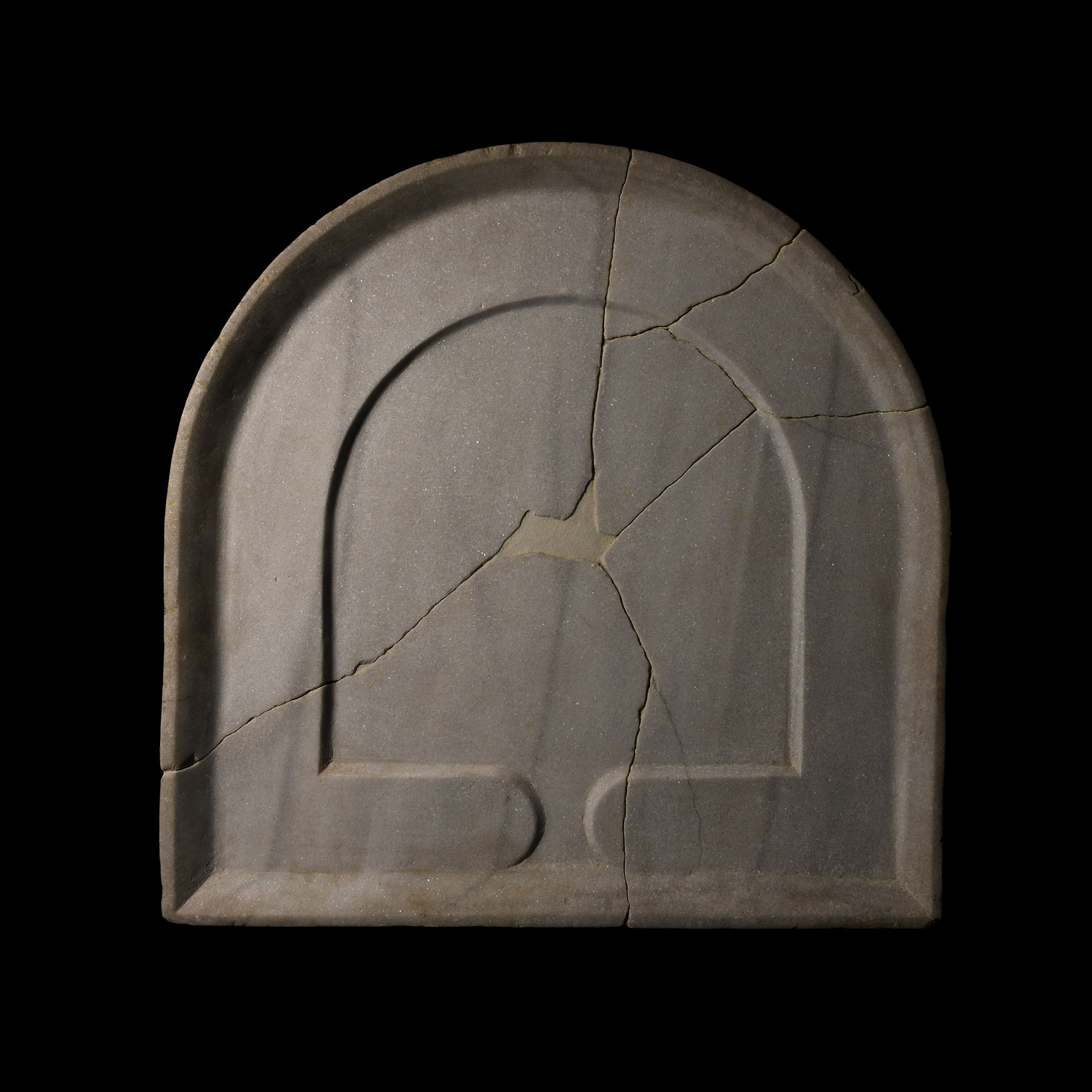
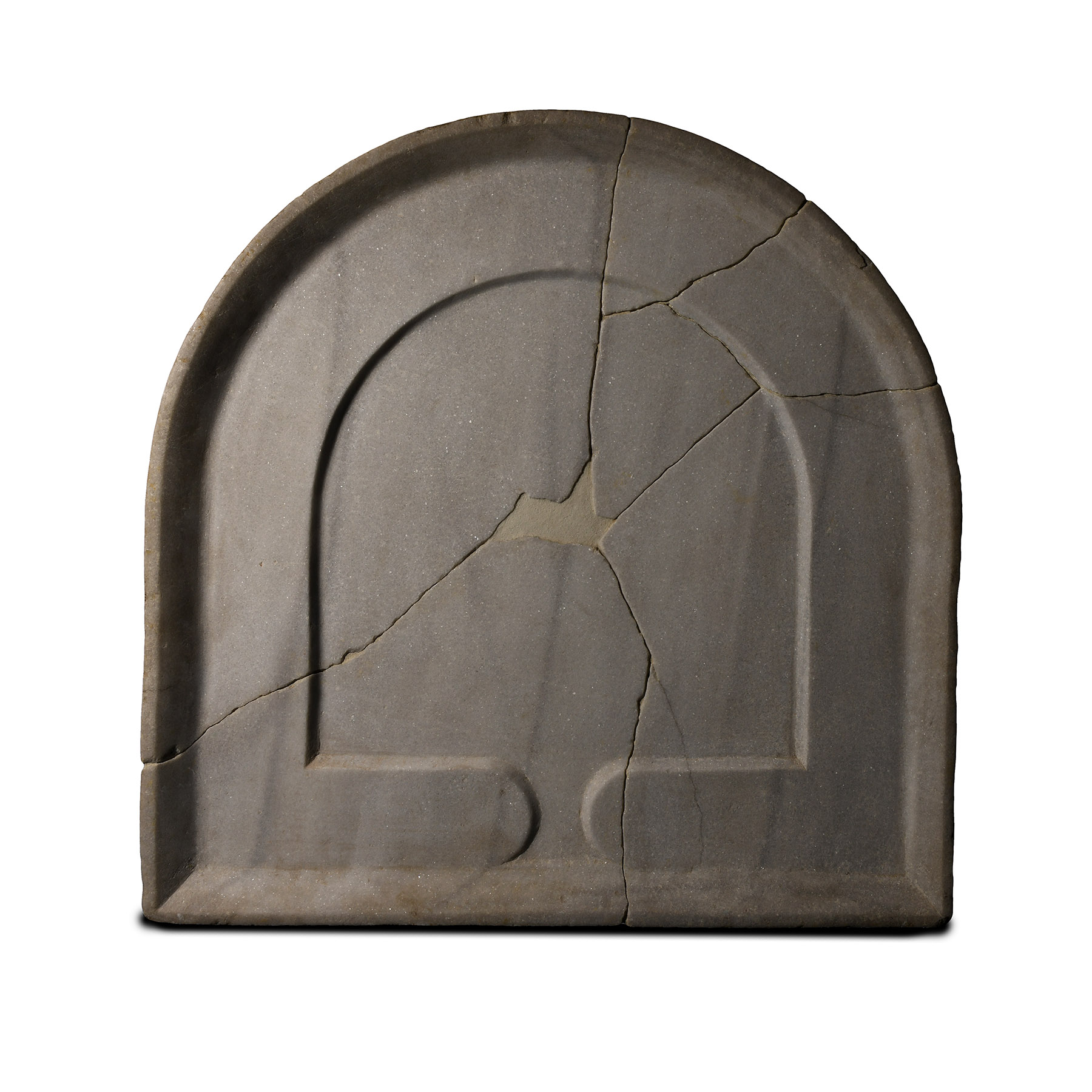
Large Late Roman Sigma-Shaped Marble Offering Table Top
EASTERN MEDITERRANEAN, 4TH-6TH CENTURY A.D.
35 3/4 in. (84.5 kg including backplate, 91 cm wide).
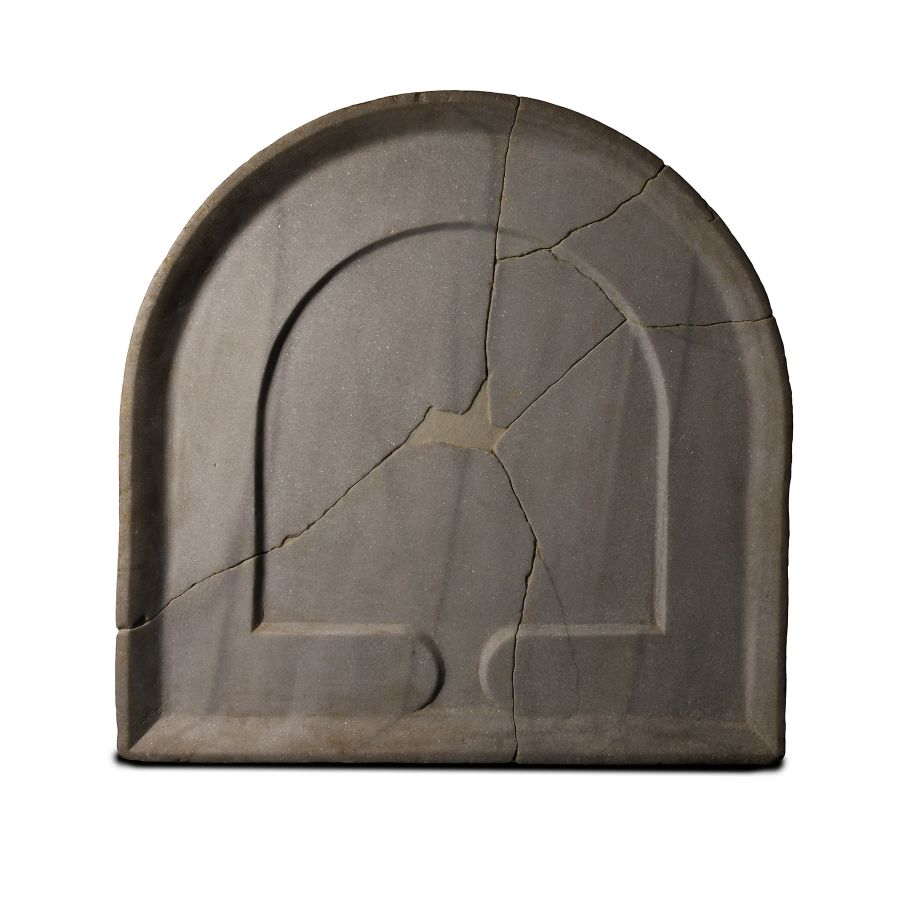
Semi-circular with raised and slightly everted edge, the top with a recessed area with a funnel-shaped outlet; for votive offerings within a church; restored. [No Reserve]
ProvenanceAcquired in the late 1960s or early 1970s.
Ex David Read collection.
Accompanied by an academic report by Dr Raffaele D’Amato.
This lot has been checked against the Interpol Database of stolen works of art and is accompanied by search certificate number no.12080-214035.
See Peirano, D., ‘Iasos and Iasian Marble between the Late Antiques and Early Byzantine eras’ in Matetić Poljak, D. and Marasović, K., Asmosia XI, Interdisciplinary Studies on Ancient Stone, Proceedings of the XI Asmosia Conference, Split, 2015, Split, 2018, pp. 123-130, figs. 1-4, for related examples; Rautman, M., Last Suppers at Sardis, Journal of Roman Archaeology, vol.34/2, 2021, pp.667-694, for examples related to domestic dining contexts; a decorated example with elaborated decoration along the edge, is in the Metropolitan Museum (sigma-shaped table with relief border depicting the Birth of Aphrodite and a Marine Thiasos, accession no. L.2020.6a–ii), but this latter was probably for domestic use; another similar specimen for liturgical use can be seen in the same museum under accession number 47.100.50.
FootnotesMarble tables such as the present example are called in archaeological terms sigma tables, in consideration of their resemblance to the Greek letter sigma. Sigma-shaped tables appeared in the banquet halls at the end of the 4th century and within Christian buildings from the following century. Most of the undecorated slabs were used as liturgical table tops for feasts to honour the deceased. This commemorative practice was known throughout the late Roman world in west and east, where it continued in the daily life of the citizens of the Eastern Roman Empire. In ecclesiastical settings, circular and sigma-shaped tables were used to collect offerings or for celebrating the agape, more generally as secondary furniture, while the rectangular form was preferred for use as an altar.
CONDITIONTimeLine Auctions follows a vetting process to ensure the authenticity and legality of all items, reinforcing our commitment to integrity and responsible trading. Each antiquity, antique, and coin lot undergoes thorough examination by a vetting committee of at least ten external specialists, professional trade association members, scientists, and archaeologists: Our Vetting Process
AUCTIONS:
TimeLine is a leading auction house specialising in antiquities, ancient art, collectables, natural history, coins, medals, and books. Our auctions offer museums, collectors, historians, and enthusiasts the opportunity to acquire unique and historically significant pieces.
LOT 0676
Large Late Roman Sigma-Shaped Marble Offering Table Top
Sold for (Inc. bp): £3,900
-
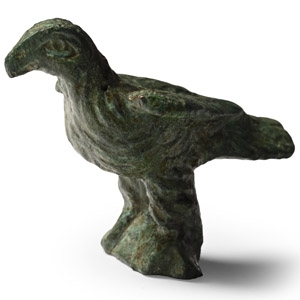
Roman Bronze Eagle Statuette
1st-2nd century A.D.Estimate: £200 - 300 (+bp*)
Opening Bid: £100
Modelled standing with closed wings, head turned to the right, detailing to the plumage and head. 34.5 grams, 44 mm
Ex German art market, 2000s. Acquired from an EU collector living in London. From the collection of Surrey, UK, gentleman. -
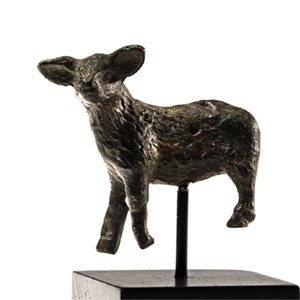
Roman Bronze Sheep Statuette
2nd-3rd century A.D.Sold for (Inc. bp): £312
Modelled standing with head turned, fleece texture to the flanks; mounted on a custom-made stand. 42.8 grams total, 53 mm including stand
From a collection acquired on the UK art market from various auction houses and collections mostly before 2000. From an important Cambridgeshire estate; thence by descent. -
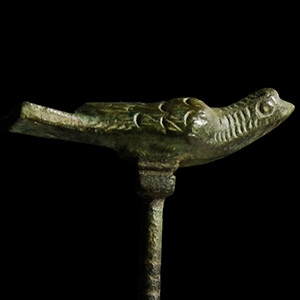
Roman Bronze Distaff with Bird Finial
4th-6th century A.D.Sold for (Inc. bp): £91
Comprising a slender stem with collar and baluster above the attachment loop; perching bird finial with incised plumage detailing. 28 grams, 18.5 cm
From a collection acquired on the UK art market from various auction houses and collections mostly before 2000. From an important Cambridgeshire estate; thence by descent.
