
Loading, please wait...
LOT 0155
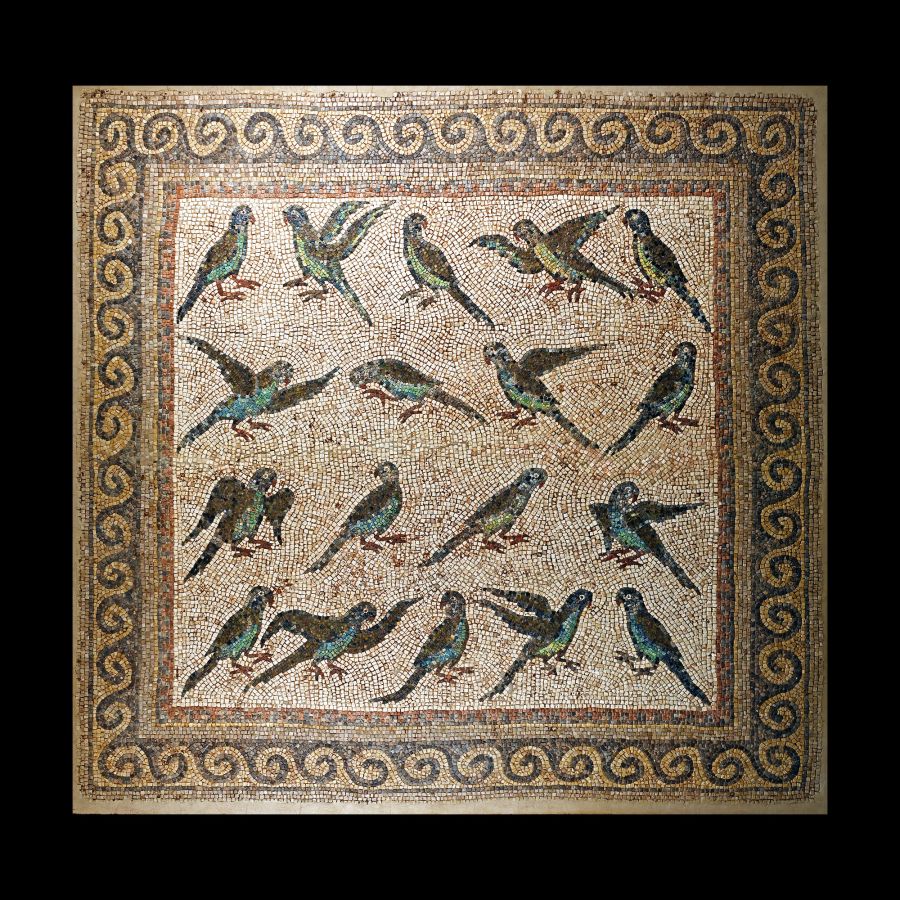
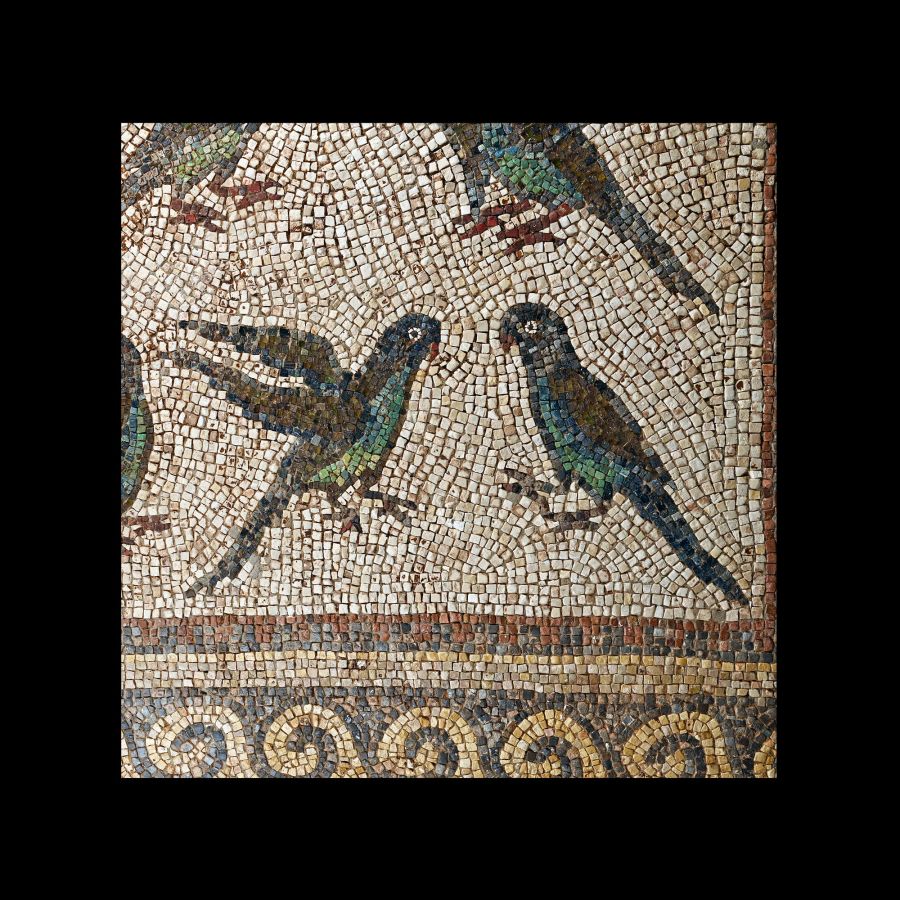
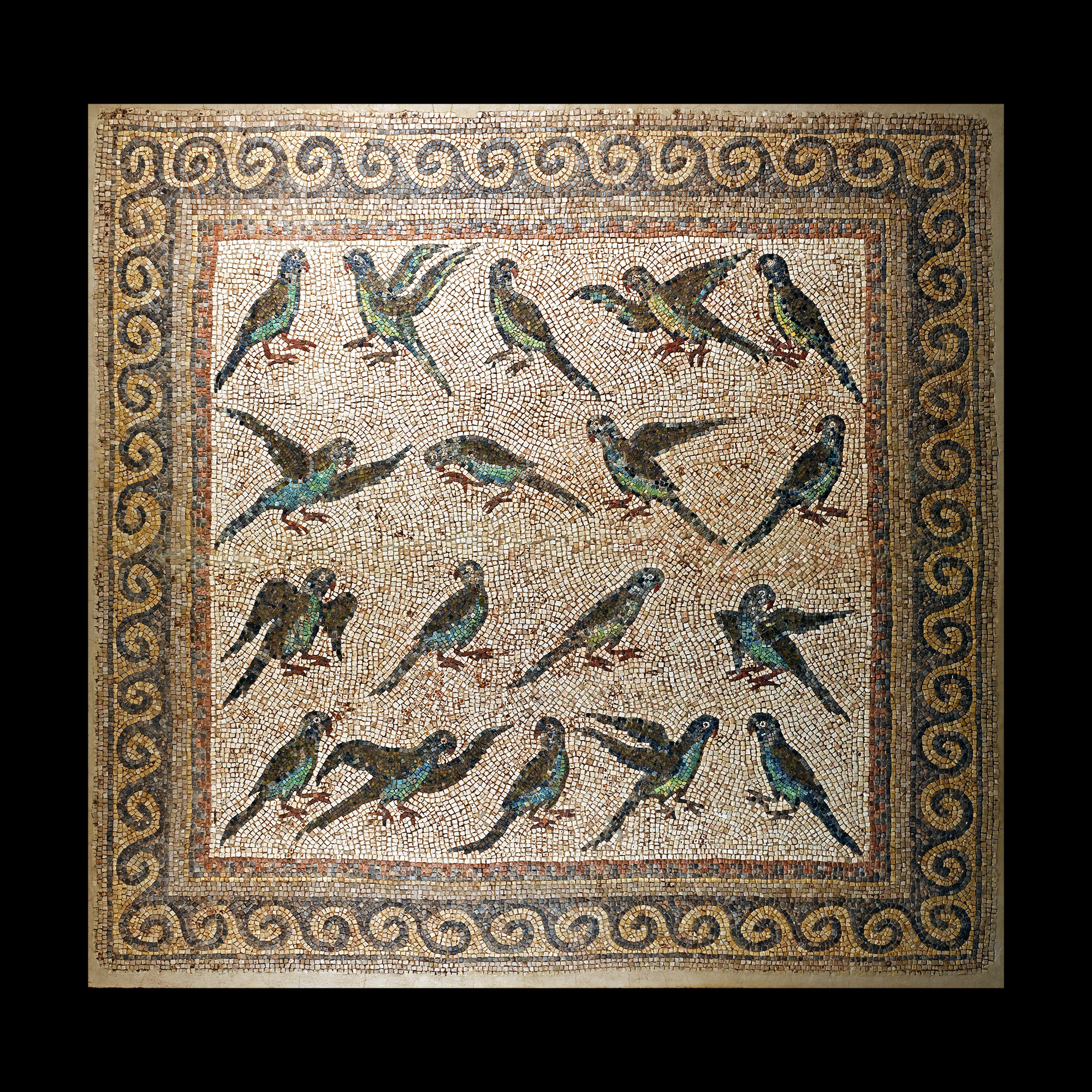
Large Late Roman Mosaic with Inlaid Glass Birds
6TH CENTURY A.D.
83 1/2 x 80 3/4 in. (2.12 x 2.05 m).
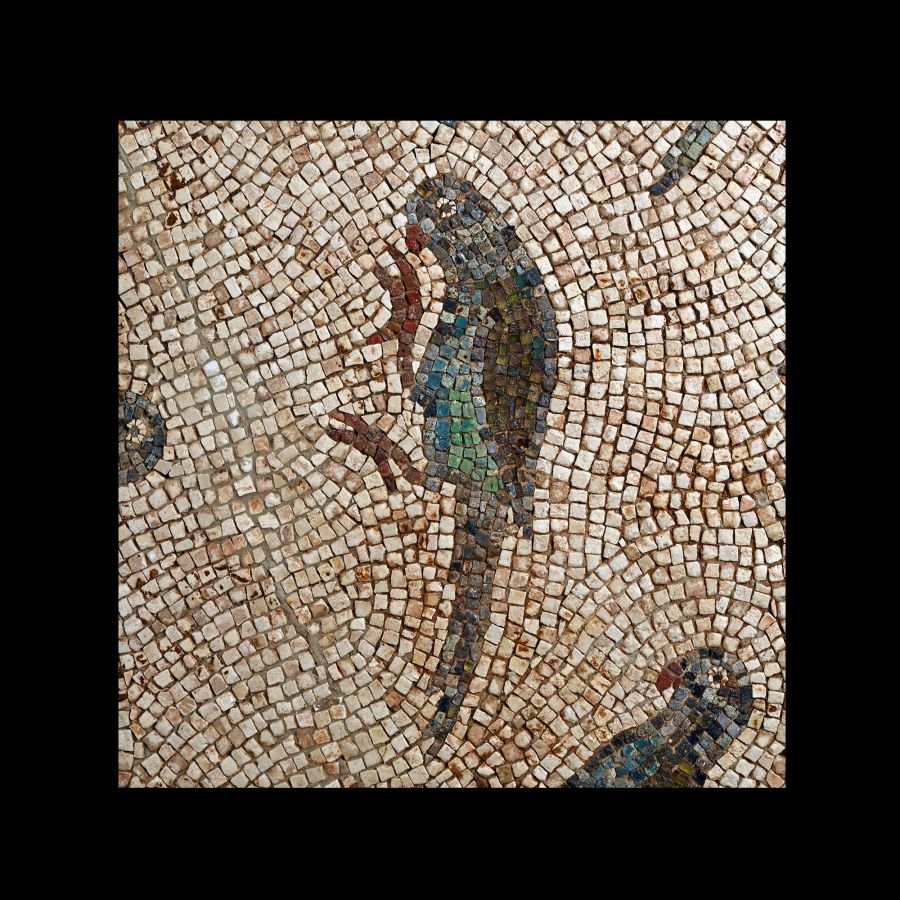
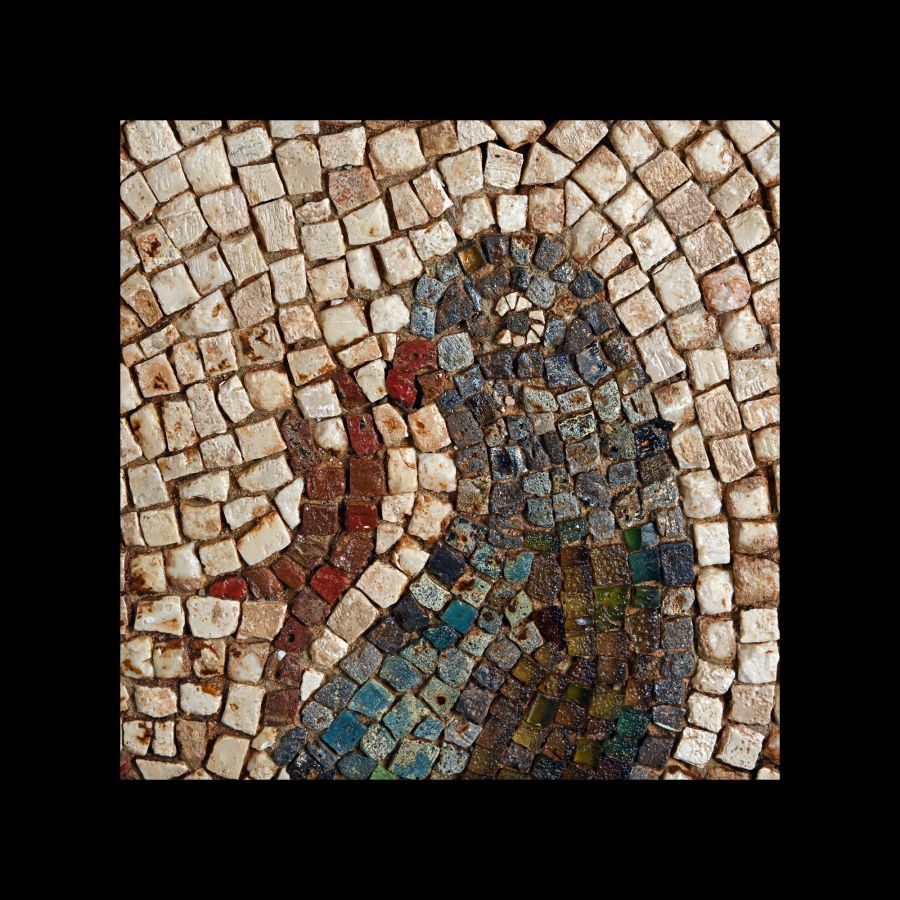
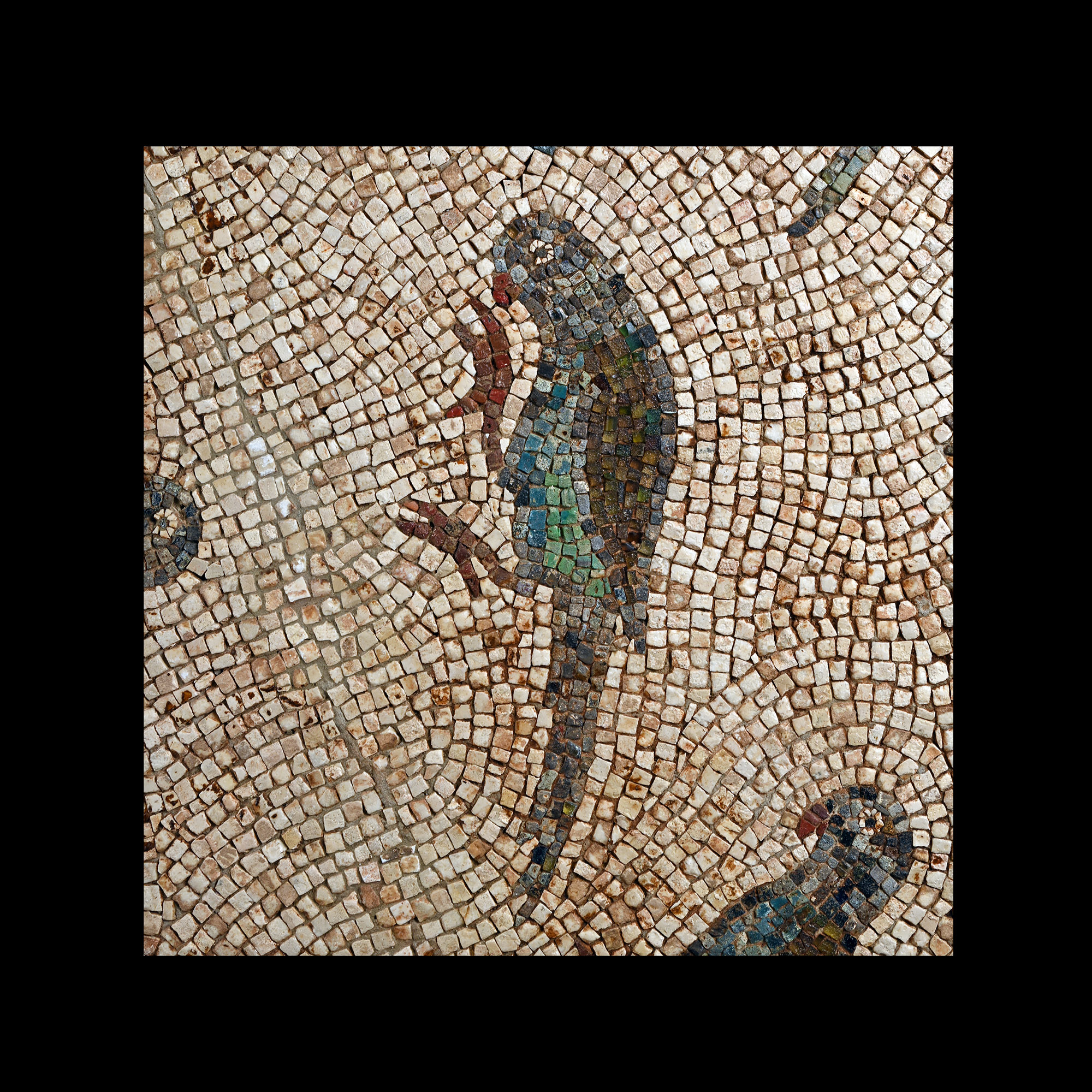
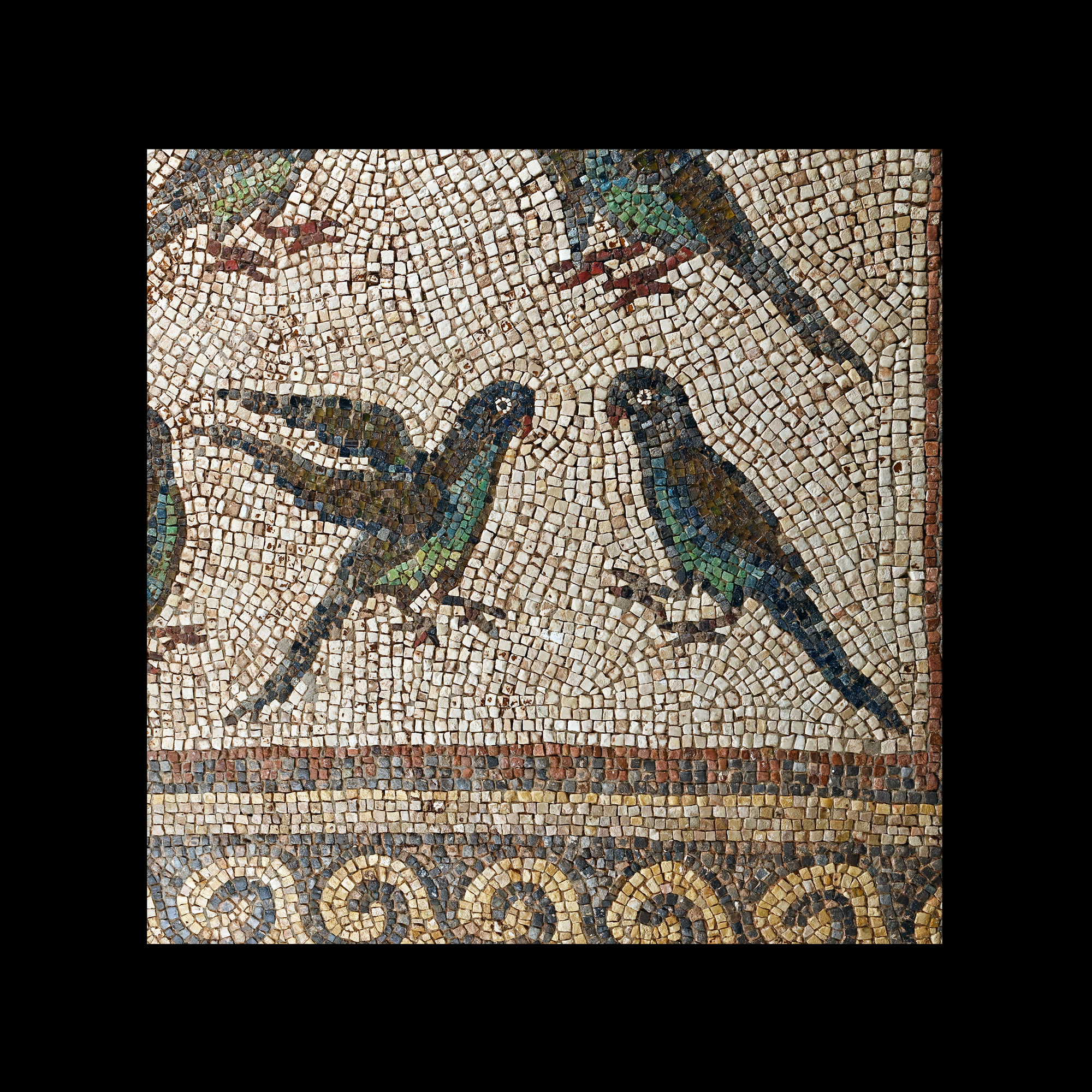
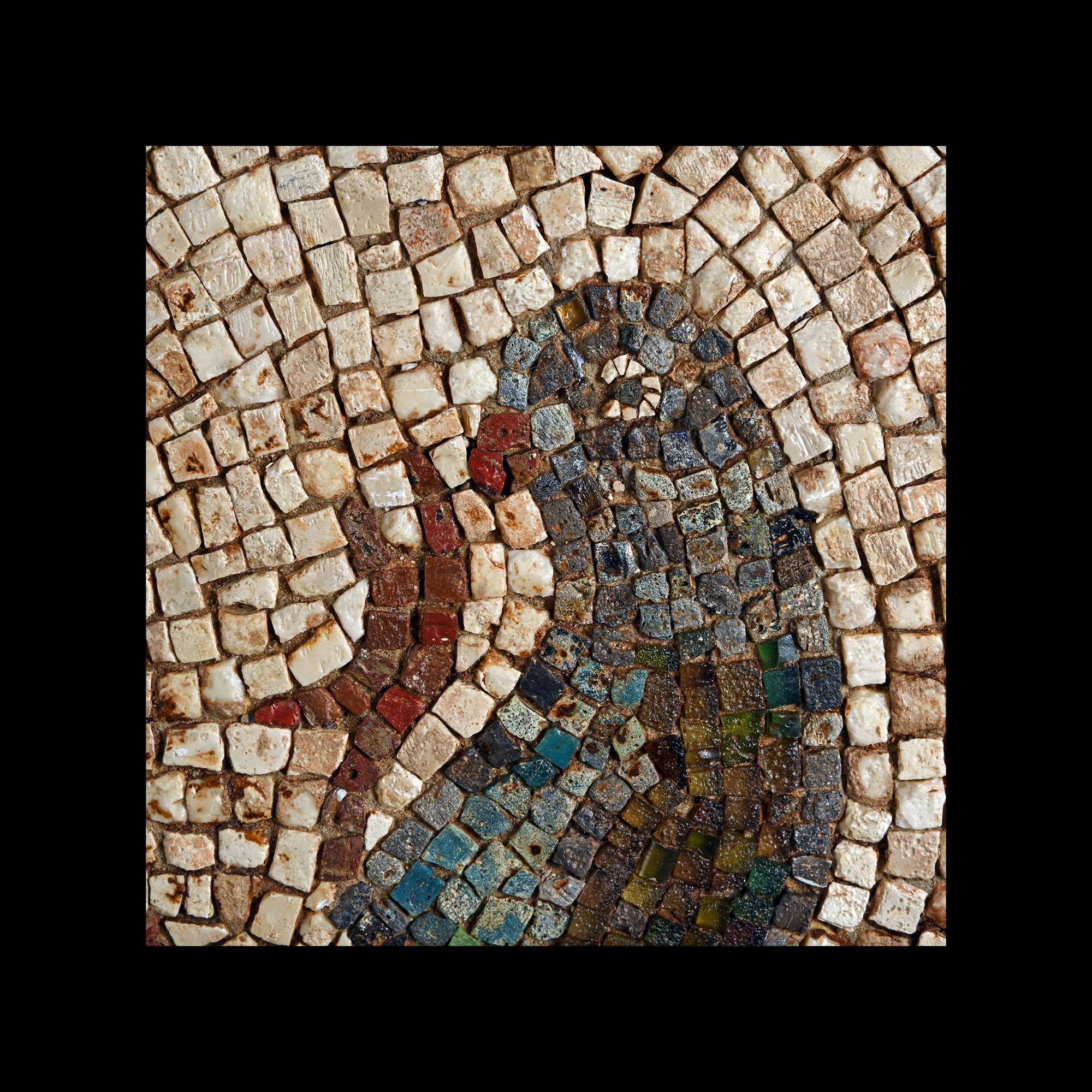
Rectangular panel of decorative mosaic tesserae comprising: wave pattern border in cream and graduated blue-grey tesserae with darker outer edge; inner border of graduated maroon and dark blue-grey tesserae; central field with two inner rows of four and two outer rows of five parakeets in various standing and perching poses, each formed from blue and green glass tesserae with white, crimson and other detailing to the eye, beak and chest; embedded in a sturdy steel-framed matrix of traditional mid 20th century type.
Provenancewith Leon Simard, 1960s, Montreal, Canada.
Archaeologia Gallery, 1980s.
This lot has been checked against the Interpol Database of stolen works of art and is accompanied by search certificate number no.12966-244460.
Cf. very similar mosaic in Louvre, inventory nos. MND 1950; Ma 3459, in Kondoleon, C. (ed.), Antioch : the lost ancient city, cat. exp. (Publié à l'occasion de l'exposition Antioch : the lost ancient city, Worcester art museum 7 octobre 2000-4 février 2001, Cleveland art museum 18 mars-3 juin 2001, Baltimore museum of art 16 septembre-30 décembre 2001), Princeton, N. J., Princeton University Press, 2000, pp. 136, 137, n° 25.
FootnotesThe design of repeated birds against a neutral field is similar to patterns found on Late Roman and Sassanian textiles of roughly the same date, especially silk and wool textiles woven on more mechanised looms. Birds of all varieties appear frequently in floor mosaics and other arts of the Roman period; however, beribboned birds are rare.
CONDITIONTimeLine Auctions follows a vetting process to ensure the authenticity and legality of all items, reinforcing our commitment to integrity and responsible trading. Each antiquity, antique, and coin lot undergoes thorough examination by a vetting committee of at least ten external specialists, professional trade association members, scientists, and archaeologists: Our Vetting Process
AUCTIONS:
TimeLine is a leading auction house specialising in antiquities, ancient art, collectables, natural history, coins, medals, and books. Our auctions offer museums, collectors, historians, and enthusiasts the opportunity to acquire unique and historically significant pieces.
-
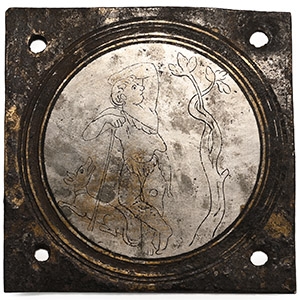
Roman Silver Military Belt Plaque
Circa 4th century A.D.Sold for (Inc. bp): £520
Square plaque from a baldric or military belt, with an engraved circle in the centre depicting a shepherd resting under a tree with two crossed branches, leaning on his staff with a greyhound beside him. 48.7 grams, 66 mm
From a UK collection since before 1990.
The plaque is related to a series of late Antique bronze plates destined to decorate the military baldrics or belts. Some of them were found in a late Roman tomb in Totanés (Toledo), ornamented with busts, and a plaque from Merida (Badajoz) was decorated with the personification of Rome. The plaque is related to similar ones from Italian and Syrian-Palestinian workshops, whose ornamentation seems sometimes to be connected to imperial authority. Parallels are linked to similar pieces of different iconographic types, but which were equally popular in the late Roman Empire, such as hunting or bucolic motifs. -
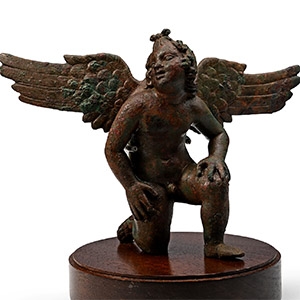
Roman Bronze Winged Eros
1st century A.D.Sold for (Inc. bp): £13,000
Modelled in the round in kneeling pose, nude, with the fingers of his left hand spread across his bent knee, head turned to the right and slightly tilted upwards; two large dorsal wings spread; the face fleshy with small eyes and nose, the hair with a wreath of curls framing the face; attachment panel behind the shoulders; mounted on a custom-made display stand. 1.38 kg total, 19 cm wide
Ex F. Philips, Netherlands, before 1980s. with Jan Roelofs Antiquaries, Netherlands. Acquired on the European art market, 2023. Private collection, London. Accompanied by an academic report by Prof. Neritan Ceka. This lot has been checked against the Interpol Database of stolen works of art and is accompanied by search certificate number no.12930-245218.
The image of the winged Eros held a special significance in Roman culture, embodying not only the god of love but also the elegance, refinement, and sophistication of the Classical tradition. His wings symbolised the fleeting nature of passion, while his youthful form carried connotations of vitality and beauty. To incorporate Eros into the decoration of luxury objects was to invoke divine favour and to align oneself with the cultivated ideals of the Graeco-Roman world. Bronzes of the 1st century A.D. represent the height of Roman metalworking, when elite households and sanctuaries commissioned works of remarkable artistry. Fittings such as this, finely cast and intended for a prestigious vessel, were both functional and symbolic: practical elements elevated to expressions of status and taste. Surviving examples are a testament to the technical mastery of Roman workshops and the desire of their patrons to surround themselves with imagery of the gods in even the smallest details of daily life. -
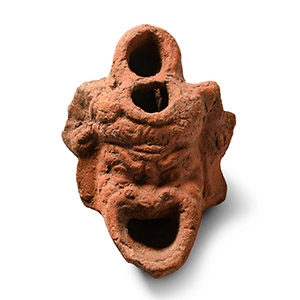
Roman Miniature Terracotta Oil Lamp with Theatre Mask
2nd century B.C.-1st century A.D.Sold for (Inc. bp): £130
Hollow-formed, no handle, but the rear bulging tubular part of the basin may have served as such; body in the shape of a comic theater mask with large open mouth; filling-hole on forehead, knit eyebrows with jolly expression and large open mouth functioning as a wick-hole; crown of foliage and fruits; flat raised oval base. 38 grams, 67 mm
From the collection of Mr W.A. Stewart, Director of School of Arts and Crafts, Cairo, 1919-1929. Acquired Christie's, London, Antiquities, Works of Art and Important Renaissance Bronzes, Plaquettes and Limoges Enamels, 8 July 1981, no.126 (part). From a private Wiltshire, UK, collection. Accompanied by a copy of the relevant Christie's catalogue page.
Lamps with figurines first appeared in the Hellenistic period, possibly originating in Athens, since the 2nd century B.C. Found in all parts of the Mediterranean basin, they were particularly popular during the 1st and 2nd centuries A.D. The Silenus face types were linked to the Bacchic cult. The crown of leaves and fruit across the forehead alludes to Bacchus or one of his followers.
