
Loading, please wait...
LOT 1287
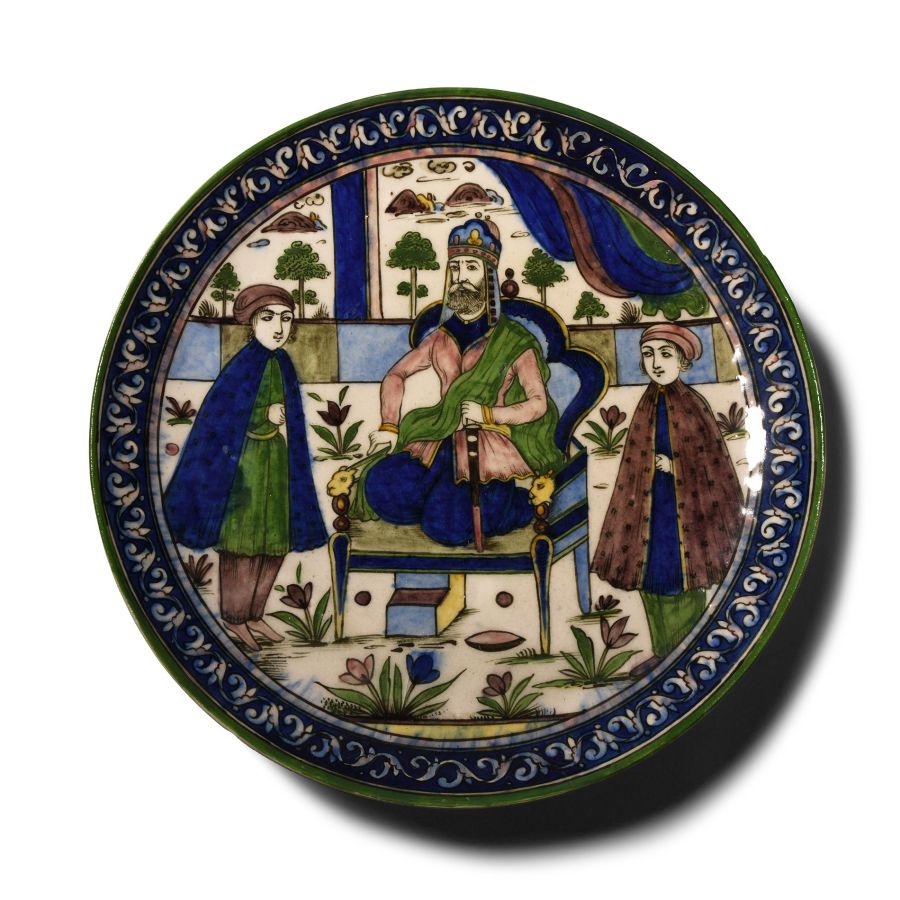
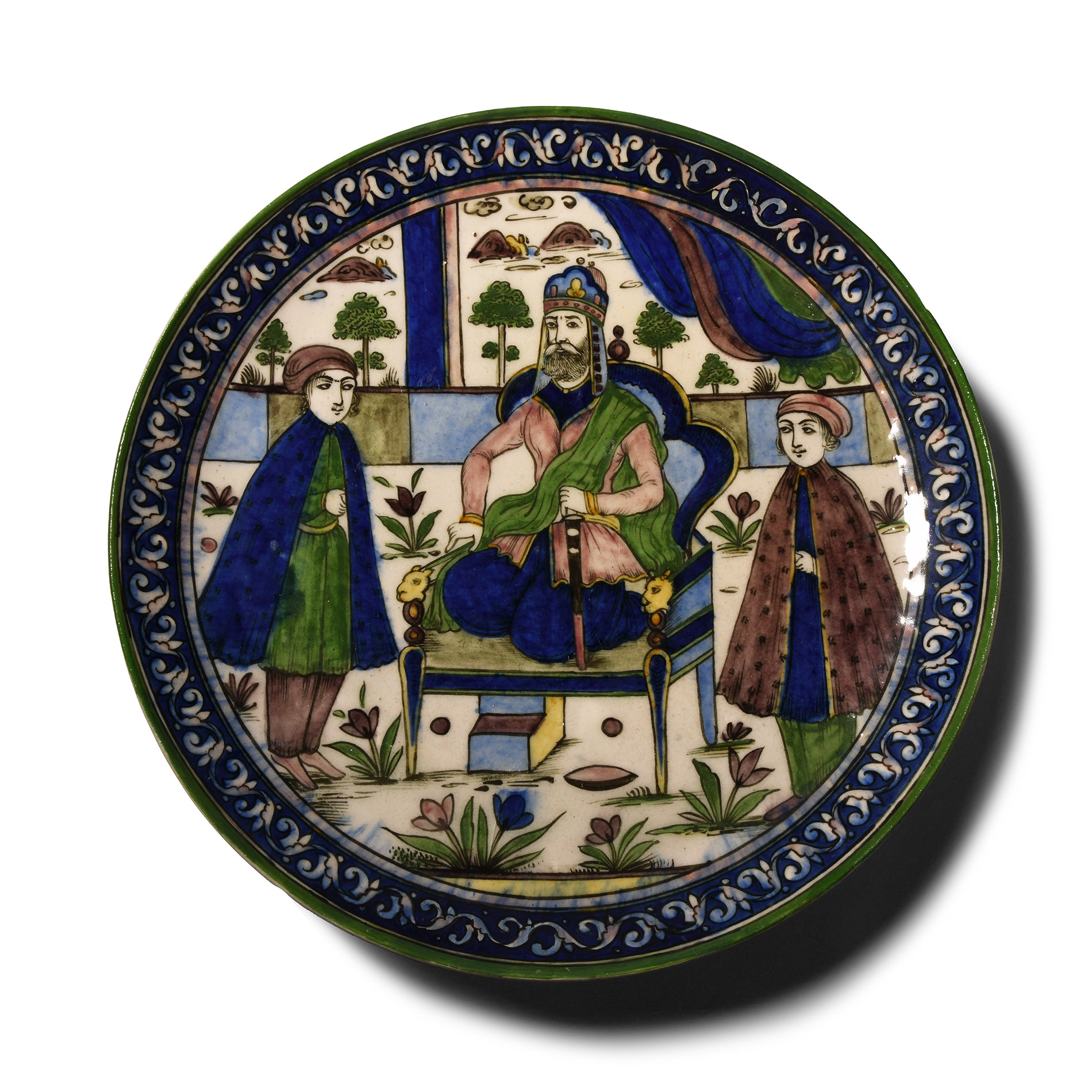
Large Iranian Ceramic Plate with Enthroned Shah
EARLY 20TH CENTURY A.D.
13 1/2 in. (1.24 kg, 34.1 cm wide).
With running foliage border enclosing a scene with a bearded Shāh sitting on a four-legged throne with lion-head finials and flanked by two attendants; flowers and other details in the field.
ProvenanceEx private collection, Belgium.
with d'Arts d'Orient et Orientalisme, Paris, France, 1 June 2015, no.73.
Ex Weber Kunsthandel, Cologne, Germany, 2015.
This lot has been checked against the Interpol Database of stolen works of art and is accompanied by a search certificate number no.12131-218137.
TimeLine Auctions follows a vetting process to ensure the authenticity and legality of all items, reinforcing our commitment to integrity and responsible trading. Each antiquity, antique, and coin lot undergoes thorough examination by a vetting committee of at least ten external specialists, professional trade association members, scientists, and archaeologists: Our Vetting Process
AUCTIONS:
TimeLine is a leading auction house specialising in antiquities, ancient art, collectables, natural history, coins, medals, and books. Our auctions offer museums, collectors, historians, and enthusiasts the opportunity to acquire unique and historically significant pieces.
LOT 1287
Large Iranian Ceramic Plate with Enthroned Shah
Estimate £1,500 - 2,000€1,740 - 2,320 (for guidance only)$2,030 - 2,700 (for guidance only)
-
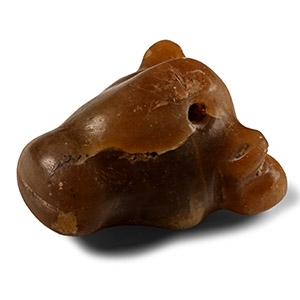
Western Asiatic Agate Bull's Head Pendant
1st millennium B.C.Sold for (Inc. bp): £208
Finely carved as a stylised bull's head with short horns and bulbous eyes, incised nostrils and mouth, perforated at the back of the neck for suspension. 28.9 grams, 40 mm
Ex property of the late Mr S.M., London, UK, 1969-1999, thence by descent. Accompanied by a previous typed cataloguing card. This lot has been cleared against the Art Loss Register database, and is accompanied by an illustrated lot declaration signed by the Head of the Antiquities Department, Dr Raffaele D'Amato. -
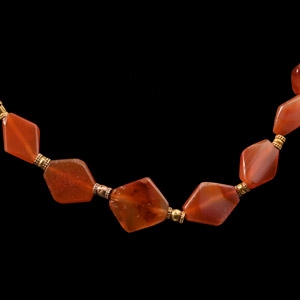
Western Asiatic Carnelian and Gold Bead Necklace
Late 1st millennium B.C.Estimate: £800 - 1,000 (+bp*)
Opening Bid: £425
Restrung group of tabular, fusiform and other carnelian beads with granulated tubular gold collar spacers between. 45.5 grams, 55 cm
From the collection of a late Japanese gentleman, 1970s onwards. -
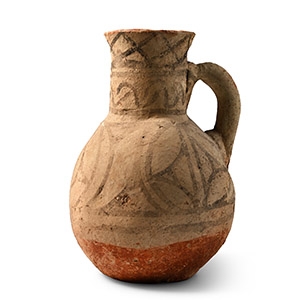
Western Asiatic Painted Terracotta Jug
8th-9th century A.D.Estimate: £200 - 300 (+bp*)
Opening Bid: £100
With teardrop-shaped body, tubular neck and everted rim, loop handle; painted panels of geometric floral motifs. 374 grams, 14.1 cm
UK collection, 1990s. Acquired on the UK art market, before 2000. Private collection, Mr M.V., a London-based businessman.
