
Loading, please wait...
LOT 1203
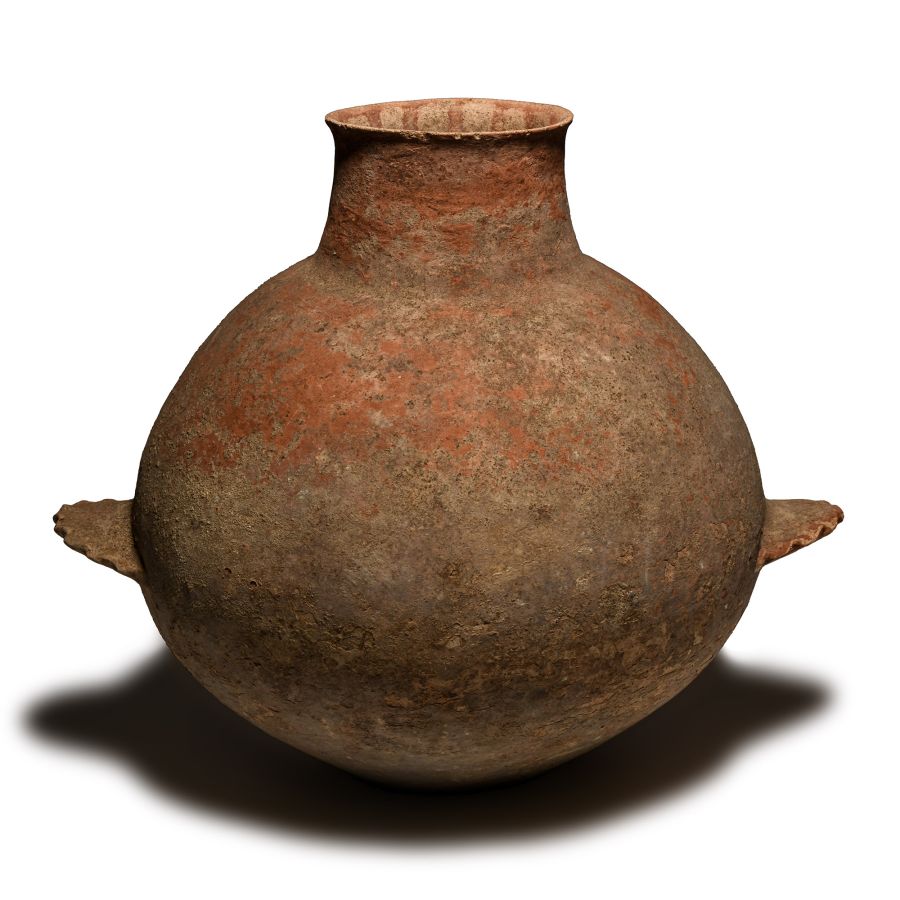
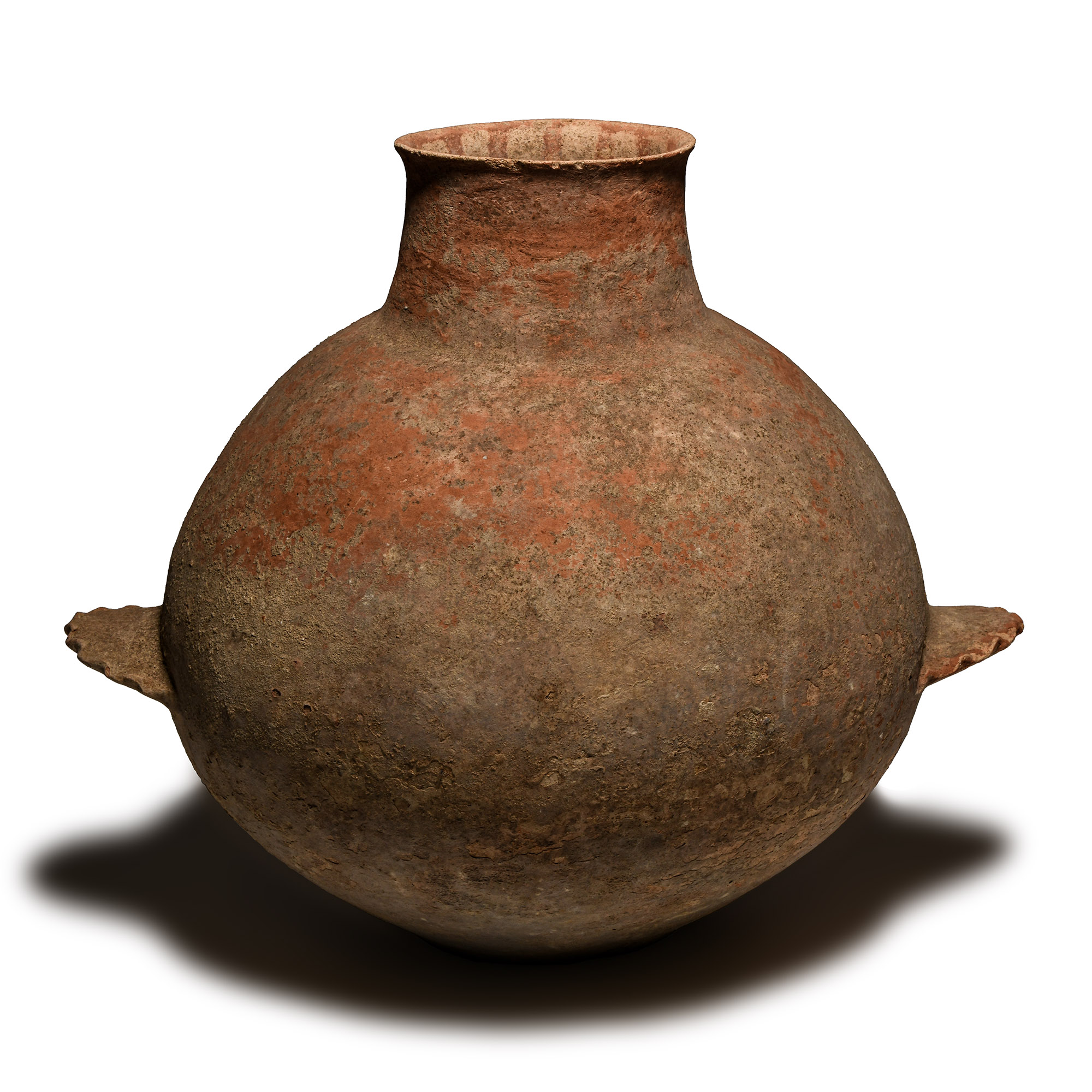
Large Holy Land Terracotta Storage Jar with Pie-Crust Handles
3RD-2ND MILLENNIUM B.C.
13 3/4 in. (2.6 kg, 35 cm wide).
Biconvex globular body with broad neck, everted rim, two ledge handles below the equator each with a piecrust outer edge. [No Reserve]
ProvenanceFrom a collection acquired on the UK art market from various auction houses and collections mostly before 2000.
From an important Cambridgeshire estate; thence by descent.
TimeLine Auctions follows a vetting process to ensure the authenticity and legality of all items, reinforcing our commitment to integrity and responsible trading. Each antiquity, antique, and coin lot undergoes thorough examination by a vetting committee of at least ten external specialists, professional trade association members, scientists, and archaeologists: Our Vetting Process
AUCTIONS:
TimeLine is a leading auction house specialising in antiquities, ancient art, collectables, natural history, coins, medals, and books. Our auctions offer museums, collectors, historians, and enthusiasts the opportunity to acquire unique and historically significant pieces.
LOT 1203
Large Holy Land Terracotta Storage Jar with Pie-Crust Handles
Sold for (Inc. bp): £111
-
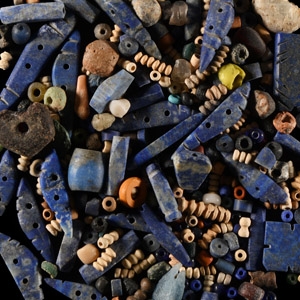
Western Asiatic Mixed Stone and Faience Bead Group
1st millennium B.C. and laterSold for (Inc. bp): £130
Mixed shapes comprising mainly lapis lazuli beads and spacers mixed with terracotta beads from Africa. 44 grams total, 2-35 mm
Ex Hong Kong collection, 1980-1990. -
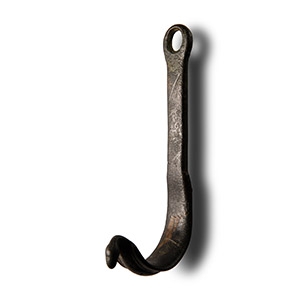
Western Asiatic Bronze Hook
1st millennium B.C.Sold for (Inc. bp): £59
With suspension loop, rectangular-section shank, recurved lower body with ribbed cross-section, acorn finial. 61 grams, 10.9 cm
From a collection acquired on the UK art market from various auction houses and collections mostly before 2000. From an important Cambridgeshire estate; thence by descent. -
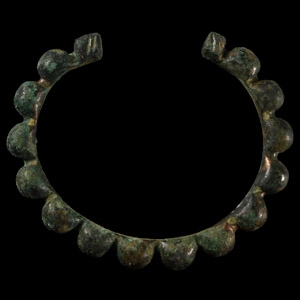
Western Asiatic Bronze Lobed Bracelet
1st millennium B.C.Sold for (Inc. bp): £59
Comprising a penannular hoop with regularly disposed lobes to the outer face. 38.5 grams, 67 mm
UK private collection before 2000. On the UK art market. Property of a London gentleman.
