
Loading, please wait...
_900x900.jpg "Large Greek Silver Ring with Advancing Lion")
_200x200.jpg "Large Greek Silver Ring with Advancing Lion")
_900x900.jpg "Large Greek Silver Ring with Advancing Lion")
_200x200.jpg "Large Greek Silver Ring with Advancing Lion")
.jpg "Large Greek Silver Ring with Advancing Lion")
.jpg "Large Greek Silver Ring with Advancing Lion")
LOT 0093
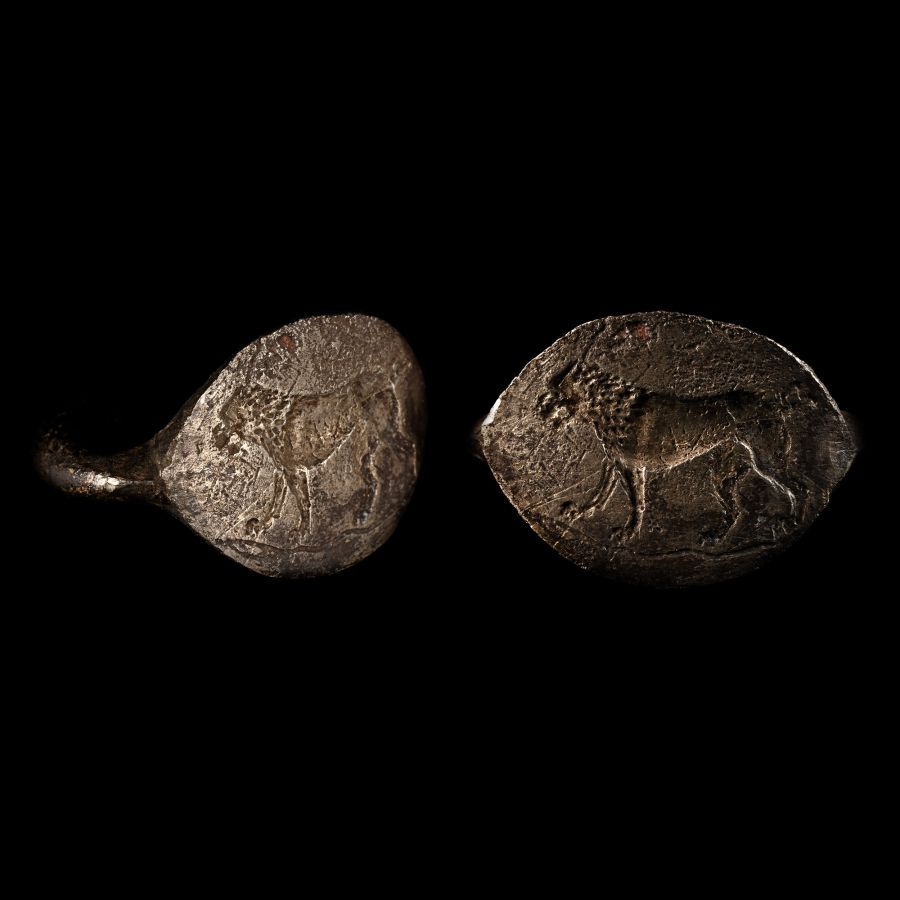
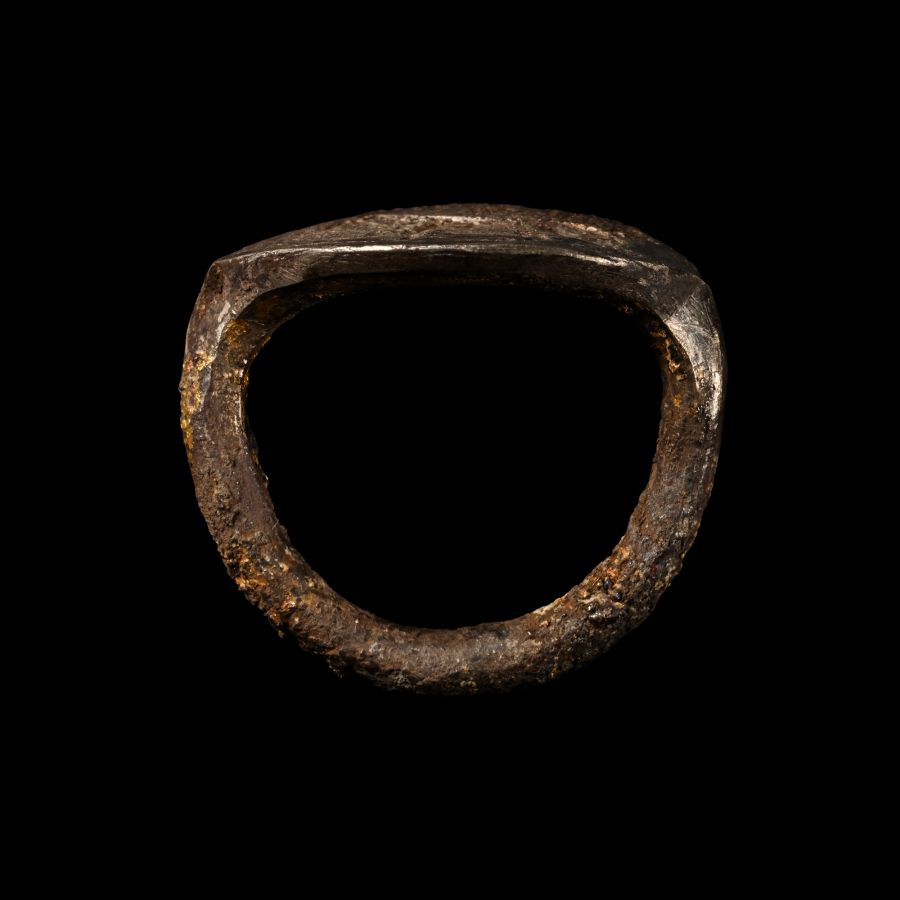
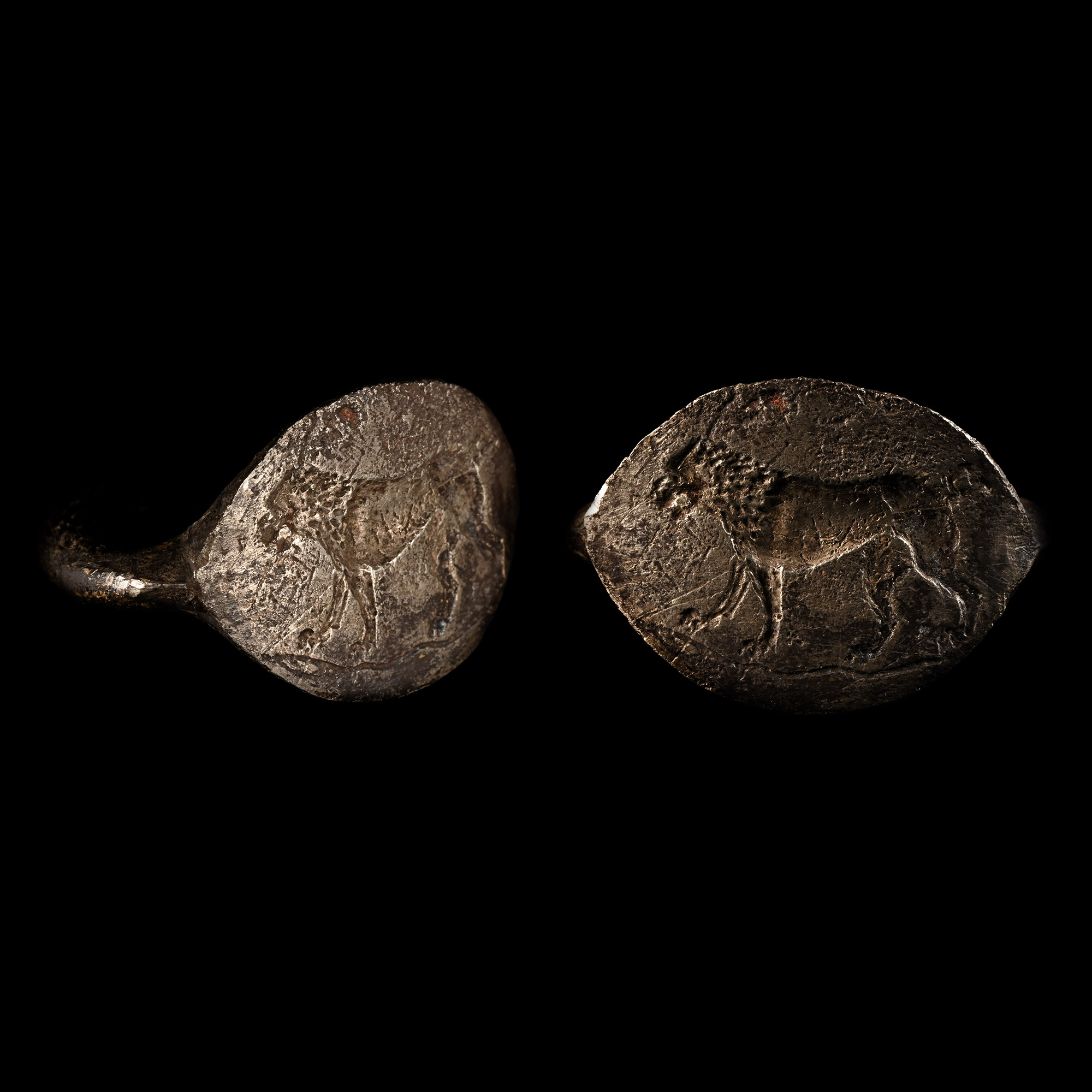
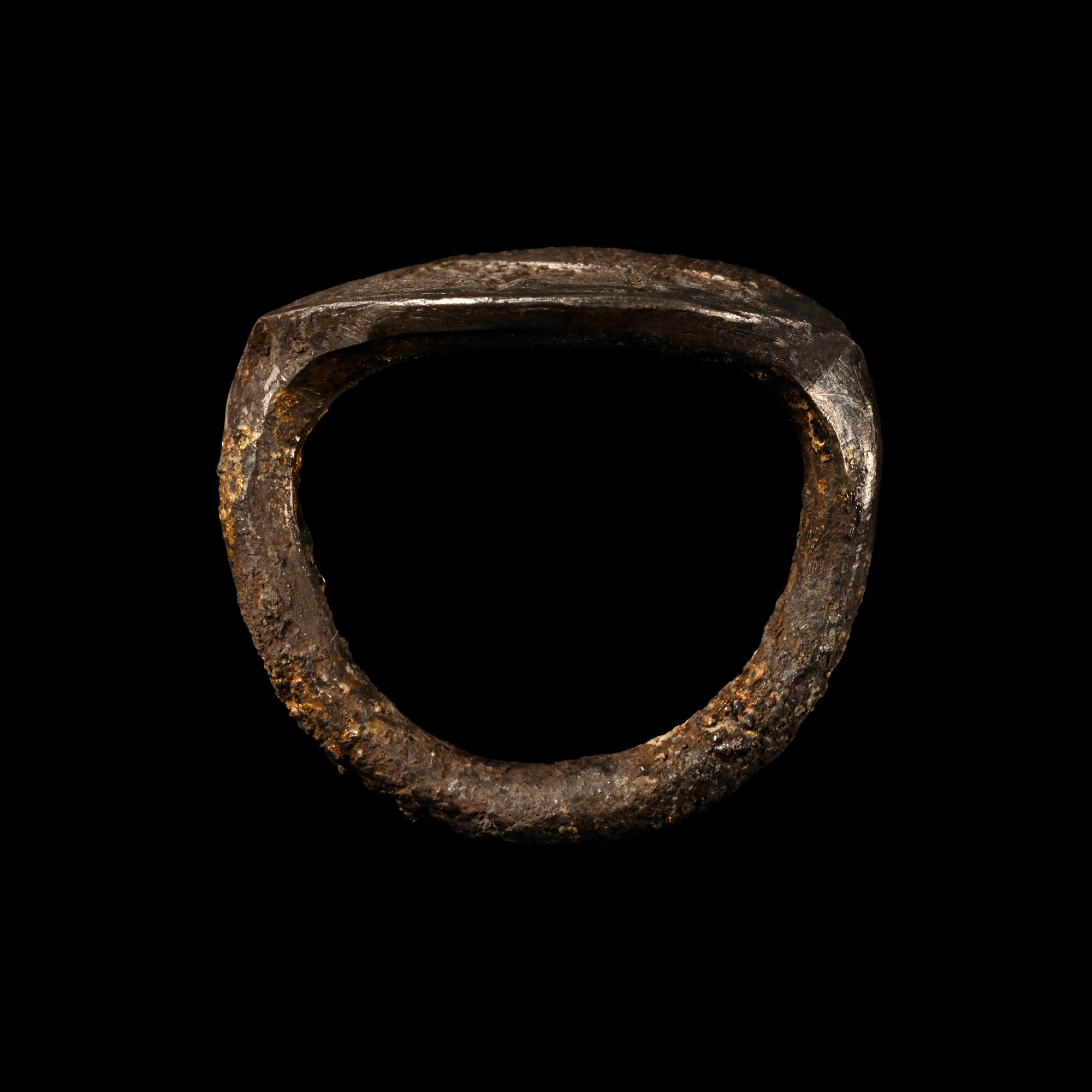
Large Greek Silver Ring with Advancing Lion
5TH CENTURY B.C.
1 1/8 in. (16.12 grams, 30.64 mm overall, 19.55 x 22.66 mm internal diameter (approximate size British V 1/2, USA 10 3/4, Europe 24.4, Japan 23)).
With round-section hoop and scaphoid plaque, incuse advancing lion in profile on a baseline.
Provenancewith Artemis Gallery, Munich, 1990s.
Acquired from Artemis Gallery, 8 February 2006.
European private collection.
This lot has been checked against the Interpol Database of stolen works of art and is accompanied by a search certificate number no.12659-234646.
This lot has been cleared against the Art Loss Register database, and is accompanied by an illustrated lot declaration signed by the Head of the Antiquities Department, Dr Raffaele D'Amato.
TimeLine Auctions follows a vetting process to ensure the authenticity and legality of all items, reinforcing our commitment to integrity and responsible trading. Each antiquity, antique, and coin lot undergoes thorough examination by a vetting committee of at least ten external specialists, professional trade association members, scientists, and archaeologists: Our Vetting Process
AUCTIONS:
TimeLine is a leading auction house specialising in antiquities, ancient art, collectables, natural history, coins, medals, and books. Our auctions offer museums, collectors, historians, and enthusiasts the opportunity to acquire unique and historically significant pieces.
-
.jpg)
Greek Terracotta Seated Shepherd
Circa 400 B.C.Estimate: £1,000 - 1,400 (‡+bp*)
Opening Bid: £500
Hollow-form statue showing a young shepherd wearing a short tunic and hooded cloak, holding an object in his right hand; rectangular slot on the reverse. 205 grams, 15.8 cm
Private collection Mr T.B., Zürich, Switzerland, before 1970. with Galerie Rhéa, Zurich, Switzerland. This lot is accompanied by an illustrated lot declaration signed by the Head of the Antiquities Department, Dr Raffaele D'Amato. -
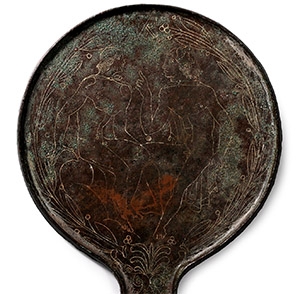
Etruscan Bronze Mirror Depicting Two Male Figures
Late 4th-3rd century B.C.Sold for (Inc. bp): £4,680
Discoid mirror with a short tang to accept an organic handle, the reverse with a palmette above the handle; the obverse with two figures seated on rocks and facing each other, to the right: Turms (Hermes) wearing a winged cap, and a young man on the left, both wearing cloaks draped over their backs, with folds visible over their shoulders and fastened at the neck; Turms depicted making an expressive gesture with his right hand while his companion listens attentively, looking toward Hermes and resting his left hand on his knee; a palmette below at the centre of the scene, two laurel branches extending upwards to form a framing arch around the composition, ending at the top in a geometric ornament. 260 grams, 22.5 cm
Private collection, Zurich, Switzerland. Accompanied by a copy of a report by the late Han Jucker (1918-1984), 1 February 1982. This lot has been checked against the Interpol Database of stolen works of art and is accompanied by a search certificate number no.12668-236379. This lot has been cleared against the Art Loss Register database, and is accompanied by an illustrated lot declaration signed by the Head of the Antiquities Department, Dr Raffaele D'Amato.
Hans Jucker (1918-1984) was a distinguished Swiss art historian and classical archaeologist, renowned for his expertise in Greek and Roman art. He was particularly recognised for his scholarly contributions to the study of ancient sculpture and iconography. Jucker served as a curator and later director at the Bernisches Historisches Museum in Switzerland, where he was instrumental in expanding and refining the museum’s collection of classical antiquities. His research and publications, marked by precision and clarity, helped shape modern understanding of Roman portraiture and the visual language of the ancient world. Through both his academic work and curatorial leadership, Jucker earned a lasting reputation as one of Switzerland’s foremost authorities on classical art. -
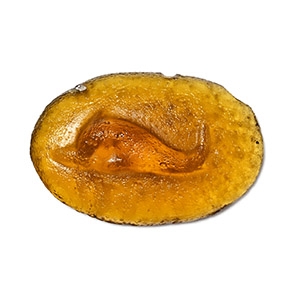
Greek Glass Cameo with Dolphin
Late 1st millennium B.C.Sold for (Inc. bp): £455
Ellipsoid in plan and plano-convex in section with low-relief dolphin modelled in the half-round. 2.75 grams, 26 mm
Acquired on the German art market, 1989-1995. with The Museum Gallery, 19 Bury Place, London, WC1, UK, 1998-2003. Property of a London based academic, 2003 to present. This lot is accompanied by an illustrated lot declaration signed by the Head of the Antiquities Department, Dr Raffaele D'Amato.
