
Loading, please wait...
LOT 0531
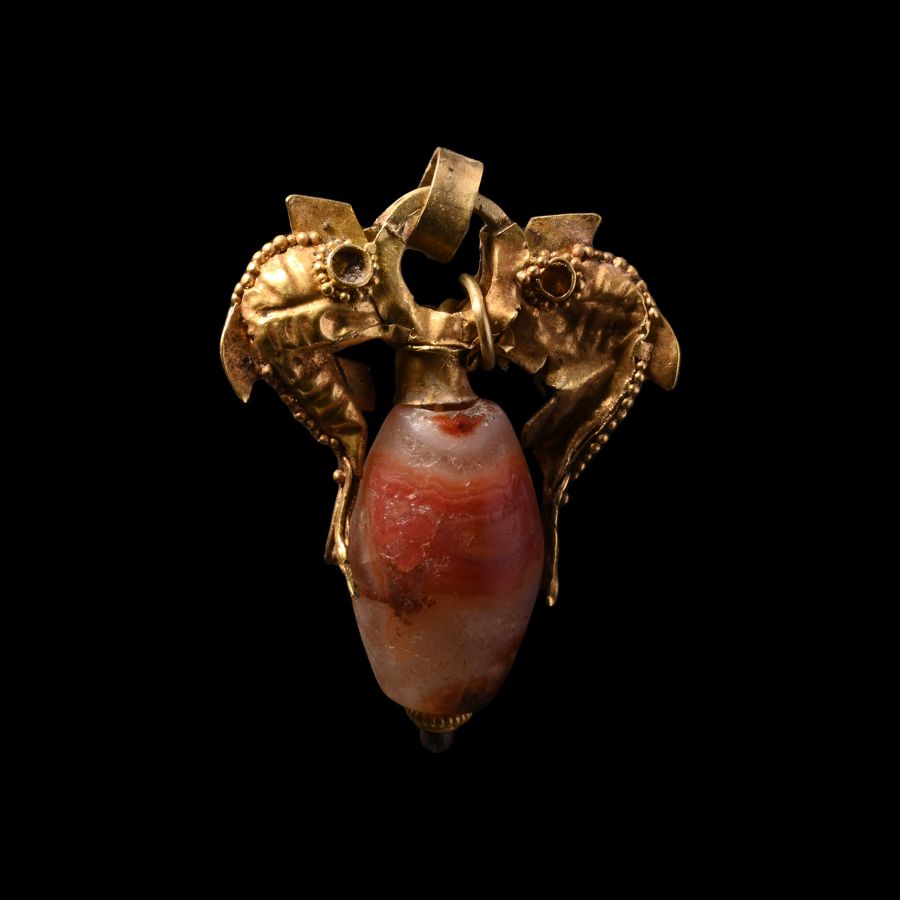
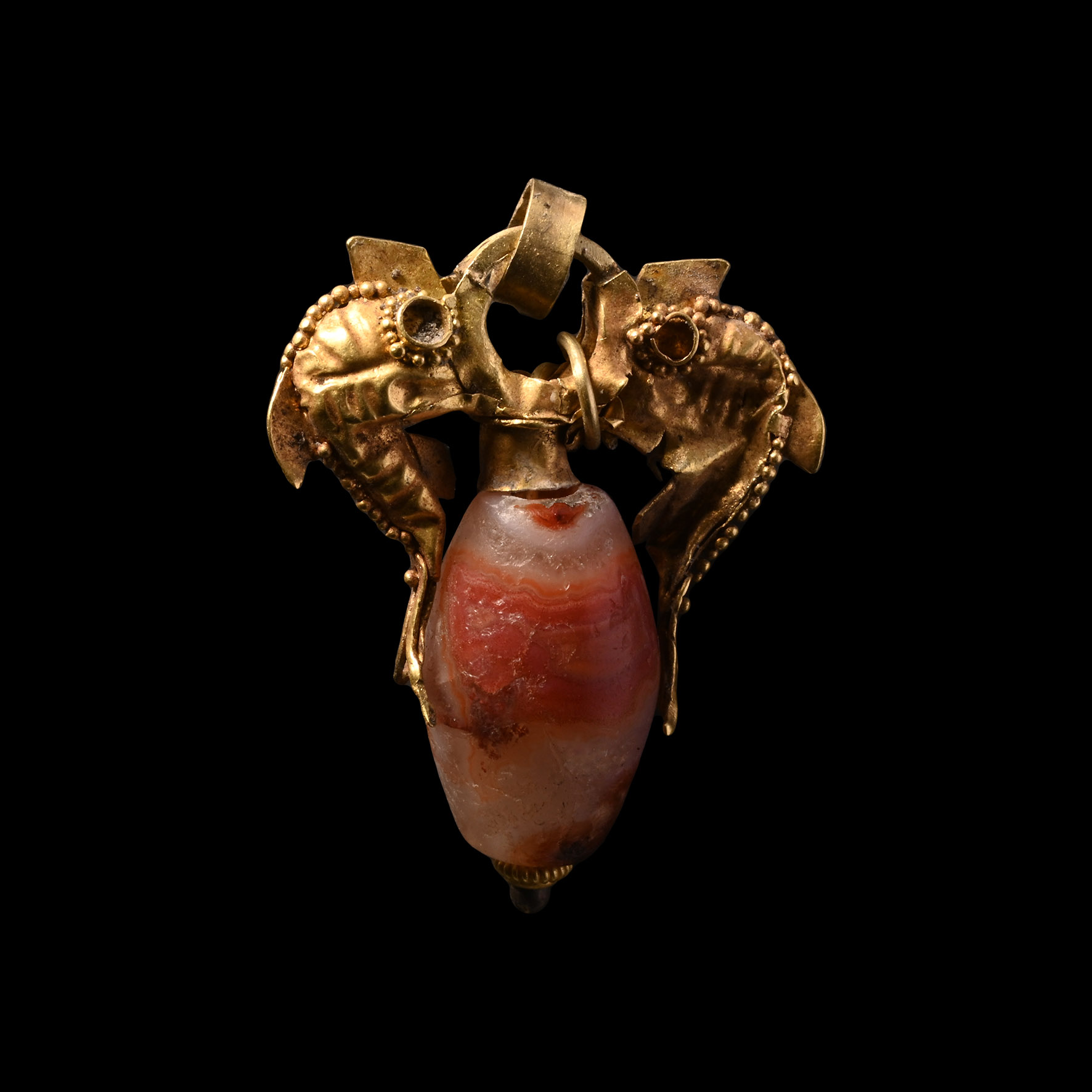
Large Greek Gold Dolphin Pendant
4TH-2ND CENTURY B.C.
1 3/8 in. (5.81 grams, 36 mm).
The leaping dolphins forming the handles of an amphora-shaped pendant with an agate body; free-running suspension loop; bifacial detailing to the animals.
ProvenanceAcquired 1970-2010.
Collection of a late Japanese gentleman.
Cf. The British Museum, museum number 1904,0706.1, for earrings with very similar elements.
CONDITIONTimeLine Auctions follows a vetting process to ensure the authenticity and legality of all items, reinforcing our commitment to integrity and responsible trading. Each antiquity, antique, and coin lot undergoes thorough examination by a vetting committee of at least ten external specialists, professional trade association members, scientists, and archaeologists: Our Vetting Process
AUCTIONS:
TimeLine is a leading auction house specialising in antiquities, ancient art, collectables, natural history, coins, medals, and books. Our auctions offer museums, collectors, historians, and enthusiasts the opportunity to acquire unique and historically significant pieces.
-
Hellenistic Silver-Gilt Ring with Image of a Ptolemaic Queen
3rd-2nd century B.C.Sold for (Inc. bp): £1,105
Elliptical bezel with high-relief profile bust. 7.51 grams, 20.26 mm overall, 16.23 mm internal diameter (approximate size British L, USA 5 3/4, Europe 11.24, Japan 10)
Acquired on the German art market around 2000. From the collection of a Surrey, UK, gentleman. -
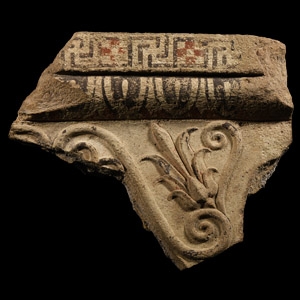
Etruscan Painted Terracotta Architectural Cornice
5th-4th century B.C.Sold for (Inc. bp): £3,900
A fragment of amorphous form, decorated in relief with scrolling tendrils and anthemion, painted egg-and-dart ornament above, surmounted by moulded bands and a frieze of meander and chequerboard panels; remains of red and black painted pigment. 5.1 kg, 34.5 cm wide
Private collection, Switzerland, 1960s. From the Sir Claude Hankes-Drielsma collection, prior to 2006. with Christie's, London, The Stanford Place Collection of Antiquities, 26 April 2006, lot 36. Accompanied by a copy of an Art Loss Register certificate number S00209802, dated 14 June 2021. Accompanied by a detailed collector's catalogue pages including description and photograph. This lot has been checked against the Interpol Database of stolen works of art and is accompanied by search certificate number no.203716. -
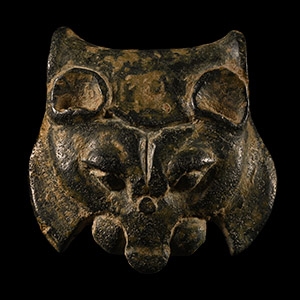
Greek Zoomorphic Bronze Hydria Handle Attachment
Circa 5th-4th century B.C.Estimate: £500 - 700 (+bp*)
Opening Bid: £200
Modelled as a skinned lion's head with fierce facial detailing; made for soldering to an articulated round handle. 98 grams, 51 mm high
Private collection, Germany, 1980s. Acquired on the UK art market 2010.
The handles were usually shaped as divinities or animals linked with gods (ie. lions for Herakles). A similar specimen can be seen in the Berlin Museum (inv.7491), from Athens.
