
Loading, please wait...
LOT 0501
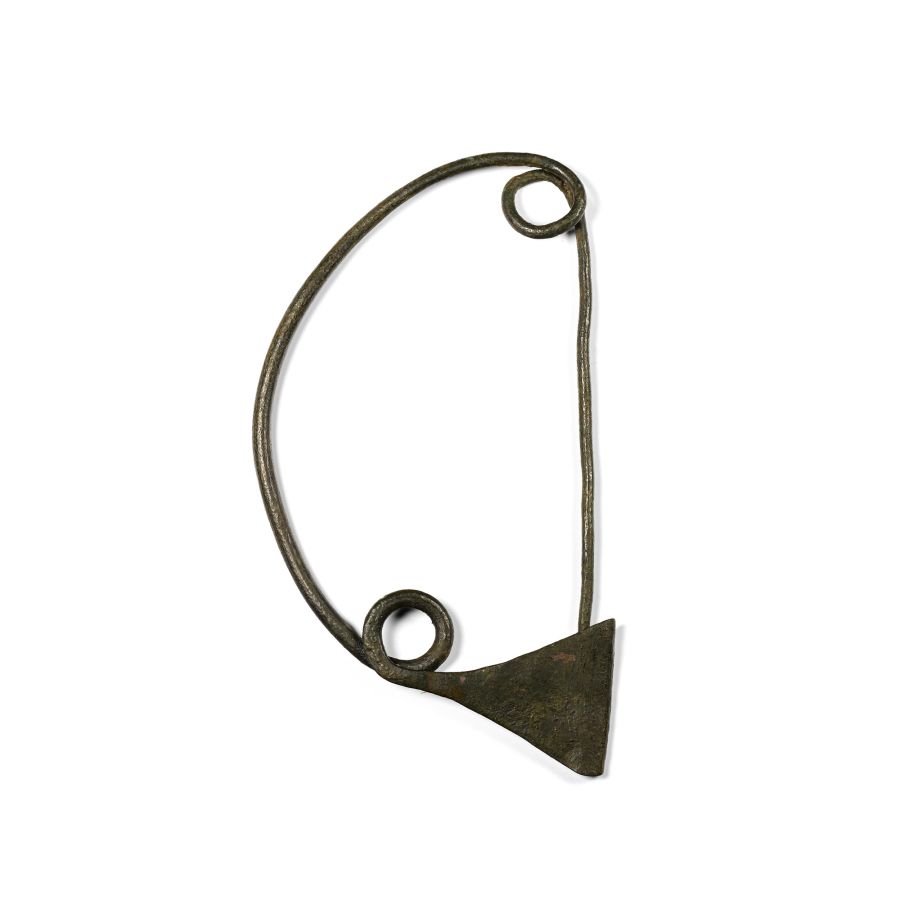
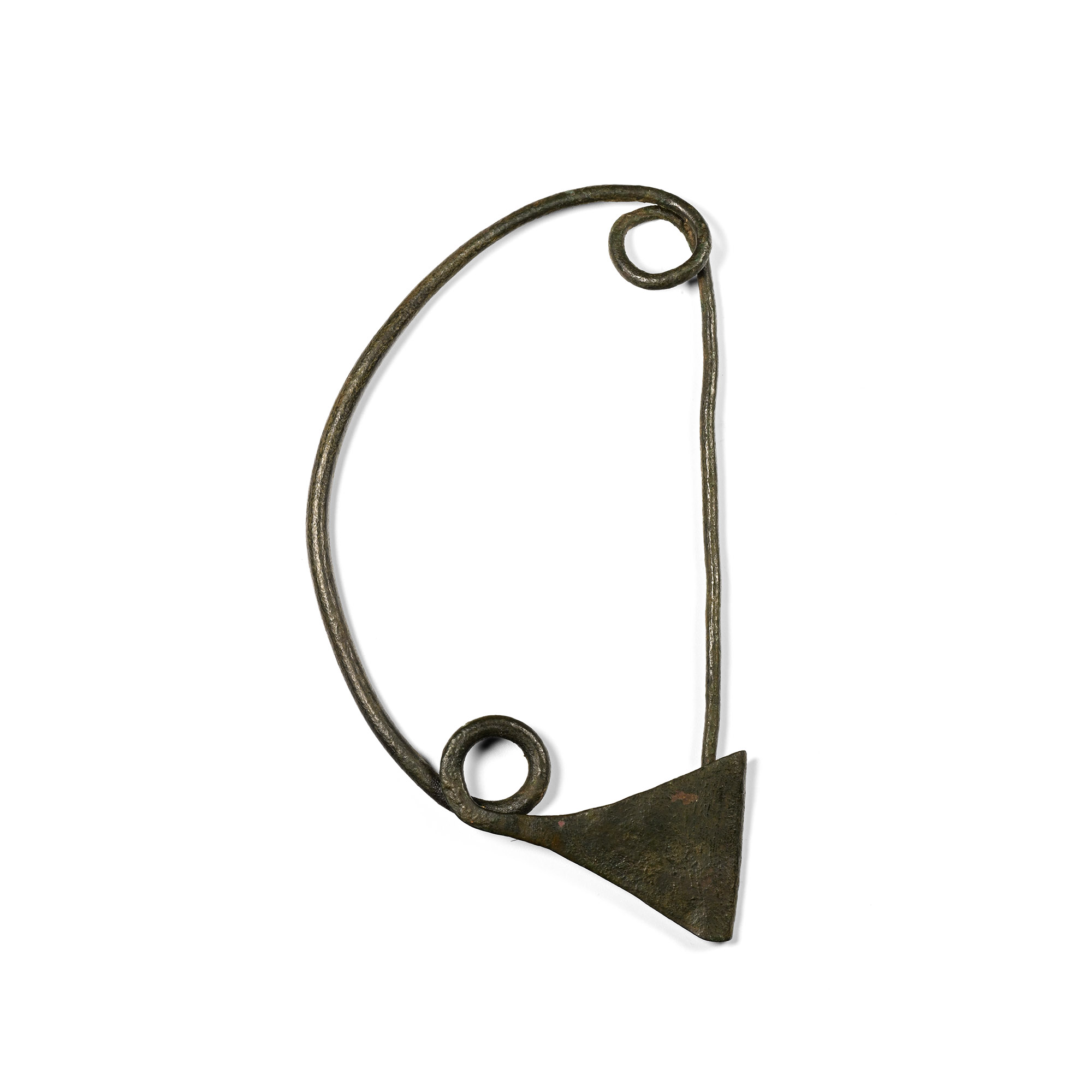
Large Greek Bronze Fibula
IRON AGE, 8TH CENTURY B.C.
4 in. (15.7 grams, 10 cm).
Single-piece fibula comprising a curved bow with integral coiled spring to one end developing to a sturdy pin; to the other end, a flared catchplate on a single-coil spring.
ProvenanceEx important German collection of brooches, 1980s.
This lot is accompanied by an illustrated lot declaration signed by the Head of the Antiquities Department, Dr Raffaele D'Amato.
Cf. Beck, H. et al., Fibel und Fibeltracht, Berlin, 2000, abb.86, for type.
CONDITIONTimeLine Auctions follows a vetting process to ensure the authenticity and legality of all items, reinforcing our commitment to integrity and responsible trading. Each antiquity, antique, and coin lot undergoes thorough examination by a vetting committee of at least ten external specialists, professional trade association members, scientists, and archaeologists: Our Vetting Process
AUCTIONS:
TimeLine is a leading auction house specialising in antiquities, ancient art, collectables, natural history, coins, medals, and books. Our auctions offer museums, collectors, historians, and enthusiasts the opportunity to acquire unique and historically significant pieces.
LOT 0501
Large Greek Bronze Fibula
Estimate £100 - 140€120 - 160 (for guidance only)$140 - 190 (for guidance only)
-
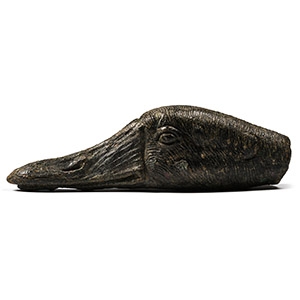
Greek Bronze Duck's Head
3rd-2nd century B.C.Estimate: £1,800 - 2,400 (‡+bp*)
Opening Bid: £810
Modelled in the round with realistic features, textured plumage, rounded beak. 236 grams, 10.1 cm
Acquired in the mid 1980s-1990s. Private collection, Switzerland, thence by descent. Private collection, since the late 1990s. This lot has been checked against the Interpol Database of stolen works of art and is accompanied by a search certificate number no.12378-226677. This lot has been cleared against the Art Loss Register database, and is accompanied by an illustrated lot declaration signed by the Head of the Antiquities Department, Dr Raffaele D'Amato. -
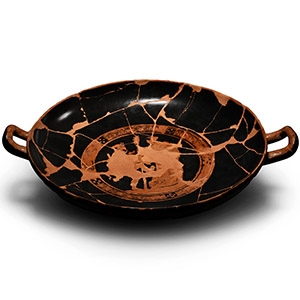
Greek Attic Red-Figure Kylix with Dancing Nymphs and Satyrs
5th century B.C.Estimate: £4,000 - 6,000 (‡+bp*)
Opening Bid: £1,800
With short stem and broad bowl with carination at the shoulder; two strap handles with an ivy-leaf with tendrils and volutes underneath; the underside of the bowl with a frieze of four satyrs and four maenads performing a dance, the maenads dressed in fancy Ionian dress, long peplos and himation, and a kekrykephalos (hair net) on their heads, and holding a thyrsus in their right hands; the centre of the cup showing dancing Silenus and a nymph, dressed in a similar manner and holding a thyrsus, border of meanders and chequered squares surrounding; restored. 875 grams, 37 cm wide
Ex Dr Gonik and the late Mr Wirth, 1960-1970s. Private collection, Switzerland. Accompanied by an academic report by Dr Raffaele D’Amato. This lot has been checked against the Interpol Database of stolen works of art and is accompanied by a search certificate number no.12573-232109. This lot has been cleared against the Art Loss Register database, and is accompanied by an illustrated lot declaration signed by the Head of the Antiquities Department, Dr Raffaele D'Amato.
Silenus, the only individualised satyr, was a companion and tutor to the wine god Dionysus, and he is represented here in the place of honour. He is typically older than the satyrs of the Dionysian retinue (thiasos) and his representation on the tondo symbolises respect towards his senior position. -
.jpg)
Etruscan Impasto 'Spiral' Amphora
7th century B.C.Sold for (Inc. bp): £715
Comprising a bulbous body and a short neck with everted rim, two strap handles with incised striations continuing in an inverted V-shape beneath the handles; on each side of the body a large double spiral flanked by five curving lines, a stylised bird above. 343 grams, 16.5 cm
Ex Fortuna, Gallery for Ancient Art (Zurich, Kirchgasse 31) Basel, 7 April 1984. Private collection, Bern, Switzerland. This lot is accompanied by an illustrated lot declaration signed by the Head of the Antiquities Department, Dr Raffaele D'Amato.
With the arrival of the Greeks (775 B.C. at Pithekoussai, 750 B.C. at Cumae), a clear technical advancement in ceramic production was observed: impasto vessels began to show more varied patterns, were fired at higher temperatures, and were eventually replaced by wheel-made pottery in the Greek style. Despite growing populations, there remained a significant demand for this more 'old-fashioned' yet technically refined pottery. Note on the term impasto (Italian): in painting, it refers to the thick application of paint (a textured, paste-like technique). In ceramics, it refers to a thick layer of slip (a watered suspension of purified clay) applied before firing, which results in a homogenous, matte-glossy surface after firing.
