
Loading, please wait...
LOT 0551
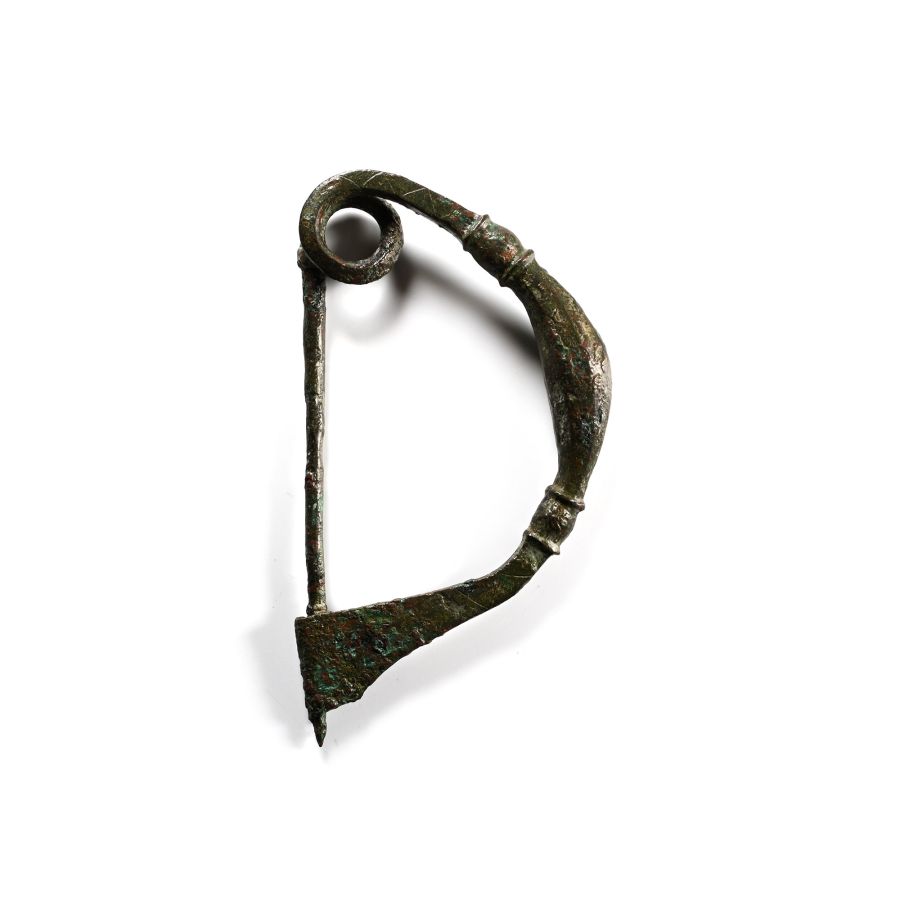
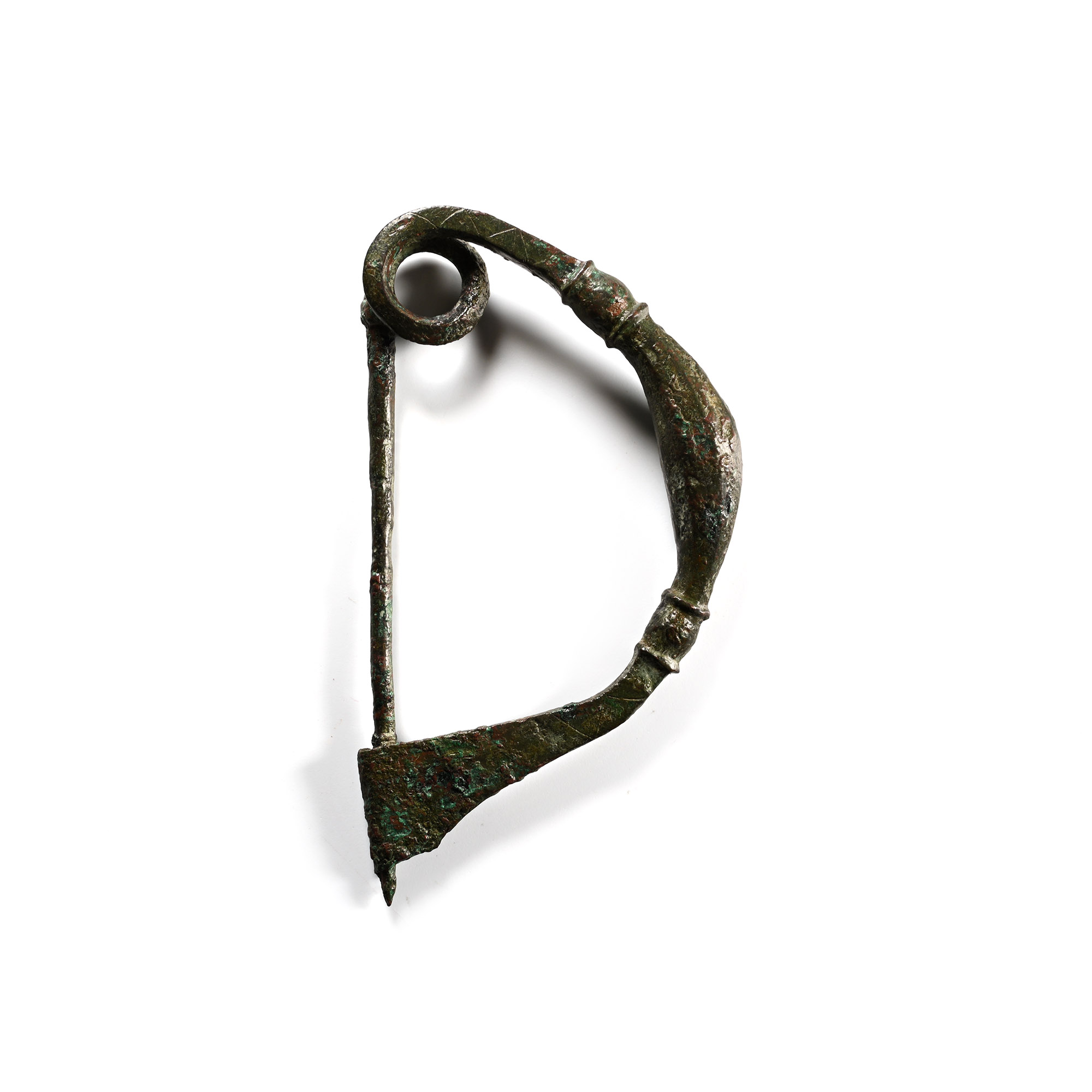
Large Greek Bronze Bow Brooch
6TH-5TH CENTURY B.C.
3 3/4 in. (47 grams, 96 mm).
Comprising a tapering bow with median cluster of an elongated bulb with collar either side, one arm extending to a single-loop spring and pin, the other widening to a flat catchplate. [No Reserve]
ProvenanceAcquired on the UK art market before 2000.
Property of an Essex, UK, gentleman.
This lot is accompanied by an illustrated lot declaration signed by the Head of the Antiquities Department, Dr Raffaele D'Amato.
Cf. Hattatt, R., Iron Age and Roman Brooches, Oxford, 1985, item 712, for type.
CONDITIONTimeLine Auctions follows a vetting process to ensure the authenticity and legality of all items, reinforcing our commitment to integrity and responsible trading. Each antiquity, antique, and coin lot undergoes thorough examination by a vetting committee of at least ten external specialists, professional trade association members, scientists, and archaeologists: Our Vetting Process
AUCTIONS:
TimeLine is a leading auction house specialising in antiquities, ancient art, collectables, natural history, coins, medals, and books. Our auctions offer museums, collectors, historians, and enthusiasts the opportunity to acquire unique and historically significant pieces.
-
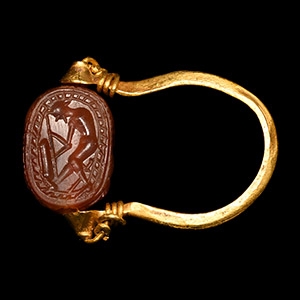
Etruscan Engraved Scarab in Gold Swivel Ring
Circa 3rd century B.C. and laterSold for (Inc. bp): £1,820
Carnelian scarab with flat underside, segmented border around a figure bent over his tools, set into a later swivel-mount with carinated hoop, wires wound round the shank at each shoulder. 10.23 grams, 35.18 mm overall, 17.75 x 23.05 mm internal diameter (approximate size British P 1/2, USA 7 3/4, Europe 16.86, Japan 16)
Acquired from a London dealer in the 1980s. From the collection of a London antiquarian, formed since the 1980s. This lot has been checked against the Interpol Database of stolen works of art and is accompanied by a search certificate number no.12745-234210. This lot has been cleared against the Art Loss Register database, and is accompanied by an illustrated lot declaration signed by the Head of the Antiquities Department, Dr Raffaele D'Amato. -
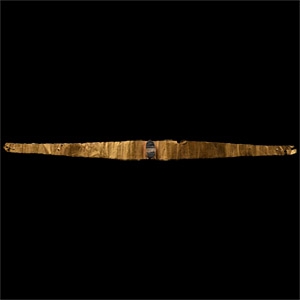
Greek Gold Diadem with Glass Gem
1st millennium B.C.Sold for (Inc. bp): £936
Sheet-gold with tapering finials, central raised cell set with a two-tone glass insert imitating banded agate; mounted on perspex backing. 76.87 grams total, 30 cm (36 cm including stand)
with Galerie Rhéa, Zurich, Switzerland. This lot is accompanied by an illustrated lot declaration signed by the Head of the Antiquities Department, Dr Raffaele D'Amato. -
.jpg)
Greek Silver Ring for Skythos
Circa 5th century B.C.Sold for (Inc. bp): £3,120
Ellipsoid bezel with incuse figure of a running horse, Greek text 'ΣΚΥΘΟΑΓΑΘΗ' for 'the sake of Skythos'. 7.57 grams, 25.17 mm overall, 20.68 mm internal diameter (approximate size British R 1/2, USA 8 3/4, Europe 19.38, Japan 18)
Acquired in the mid 1980s-1990s. Private collection, Switzerland, thence by descent. Private collection, since the late 1990s. This lot has been cleared against the Art Loss Register database, and is accompanied by an illustrated lot declaration signed by the Head of the Antiquities Department, Dr Raffaele D'Amato.
