
Loading, please wait...

LOT 0025
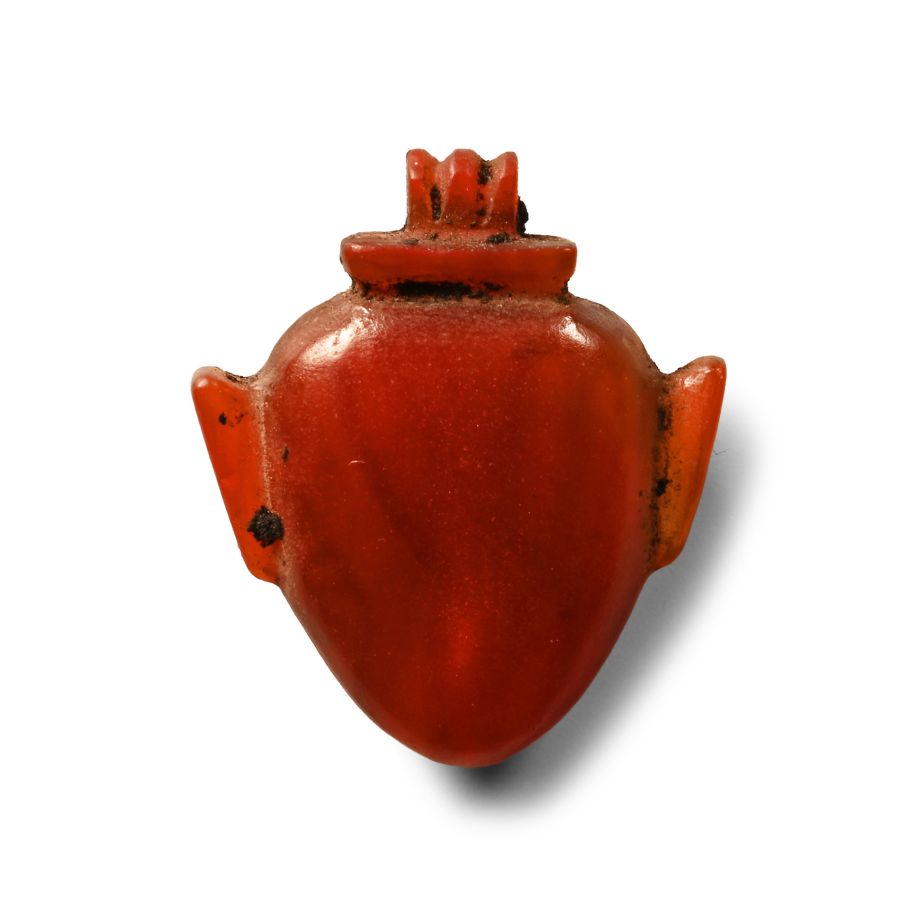
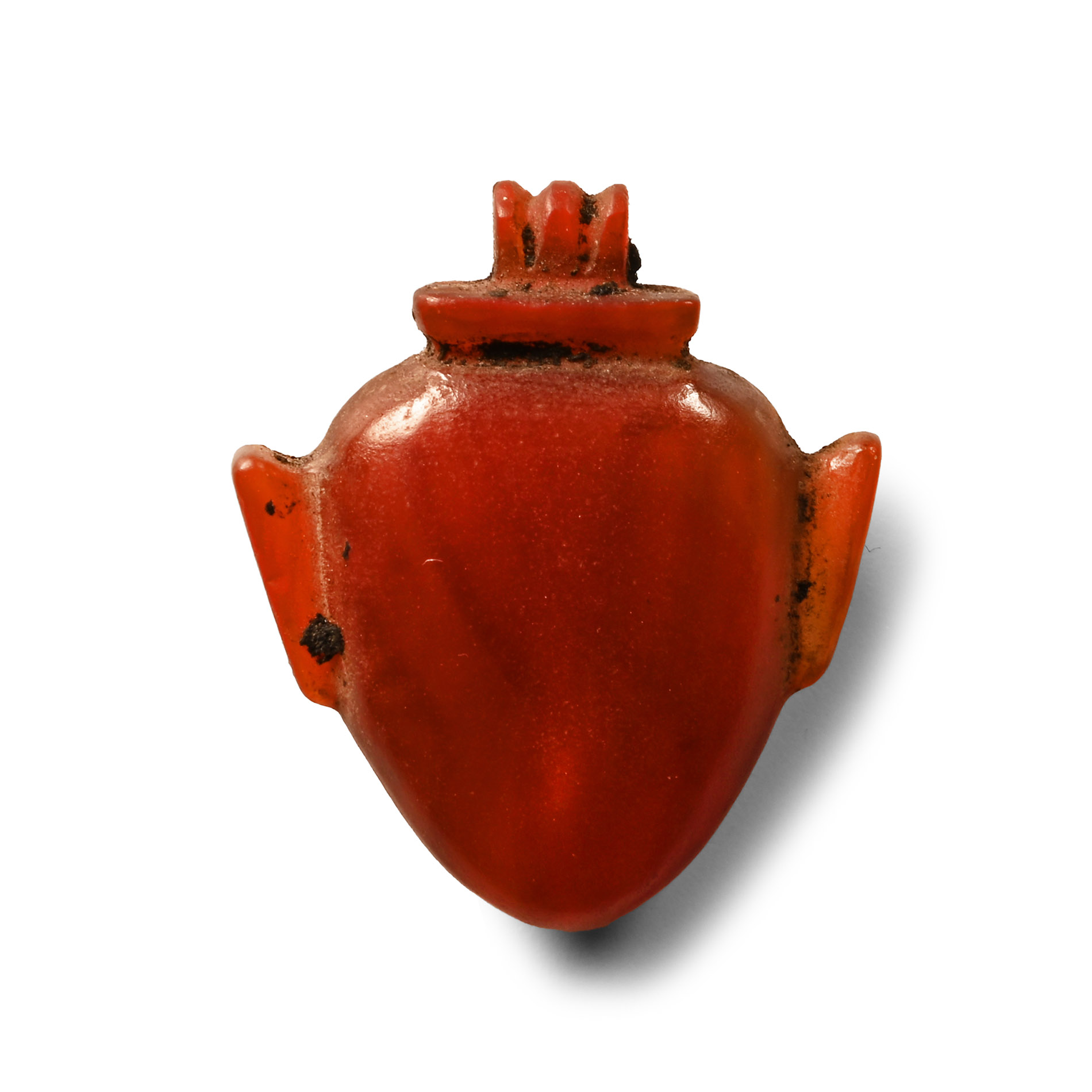
Large Egyptian Translucent Carnelian Heart Amulet
NEW KINGDOM, CIRCA 1550-1070 B.C.
1 in. (4.6 grams, 24 mm).
Carved with lateral triangular lugs and ribbed bale.
ProvenanceFrom an early 20th century collection.
LiteratureCf. Petrie, W.M.F., Amulets. Illustrated by the Egyptian Collection in University College, London, 1914, pl. I, nos.7a-p, for type; Andrews, C., and van Dijk, J., Objects for Eternity: Egyptian Antiquities from the W. Arnold Meijer Collection, Mainz am Rhein, 2006, p.128, no. 2.34a, for a slightly slender carnelian example.
FootnotesAccording to ancient Egyptian beliefs, the heart (ib) was considered to be the centre of intelligence, emotions, and behaviour. The heart was also believed to store an individual's memories. During the Weighing of the Heart ceremony in the afterlife, the heart could speak up for the deceased and account for their lifetime of actions before Osiris. For this reason, heart amulets were placed on the mummy to safeguard the organ and ensure a favourable outcome during judgment.
CONDITIONTimeLine Auctions follows a vetting process to ensure the authenticity and legality of all items, reinforcing our commitment to integrity and responsible trading. Each antiquity, antique, and coin lot undergoes thorough examination by a vetting committee of at least ten external specialists, professional trade association members, scientists, and archaeologists: Our Vetting Process
AUCTIONS:
TimeLine is a leading auction house specialising in antiquities, ancient art, collectables, natural history, coins, medals, and books. Our auctions offer museums, collectors, historians, and enthusiasts the opportunity to acquire unique and historically significant pieces.
-
Egyptian Limestone 'Floral' Inlay Group
Roman Period, 30 B.C.-323 A.D. or earlierSold for (Inc. bp): £85
Group of discoid inlay plaques or gaming counters, crinoids with cinquefoil motif. 80 grams total, 12-19 mm
From a central London ADA gallery, 1990s.
Flowers were symbolic of rebirth due to the daily reopening of their petals after nightfall. As a result, they were widely used in domestic settings, religious and funerary contexts, and as adornments. Similar rosette discs, like those recovered from the Ramesside Period palace at Qantir, were used as decorative elements in royal palaces. -
Egyptian Gold Uraeus Appliqué
Late Period, 664-332 B.C.Sold for (Inc. bp): £195
Sheet-gold repoussé mount with S-curved serpentine body, ovoid head; edges recurved. 0.87 grams, 21 mm
From an old UK collection, 1980s. -
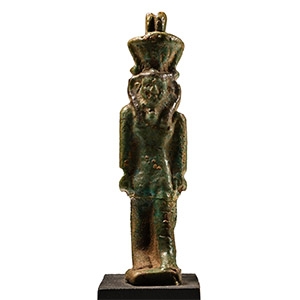
Egyptian Faience Figure of Nefertum
Ptolemaic Period, 332-30 B.C.Estimate: £700 - 900 (‡+bp*)
Opening Bid: £350
Turquoise faience standing figure of Nefertum in a striding pose with arms at the sides, sporting a black coloured tripartite wig surmounted by the god's distinctive headdress consisting of a lotus flower with two plumes on top; a suspension loop at the back; repaired. 71 grams total, 13 cm including stand
Property from an American deceased estate, acquired between 1970 and 1989. with Bonham's, London, 28 October 2009, no.81 [Part].
Nefertum was closely associated with the creator god Ptah and the goddesses Sekhmet and Bastet. He represented the first sunlight and the sweet scent of the Egyptian blue lotus flower (nymphaea caerulea). According to beliefs, the sun rose from the bloom of a blue lotus, embodying notions of rebirth and rejuvenation. Additionally, as the lotus was seen as a symbol of fertility, it is possible that this amulet was also worn for that purpose.
