
Loading, please wait...
_900x900.jpg "Large Egyptian Stone Hieroglyphic Scarab for Amenhotep III")
_200x200.jpg "Large Egyptian Stone Hieroglyphic Scarab for Amenhotep III")
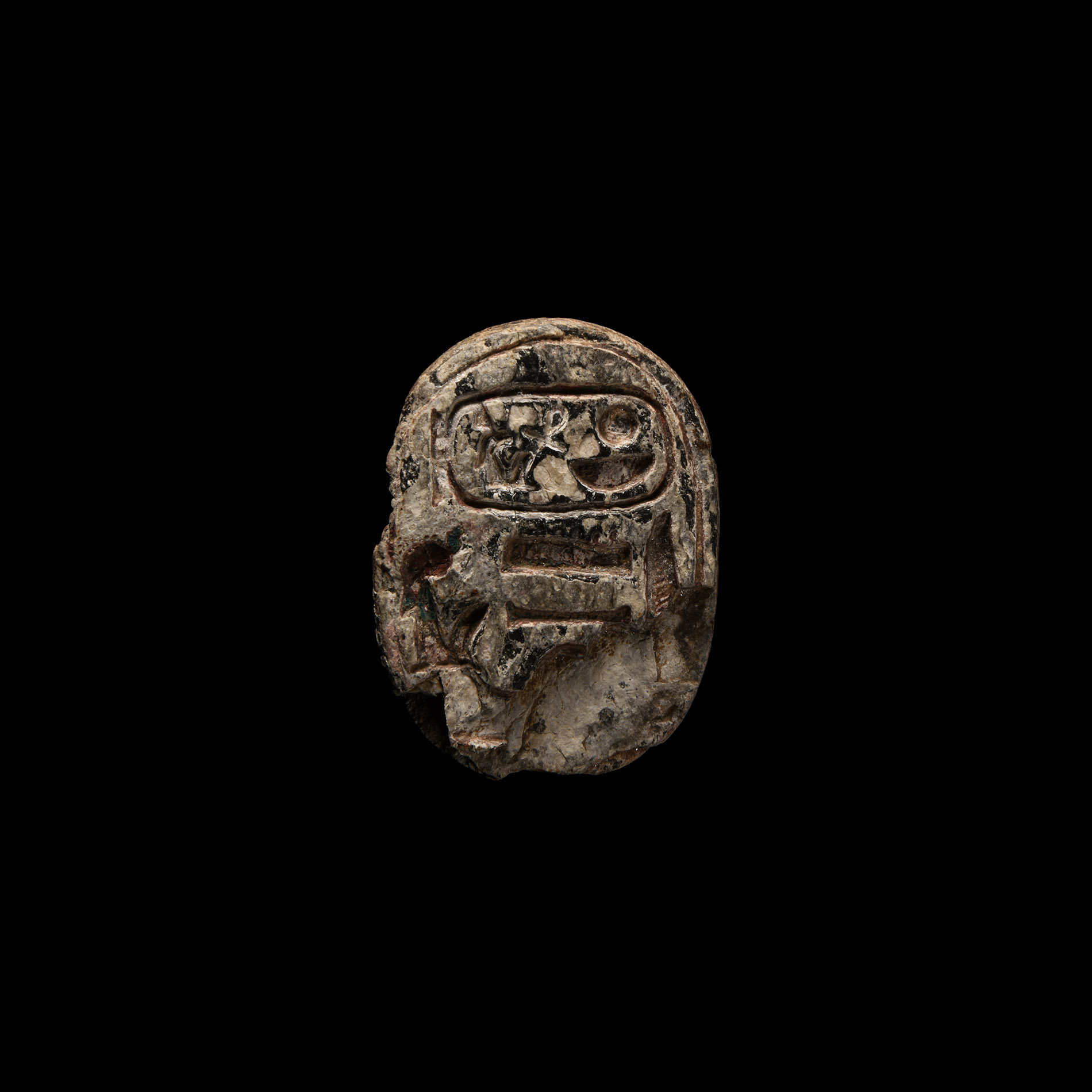
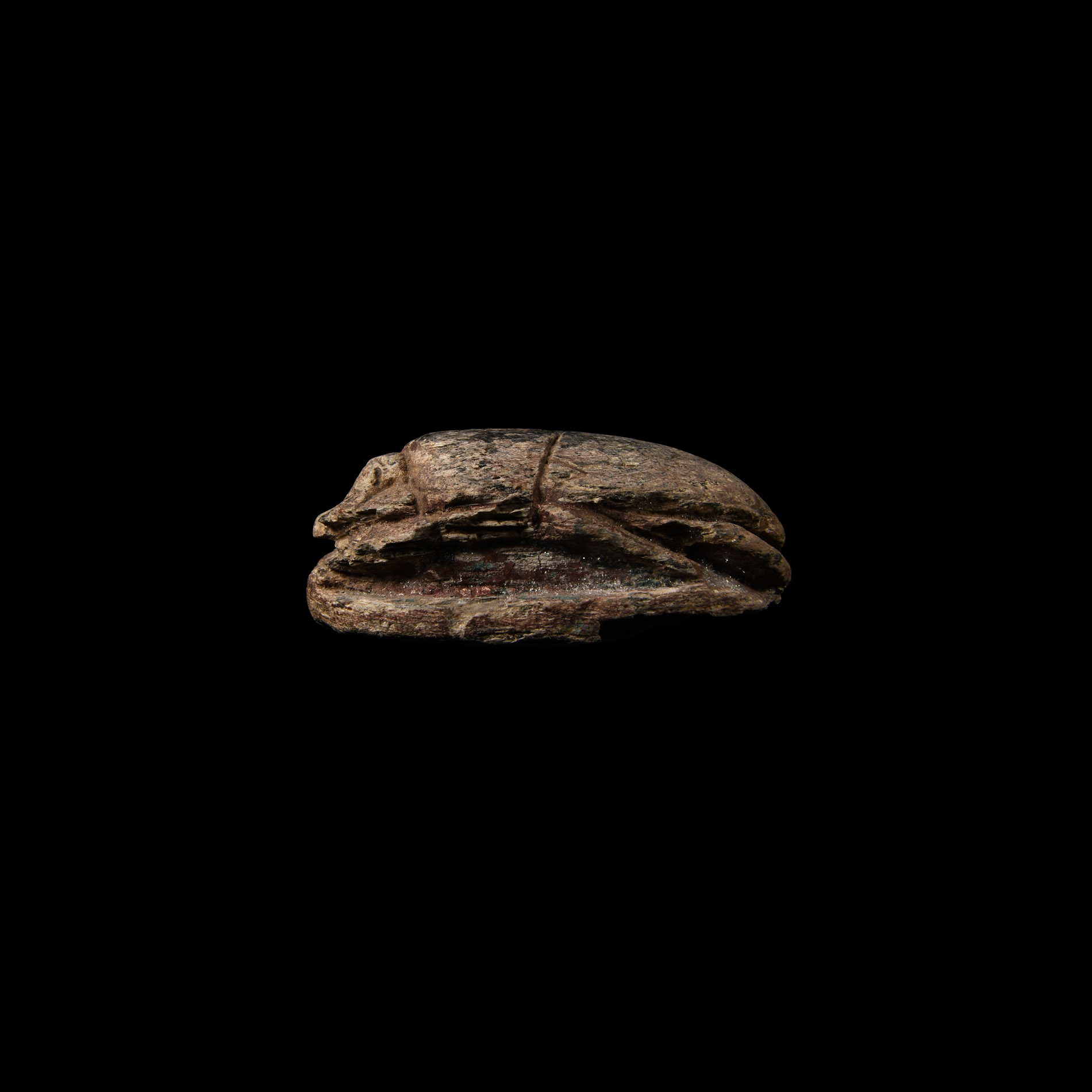
.jpg "Large Egyptian Stone Hieroglyphic Scarab for Amenhotep III")
LOT 0513
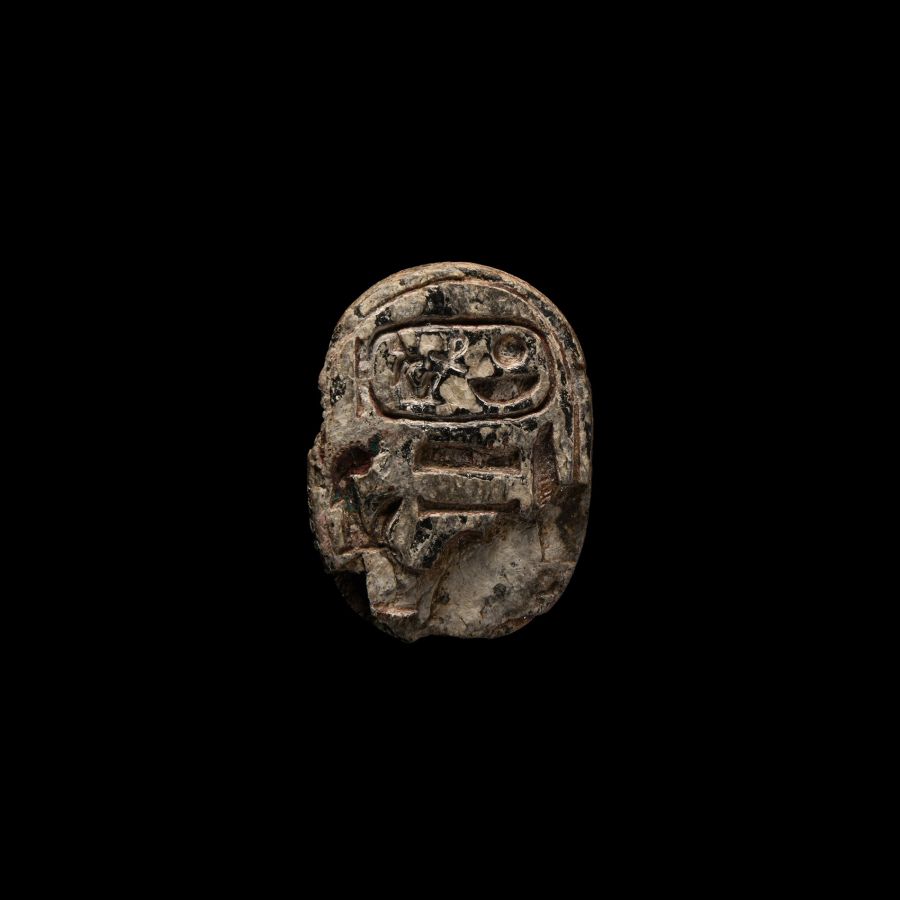
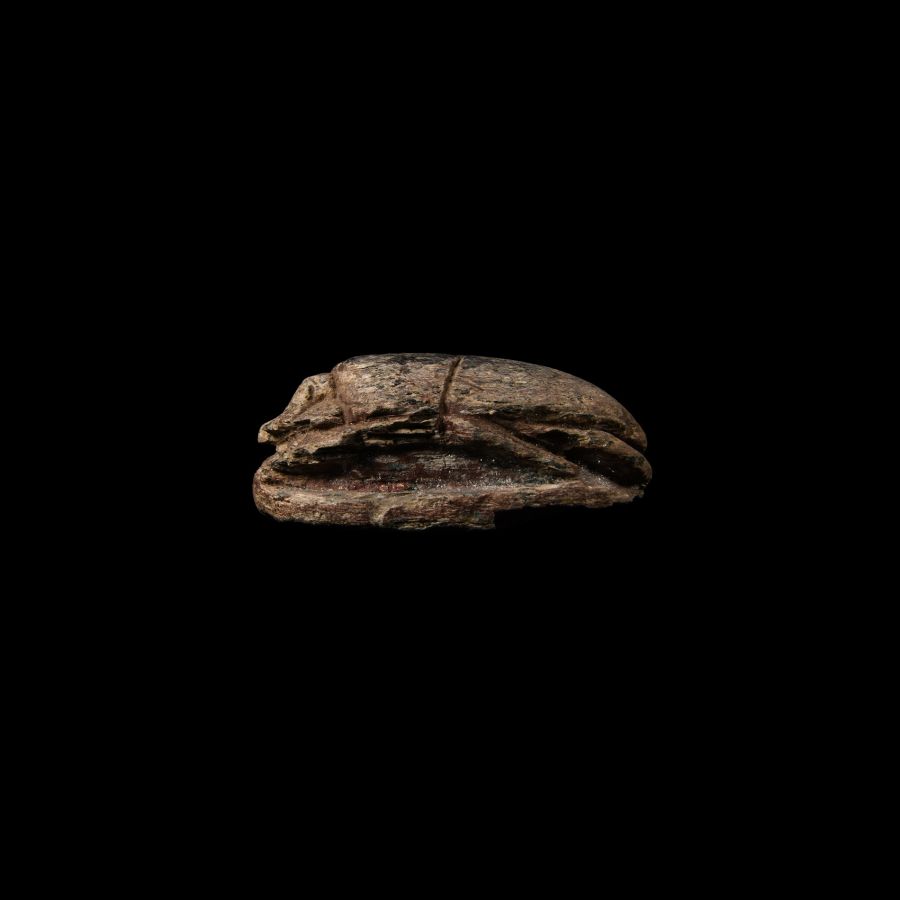
Large Egyptian Stone Hieroglyphic Scarab for Amenhotep III
NEW KINGDOM, 1386-1349 B.C.
1 3/4 in. (41 grams, 44 mm).
Naturalistically modelled with detailing to the upper body and legs; damaged base with the throne name 'neb-maat-re' of Amenhotep III in cartouche and the god's name Amun-Re below; pierced for suspension.
ProvenanceEx R. Liechti (1934-2010) Geneva, Switzerland, collection between 1950-1990s.
CONDITIONTimeLine Auctions follows a vetting process to ensure the authenticity and legality of all items, reinforcing our commitment to integrity and responsible trading. Each antiquity, antique, and coin lot undergoes thorough examination by a vetting committee of at least ten external specialists, professional trade association members, scientists, and archaeologists: Our Vetting Process
AUCTIONS:
TimeLine is a leading auction house specialising in antiquities, ancient art, collectables, natural history, coins, medals, and books. Our auctions offer museums, collectors, historians, and enthusiasts the opportunity to acquire unique and historically significant pieces.
LOT 0513
Large Egyptian Stone Hieroglyphic Scarab for Amenhotep III
Estimate £700 - 900€810 - 1,040 (for guidance only)$950 - 1,220 (for guidance only)
-
Egyptian Silver Bastet Cat Goddess
Late Period, 664-332 B.C.Estimate: £700 - 900 (‡+bp*)
Opening Bid: £350
Modelled seated on an oblong base; accompanied by a custom-made display base. 1.27 grams, 13 mm high (6.02 grams total, 33 mm including stand)
Ex Mrs Zimmermann Koutoulakis, December 1977. Ex R. Liechti (1934-2010) Geneva, Switzerland, collection between 1950-1990s.
Bastet was primarily a goddess of fertility, but she also represented festivities and intoxication, which formed part of the temple celebrations of her cult. -
Phoenician Bronze Statuette of a Naked Female
6th-4th century B.C.Sold for (Inc. bp): £169
Modeled in the round with arms folded across the abdomen, standing nude on a square base. 107 grams, 94 mm
Acquired in Egypt by Lieutenant James Alexander Goodman in the 1920s. Thence by descent to his grandson.
Lieutenant Goodman served in the 4th Battalion Welsh Regiment during World War I and saw action in Palestine during the capture of Bethlehem, (for which he won an MC). After the war, he setup a business selling Fordson trucks and tractors in Alexandria, Egypt. A keen antiquarian, he collected ancient objects during his time in Alexandria and when he visited the pyramids at Giza. After his first marriage failed, he returned to the UK in the early 1930s. On his death in 1959, he passed his small collection of Egyptian objects on to his second wife, Ruby Goodman. On Ruby’s death in 1994, they were left to their second daughter, Rosemary Johnson, (née Goodman), and are currently in the possession of her son. -
.jpg)
Romano-Egyptian Terracotta Votive Figure of Eros
1st-2nd century A.D.Estimate: £4,000 - 6,000 (‡+bp*)
Opening Bid: £2,222
Depicted nude in a dynamic pose with his legs apart and the weight of the body upon his right leg, standing in front of a two storey structure, probably an oven; his left arm raised and right arm extended in front of his torso and resting on the edge of the structure; the oven painted pink at the top and white at the bottom with an offering receptacle at floor level. 232 grams, 15 cm
Ex Dr Daniel Marie Fouquet (1859-1914), Cairo. with Pierre Berge & Associes, Auction, Archaeology 29 November 2014, no.193. Accompanied by a French cultural export permit, no.161028. Accompanied by an academic report by Dr Raffaele D'Amato. Accompanied by a copy of the relevant pages in: Perdrizet, P., Les Terres Cuites Grecques d'Egypt de la Collection Fouquet, Nancy, 1921, where it is published. This lot has been checked against the Interpol Database of stolen works of art and is accompanied by search certificate no.12000-211884.
The image of the ‘Eros Baker’ is part of a wide production of Roman terracotta imitating Greek models, although in somewhat crude way. In the Roman age, designs tended to be commonplace and were often indifferent copies of Greek originals. However, the production of terracotta in Hellenistic Egypt continued without interruption and the most subjects of these votive statuettes (in this case probably a baker invoking the blessing of the god upon his activity) were religious, Eros being one of the favourites.
