
Loading, please wait...
_900x900.jpg "Large Egyptian Stone Hieroglyphic Scarab for Amenhotep III")
_200x200.jpg "Large Egyptian Stone Hieroglyphic Scarab for Amenhotep III")
.jpg "Large Egyptian Stone Hieroglyphic Scarab for Amenhotep III")
LOT 0505
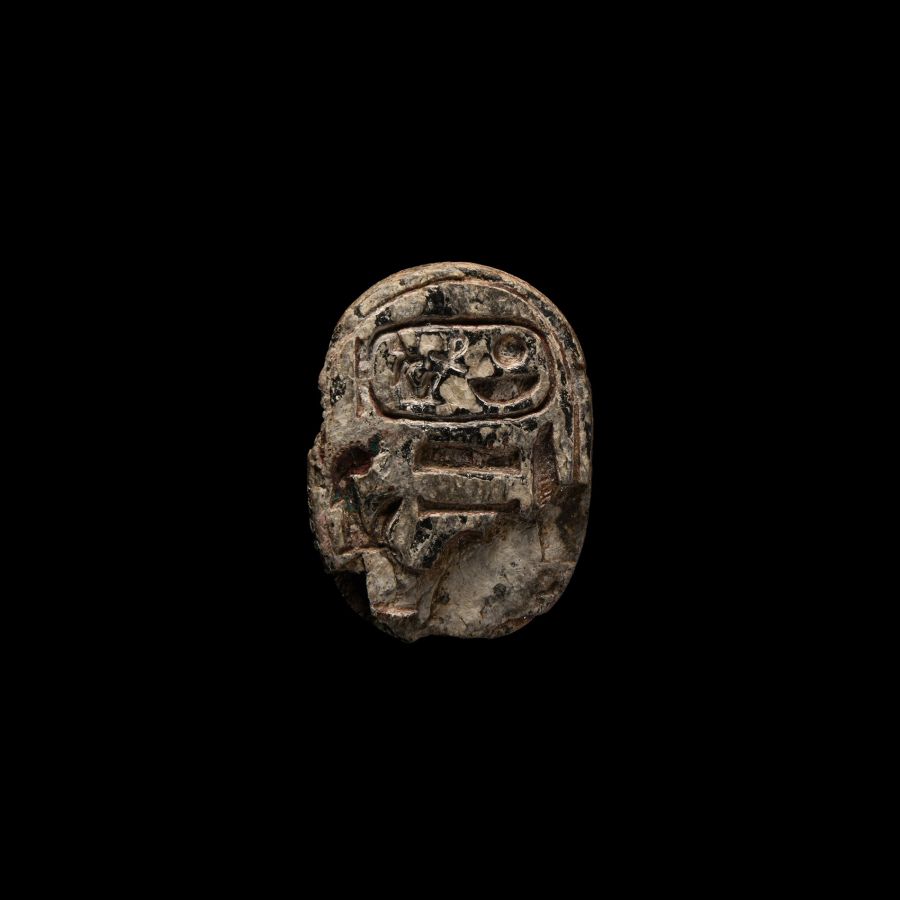
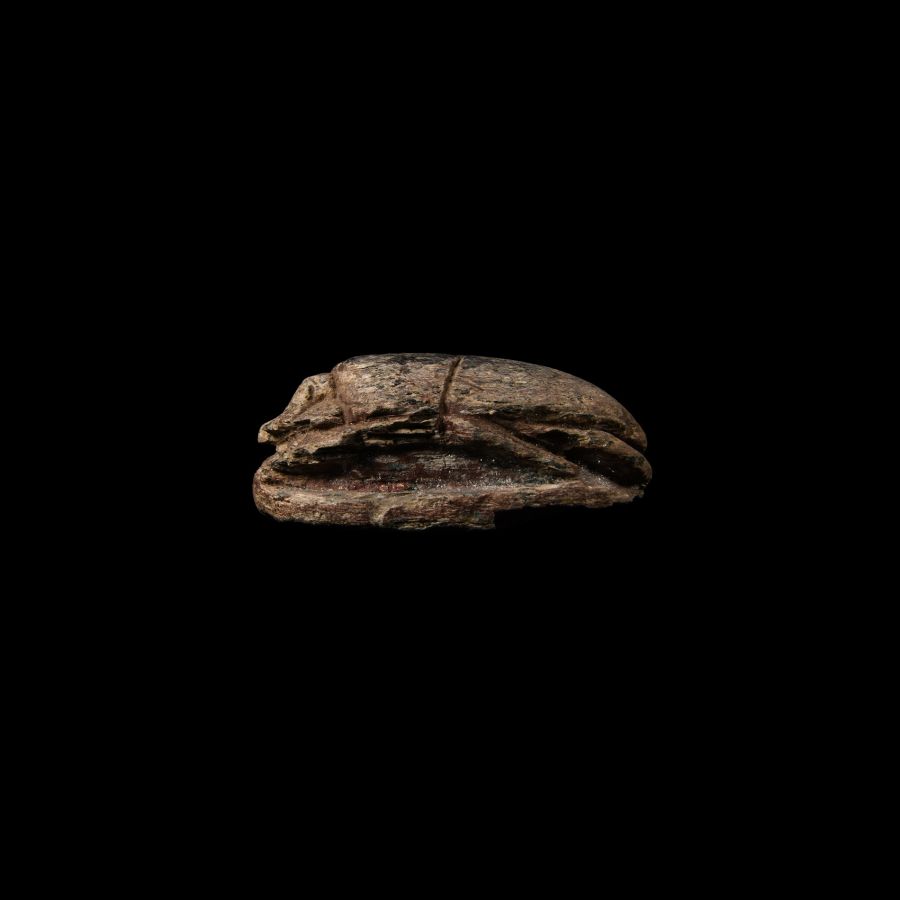
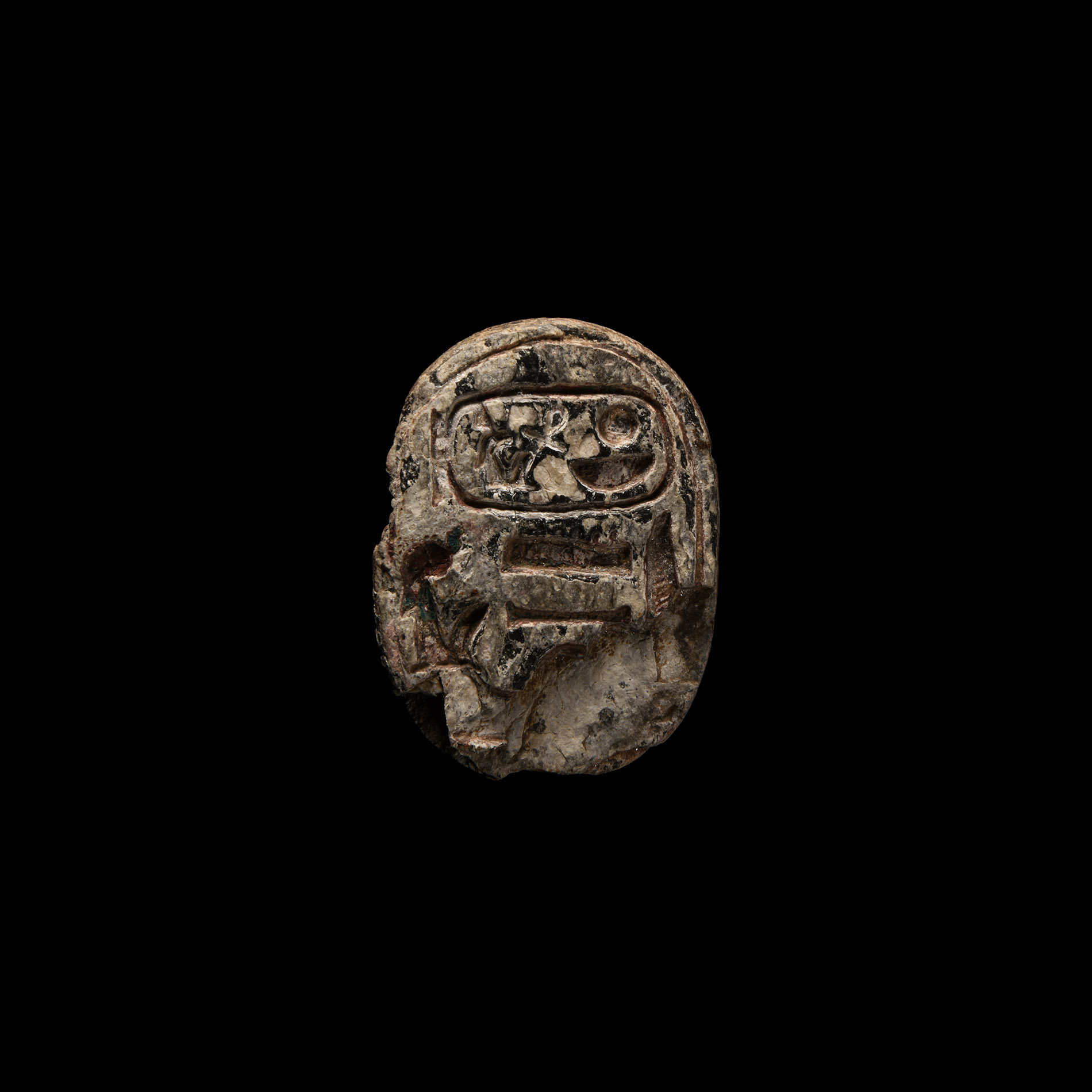
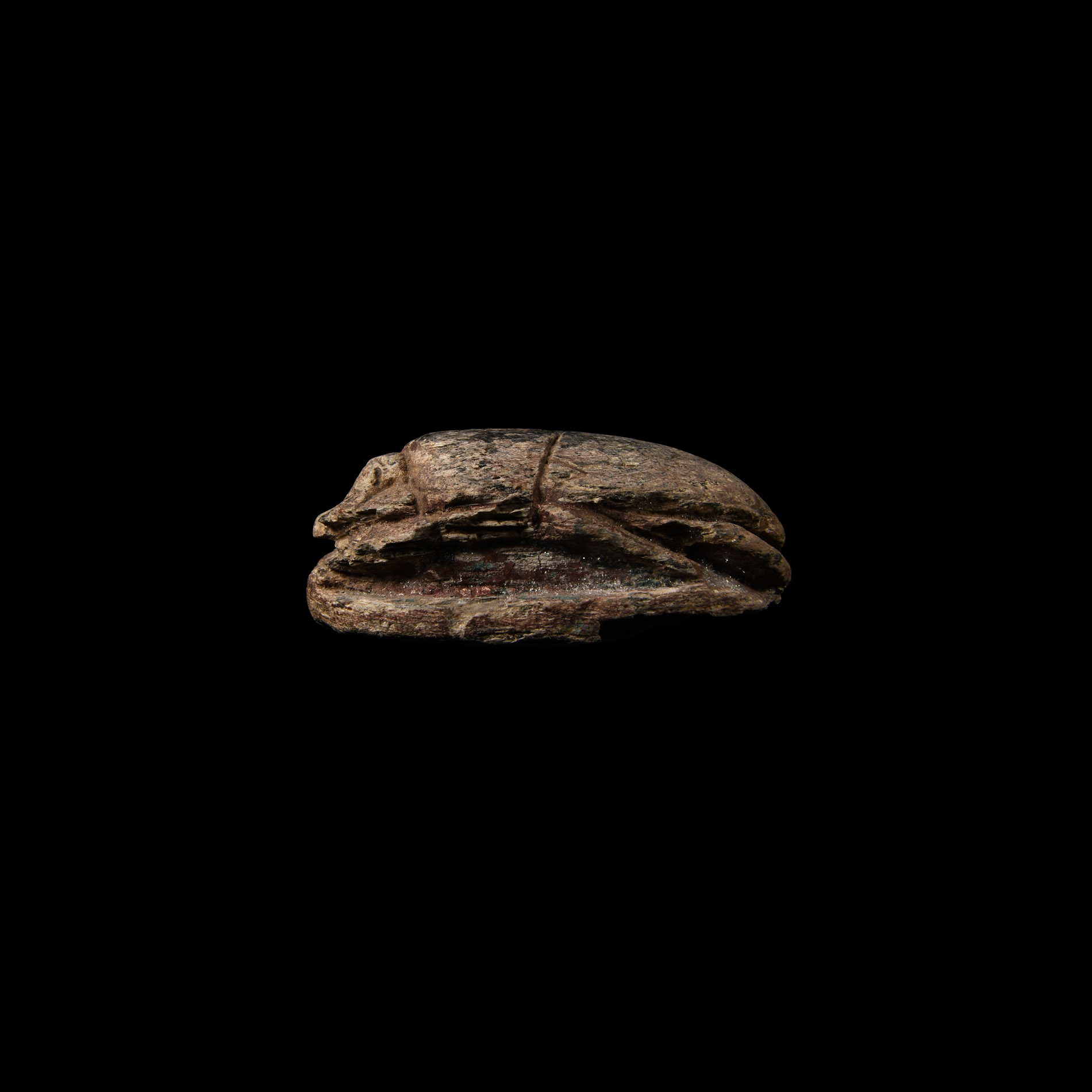
Large Egyptian Stone Hieroglyphic Scarab for Amenhotep III
NEW KINGDOM, 1386-1349 B.C.
1 3/4 in. (41 grams, 44 mm).
Naturalistically modelled with detailing to the upper body and legs; damaged base with the throne name 'neb-maat-re' of Amenhotep III in cartouche and the god's name Amun-Re below; pierced for suspension.
ProvenanceEx R. Liechti (1934-2010) Geneva, Switzerland, collection between 1950-1990s.
CONDITIONTimeLine Auctions follows a vetting process to ensure the authenticity and legality of all items, reinforcing our commitment to integrity and responsible trading. Each antiquity, antique, and coin lot undergoes thorough examination by a vetting committee of at least ten external specialists, professional trade association members, scientists, and archaeologists: Our Vetting Process
AUCTIONS:
TimeLine is a leading auction house specialising in antiquities, ancient art, collectables, natural history, coins, medals, and books. Our auctions offer museums, collectors, historians, and enthusiasts the opportunity to acquire unique and historically significant pieces.
LOT 0505
Large Egyptian Stone Hieroglyphic Scarab for Amenhotep III
Estimate £600 - 800€700 - 930 (for guidance only)$810 - 1,080 (for guidance only)
-
Egyptian Hardstone Scarab Group
New Kingdom, 1550-1069 B.CSold for (Inc. bp): £104
Comprising: one agate with ribbed carapace, leg detailing to underside; one steatite with two figures to the underside; with old dealer's notes. 3.77 grams total, 15-23 mm
Ex Chapman collection, UK, 1990s. Accompanied by two previous handwritten catalogue information slips. -
Egyptian Glass Bes Amulet in Gold Pin
Late Period-Roman Period, 664 B.C.-323 A.D. and laterEstimate: £400 - 600 (+bp*)
Opening Bid: £210
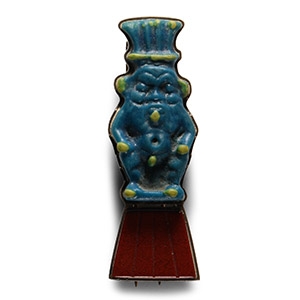
Comprising a large blue amulet of facing Bes with yellow highlighting, the grimacing god wearing a plumed headdress and depicted nude; set in a later gold casing with a plume-shaped red jasper insert, an articulated pin attachment on the reverse. 13.7 grams, 51.6 mm
Ex AH collection, London, UK, 1980s. Accompanied by a previous cataloguing slip.
Despite his rather fearful appearance, Bes was the patron and protector of pregnant women and children. He was also believed to provide protection from snakes. -
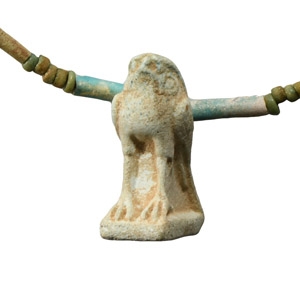
Egyptian Faience Bead Necklace String with Horus Amulet
Late Period, 664-332 B.C.Estimate: £400 - 600 (+bp*)
Opening Bid: £200
Restrung using mainly annular and tubular beads; central feature a large pendant depicting the god Horus in falcon form, intricate feather detailing to the wings and back, long talons gripping the rectangular platform. 14.6 grams, 26 cm
From the vendor's grandfather's collection, formed in the 1950s; thence by family descent circa 1974.
