
Loading, please wait...
LOT 0448
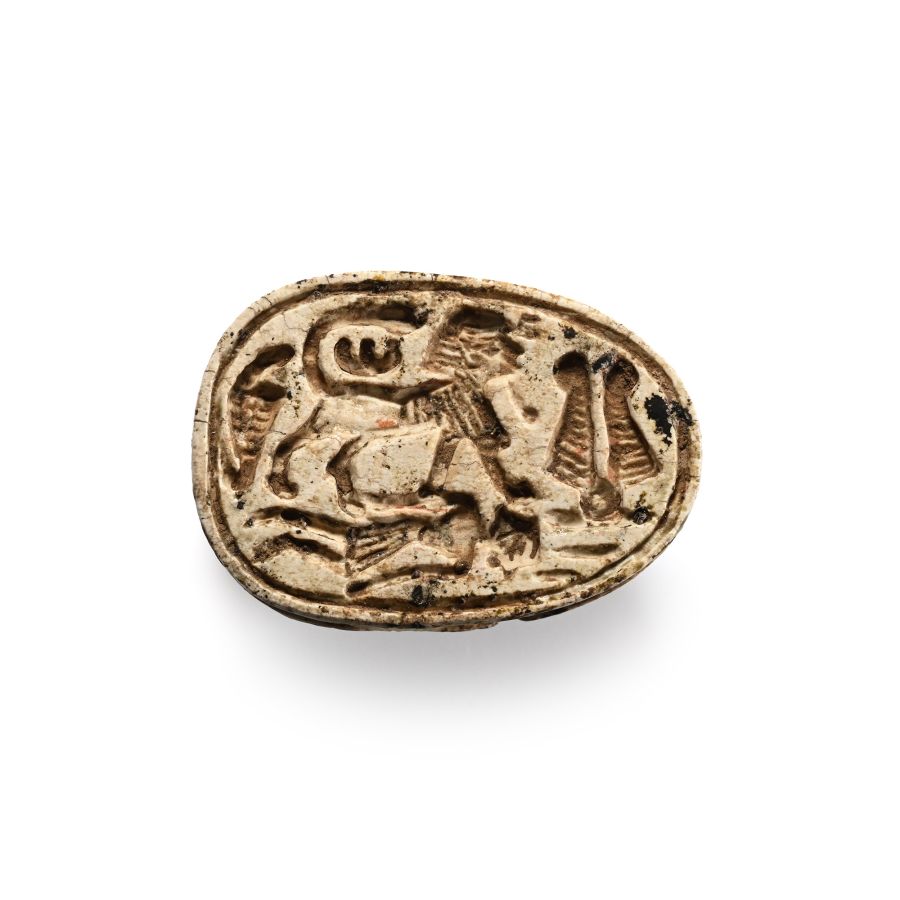
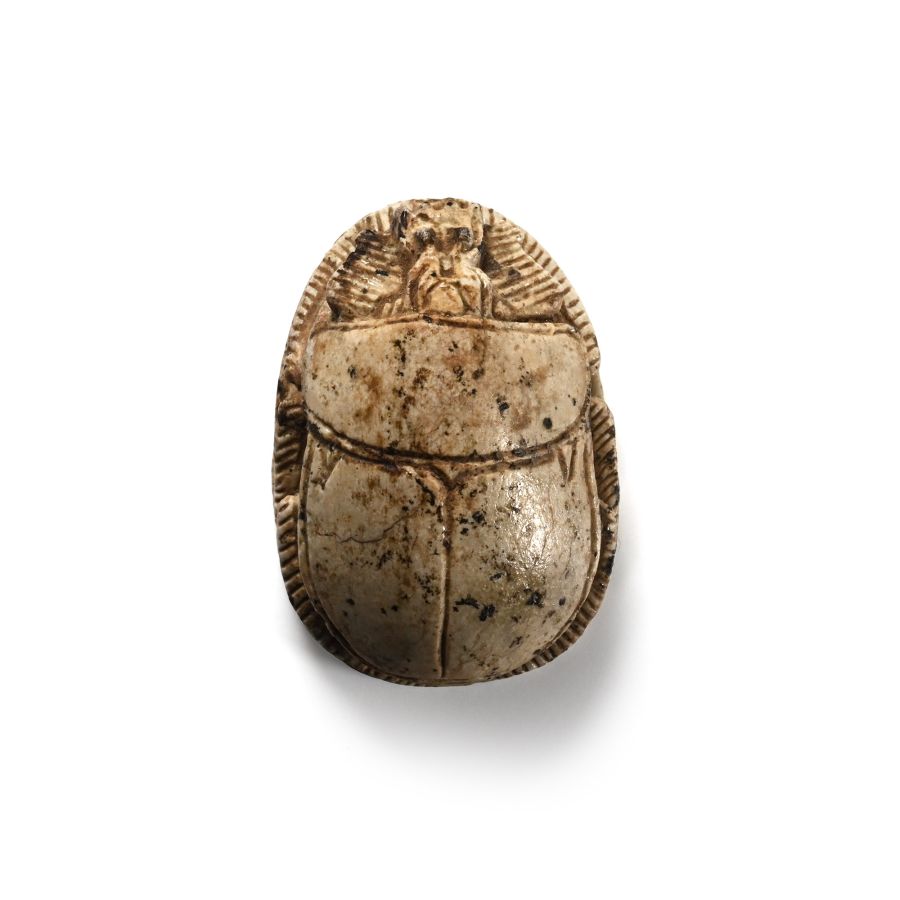
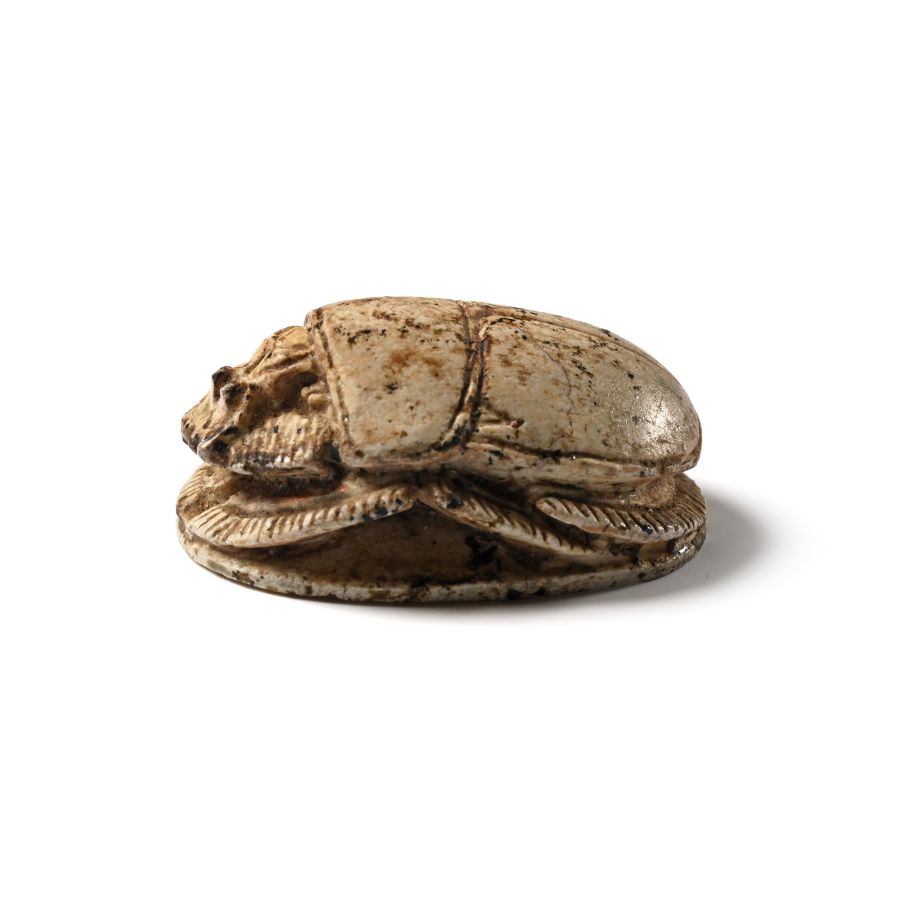
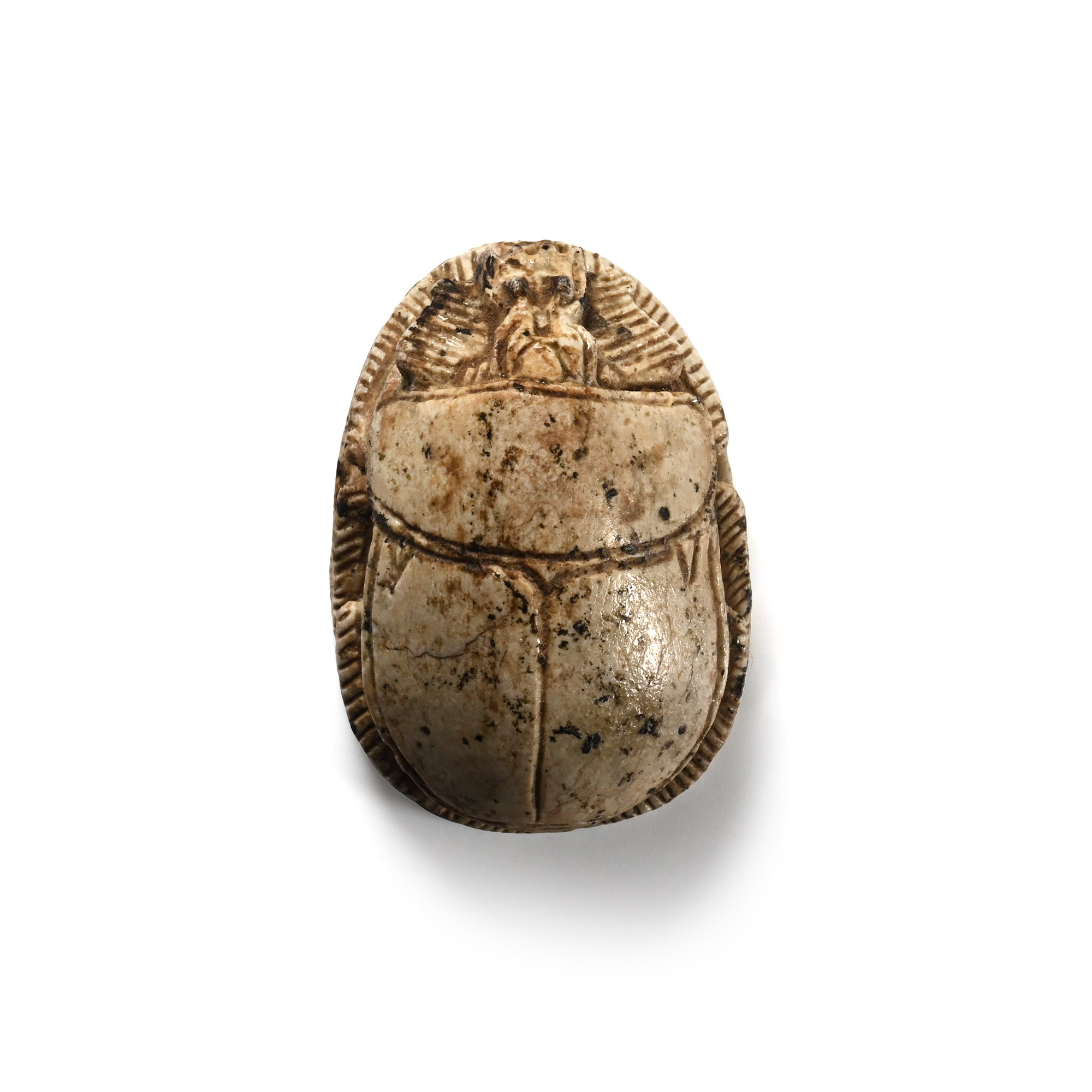
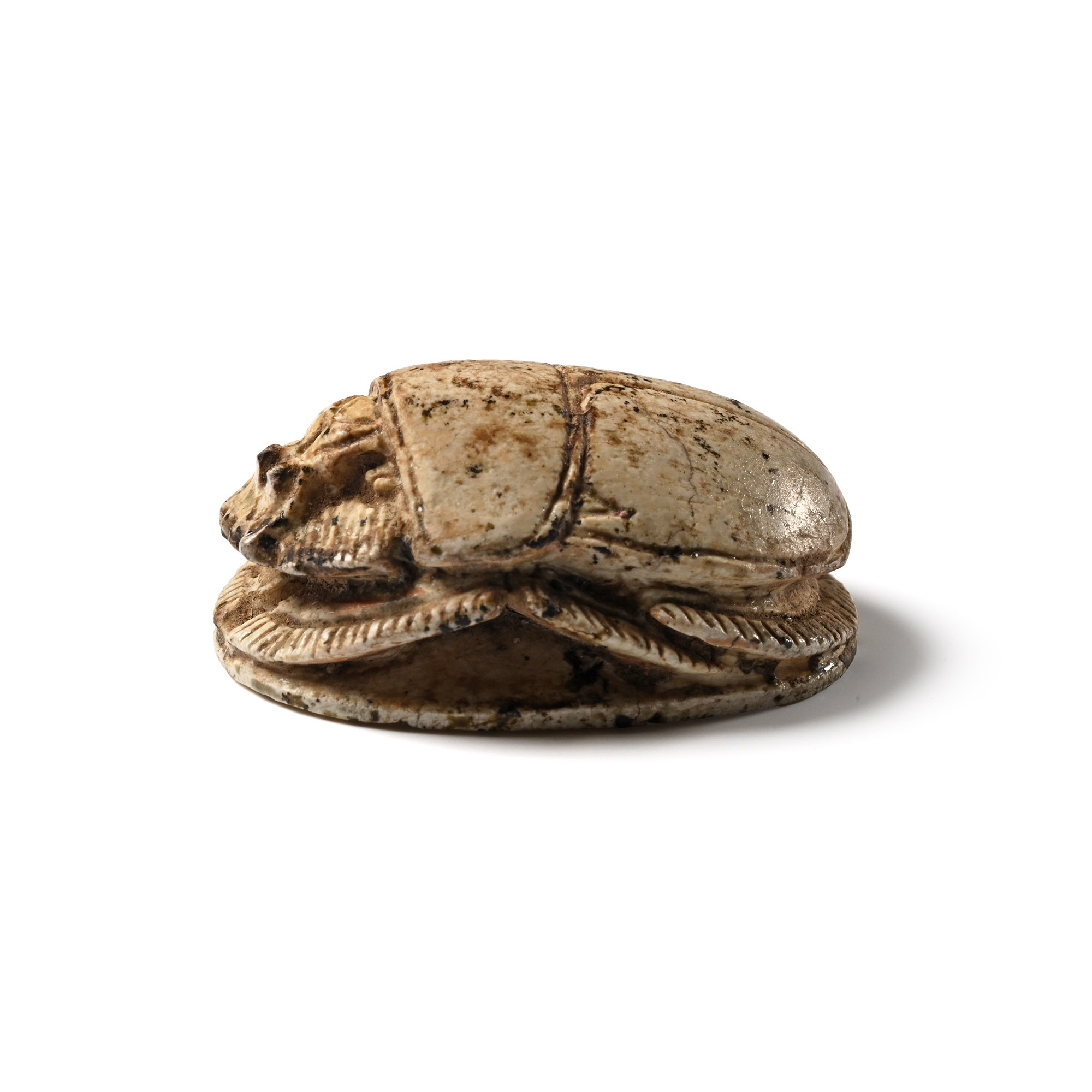
Large Egyptian Steatite Scarab with Sphinx
LATE PERIOD, 664-332 B.C.
1 1/4 in. (13.4 grams, 32 mm).
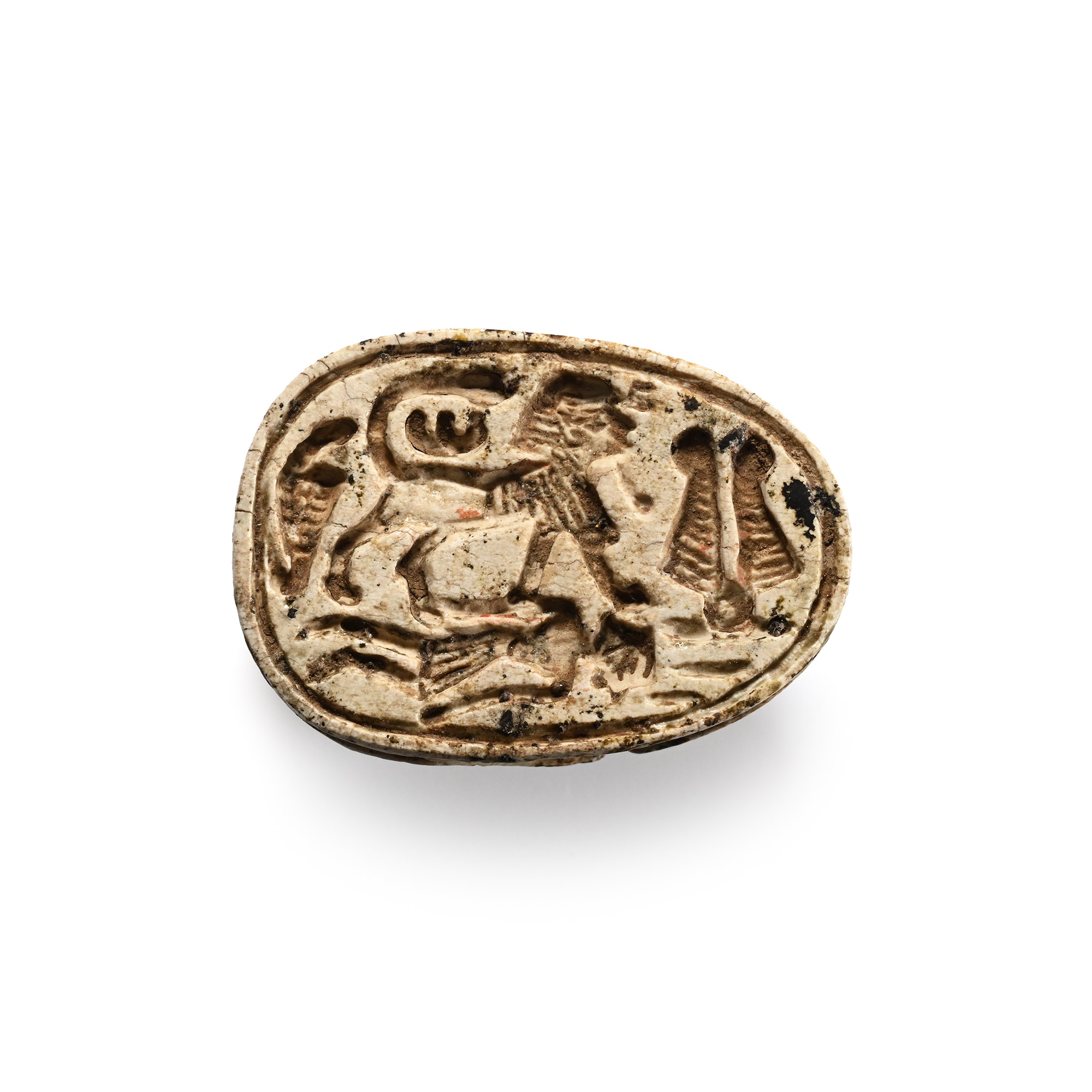
With detailed carapace, head, and legs; the underside depicting the king as an advancing sphinx trampling a male enemy in a short kilt, with a rearing cobra behind, a pair of ostrich feathers atop a sun disc in front, and the symbol for foreign lands placed in the curl of the sphinx’s tail.
ProvenanceFrom the collection of a gentleman, acquired on the London art market in the 1990s.
This lot is accompanied by an illustrated lot declaration signed by the Head of the Antiquities Department, Dr Raffaele D'Amato.
Cf. Matouk, F.S., Corpus du scarabée égyptien. Vol. 2: Analyse thématique, Beirut, 1976, 355, no. 1532, for a similar thematic scarab design.
CONDITIONTimeLine Auctions follows a vetting process to ensure the authenticity and legality of all items, reinforcing our commitment to integrity and responsible trading. Each antiquity, antique, and coin lot undergoes thorough examination by a vetting committee of at least ten external specialists, professional trade association members, scientists, and archaeologists: Our Vetting Process
AUCTIONS:
TimeLine is a leading auction house specialising in antiquities, ancient art, collectables, natural history, coins, medals, and books. Our auctions offer museums, collectors, historians, and enthusiasts the opportunity to acquire unique and historically significant pieces.
-
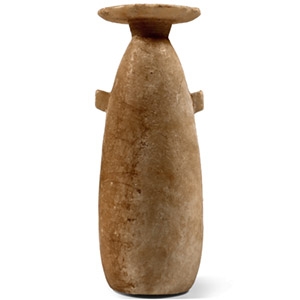
Phoenician Alabastron with Handles
6th-5th century B.C.Sold for (Inc. bp): £1,053
Comprising a slender alabaster piriform body and two lateral lug handles, conical neck with broad everted rim. 650 grams, 19.7 cm high
Giusfredi collection, 1980s. Swiss private collection, acquired May 1999. This lot is accompanied by an illustrated lot declaration signed by the Head of the Antiquities Department, Dr Raffaele D'Amato. -
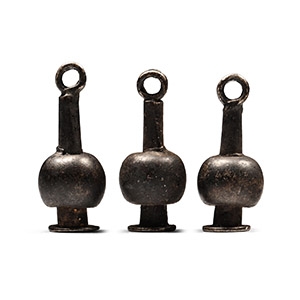
Egyptian Silver Poppy Amulet Group
Late-Ptolemaic Period, 664-30 B.C.Sold for (Inc. bp): £91
Three pendants each with poppy-head and loop at the apex. 3.67 grams total, 17-19 mm
From an early 20th century collection. This lot is accompanied by an illustrated lot declaration signed by the Head of the Antiquities Department, Dr Raffaele D'Amato.
Amulets in the form of poppies were used to heal and alleviate pain and to ward off death. These types of amulets were also linked to Osiris, the Egyptian deity of agriculture, death, and the afterlife. -
.jpg)
Egyptian Limestone Relief
Late Period, 664-332 B.C.Sold for (Inc. bp): £2,080
A fragment featuring a low-relief depiction of a male head in profile with a shoulder-length duplex wig, the upper part intricately detailed with herringbone stripes and a fringed edge, transitioning into heavy curls at the lower part, sporting a short beard and a boldly carved ear with an indented lobe, drilled for a mounting peg. 1.95 kg, 26.5 cm
Acquired in the mid 1980s-1990s. Private collection, Switzerland, thence by descent. Private collection, since the late 1990s. This lot has been checked against the Interpol Database of stolen works of art and is accompanied by a search certificate number no.12626-234637. This lot has been cleared against the Art Loss Register database, and is accompanied by an illustrated lot declaration signed by the Head of the Antiquities Department, Dr Raffaele D'Amato.
