
Loading, please wait...
LOT 0006
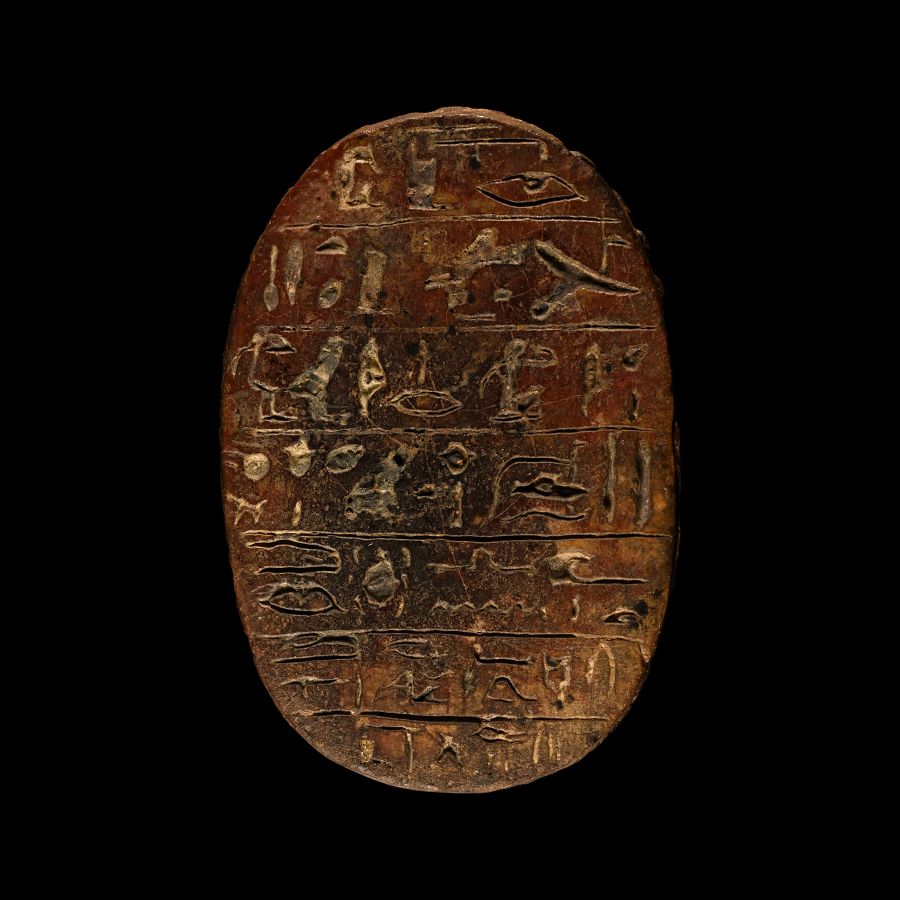
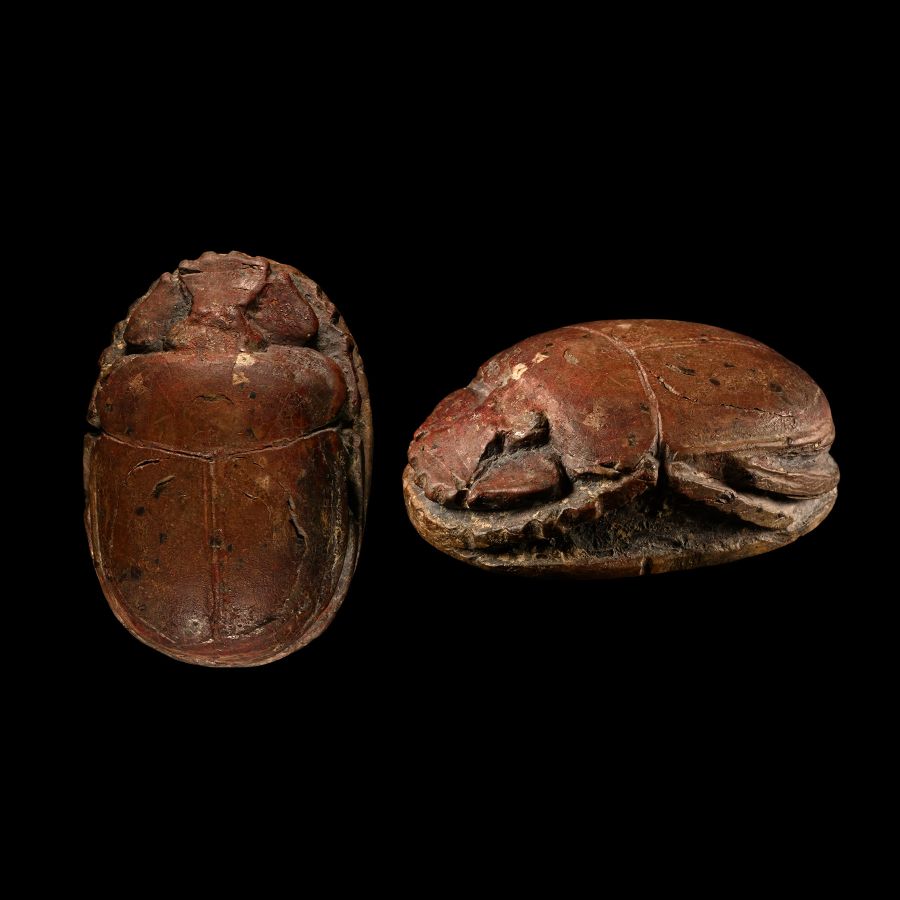
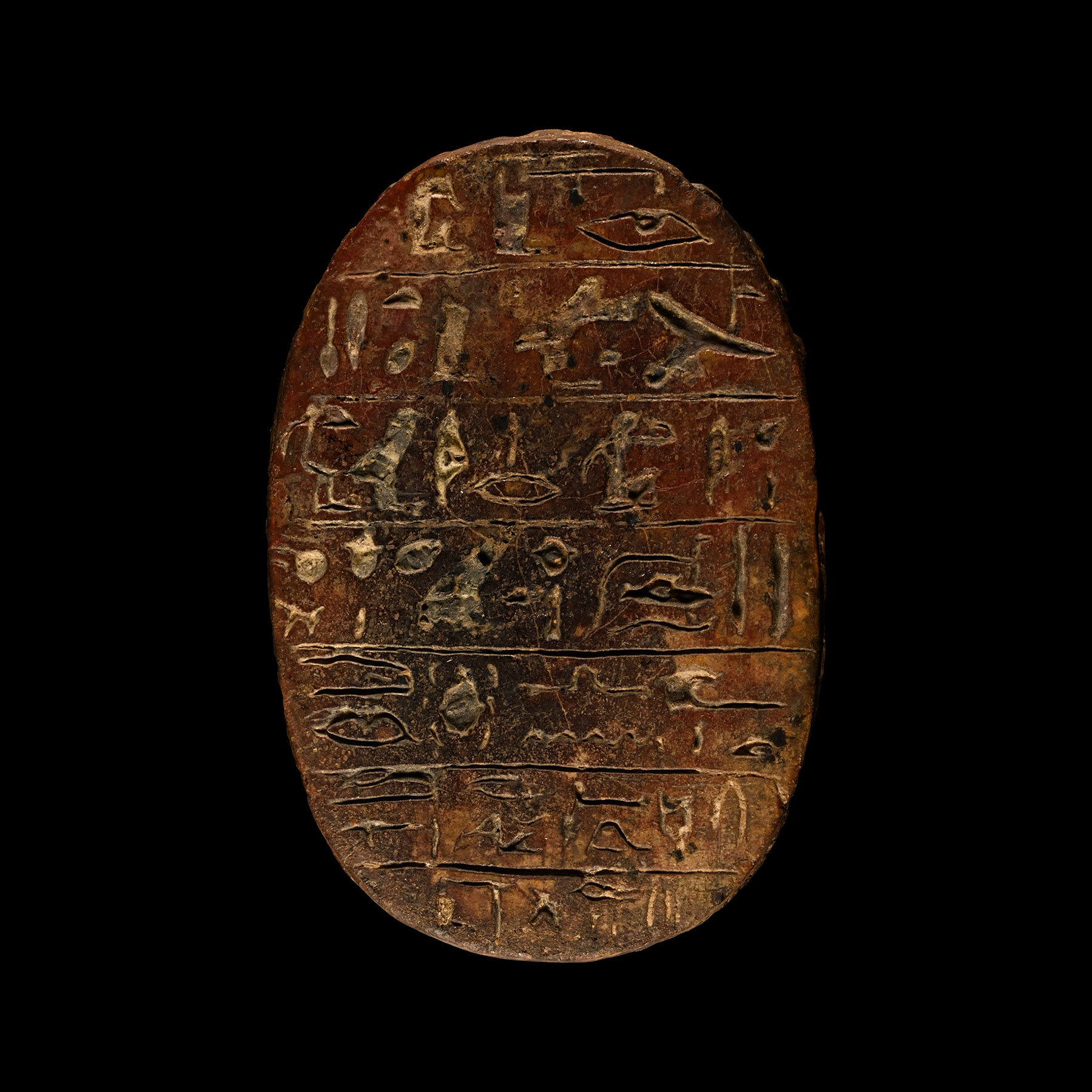
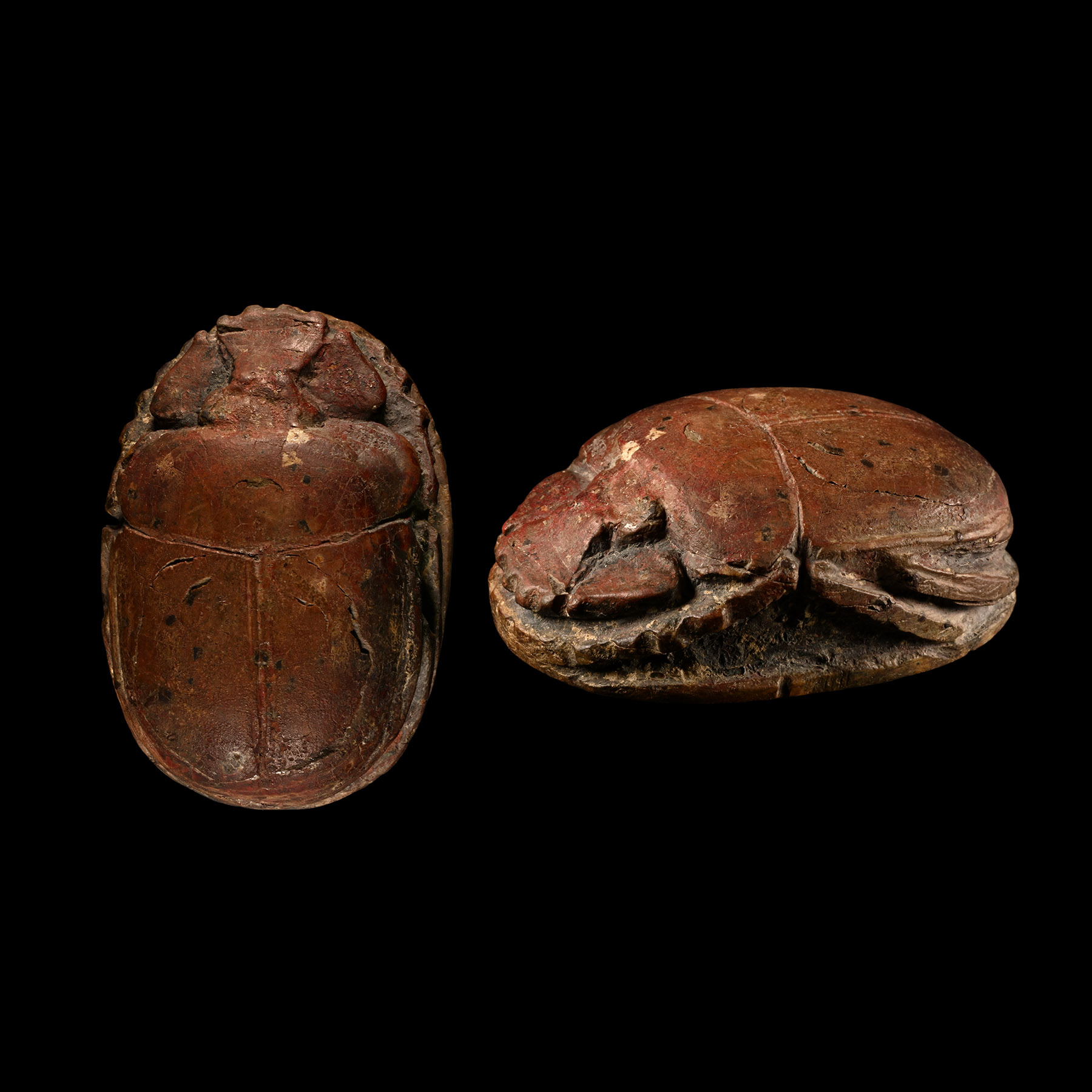
Large Egyptian Heart Scarab with Hieroglyphic Inscription
LATE PERIOD, 664-332 B.C.
2 1/8 in. (68.5 grams, 54 mm).
With naturalistic detailing to the upper body and legs; base engraved with seven rows of hieroglyphic text, a version of Chapter 30b of the Book of the Dead; faience or glazed steatite.
ProvenanceEx collection Charles Bouché, (1928 - 2010).
Accompanied by an academic report by Egyptologist Paul Whelan.
Accompanied by a copy of a French cultural passport no.139368.
Accompanied by old sketches of the artefact together with a provisional translation of the hieroglyphic inscription in French; mentioning the god Osiris.
This lot has been checked against the Interpol Database of stolen works of art and is accompanied by search certificate no.11845-206822.
Cf. Israel Museum, inv.no.76.18.271, for a heart scarab in green schist; see Cohen Collection of Egyptian Antiquities, inv.no.249, for a small heart scarab in carnelian.
CONDITIONTimeLine Auctions follows a vetting process to ensure the authenticity and legality of all items, reinforcing our commitment to integrity and responsible trading. Each antiquity, antique, and coin lot undergoes thorough examination by a vetting committee of at least ten external specialists, professional trade association members, scientists, and archaeologists: Our Vetting Process
AUCTIONS:
TimeLine is a leading auction house specialising in antiquities, ancient art, collectables, natural history, coins, medals, and books. Our auctions offer museums, collectors, historians, and enthusiasts the opportunity to acquire unique and historically significant pieces.
LOT 0006
Large Egyptian Heart Scarab with Hieroglyphic Inscription
Sold for (Inc. bp): £7,150
-
Historic Collection of Thirty-Six Original Slide Images of Egypt Including Archaeological Sites
Circa 1897 A.D.Sold for (Inc. bp): £260
Group of photographic negatives in 'quarter plate size', in two old cardboard lidded boxes, one stamped 'D.W.Collings'; archaeological expedition to Egypt. 168 grams total, 11.6 cm
From the private collection of Dudley Collings, from his travels in Egypt in the late 19th century. -
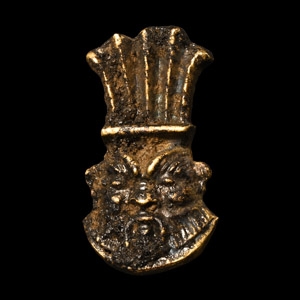
Egyptian Gold Bes Amulet
Late New Kingdom-Third Intermediate Period, 1070-900 B.C.Sold for (Inc. bp): £1,235
Mask of Bes with tall plumed headdress, vertical bar to the reverse. 3.6 grams, 18 mm
From an early 20th century French collection.
Bes became one of ancient Egypt's most popular apotropaic deities from the New Kingdom onwards. Despite his rather fearful appearance, Bes was the patron and protector of pregnant women and children. He was also believed to provide protection from snakes. -
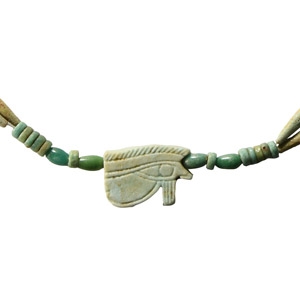
Egyptian Faience Bead Necklace String with Wedjat Eyes
Late Period, 664-332 B.C.Estimate: £400 - 600 (+bp*)
Opening Bid: £200
Restrung on two parallel strands using mainly annular and tubular beads, enhanced with two pairs of small wedjat eye pendants, one pair with applied black detailing and the other pair with moulded low-relief detailing; with a central, large wedjat eye pendant with low-relief detailing. 14.1 grams, 44 cm
From the vendor's grandfather's collection, formed in the 1950s; thence by family descent circa 1974.
