
Loading, please wait...
LOT 0009
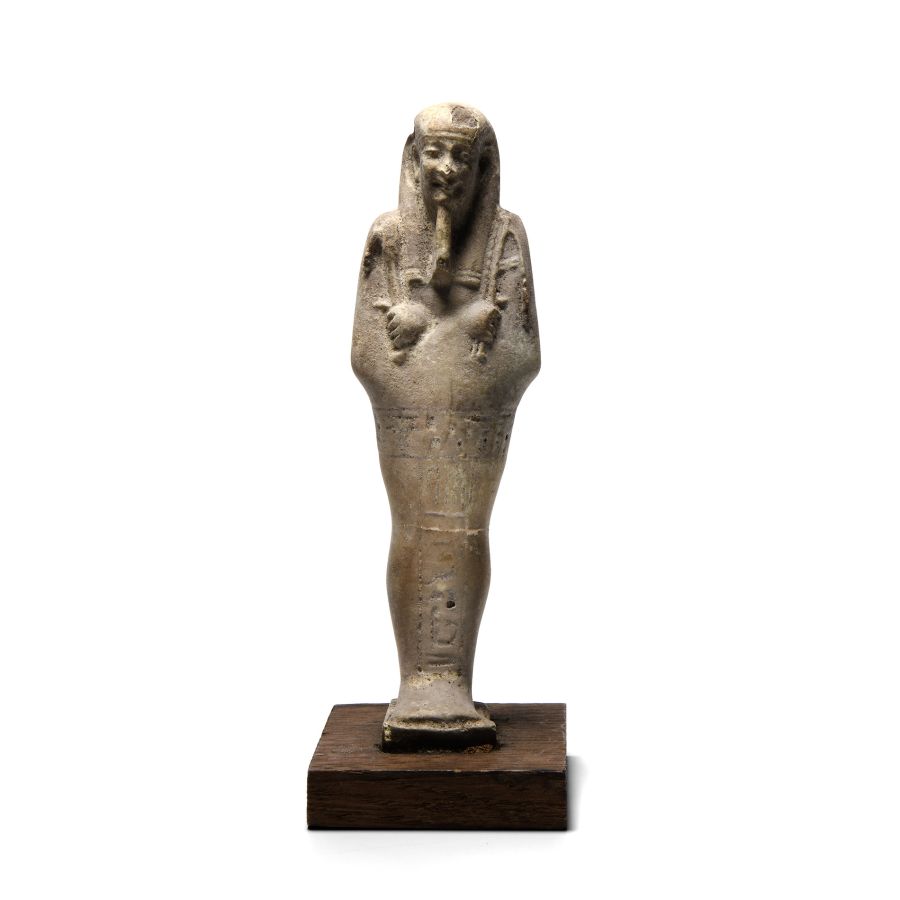
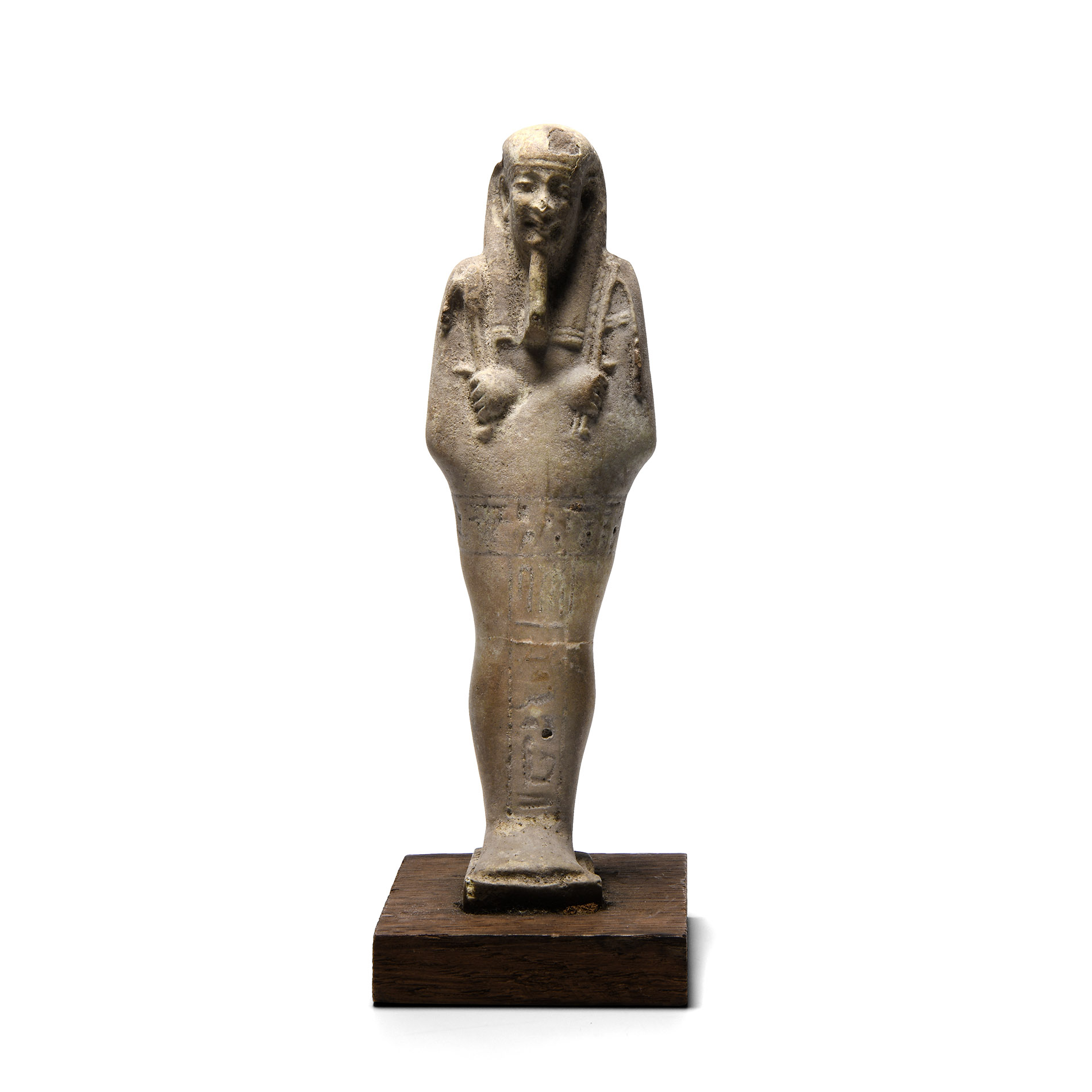
Large Egyptian Glazed Hieroglyphic Shabti
LATE PERIOD, 30TH DYNASTY, 380-343 B.C.
6 3/4 in. (191 grams total, 17 cm high including stand).
Modelled mummiform, arms crossed over the chest holding crook and flail, with a blank pillar to reverse; hieroglyphs to the front of the body; remains of glaze; mounted on a wooden display base; repaired. [No Reserve]
ProvenanceGifted by Herbert Parsons (1870-1940) to his grandson, James Gibson (1926-2013).
Inherited by the vendor and her brother, from their grandfather James Gibson.
Cf. The Metropolitan Museum, New York, accession number 41.160.127, for a broadly comparable shabti of this period.
CONDITIONTimeLine Auctions follows a vetting process to ensure the authenticity and legality of all items, reinforcing our commitment to integrity and responsible trading. Each antiquity, antique, and coin lot undergoes thorough examination by a vetting committee of at least ten external specialists, professional trade association members, scientists, and archaeologists: Our Vetting Process
AUCTIONS:
TimeLine is a leading auction house specialising in antiquities, ancient art, collectables, natural history, coins, medals, and books. Our auctions offer museums, collectors, historians, and enthusiasts the opportunity to acquire unique and historically significant pieces.
-
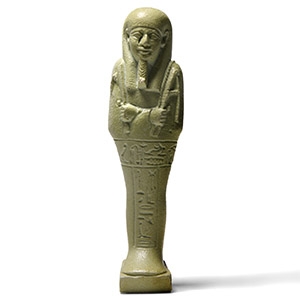
Egyptian Glazed Composition Shabti for Ka-Nefer
30th Dynasty, 380-343 B.C.Sold for (Inc. bp): £975
Modelled mummiform, hands crossed in front of chest holding pick and hoe, seed bag over shoulder, wearing tripartite wig and false beard, T-shaped arrangement of hieroglyphic inscription to the midriff and lower body; plinth base and plain back pillar to reverse. 78 grams, 12.2 cm high
Private collection, New York, USA, early 1980s.
The inscription informs us that Ka-nefer was a wener- priest and scribe of Ptah. His mother's name was Isit-reshuty. He was buried at Saqqara. -
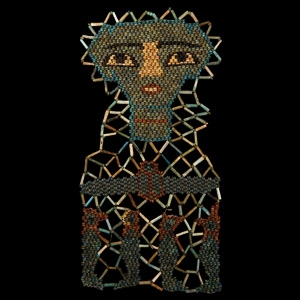
Egyptian Faience Bead Mummy Face Mask
Ptolemaic Period, 332-30 B.C.Sold for (Inc. bp): £390
Restrung; a netted beadwork panel of annular and tubular glazed composition beads in blues, greens, black, cream and red-brown colours, depicting a mummy face mask with false beard, a scarab with extended wings below, the 'Four Sons of Horus’ beneath the scarab, joined together with areas of open netting of tubular beads. 67 grams, 24 cm high
Acquired 1990s. Ex Mariaud des Serres, Paris, France.
The 'Four Sons of Horus' protected the internal organs of the deceased. Depicted from left to right: the falcon-headed Qebhesenuef protected the intestines; human-headed Imsety, the liver; baboon-headed Hapi, the lungs; jackal-headed Duamutef, the stomach. -
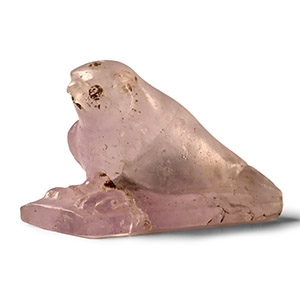
Egyptian Amethyst Horus Amulet
Late Period, 664-332 B.C.Estimate: £1,500 - 2,000 (+bp*)
Opening Bid: £750
Shown in the form of a falcon modelled perched on a rectangular base; drilled for suspension. 5.9 grams, 27 mm wide
From an early 20th century Home Counties, UK, collection.
