
Loading, please wait...
LOT 0482
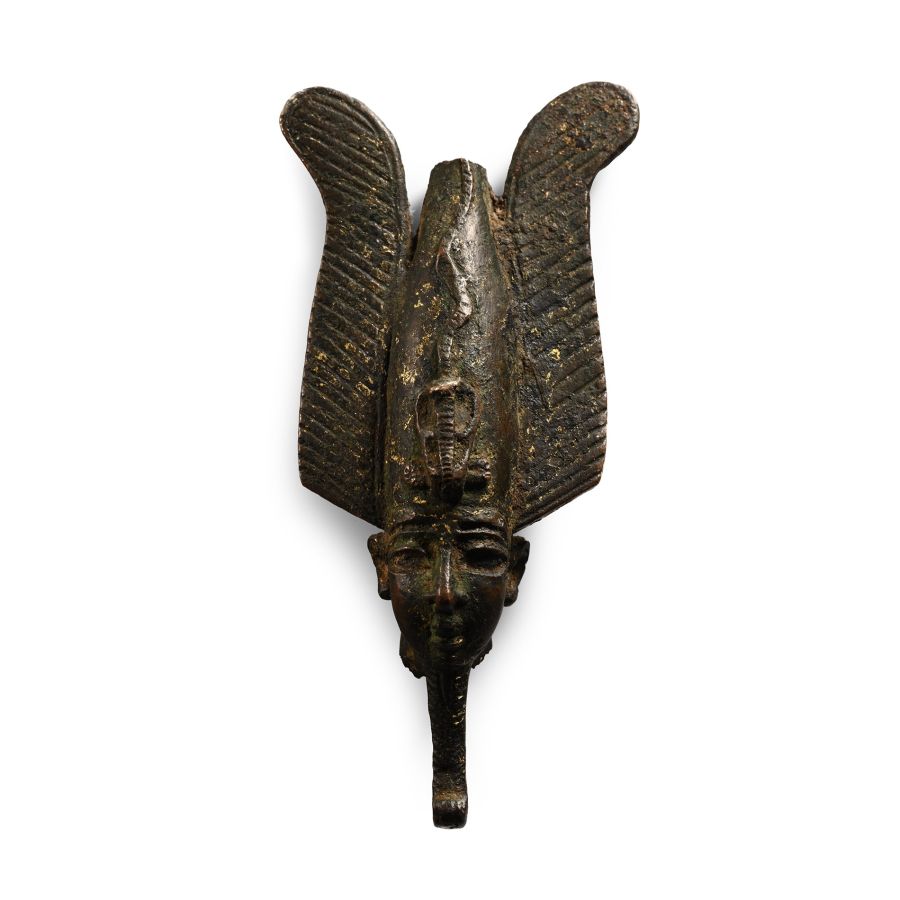
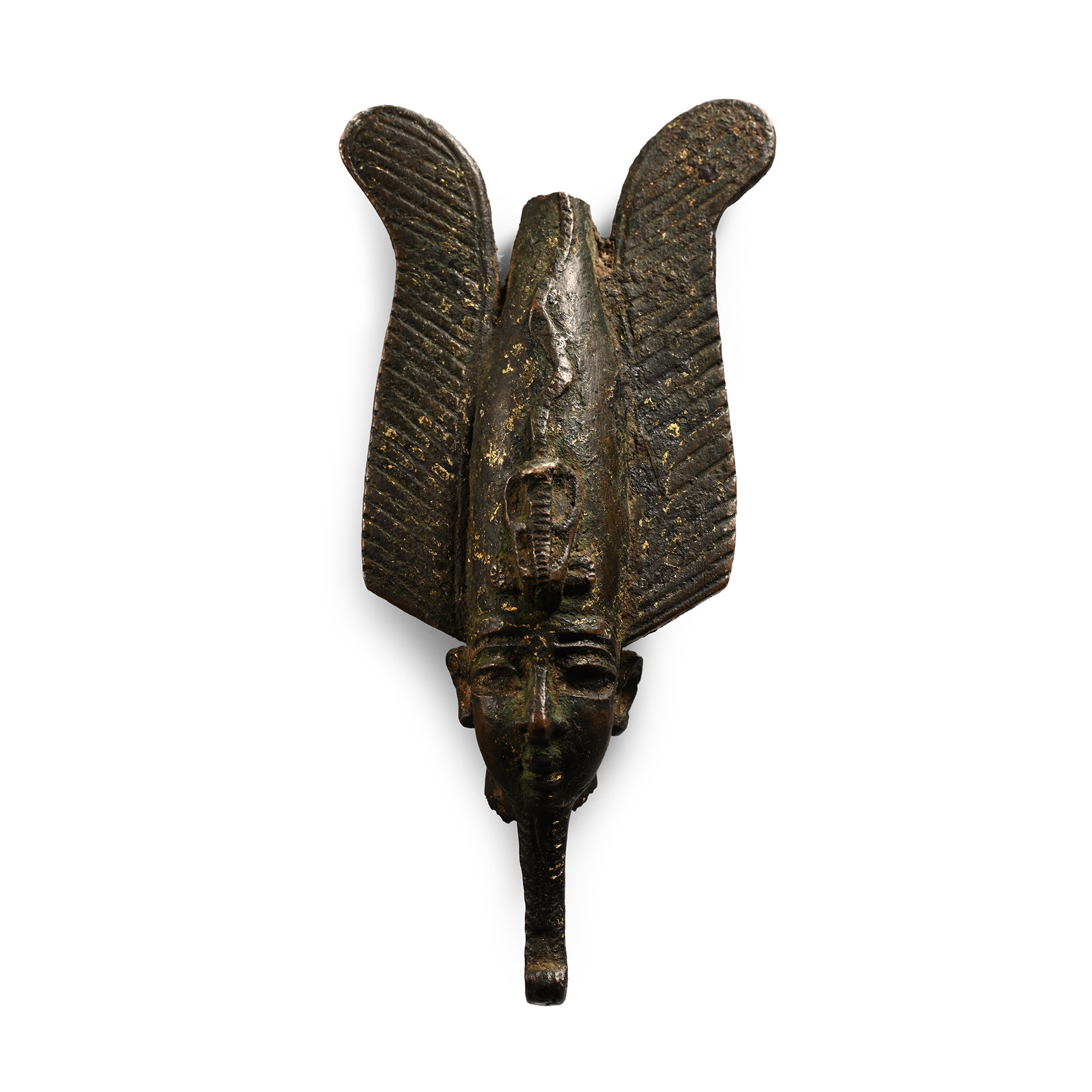
Large Egyptian Gilt Bronze Head of Osiris
LATE PERIOD, 664-525 B.C.
4 1/2 in. (199 grams, 11.4 cm).
Modelled in the round wearing the atef crown (hedjet with lateral ostrich feathers) and uraeus to the brow with tail extending up the crown, detailed false beard with coiled finial; eyes recessed to accept inlays; tip of crown missing.
ProvenanceAcquired on the German art market, 1989-1995.
with The Museum Gallery, 19 Bury Place, London, WC1, UK, 1998-2003.
Property of a London based academic, 2003-present.
Cf. Daressy, G., Catalogue général des antiquités égyptiennes du Musée du Caire N° 38001-39384 Statues de divinités, Cairo, 1906, pl. XVI, no. 38.261, for complete statuette with comparable head.
FootnotesOsiris is a deity who represents death and fertility and is commonly regarded as the quintessential god of rebirth. Though he was once a mortal ruler, as a deceased entity, his domain was the Underworld. Abydos was the primary centre of Osiris’ cult, where a renowned yearly celebration of the god was held. This head comes from a once sizeable statuette of the god.
CONDITIONTimeLine Auctions follows a vetting process to ensure the authenticity and legality of all items, reinforcing our commitment to integrity and responsible trading. Each antiquity, antique, and coin lot undergoes thorough examination by a vetting committee of at least ten external specialists, professional trade association members, scientists, and archaeologists: Our Vetting Process
AUCTIONS:
TimeLine is a leading auction house specialising in antiquities, ancient art, collectables, natural history, coins, medals, and books. Our auctions offer museums, collectors, historians, and enthusiasts the opportunity to acquire unique and historically significant pieces.
-
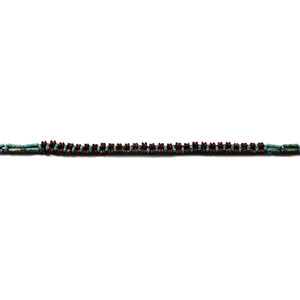
Egyptian Faience Mummy Bead Necklace
Late New Kingdom, 1295-1069 B.C.Estimate: £400 - 600 (+bp*)
Opening Bid: £200
Restrung designer necklace using tubular green-glazed beads in a double row, interspersed with small two-holed beads; the central feature a net-like composition of small brown and blue-glazed ring-shaped beads. 9.54 grams, 46 cm long
By repute, 'Excavated at Gurob by Prof. Flinders Petrie. From a quantity of beadwork taken from the neck of a mummy'. Ex 1920s UK collection. -
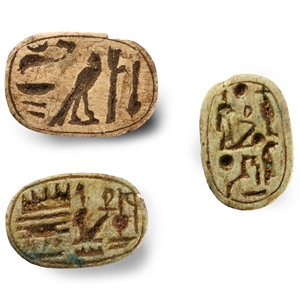
Egyptian Faience Scarab Group
Late Period, 664-332 B.C.Sold for (Inc. bp): £416
Group of three scarabs, each with a hieroglyphic inscription to the underside. 5.05 grams total, 16-18 mm
Acquired on the UK art market from various auction houses and collections mostly before 2000. From an important Cambridgeshire estate; thence by descent. -
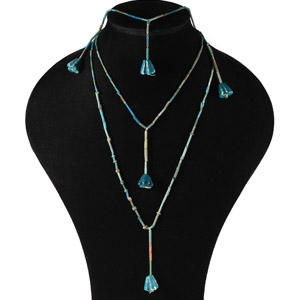
Egyptian Faience Mummy Bead Necklace with Lotus Flower Amulets
Late Period, 664-332 B.C.Sold for (Inc. bp): £208
Restrung group of mainly tubular beads with five faience lotus-flower pendants. 24.9 grams, 111 cm long
From an old English deceased estate. Acquired on the London art market in the early 1990s. Property of a London, UK, collector.
