
Loading, please wait...
LOT 0489
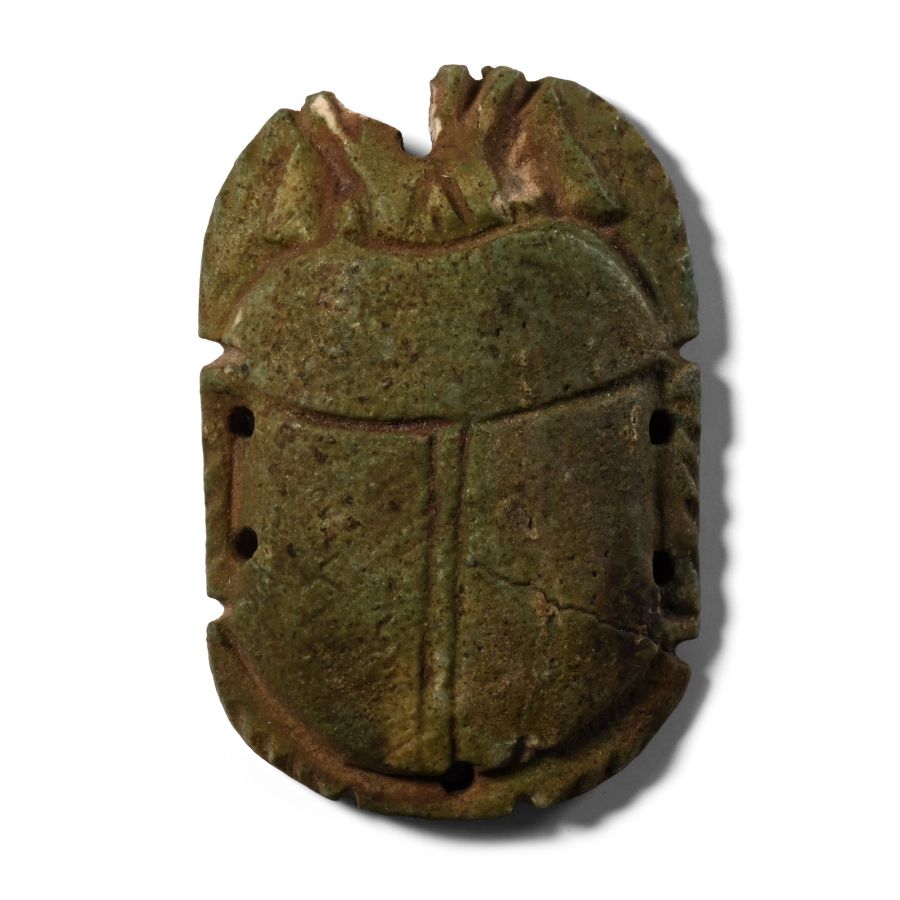
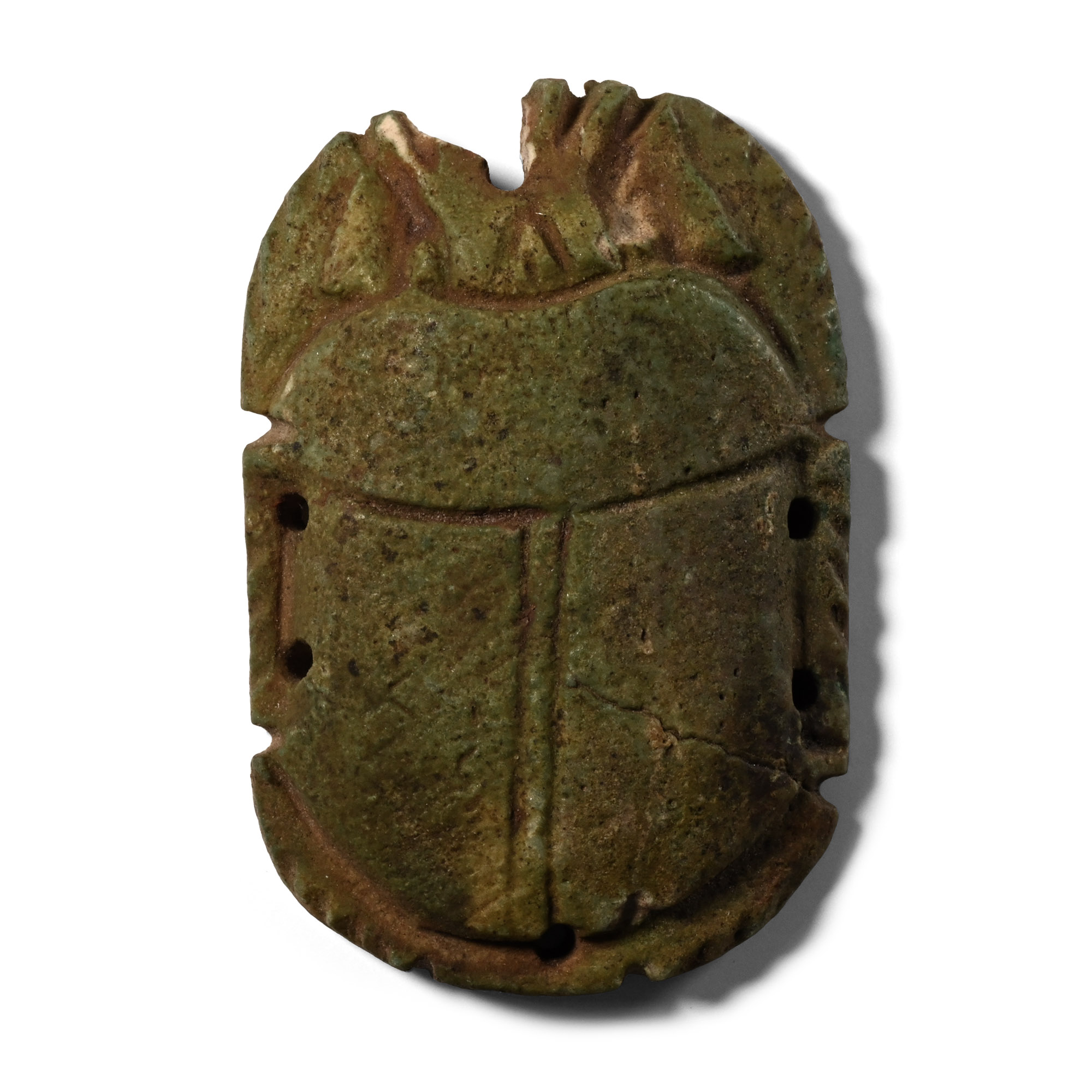
Large Egyptian Faience Heart Scarab
LATE PERIOD, 664-332 B.C.
2 7/8 in. (48 grams, 73 mm).
Green-glazed with anatomical detailing, pierced through the outer edge.
ProvenanceFrom an early 20th century collection London and Home counties, UK.
This lot is accompanied by an illustrated lot declaration signed by the Head of the Antiquities Department, Dr Raffaele D'Amato.
Cf. Tinius, I., Altägypten in Braunschweig. Die Sammlungen des Herzog Anton Ulrich-Museums und des Städtischen Museums, Wiesbaden, 2011, p. 169, no. 327, for similar.
FootnotesThe heart scarab served to protect the individual by silencing the heart so it would not testify against its owner. Many heart scarabs, especially those intended for elite burials, were mounted with outstretched wings—symbols of divine protection and rebirth. These wings echoed the iconography of protective deities like Isis and Nephthys, enhancing the amulet’s power to safeguard the soul on its journey to eternal life. The pierced holes on the side of this example were likely for the attachment of such wings.
CONDITIONTimeLine Auctions follows a vetting process to ensure the authenticity and legality of all items, reinforcing our commitment to integrity and responsible trading. Each antiquity, antique, and coin lot undergoes thorough examination by a vetting committee of at least ten external specialists, professional trade association members, scientists, and archaeologists: Our Vetting Process
AUCTIONS:
TimeLine is a leading auction house specialising in antiquities, ancient art, collectables, natural history, coins, medals, and books. Our auctions offer museums, collectors, historians, and enthusiasts the opportunity to acquire unique and historically significant pieces.
-
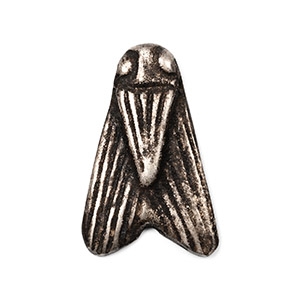
Egyptian Silver Fly Amulet
Late-Ptolemaic Period, 664-30 B.C.Sold for (Inc. bp): £143
With linear detailing to wings, raised eyes, pierced for suspension. 1.3 grams, 19 mm
From an early 20th century collection. This lot is accompanied by an illustrated lot declaration signed by the Head of the Antiquities Department, Dr Raffaele D'Amato. -
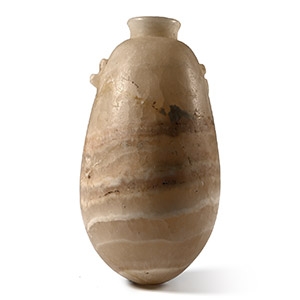
Egyptian Alabaster Alabastron
Late Period, 664-332 B.C.Estimate: £800 - 1,000 (‡+bp*)
Opening Bid: £400
Ovoid jar with a rounded base, concave shoulders and flared neck; remains of lug handles, restored. 332 grams, 14 cm
Acquired in the mid 1980s-1990s. Private collection, Switzerland, thence by descent. Private collection, since the late 1990s. This lot is accompanied by an illustrated lot declaration signed by the Head of the Antiquities Department, Dr Raffaele D'Amato. -
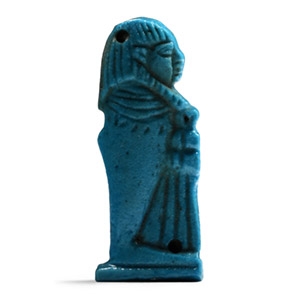
Egyptian Turquoise Glazed Faience Amulet of Imsety
Late Period, circa 664-332 B.C.Sold for (Inc. bp): £468
Flat-backed depiction of Imsety, one of the four sons of Horus, wearing a finely detailed tripartite wig, a broad collar, and holding a length of folded cloth. 3.66 grams, 36 mm
with Ancient World Arts, New York, USA. Private collection, London, UK, acquired from the above in 1994. This lot is accompanied by an illustrated lot declaration signed by the Head of the Antiquities Department, Dr Raffaele D'Amato.
The Four Sons of Horus were deities responsible for protecting the deceased's internal organs. The human-headed Imsety protected the liver, the baboon-headed Hapy protected the lungs, the jackal-headed Duamutef protected the stomach, and the falcon-headed Qebehsenuef protected the intestines. Amulets depicting these deities were placed within the mummy wrappings.
