
Loading, please wait...
LOT 0478
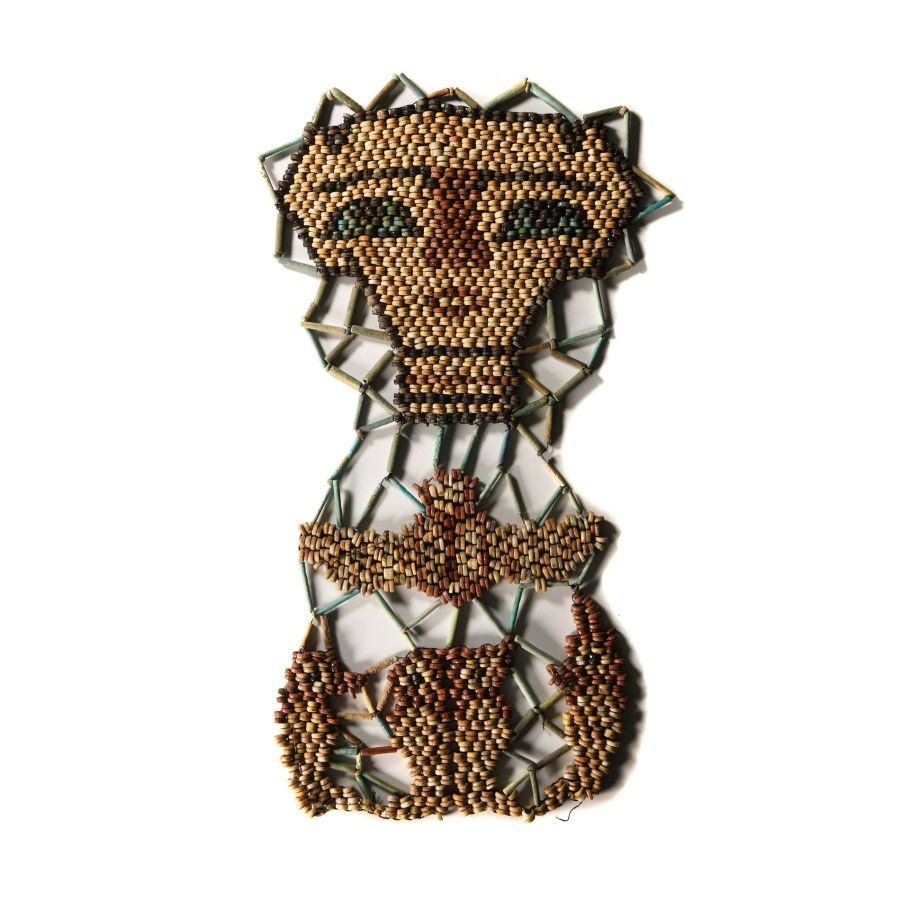
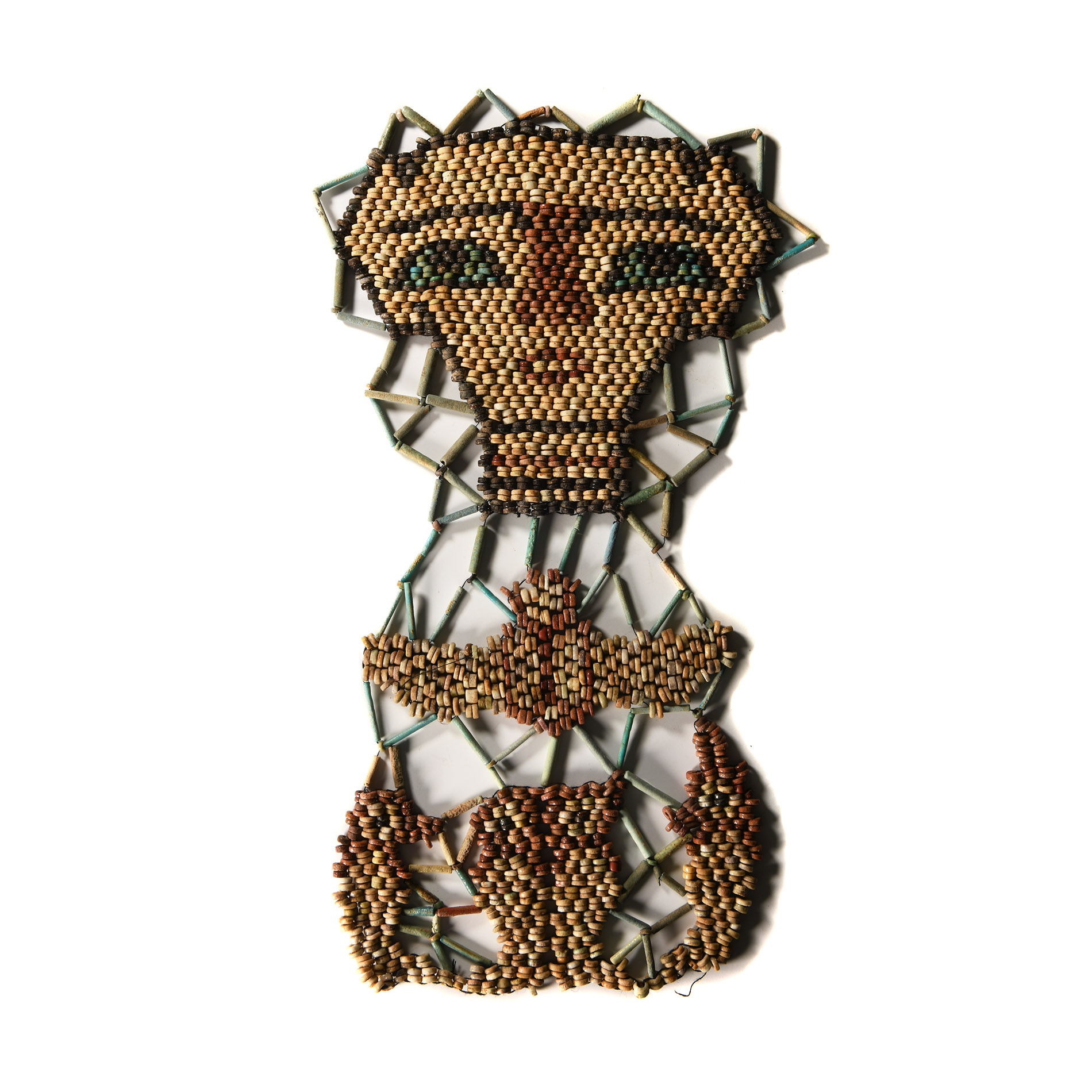
Large Egyptian Faience Beaded Mummy Mask with Sons of Horus
PTOLEMAIC PERIOD, 332-30 B.C.
11 3/4 in. (123 grams, 30 cm).
Restrung netted beadwork panel of annular and tubular glazed composition beads in blues, greens, black, cream and red-brown colours, depicting a mummy face mask with false beard, a scarab with extended wings below, the 'Four Sons of Horus’ beneath the scarab, joined together with areas of open netting of tubular beads; restrung with some later beads.
ProvenanceEx Mariaud de Serres, Paris, France, 1980-1990s.
From a London, UK, collection.
Cf. Manley, B., and Dodson, A., Life Everlasting. National Museum of Scotland Collection of Ancient Egyptian Coffins, Edinburgh, 2010, p.114, no.43, for a bead-work shroud incorporating the mask, winged scarab, and Four Sons of Horus.
FootnotesThe Four Sons of Horus were deities responsible for protecting the internal organs of the deceased. The human-headed Imsety protected the liver, the baboon-headed Hapy protected the lungs, the jackal-headed Duamutef protected the stomach, and the falcon-headed Qebehsenuef protected the intestines.
CONDITIONTimeLine Auctions follows a vetting process to ensure the authenticity and legality of all items, reinforcing our commitment to integrity and responsible trading. Each antiquity, antique, and coin lot undergoes thorough examination by a vetting committee of at least ten external specialists, professional trade association members, scientists, and archaeologists: Our Vetting Process
AUCTIONS:
TimeLine is a leading auction house specialising in antiquities, ancient art, collectables, natural history, coins, medals, and books. Our auctions offer museums, collectors, historians, and enthusiasts the opportunity to acquire unique and historically significant pieces.
LOT 0478
Large Egyptian Faience Beaded Mummy Mask with Sons of Horus
Sold for (Inc. bp): £351
-
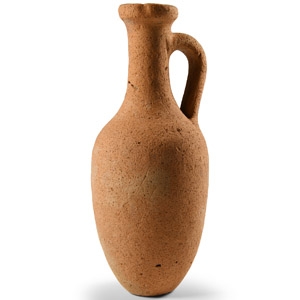
Phoenician Terracotta Jug
1st millennium B.C.Sold for (Inc. bp): £65
Ovoid body with narrow base, tall columnar neck and flared mouth. single strap handle to the shoulder. 249 grams, 15 cm
From the H.N. collection, Milton Keynes, Berkshire, UK, 1990s. -
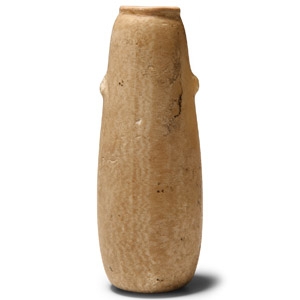
Egyptian Alabaster Cosmetic Jar
Late Period, 664-332 B.C.Sold for (Inc. bp): £124
Carved cosmetics jar, tapering gradually towards the top, with two small lugs at the shoulders, a collared rim, and flattened base. 77 grams, 87 mm
Private collection, Zurich, acquired in 1975 when the owners lived in Cairo (1975-1980). with Bonhams London, Antiquities, 23 July 2020, lot 119 (part). Property of a Bristol, UK, gentleman. -
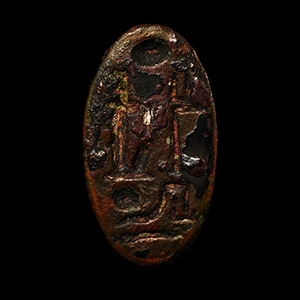
Egyptian Bronze Ring for Ramesses II
New Kingdom, 19th Dynasty, 1303-1213 B.C.Sold for (Inc. bp): £2,340
D-shaped hoop and ellipsoid plaque, hieroglyphic text in low relief giving the regnal name of Ramesses II (User-Maat-Re Setep-en-Re). 6.78 grams, 23.72 mm overall, 17.94 mm internal diameter (approximate size British Q, USA 8, Europe 17.49, Japan 16)
Ex R.K. collection, early 1980s. UK private collection before 2000. Property of a London gentleman. This lot has been checked against the Interpol Database of stolen works of art and is accompanied by a search certificate number no.12082-217353.
