
Loading, please wait...
LOT 0040
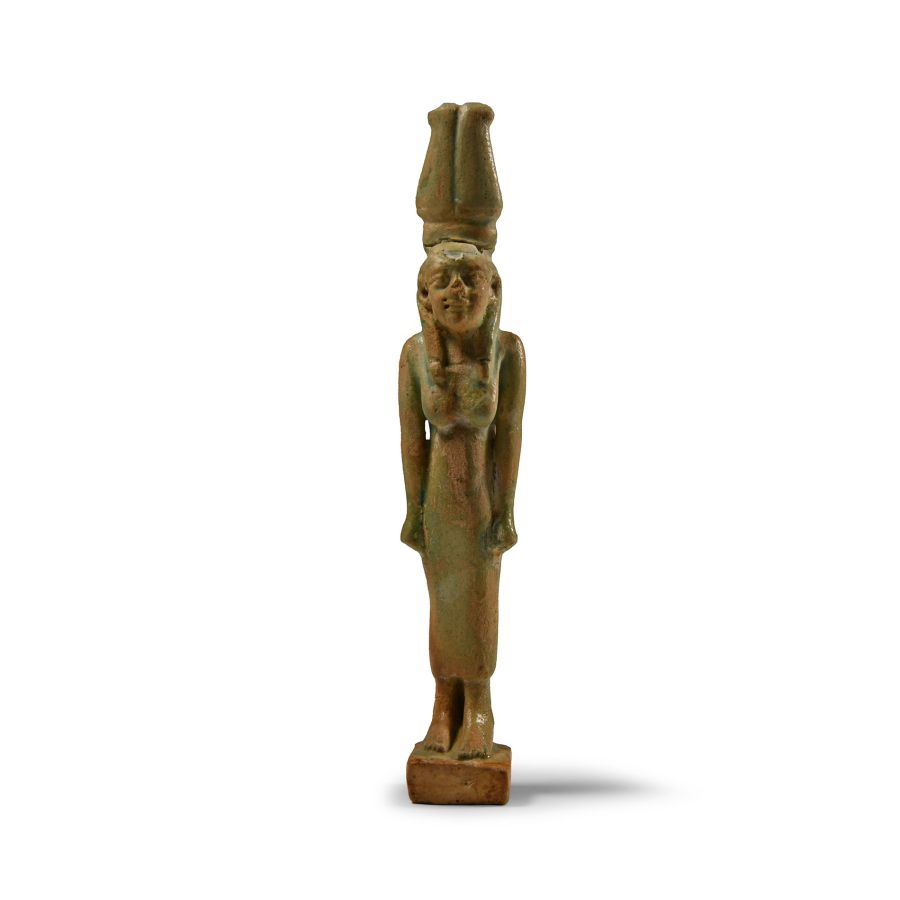
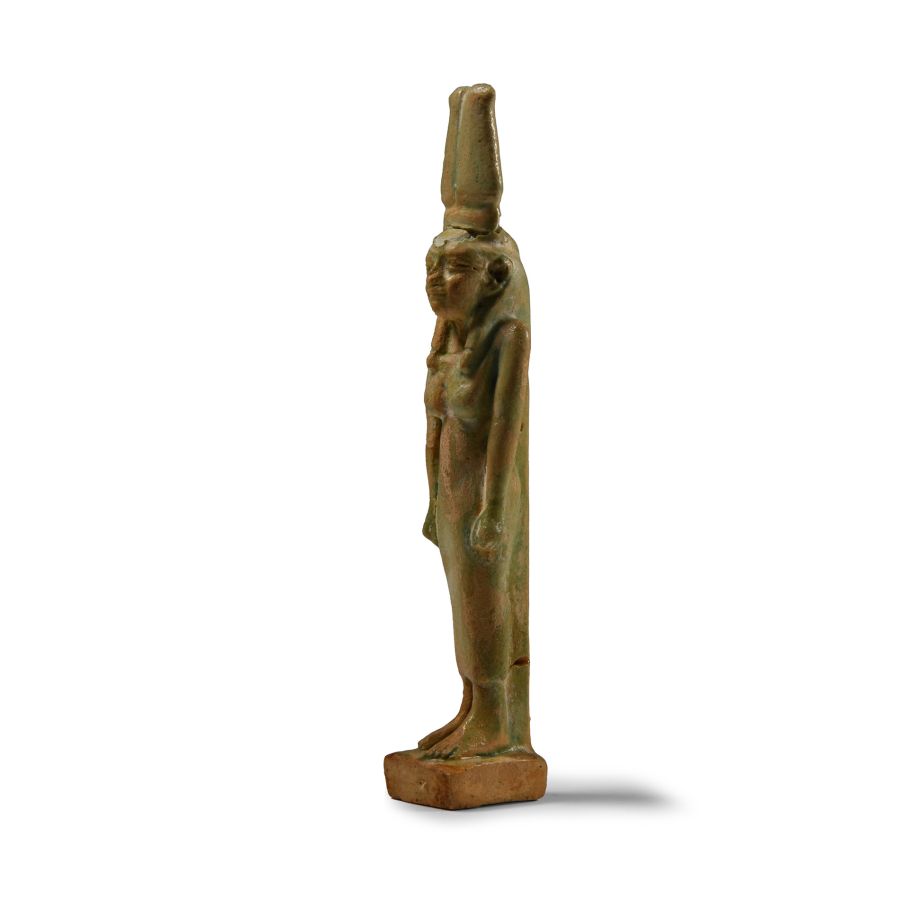
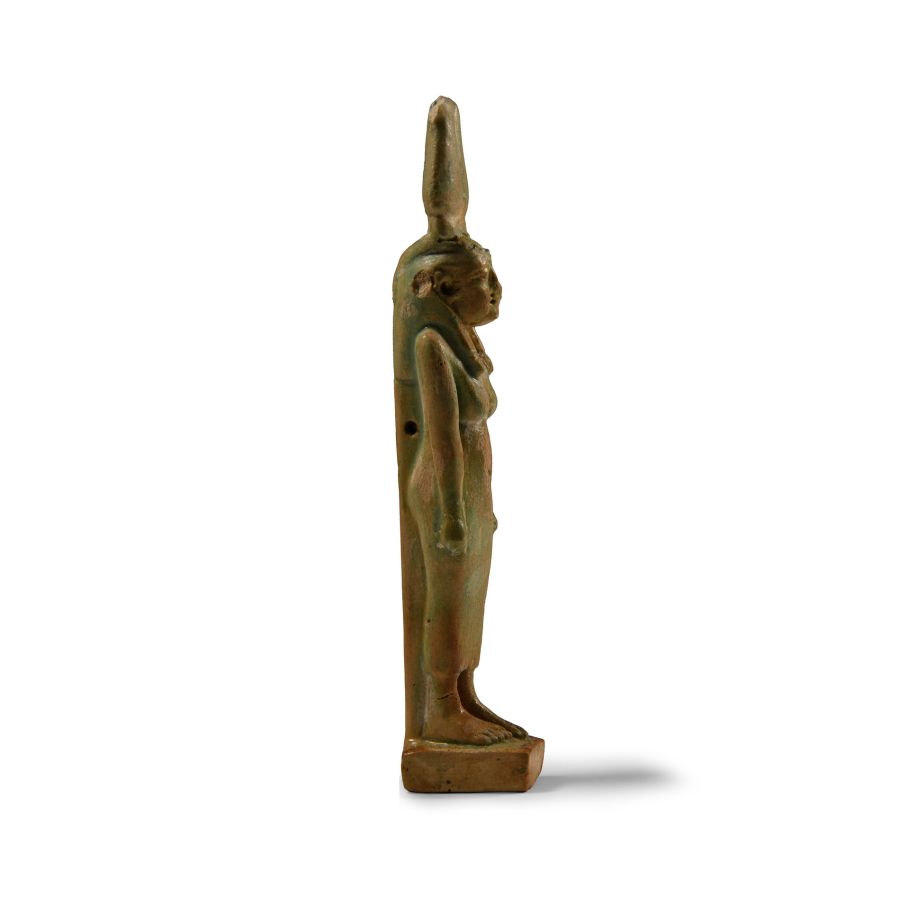
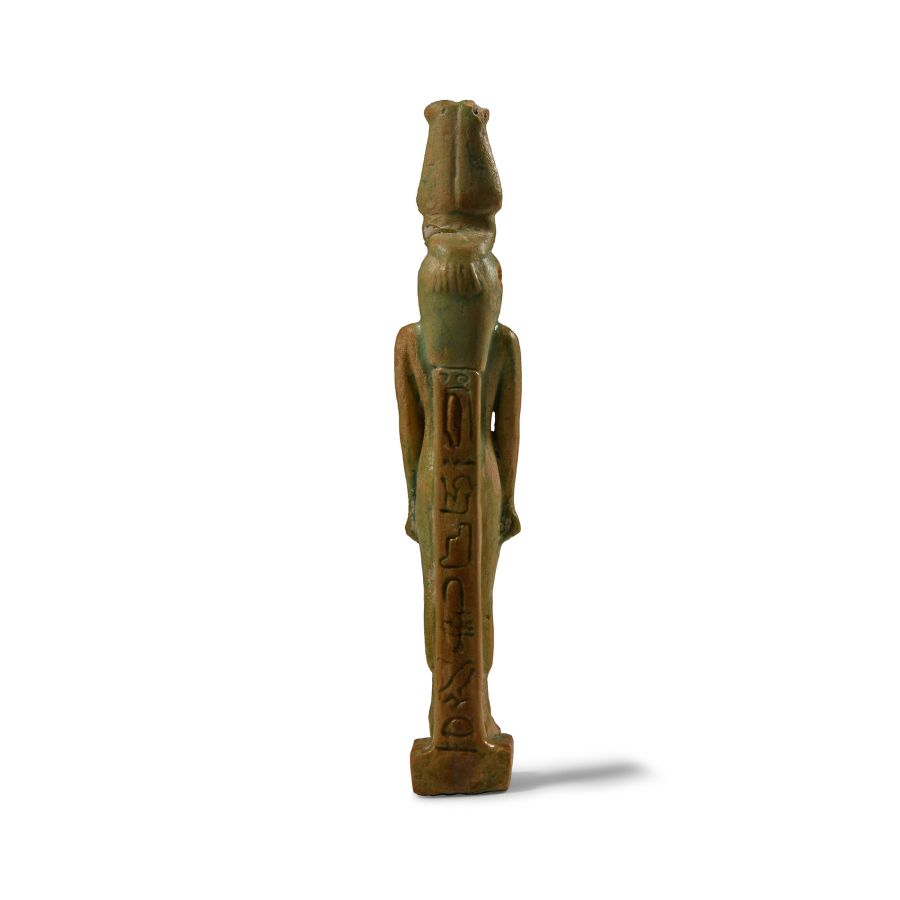
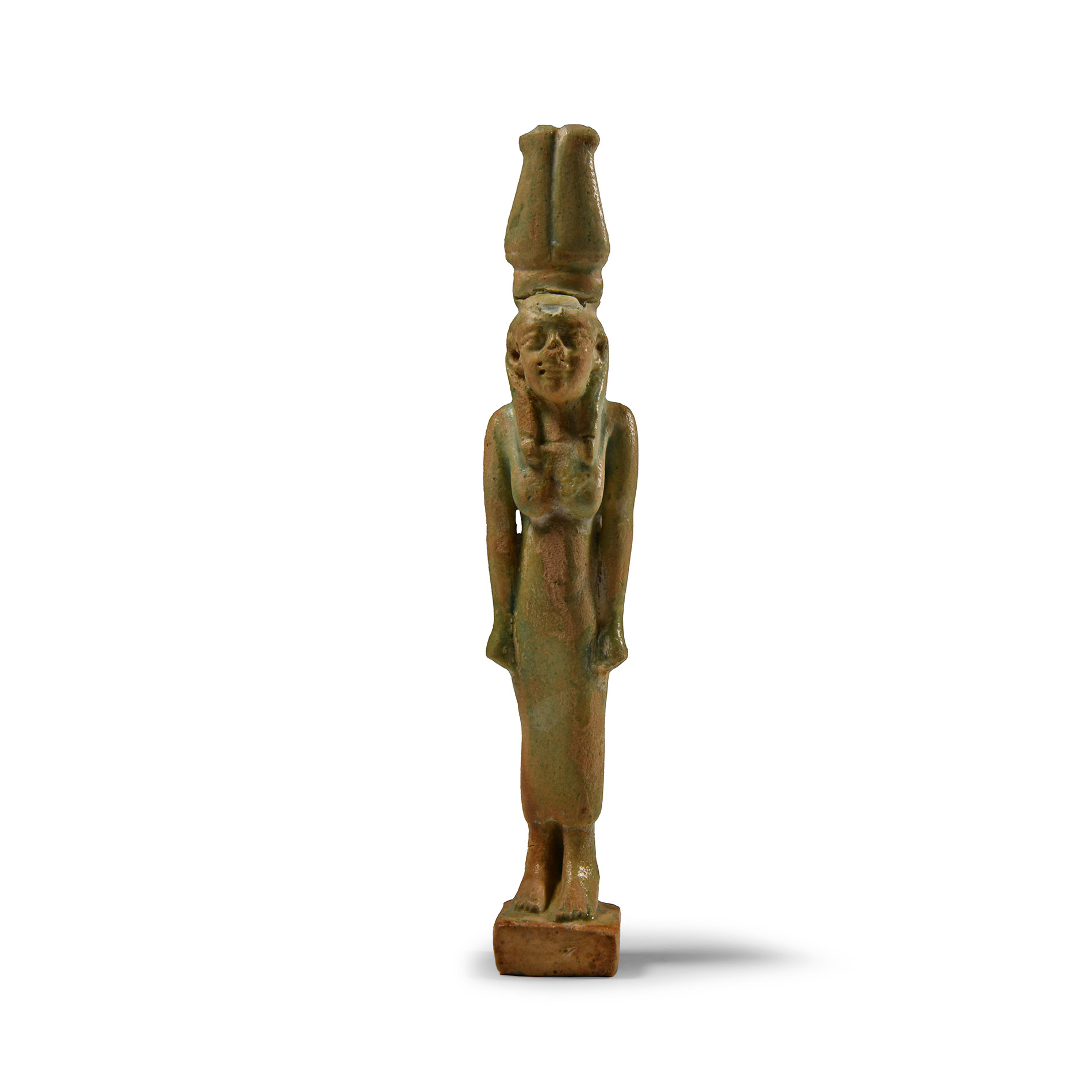
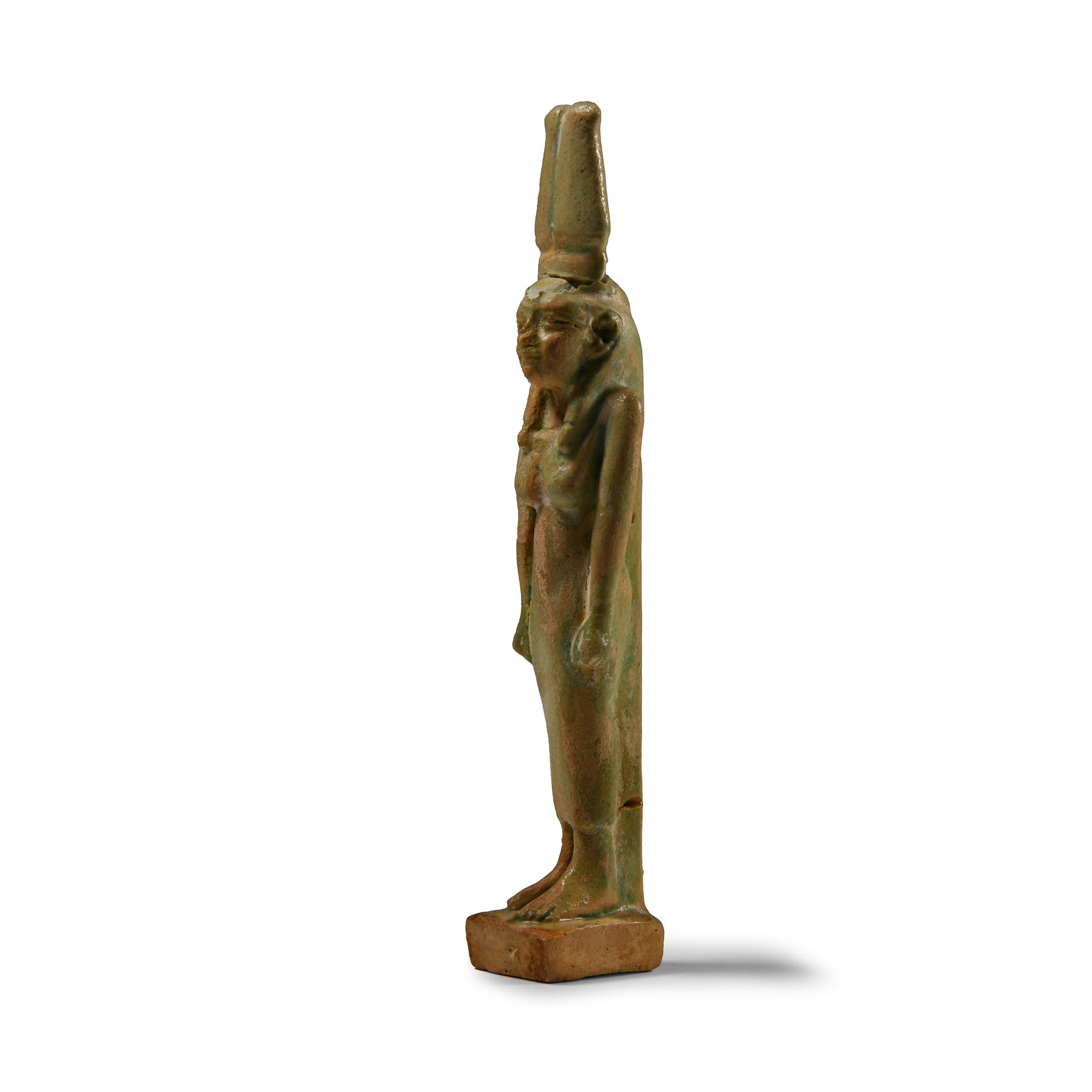
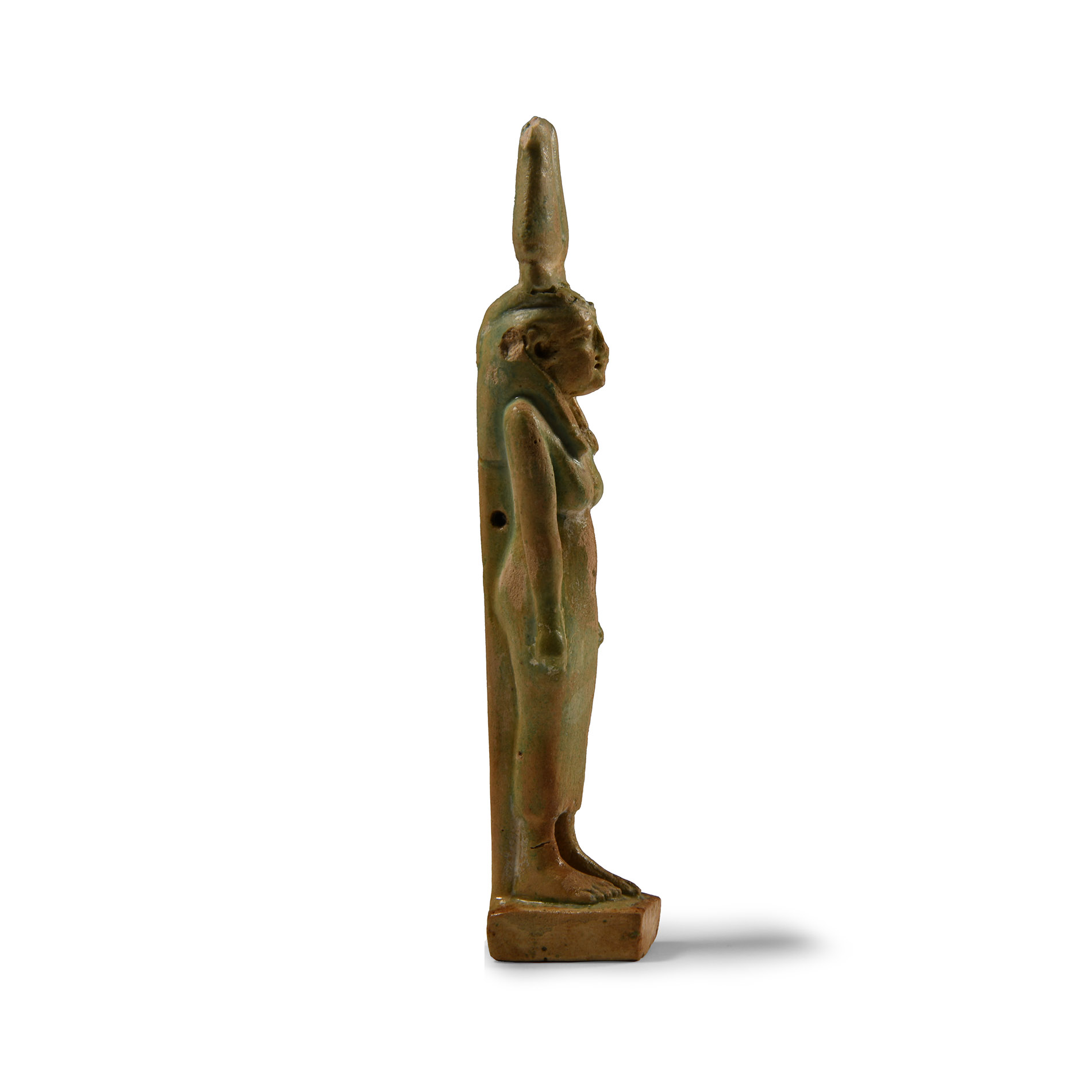
Large Egyptian Faience Amulet of the Goddess Isis
LATE PERIOD-PTOLEMAIC PERIOD, 664-30 B.C.
5 1/2 in. (50 grams, 14 cm).
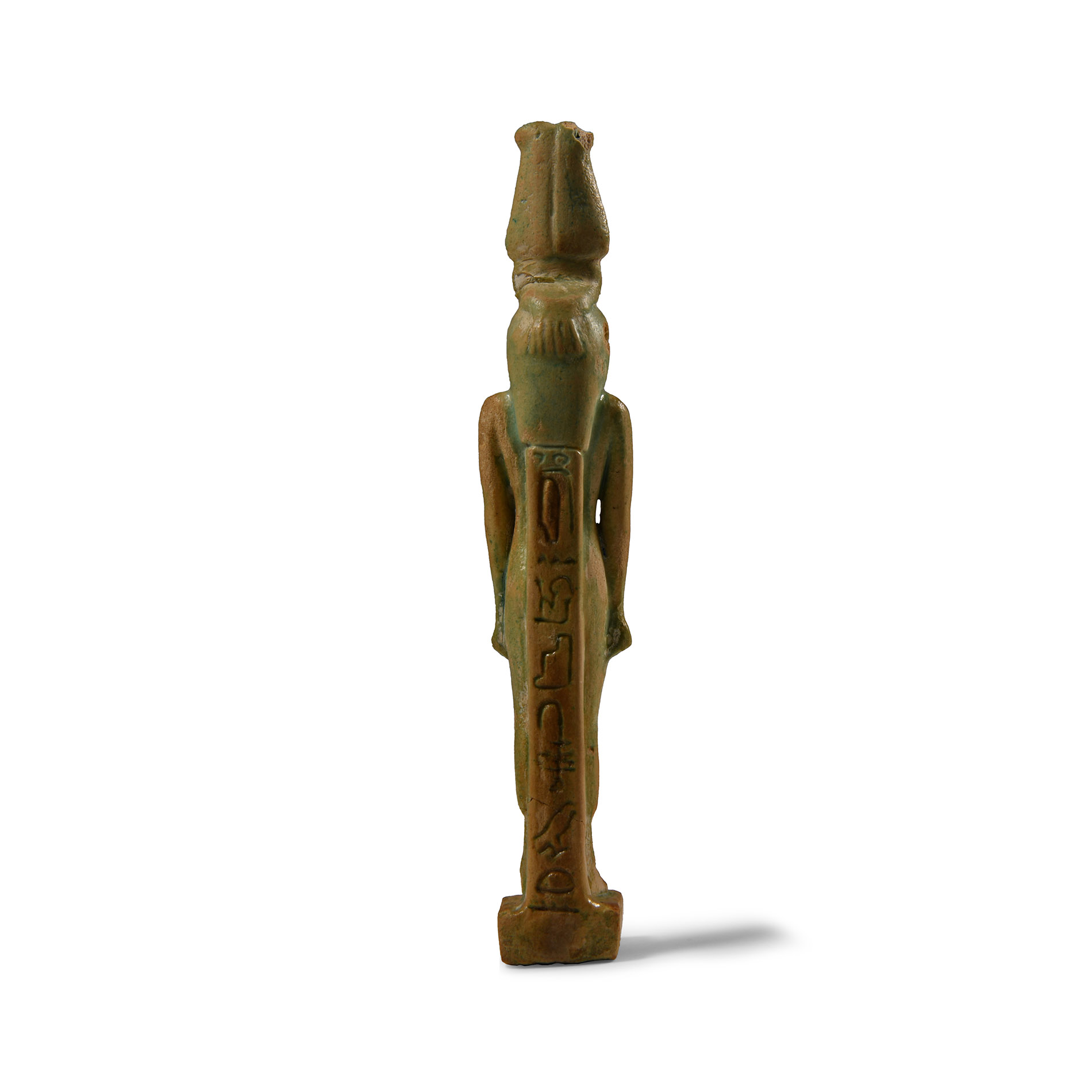
The goddess dressed in a long tight-fitting tunic to her ankles, standing with her left leg forward, her straight arms descending to her thighs; vulture headgear surmounted two long feathers; dorsal pillar with hieroglyphic text; repaired.
ProvenancePrivate collection Mr E. Saad, Cairo, Egypt-Montreux, Switzerland, 1970s.
Ex private collection of Mr S.A., acquired from Mr Saad in 1997.
In ancient Egyptian mythology, Isis was the sister-wife of Osiris and the mother of the sky god Horus. She is associated with aspects of fertility and motherhood. This amulet unusually depicts her with a two-plumed crown, which may associate her with the goddess Sothis.
CONDITIONTimeLine Auctions follows a vetting process to ensure the authenticity and legality of all items, reinforcing our commitment to integrity and responsible trading. Each antiquity, antique, and coin lot undergoes thorough examination by a vetting committee of at least ten external specialists, professional trade association members, scientists, and archaeologists: Our Vetting Process
AUCTIONS:
TimeLine is a leading auction house specialising in antiquities, ancient art, collectables, natural history, coins, medals, and books. Our auctions offer museums, collectors, historians, and enthusiasts the opportunity to acquire unique and historically significant pieces.
LOT 0040
Large Egyptian Faience Amulet of the Goddess Isis
Estimate £1,200 - 1,700€1,390 - 1,970 (for guidance only)$1,620 - 2,300 (for guidance only)
-
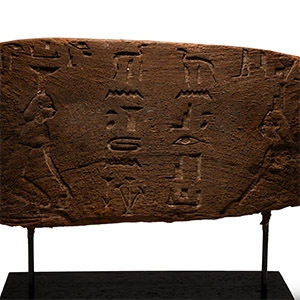
Egyptian Wood Panel with Hieroglyphs for Padi-Wsir
Late Period, 664-332 B.C.Sold for (Inc. bp): £2,340
Foot panel from a cedarwood sarcophagus with carved socket to the inner face to accept the feet and mortices for attaching to sides; the outer face in low relief, a figural scene depicting the sisters of Osiris (Nephthys to the left and Isis to the right) with their arms extended; text translatable as 'Words spoken for Neftis, which surrounds ...Words spoken for Osiris, Padi-Wsir. I have come into existence as [...] Osiris, Padi-Wsir, the righteous [...]'. 652 grams total, 31 cm wide including stand
From a Dutch private collection, acquired in the 1970s. Acquired from J. Bagot Ancient Art, Barcelona, Spain, in 2016. From the Keane private collection, Kent, UK. Accompanied by a copy of the J. Bagot certificate of authenticity and invoice (2,800 euros). This lot has been checked against the Interpol Database of stolen works of art and is accompanied by a search certificate number no.12078-216769.
'Padi Wsir' is probably the name of the owner of the sarcophagus; the same name was elsewhere transliterated as 'Padiusir' and Hellenised as 'Petosiris'', a familiar name in the Late Period. -
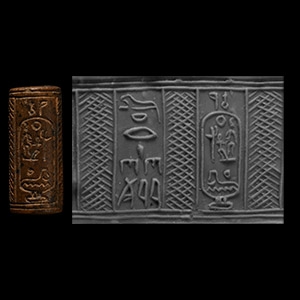
Egyptian Cylinder Seal with Cartouche of Ramesses II
New Kingdom, 19th Dynasty 1304-1237 B.C.Sold for (Inc. bp): £1,235
With crisp detail of crosshatched panels, hieroglyphic text in one and a cartouche in the other with the regnal name of Ramesses II (User-Maat-Re-setep-en-Re), supplied with a museum-quality impression. 5.01 grams, 25 mm
Gustave Mustaki, Alexandria, Egypt; exported from Egypt to the UK c.1950. Elsa McLellan, UK; by descent from the above. Private collection, London, UK; by descent from the above. -
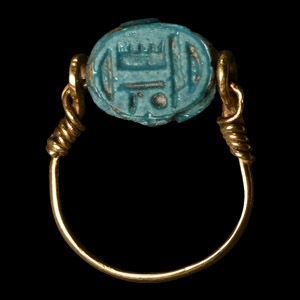
Egyptian Bright Blue Faience Scarab in Gold Ring
Late Period, 664-332 B.C. and laterSold for (Inc. bp): £494
Scarab with detailed carapace and legs, impressed hieroglyphs to the underside; set in a 19th century gold ring. 2.44 grams, 23.63 mm overall, 17.57 x 16.48 mm internal diameter (approximate size British M, USA 6, Europe 12.46, Japan 12)
From an early 20th century collection.
