
Loading, please wait...
LOT 0039
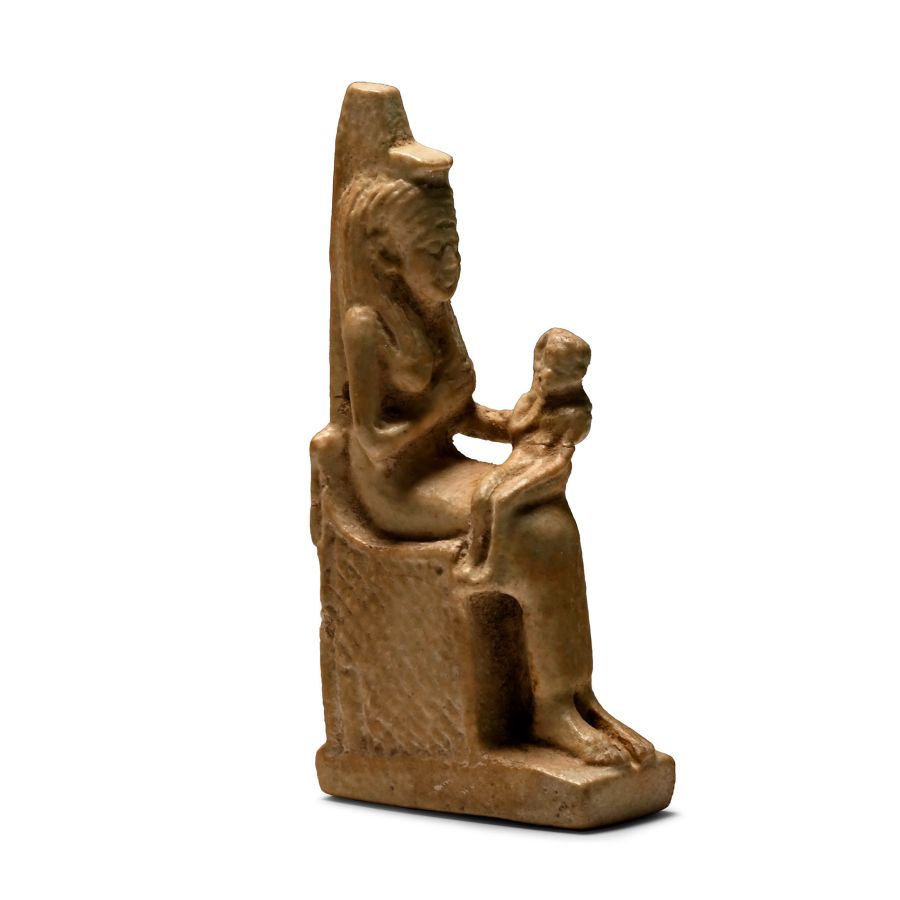
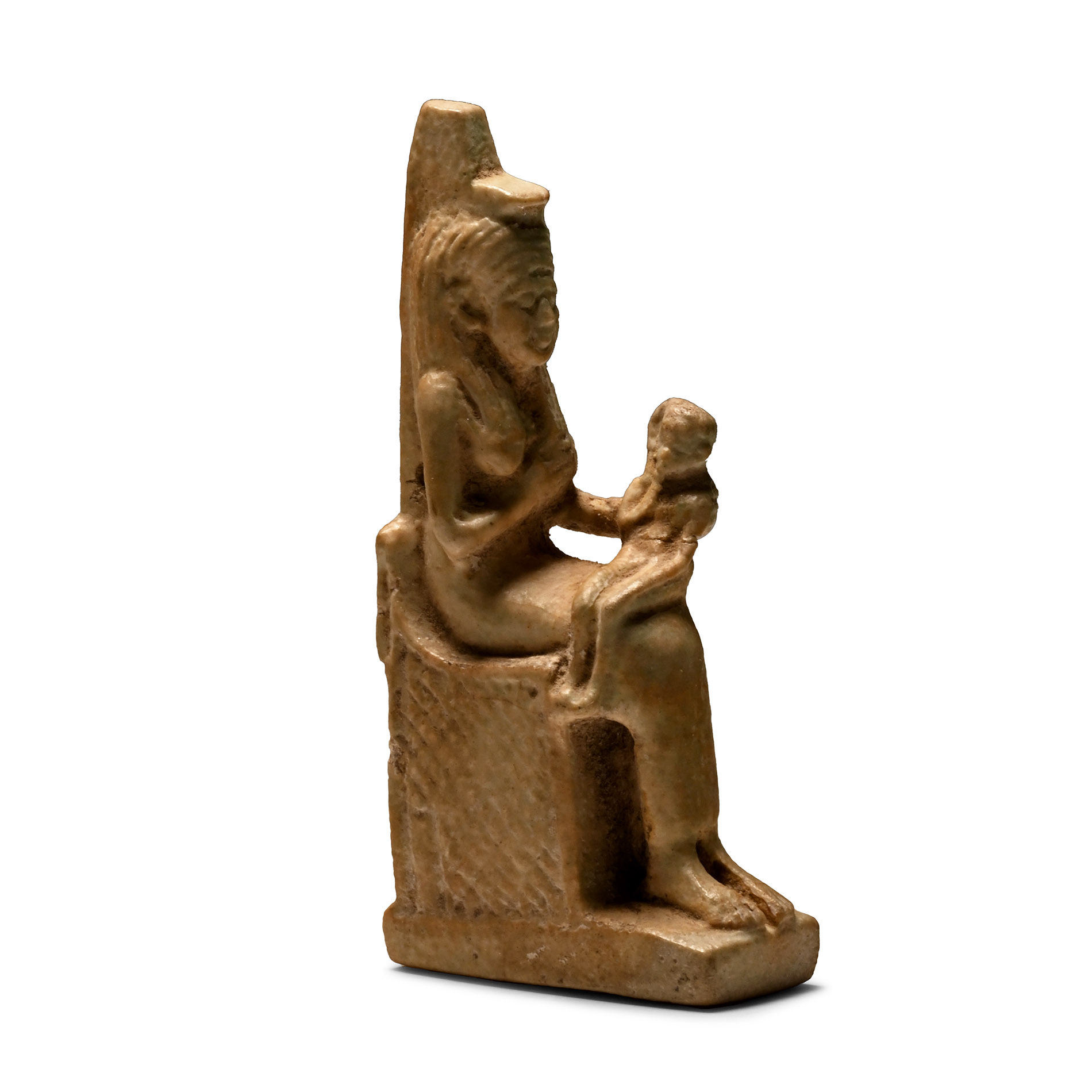
Large Egyptian Faience Amulet of Isis Nursing Baby Horus
LATE PERIOD, 664-332 B.C.
2 5/8 in. (20.16 grams, 65 mm).
Amulet of Isis seated on an elaborate throne decorated with a crosshatch pattern, holding the infant Horus to her breast, supporting his head with her left hand; wearing a long close-fitting sheath dress and striated tripartite wig, surmounted by a crown in the form of her hieroglyphic name-sign, the "throne"; Horus wearing the sidelock of youth and holding his finger to his mouth; horizontal piercing just above the throne at the back for suspension.
ProvenanceEx Foxwell collection.
Acquired from a London gallery.
Ex Mr A.S. collection, 1990s.
Cf. Andrews, C., Amulets of Ancient Egypt, London, 1994, p.22, fig. 18b, for similar.
FootnotesIn ancient Egyptian mythology, Isis was the sister-wife of Osiris and the mother of the sky god Horus. She is associated with aspects of fertility and motherhood and is often depicted in various artworks seated in a nursing pose with her son Horus on her lap.
CONDITIONTimeLine Auctions follows a vetting process to ensure the authenticity and legality of all items, reinforcing our commitment to integrity and responsible trading. Each antiquity, antique, and coin lot undergoes thorough examination by a vetting committee of at least ten external specialists, professional trade association members, scientists, and archaeologists: Our Vetting Process
AUCTIONS:
TimeLine is a leading auction house specialising in antiquities, ancient art, collectables, natural history, coins, medals, and books. Our auctions offer museums, collectors, historians, and enthusiasts the opportunity to acquire unique and historically significant pieces.
LOT 0039
Large Egyptian Faience Amulet of Isis Nursing Baby Horus
Estimate £1,000 - 1,400€1,160 - 1,620 (for guidance only)$1,350 - 1,890 (for guidance only)
-
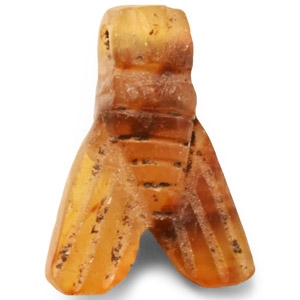
Egyptian Hardstone Fly Amulet
Late Period, 664-332 A.D.Sold for (Inc. bp): £117
With linear detailing to body and wings, pierced at the neck. 0.38 grams, 12 mm
From the H.N. collection, Milton Keynes, Berkshire, UK, 1990s.
Fly amulets were believed to protect against insect bites and ward off flying creatures through apotropaic magic. Additionally, the pharaoh would give gold fly-shaped pendants as military awards to recognise the bravery and persistence of soldiers in battle. -
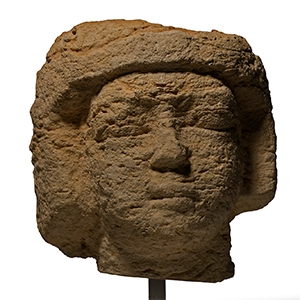
Egyptian Limestone Male Head Fragment
Old Kingdom, 4th-early 5th Dynasty, circa 2640-2480 B.C.Sold for (Inc. bp): £3,380
Wearing a short wig, the eyes with incised cosmetic lines; mounted on a custom-made display stand. 4.58 kg total, 26.5 cm including stand
with Sotheby's, London, 5 July 1982, no.190. with Sotheby's, London, 13-14 December 1990, no.18. Acquired from the above sale by the late Robert Browne. Property of Ms L.F., London, UK. Accompanied by a copy of an Art Loss Register certificate no.S00243674. This lot has been checked against the Interpol Database of stolen works of art and is accompanied by a search certificate number no.12073-217362. -
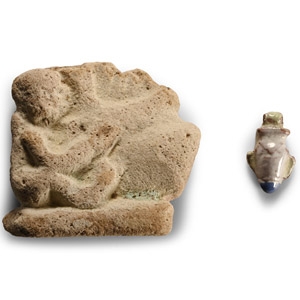
Egyptian Faience Phallic Figural Amulet
Late Period, 664-332 B.C.Sold for (Inc. bp): £46
Figurine of a naked male seated on a rectangular base, his phallus extended forward on which the harp he is playing rests; sold with a later white-glazed heart with blue finial, possibly after the antique. 24.5 grams total, 18-44 mm
From the collection of Doctor Girard, a collector for over 60 years. with Hotel des Ventes de Clermont-Ferrand, 22 May 2017. Property of a French collector.
