
Loading, please wait...
LOT 0494
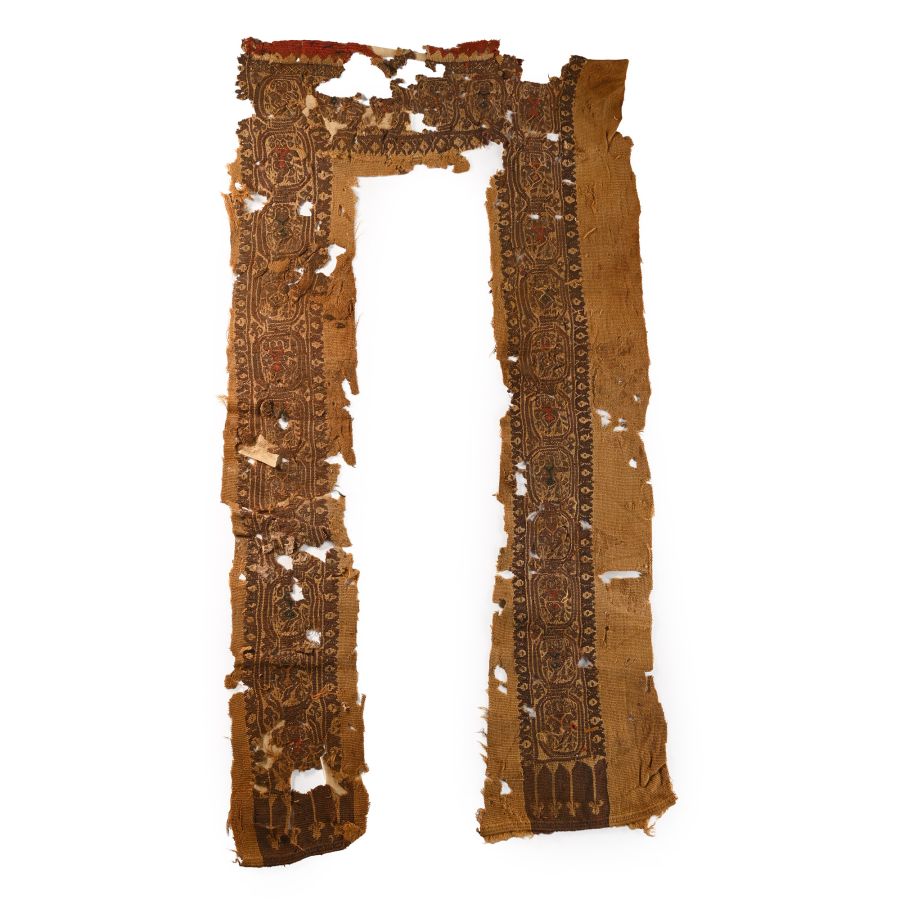
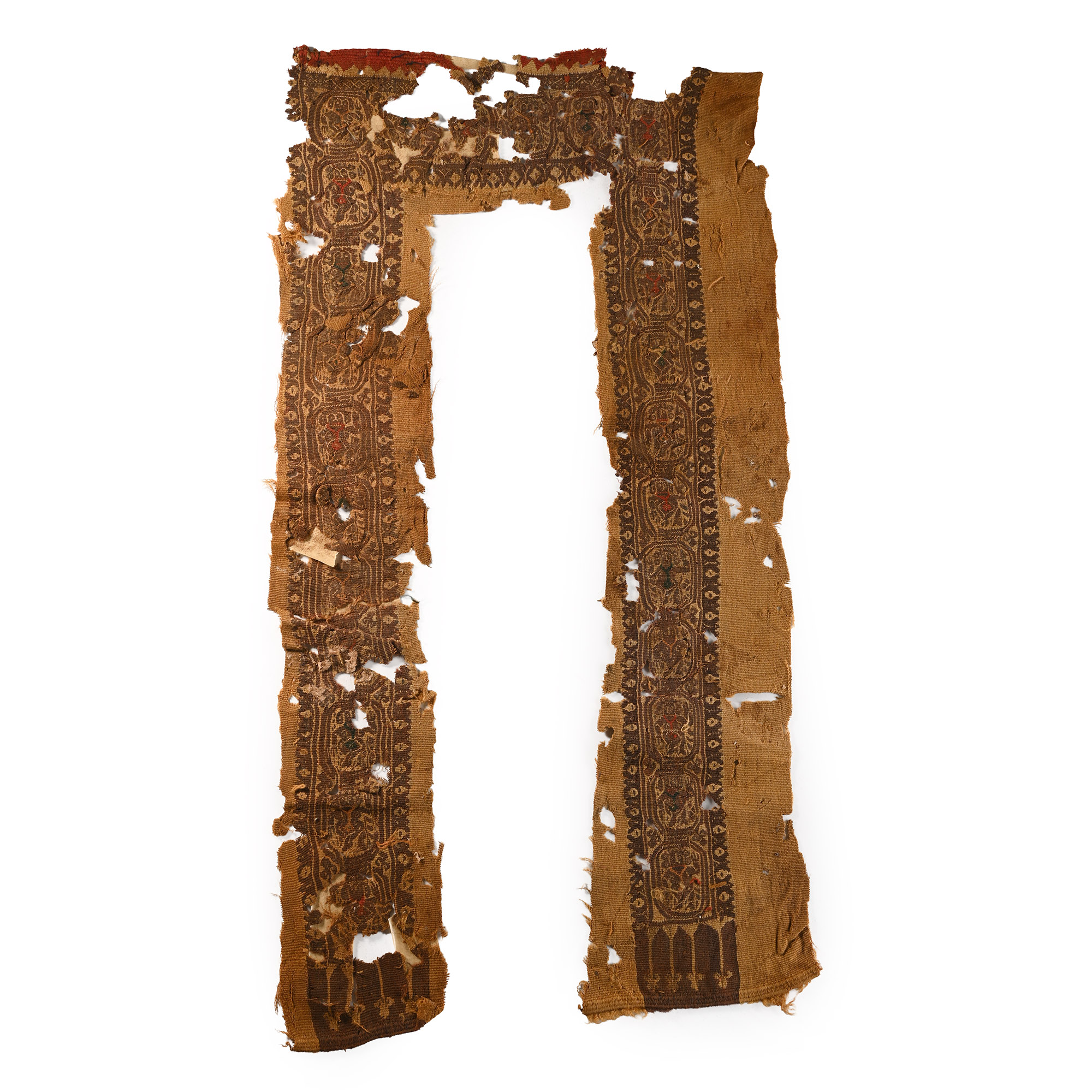
Large Egyptian Coptic Textile Fragment
CIRCA 7TH CENTURY A.D.
24 1/2 in. (224 grams, 62 cm).
Fragment from a tunic in coarse linen and purple violet wool, preserving the ornamentation of neck and chest, decorated with alternating medallions, with figures enclosed within the orbiculi of the vertical braids (clavi), representing nude or lightly dressed dancers; the upper part of the fragment featuring a decoration of red triangles descending downwards.
ProvenanceAcquired 1970s-1996.
Property of a North American collector.
London collection, 2016.
Cf. Institut du monde arabe, L'art copte en Égypte: 2000 ans de Christianisme : exposition présentée à l'Institut du monde arabe, Paris, du 15 mai au 3 septembre 2000, Paris, 2000, p.137, no.124, for a fragment of tunic decorated in a similar way.
FootnotesThis iconographic theme, originating from the pagan repertoire of Greek origin, was common on late Roman tunics: it evoked the joyful processions of Dionysus' servants.
CONDITIONTimeLine Auctions follows a vetting process to ensure the authenticity and legality of all items, reinforcing our commitment to integrity and responsible trading. Each antiquity, antique, and coin lot undergoes thorough examination by a vetting committee of at least ten external specialists, professional trade association members, scientists, and archaeologists: Our Vetting Process
AUCTIONS:
TimeLine is a leading auction house specialising in antiquities, ancient art, collectables, natural history, coins, medals, and books. Our auctions offer museums, collectors, historians, and enthusiasts the opportunity to acquire unique and historically significant pieces.
-
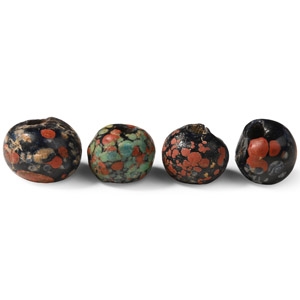
Phoenician Glass Bead Collection
Circa 600-400 B.C. or laterSold for (Inc. bp): £65
Four beads with a core of dark blue glass embedded with dispersed canes fused into the matrix, creating varied patterns in red, blue, white, and green, possibly Hebron. 19.6 grams total, 14-19 mm
Prince collection, 1990s-2014. Ex private collection 1970s-1990s. -
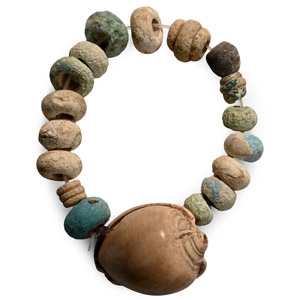
Phoenician Faience Bead Bracelet with Shell
Circa 600-400 B.C.Sold for (Inc. bp): £59
Consisting of oblate forms in shades of pale blue, cream, and beige; a large shell pendant at the centre. 60.7 grams, 14 cm long
Prince collection, 1990s-2014. Ex private collection 1970s-1990s. -
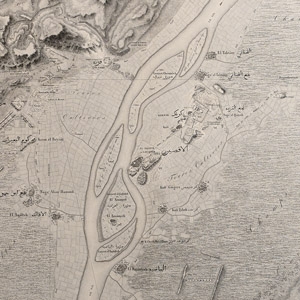
Very Large Egyptian Expedition Lithograph of Thebes
Early 19th century A.D.Estimate: £100 - 140 (+bp*)
Opening Bid: £50
Proof etching on laid paper of plate 1 entitled Thèbes. Plan général de la portion de la Vallée du Nil qui comprend les ruines, Volume II, Plate 1. 341 grams, 103.8 x 69.5 cm
From the collection of a North American priest. Acquired between 1981-1996. Property of a North American collector.
Produced between February 1802 and 1830 on the orders of Napoleon Bonaparte; published between 1809 and 1828. Just 1,000 copies were distributed to various institutions, printed on laid paper with an 'Égypte ancienne et moderne' watermark. The book is subtitled Recueil des observations et des recherches qui ont été faites en Égypte pendant l’expédition de l’Armée française, publié par les ordres de Sa Majesté l’Empereur Napoléon le Grand (Gathering of observations and discoveries which were made in Egypt during the expedition of the French army, published on the orders of His Majesty the Emperor Napoleon the Great). It was the world's first encyclopedia devoted exclusively to the remains of ancient Egypt. The plates of this book are the first to present the archaeological sites of Thebes (Luxor).
